


Germany
| Full Name | 4 Greater German Empire | |
| Alliance | Axis - Major Member Nation | |
| Entry into WW2 | 1 Sep 1939 | |
| Population in 1939 | 79,800,000 | |
| Military Deaths in WW2 | 5,500,000 | |
| Civilian Deaths in WW2 | 2,000,000 | |
| - Civ Deaths from Holocaust | 160,000 |
Contributor: C. Peter Chen
ww2dbaseOn 27 Feb 1933, the Reichstag was set on fire, generally believed to be started by a Dutch communist. The propaganda machine of the Nationalsozialistische Deutsche Arbeiterpartei, the National Socialist German Workers' Party or Nazi Party for short, seized the opportunity to claim their importance in a Germany now influenced by the dangerous expansionist philosophies of communism. Slowly, Germany became a single-party republic, and Adolf Hitler became a practical monarch with absolute power over the nation. For the most part, Germany welcomed the dictatorship. Many considered the Versailles Treaty a gross violation of German sovereignty, and the economic depression that hit Germany left the German people thirsting for a strong leader who could bring Germany to the world stage again. Hitler manipulated politics and popular opinion with the total control of media and a powerful propaganda machine so that he could fill that role. Over the course of the 1930s, he courted industrial leaders and established a strong war production base, while he also charmed military leaders with visions of glory through conquest. The first military move took place in 1936 when German troops marched into Rhineland. In 1938, Hitler's native country Austria was annexed within German borders, followed by Czechoslovakia and Memel in 1939. Finally, the European War broke out in 1939. One by one, Poland, the Low Countries, and France fell. In Jun 1941, even Germany's recent ally Russia was invaded. In Dec 1941, after Japan's attack on Pearl Harbor, Germany boldly declared war on the US as well. The illusion of Germany Army's invincibility soon fell apart, however, when the attack on Moscow, and then Stalingrad, grinded away German strength. In Jun 1944, the Normandy campaign eroded the Western Front as well. The pressures of a two-front war finally led to the total collapse of the German military. Hitler committed suicide on 30 Apr 1945, and Germany surrendered a week later.
ww2dbaseThe Nazi German period is sometimes referred to as the "Third Reich", which was a name used in Nazi propaganda. It was meant to create a sense of connection between Nazi Germany and the first two great empires in German history, the Holy Roman Empire and the German empire under Kaiser Wilhelm I and Kaiser Wilhelm II.
ww2dbaseA heinous legacy was left with the departure of the Nazi regime. The Holocaust, or the systematic extermination of Jews, Slavs, homosexuals, the disabled, communists, and many other groups, left 11 million dead all across Europe. Of that total, more than half were Jews. Majdanek, Natzweiler-Struthof, Dachau, Buchenwald, Auschwitz, and so many other concentration camps horrified those who found them. German industries such as I. G. Farben and Fried. Krupp, too, joined in on the pillage of Europe, illegally seizing industries in the conquered nations and employed slave labor from the concentration camps. Advocates such as Simon Wiesenthal dedicated their efforts in finding those responsible for the murders and bringing them to justice.
ww2dbaseAfter the war, Germany was divided into occupation zones, which led to the division of East and West Germany during the Cold War.
ww2dbaseSource: Wikipedia.
* Planned only; not actually built
| Territories, Possessions, and Nations Under the Influence of Germany | ||
| Austria | Czechoslovakia | |
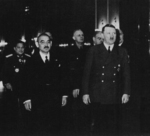
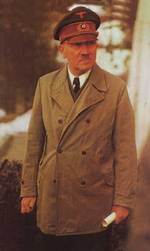
Photographs
 |  |  |  |
 |  |  |  |
Germany in World War II Interactive Map
Did you enjoy this article or find this article helpful? If so, please consider supporting us on Patreon. Even $1 per month will go a long way! Thank you. Share this article with your friends: Stay updated with WW2DB: |


Visitor Submitted Comments
 Bill says:
11 Dec 2009 01:48:10 PM
From the end of World War I to the End of
World War II, German Arms Industry was able
to produce:
14,000,000 98K Rifles
1,200,000 Lugers Pistols
1,100,000 P-38 Pistols
1,000,000 MP-40 Machine Pistols
425,000 MP-44 Assault Rifles
400,000 MG-34 Machine guns
700,000 MG-42 Machine guns
During World War II the Germans also captured
weapons from the countries, that were invaded and occupied, adding millions of new
weapons to the Wehrmacht.
After World War II in the 1950's and early 1960's the US Army developed new Infantry weapons, for example the M-60 Machine gun
was inspired by the MG-34 and 42 Machine guns
that became the basic infantry unit machine gun. The M-16 became the basic infantry rifle
Bill says:14 Dec 2009 06:21:15 PM
Next to the "Jackboot" was the "Stahlhelm"
or(Steel Helmit)that made the image of the Wehrmacht. This helmit first came into use during the First World War, replacing the
Pickelhaube(Spiked Helmit).
After W.W.I it continued to be used by the
German army between the wars.
In the late 1930's the M-1935 improved model
that was lighter more compact and more
comfortable to ware. There was also a
Fallschirmjager version designed for use by
the Paratroops it was cut down, to lessen
the risk of neck injuries.
The M-56 originally designed in 1942, as a
replacement for the M-1935 Stahlhelm However,
the design did not progress during the war.
The East German M-1956 was a copy of the 1942
design,and was issued to the Volkspolzei and
to the East German Army.
Post-War use:
Germany's GSG-9 Special unit used the W.W.II
Paratroop helmit.
Even the old 1960's T.V. Show "Hogans Heros"
had a W.W.II Officers Cap tilted slightly
on a Pickelhaube Spike Helmit.
After W.W.II many countries in Europe used
german military equipment among them were
the Stahlhelm. At one time, over 28 countries
used the Stahlhelm.
Bill says:15 Dec 2009 02:57:53 PM
What's a Jackboot? Any type of combat boot, that is mid-calf, and does not use any type of type of laces.
The Jackboot is connected with terror and
the Nazi regime, but this boot has been used
by German armies in World War I, and before.
During the later part of World War II with
the shortage of material, short ankle boot's w/ gaiters replaced the jackboot in many
German Military units.
Did you know:
Jackboot's have been used with British army
regiments since the 18th Century, and with other foreign armies in europe ,but the
Jackboot has been associated w/ Totalitarian
regimes, as the former USSR and East Germany.
The East German version was of poor quality
and style, that some experts say, they are
not worth having at any price.
Hessian soldiers wore Jackboot's fighting
with the British, during the American War for
Independence,and the boot was used by armies through the Napolenic Wars, even General of
the American Army, George Washington had a
pair.
Today many Motorcycle Police ware a similar
version of the Jackboot.
To learn more about the Jackboot, and the
German Soldier Read:
"JACKBOOT"
by John Laffin
History Press
Published 2/6/04
ISBN-10 0750934786
ISBN-13 978-0750934787
Did you know:
The word "Jawohl" meaning Yes, Yes Indeed or Absolutely Yes! Became so strongly associated with World War II, that it is not used in the New German Army (Heer). I would also think, that the clicking of the heels
along with a hand salute, is also a big, big
no, no.
"JAWOHL"!.
30 Dec 2009 05:57:13 AM
I often used "Jawohl" (spoken: jawoll faster and louder) during my time in the German Heer. But I never clicked heels along with a hand salute. I served in the 80`s - Sorry Bill.
Bill says:2 Jan 2010 05:58:58 PM
To Anonymous:
30 Dec. 2009 05:57:13 AM / #5
Thank you for your response, and I stand corrected. Glad to receive feedback and your
first hand information.
I can only add what information is available on the inter-net, be it fact or second-hand
information.
I spent time in West Germany, serving with
the U.S. Seventh Army from December 1966 to September 1967,before going to South Vietnam but that's another story. Went on training
operations with the West German Army, it was an interesting experience.
The unit that supported us carried at that time,the Heckler & Koch G3 Assault Rifle, we used the M-14.
At that time, I was stationed in Hanau the food and beer were great! It was a long time ago, over (40) years ago but, that was when
I was younger, much younger.
My E-mail address is:
pdenomie@pahrump.com
Bill says:11 Jan 2010 03:25:25 PM
What did thoses letters mean on WWII German
Wehrmacht vehicles:
Licence plate with letters
WH (Heer)
WL (Luftwaffe)
WM (Kriegsmarine)
SS (Waffen-SS)
Bill says:11 Jun 2010 07:53:40 PM
Blood for Oil:
"To fight we must have oil for our machine"
-Adolf Hitler-
Blitzkrieg! Poland, Low Countries and France
fast victories, a Panzer division needed
1,000 gallons thats about (30) barrels of
fuel per mile traveled!
The Panzer troops, were the spearhead of all
those early campagins However, one must
remember that the Wehrmacht's panzers made up
only a small part of the entire force.
The German army was far from fully mechanized
as much as 70% of German transport was still
horse-drawn and each division had on hand
5,000 horses.
To keep the oil supply moving towads the
Fatherland, special teams of specialists
would repair captured enemy oil fields and
equipment to supply the armed forces.
During the Polish campaign, one panzer division temporarity ran out of fuel, due to
the shortage of trucks to keep the supply
line moving.
Between 1933 to 1939 German crude oil production tripled to 4.5 million barrels
per year, and synthetic fuel production
reached 31 million barrels per year. As WWII
went on more oil was needed to supply the
German armed forces, and also those of her
Allies.
Captured stocks of oil from the occupied
countries of Europe were not enough to keep
Hitler's war machine running the need for
more oil reached its limit, the Wehrmacht was
using half of Germany's oil reserves on the
Eastern front alone.
Analysis of World War II, its easy to forget
the lessons learned. Today armies are fully
mechanized each nation is more dependent than
ever on secure lines of oil supplies.
French diplomat Henri Berenger once said:
"He who owns the oil, will own the world".
Bill says:11 Jun 2010 10:47:23 PM
Achtung Panzer! Fuel For The War Machine
A full strength division, in 1939 had 16,000
personnel, and between 135 to 209 tanks, this
does not count support vehicles.
As the war continued the amount of tanks per
division would decrease.
Example:
1st Panzer Division had 309 tanks on strength
September 1, 1939. For the Invasion of
Poland.
By June 22, 1941 1st Panzer had only 145 tanks, for the Invasion of Russia.
Fuel used by Mk IV was about one gallon per
mile.
German 75mm Assault Gun 0.9 miles per gallon
German Half-track Sd.Kfz about 1.5 miles per
gallon.
The Tiger Tank in good weather conditions and
terrain 1.58 gallons per mile and about
2 miles per gallon cross country.
Note*
These are estimates only
Bill says:9 Dec 2010 06:48:28 AM
To learn more click on Events, and scroll down to Germany's Surrender. Here at ww2db
Best wishes,
Bill
Bill says:10 Dec 2010 09:49:22 AM
DID YOU KNOW...
LIVING IN FEAR:
By June of 1941 about 59% of the world's population was living under Nazi Germany's
rule.
This includes that of its Axis partners and Neutral Countries friendly to Germany.
This figure does not include the USSR before the German invasion of June 22, 1941.
After the German invasion of the USSR and
Baltic Countries it would cover 70% of the world's population.
The main power-blocs outside of the group were Mainland China, the United States, the
British Commonwealth and South America.
Bill says:12 Dec 2010 02:46:24 PM
GERMAN OCCUPTION TROOPS IN EUROPE:
HALT!...PAPERS PLEASE
After the Victories of 1939-1940 the Germans
kept troops in the Occupied countries.
France 500,000
Belgium 100,000
Holland 100,000
Denmark 40,000
Norway 150,000
Balkins 200,000
GERMAN DIVISIONS IN OCCUPIED EUROPE:
France, Belgium and Holland 56 Divisions
Demark, Norway and Finland 19 Divisions
Balkins 20 Divisions
Italy 22 Divisions
Bill says:12 Dec 2010 02:56:29 PM
FEEDING THE WAR MACHINE
TONS OF FUEL USED PER ONE HUNDRED MILES
TYPES OF TANKS IN A DIVISION
1941 Pz.II, Pz.III, Pz.IV and Pz.38 Used
22.1 Tons.
1942 Pz.III, Pz.IV Used 23.7 Tons.
1943 Pz.III, Pz.IV, Panther and Tiger Used
31.7 Tons.
1944 Pz.IV, Panther and Tiger Used 35.8 Tons
Bill says:13 Dec 2010 11:20:49 AM
IT WAS A HEART BREAKER, THE SLAUGHTERHOUSE
Total German combat deaths in WWII were about
3.4 million that's about 9 out of 10 German soldiers killed, died on the Eastern front.
This dosen't count wounded, missing and POWs
THE NUMBER OF CASUALTIES COULD BE 100 MILLION
During WWII an average of 25,000 people died each day, worldwide. Estimates of the total casualities of WWII will never really be known.
Many deaths went unrecorded, some sources suggest 60 million died in WWII, but that figure could go over 100 million many died as an indirect result of the war, through
massacre of civilians carried out by non-military forces, bandits and raiders.
Civilians died as a resut of disease, torture
starvation and other cruelties carried out by both military and non-military forces.
It took ten years before the last known German soldiers were released from Soviet prisons, but how many more were really left behind?
An unknown number of Japanese soldiers left on the Asian mainland, disappeared without a trace! Going into Soviet captivity never to be heard from again.
"Unto the lands of Man, descend the seeds of
the Devil and to all the Nations of the World destruction takes root..."
Bill says:14 Dec 2010 06:28:58 PM
During World War II the Germans issued
captured semi-auto pistols and revolvers of the occupied countries. The semi-auto pistol is a practical firearm and the Germans looked upon the pistol as a badge of rank by both the officers and enlisted men.
Just about every German officer was issued a semi-auto pistol, from staff to front-line
officer.
Every Hollywood movie ever made dealing with WWII has a German officer carrying a pistol
next to the famous MP 40 submachine gun.
Besides the semi-auto pistol, the revolver was also used by both the Allies and Axis troops.
The Germans didn't issue revolvers other than
the weapons captured along with semi-auto pistols that were issued to the rear-echelon ccupying forces.
After the fall of France revolvers and other arms, were used to the army and police of the Vichy Government under the watchful eye of the Gestapo and the Wehrmacht.
Most German soldiers would use the semiauto pistol over the revolver but, would use the revolver when semi-auto pistols could not be found.
Bill says:7 Jun 2011 01:48:22 PM
Before World War II, Germany led the world in
technology. 75% of all technical papers and books, were written in German. The Germans were ahead in most scientific fields and continued through WWII.
Did you know: Germany took about half of the world's nobel prize by the start of WWII.
9 Aug 2011 04:39:30 PM
Do you know about forced labor In airplane factories in Leipzig, Germany about 1941? I have a Ukranian/Russian woman friend who "worked" in such a place, barely surviving on one kilogram of bread and watery soups!
Bill says:19 Aug 2011 10:04:10 PM
Janet Lutz-Smith the information I have is as
follows.
Leipzig was attacked by Allied bombers during
WWII, one company Erla Flugzeugwerke built
fighters became a strategic target, with the
raids continuing into February 1945.
During WWII German Industry producing the weapons, used slave-labor in every area of war production. Slave-labor was also used in civilian homes and business. Throughout German-occupied Europe over 12 million people
were sent to work in German Industry.
Many died as a result of treatment, beatings
malnutrition slave-labor made up 20% of the
German work force, 2.8 million Russian workers were sent into slave-labor.
BMW used between 25,000 to 30,000 slave-labor
POWs, Inmates from Concentration Camps.
Others were Krupp, IG Farben, Europa and over 2,000 other German Industries made a profit off slave-labor.
After WWII Messerschmitt served two years in prison, for using slave-labor, POWs, inmates from concentration camps.
Years later after the war,the Federal German Government is still paying reparations in the billions to the survivors.
SINS OF THE FATHER...
In fact the German Government is still paying for WWII how many generations will it take, before the last payment is made by a
generation who took no part in a war fought long ago.
25 Aug 2011 09:20:56 PM
How can I find out who was issuesd a WW2 Browning 9MM (Belgium) made pistol with german marks on it?
Glen
18 Aug 2012 10:26:18 AM
Is there a way to find out about stalag7 in Musberg Germany where my brother was held as an American POW in WW2 after his plane a B17 was shot down near the Austrian Belgian border in Feb 1945? Would the German govt. have records or information now.
14 Sep 2012 12:24:59 PM
Musberg, Germany at the time of WWII had a popultaion of about 3000. There was no Stalag in town. However, I heard that in the woods of Echterdingen (about 10 miles away from Musberg) had some kind of camp.
There is no "Austrian/Belgian border" - nor was there ever one. Both countries border Germany; Belgium in the northwest, Austria in the southeast.
24 Sep 2012 10:19:48 AM
is there a list of german military bases anywhere on the net please?
8 Jan 2013 04:47:14 AM
Besides the military vehicle license letters (WH, WL, WM and SS), what other letters were used and for what organizations?
14 Feb 2013 12:18:32 PM
Glen, hope you still cruise by here now and then.
Your email re: the Belgian Browning 9mm caught my eye. You see I am trying to find my father's. He was stationed in Germany & Paris and actually brought his home. It has been missing since about 1976. He was just talking about it recently and sharing some war stories. I'll try to get more information from my Dad and respond back. Do you have one of the pistols?
1 Mar 2014 12:49:25 PM
how can I find out how many german women became prisoners of war and if any nurses were killed with the Africa corps
9 Mar 2014 02:18:52 PM
How can I track down who a P38 was issued to? Is there a site I can go to that will tell that?
7 Jun 2014 04:39:16 PM
I am looking for information regarding a German officer who was a POW in Europe. Can't tell you where. I believe that his last name was Schmidt. He was an artist. While a prisoner, he created several chalk drawings for American Officers. I have several of his drawings and am attempting to find out information about him and his family. Do you have any advice?? Thanks!
15 Jul 2014 11:46:31 AM
Hi guys, Does anyone know if Germanys licensplatenumber on Heer to Kriegsmarine WWII, still is registrated in documents somewhere. I own a couple of German armycars from the war and I have the reg.number but I don´t have any idea wich unit or staff it belonged to.
26 Oct 2014 09:59:56 AM
Terrific and informative site;has given me some answers.
29 Sep 2015 11:13:55 AM
I've been told that I had a great uncle who was a doctor for the German army. I was told he died in Salerno, Italy. We've got a name of Eric (Erik) Dworak. Been looking everywhere for a list of dead german doctors. Can you help? My mother is illegitimate and german. She knew she had an uncle. Thanks for your help.
9 Dec 2016 10:29:10 AM
Looking for a German soldier that died in 1942. His name was Kurt Johannes Harzer
13 Dec 2016 04:11:16 PM
Given that in 1939 there were roughly 525,000 Jewish German citizens and over 1 Million Jews files claims for assistance as Germans in 1945-46 were exactly did the 6 million come from?
13 Dec 2016 07:54:50 PM
Looking for information on my grandfather who was a German solder. His name was Johannes Wenzel, he died September 25 1944
C. Peter Chen says:14 Dec 2016 07:57:25 AM
Anonymous of 13 Dec 2016: Please see (USA) National WWII Museum's table for breakdown of Jews killed per country: http://www.nationalww2museum.org/learn/education/for-students/ww2-history/ww2-by-the-numbers/holocaust.html
12 Jan 2017 11:36:59 PM
I have a gas mask in a container from 1941 ang the card on the inside of the lid reads
Flugzeugfuhrerschu(f)*e A 28 *(not sure if that letter is an "f" top is not readable)
Techn. Kompanie
Gruppe I
Lfde.Nr. 32
I haven't been able to find it listed as a Germany Division or Company and the closest translation I can get for Flug...Is Flying certificate/wings. Can anyone tell me anything about this company? Thanks in advance
5 Apr 2017 12:18:50 PM
I AM LOOKING FOR INFORMATION ON MY GRANDFATHER WILHELM KUMPF
18 Apr 2017 10:00:26 AM
several war graves in Vasco Church cemetery, Goa. Deaths occured with loss of vessels in Goa harbour.
11 Aug 2017 09:27:53 AM
Where can I get info about my uncle grades and division he was in during ww2?
30 Aug 2017 09:12:50 AM
How do I find out about my aunt and father-in-law who were both in the German army?
20 Sep 2017 02:27:58 PM
How do I find out out about the brother's NICK family who died I
4 Oct 2017 08:52:27 PM
Unfortunately many, or at least most, of the German military records were destroyed shortly before the end of the war.
I myself am looking for information on my grandmother's brother, but I can find no records for the German Pioneer (combat engineer) troops.
Even more difficult when all I have are the branch he served in, his last name, and that he was born in Poland.
21 Oct 2017 05:05:59 AM
I would like to find out any information about my Grandfather Gustav Schildt. He was a German soldier in WW2 who apparently was missing in action and his body was never found. Any military records would be great.
26 Nov 2017 09:17:14 AM
I would like to find info about Hauptmann Adolf Mölders, who was on ex Yougoslavia battlefields . I am in posession of his Luger P 08.
28 Nov 2017 09:45:27 PM
Can you please tell me where I would find the names of the dead from the sinking of SS Bremerhaven off Gdansk on 31st October 1944.
Many Thanks
26 Dec 2017 05:17:53 PM
I am searching for information on the death (Killed in Action) of a German individual who may have died from "splinters" while serving in the "Pioneers" in Ukraine, August, 1941. I am not a relative, but am trying to learn more about this individual to honor him. He left behind at least one child and I have studied the War fought by Germans for many years. As a Vietnam veteran, combat infantryman who was wounded in action severely in 1966, I feel a common bond for men who were fighting in WW II. I had 12 relatives who fought the Germans & Japanese during WW II.
Jerry Eagan
New Mexico, USA
20 Jan 2018 08:15:01 AM
My father was in the German Army during WW2 ; at least he said he was.
I am looking for positive proof that he was. Your help would be greatly appreciated. His name is Johann/John Gnandt.
2 Feb 2018 11:06:59 AM
I'm looking for information to find out if there were any last name Heubach in the SS or waffen-ss.please contact me at nova6759@gmail.com
20 Feb 2018 03:29:26 AM
I got my German grandfather's war records from WW1 & 2 through this website. Two pages!
https://www.dd-wast.de/en/home.html
12 Mar 2018 01:19:24 AM
Trying to find Karl Ude who served in the second world war. If alive he will be 85 years plus. Thank you
24 Apr 2018 06:49:10 AM
I few years ago I found an old army bag in a shed which contained a World War II Luftwaffe helmet.
What is the best way of finding out who it would have belonged to in the German Army?
14 May 2018 12:05:52 PM
Trying to find out if Kurt Weis born 1926 in Lübeck survived WW2. He joined LSSAH in 1944.
8 Jun 2018 05:22:30 AM
Looking for Karl Schwalb. Mother's brother, according to her, he was an American POW in France. Seeking verification. family only knows what my mother told. His children don't know anything and I have his Luftwaffe pictures. t
7 Jul 2018 10:07:12 AM
It seems impossible to confirm the identity of my natural father, although I have a photograph, was told his name was Wilhelm Kaiser, about forty or so years old, from Tubengen Germany & stationed in Deutsch-Przemysl, Poland in 1942. I have only a small portrait photo & name, no date of birth. Any suggestions or should I give it up?
21 Jul 2018 02:43:06 PM
Hi! I was wondering if anyone had any information about Leopold Garn? I was told that he fought with Germany in WW2 and died when he was 19. That's all I know and I would love to know more, any help would be appreciated! Thank you!
18 Sep 2018 02:26:05 PM
Army
16 Nov 2018 02:14:28 PM
Please, My grandfather Herbert Reich served in the German military... Situated in Rothenberg at one point. I can't find any info on him. His father Leopold Reich and mother Martha Stephan.
Please can you help?
21 Nov 2018 12:42:43 PM
Hello
How can I access the record for my grand father hans Weissenberger
11 Feb 2019 10:06:12 AM
im lookin for my grandpa his name is clifford retech ritch or reich...or it spelled different....he was in the german army...after the war he lived in northern ontario canada...
11 Feb 2019 10:08:14 AM
im lookin for my grandpa his name is clifford retech ritch or reich...or it spelled different....he was in the german army...after the war he lived in northern ontario canada...
5 Mar 2019 03:15:24 PM
I'm looking for information about my maternal grandfather who was a German WW 2 soldier. I believe he passed away after returning from a camp in 1949. His name is Gustav Kolling and his wife's name is Adelheid Olga Erik nee Fath
11 Mar 2019 08:57:00 AM
Trying to find out when and where my uncle, Friedrich Bitzer, born in Sindlefinger, died, I believe, in 1944 at the Russian front. Looking for his birthdate as well. His parents were Karl Bitzer and Elise Dannecker Bitzer. His sister, Elisabeth Gerda Bitzer, b. 18 Oct 1929, is my mother.
21 Mar 2019 06:52:49 AM
I am looking hot any information about my uncle Leopold von der Borch. He was a foot soldier but came from aristocracy and should have been an officer. Born in Australia and sent to Germany to grow up. He was in the tank core and fought on the Eastern Front from Stepping on a land mine where he recouperated in his home at Schonneck
28 Mar 2019 07:35:09 PM
Looking for military information on my grandfather Johannes Sticht, who went to the Eastern Front in WW2 and never returned. I would dearly love to find what happened to him..
29 Aug 2019 02:00:28 PM
ID - A. 14697. Stamm Kp.Ld.Schütz.Er.Batl.13 . Does anyone know the name of the soldier who carried this ID plate ???? There's his number.
10 Feb 2020 07:31:05 AM
Hello does anyone have information about my greatgrandfather Erich Maria Petersen,he fought at kursk and was wounded by an artillery shell,he was a shopkeeper in hamburg and had glasses and green eyes
21 Feb 2020 05:01:31 AM
I would like to know if anyone has ever seen this last name before
Suchoronczak
9 May 2020 12:51:23 AM
I have in my possession a large, detailed map/plans for a national war cemetary for fallen NAZI soldiers dated during WW 2 years. There is a cover directive which may be initialed by Adolf Hitler. How do I have this authenticated? Thank you.
21 Jul 2020 09:39:00 AM
Looking for information about Herman Brummer
28 Aug 2020 03:24:04 AM
Looking for information about Jan Grygierczyk
31 Jan 2021 04:11:58 PM
Looking for information on Wilhelm Martin Fuchs..
7 Mar 2021 02:47:19 PM
Looking for information on Stefan Kronthaler
9 Apr 2021 10:00:43 AM
We came across a medal with the words Wintepschlacht Imosten 1941/42 We think this is a name of someone. Would like to get it back to the owner or his family if possible. Thank You
David Stubblebine says:9 Apr 2021 01:19:51 PM
Anonymous (above):
“Wintepschlacht im Osten” means “Winter Battle in the East.” This is known as the Eastern Medal, a campaign medal issued to all Wehrmacht troops who served in the Soviet Union from 15 Nov 1941 to 15 Apr 1942. Over 3 million Eastern Medals were issued. Finding the family of the soldier who received your particular medal will require more clues than the plain medal itself. See: https://en.wikipedia.org/wiki/Eastern_Medal
10 Dec 2021 03:31:01 PM
Looking for information on my Great grandparents, my great grandfather was conscripted and moved to Poland with his wife and my grandmother, his name was Friedrich Uckert, my grandma said he was an Accountant.
1 Feb 2022 02:35:03 PM
Looking for service history of edmund schweisguth any background ww2 regards
25 May 2022 04:19:29 PM
Looking for any records of Wehrmacht private Eberhard Pantherle Gutmann, KIA on Ostfront, 1942. Thank you.
9 Sep 2022 11:49:11 AM
Anything on martin Eucken. Kia august 1941 near Leningrad
12 Oct 2022 09:10:11 PM
Looking for my half sisters father,
born Sept.1910 in Unterriffingen, Ostalbkreis, Baden-Württemberg
died in Luxembourg 12 May 1940
I am looking for where he is buried.
No luck online
14 Jul 2023 03:14:15 AM
Looking for information on Johannes Kerperin (Hans). born 27/8/21, Died in Russia 9/3/44. I have his death reg no and when his death was registered in Emlichheim 1951. But would like to find his grave and also some info as to what he did in war. I know he was an officer judging by his uniform. Just dont know how to move forward with it. TIA
All visitor submitted comments are opinions of those making the submissions and do not reflect views of WW2DB.
- » WW2DB's 19th Anniversary (29 Dec 2023)
- » Looted Painting "Madonna with Child" Returned to Poland (2 Jun 2023)
- » Wreck of USS Mannert L. Abele Found (29 May 2023)
- » Wreck of Montevideo Maru Found (25 Apr 2023)
- » Accidental Detonation of a WW2-Era Bomb in Great Yarmouth (10 Feb 2023)
- » See all news
- » 1,146 biographies
- » 336 events
- » 43,422 timeline entries
- » 1,237 ships
- » 349 aircraft models
- » 207 vehicle models
- » 372 weapon models
- » 123 historical documents
- » 259 facilities
- » 468 book reviews
- » 28,395 photos
- » 432 maps
Winston Churchill

Please consider supporting us on Patreon. Even $1 a month will go a long way. Thank you!

Or, please support us by purchasing some WW2DB merchandise at TeeSpring, Thank you!
20 Jun 2009 08:46:32 PM
Did you know: 17,277,180 Germans voted for the Nazi party in the democratic elections
of March 1933, the last to held in Germany,
until after 1945.
"We have become once more true Germans."
-Adolf Hitler, March 1933