


Invasion of Poland
Contributor: John Radzilowski
Additional Contributions By: C. Peter Chen
ww2dbasePolitical Situation
ww2dbasePoland had been reborn as an independent nation after World War I and the collapse of Austria-Hungary, Russia, and Germany. Polish borders had been partly re-established by the Versailles Treaty but a series of armed conflicts with Germany, Czechoslovakia, Lithuania, and Ukrainian nationalists, as well as a major war with the Soviet Union, gave the borders their final shape.
ww2dbaseDuring the course of the Polish-Soviet War (1919-20), Poland had been forced to rely on her own resources as help from the Western Allies had been slow in coming or had actively blocked by pro-communist unions in Europe. Because of the Polish-Soviet war and continuing Soviet efforts at infiltration thereafter, Polish military and political planning focused primarily on a future conflict with the Soviets. To this end, the Poles developed alliances with Rumania and Latvia. Poland's policy toward Germany was based on her alliance with France, but Polish-Czech relations remained cool. The problem with the French alliance, as far as the Poles were concerned, was the instability in French politics which resulted in constant indecision about the eastern alliances. As governments rose and fell in regular succession, French policies toward Poland and other allies changed.
ww2dbaseGerman military leaders had begun planning for war with Poland as early as the mid 1920s. Recovering the ethnically Polish territory of Pomerania, Poznan, and Silesia, as well as the largely German Free City of Danzig were the major objectives. Nevertheless, the restrictions of Versailles and Germany's internal weakness made such plans impossible to realize. Hitler's rise to power in 1933 capitalized on German's desire to regain lost territories, to which Nazi leaders added the goal of destroying an independent Poland. According to author Alexander Rossino, prior to the war Hitler was at least as anti-Polish as anti-Semitic in his opinions. That same year, Poland's Marshal Jozef Pilsudski proposed to the French a plan for a joint invasion to remove Hitler from power, which the French vetoed as mad warmongering.
ww2dbaseIn 1934, however, the Germans signed a non-aggression pact with Poland, providing a kind of breathing space for both countries. German efforts to woo Poland into an anti-Soviet alliance were politely deferred as Poland attempted to keep her distance from both powerful neighbors. As German power began to grow, however, and Hitler increasingly threatened his neighbors, the Poles and French began to revitalize their alliance.
ww2dbaseThe Munich Pact dramatically increased Poland's danger. At the last minute, the Poles and Czechs had attempted to patch up their differences. The Czechs would give up disputed territory taken in 1919 and half ownership in the Skoda arms works in exchange for Polish military intervention in the case of German attack. The Munich Pact, however, closed this option and Poland sent its troops to forcibly occupy the territory of Teschen and the nearby Bohumin rail junction to keep it out of German hands.
ww2dbaseAfter Hitler violated the Munich treaty, Poland was able to extract guarantees of military assistance from France, and significantly, Britain. In March 1939, Hitler began to make demands on Poland for the return of territory in the Polish Corridor, cessation of Polish rights in Danzig, and annexation of the Free City to Germany. These Poland categorically rejected. As negotiations continued, both sides prepared for war.
ww2dbaseEditor's addition: German demands sent to Poland on 25 Aug 1939 were the following.
- The return of Danzig to Germany
- Rail and road access across the corridor between Germany and East Prussia
- The cession to Germany any Polish territory formerly of pre-WW1 Germany that hosted 75% or more ethnic Germans
- An international board to discuss the cession of the Polish Corridor to Germany
ww2dbaseHitler, however, again altered the strategic landscape again in August 1939 when Germany and the Soviet Union signed a non-aggression pact which contained secret protocols designed to partition Poland and divide up most of eastern Europe between the two dictators.
ww2dbaseStrategic Considerations
ww2dbasePoland's strategic position in 1939 was weak, but not hopeless. German control over Slovakia added significantly to Poland's already overly long frontier. German forces could attack Poland from virtually any direction.
ww2dbasePoland's major weakness, however, was its lack of a modernized military. In the 1920s, Poland had had the world's first all-metal air force, but had since fallen behind other powers. Poland was a poor, agrarian nation without significant industry. While Polish weapons design was often equal or superior to German and Soviet design, it simply lacked the capacity to produce equipment in the needed quantities. One example was the P-37 Łos bomber, which at start of the war was the world's best medium bomber. Another example was the "Ur" anti-tank rifle which was the first weapon to use tungsten-core ammunition.
ww2dbaseTo motorize a single division to German standards would have required use of all the civilian cars and trucks in the country. This occurred despite heroic efforts by Polish society to create a modern military which included fundraising among civilians and the Polish communities in the USA to buy modern equipment. As a percentage of GNP, Polish defense spending in the 1930s was second in Europe, behind the Soviet Union but ahead of Germany. Yet, in real dollar terms, the budget of the Luftwaffe alone in 1939 was ten times greater than the entire Polish defense budget. Yet even this did not give the full picture, since the Polish defense budget included money to upgrade roads and bridges and to build arms factories.
ww2dbaseThe Polish leadership was also hamstrung by political rifts and by the legacy of Pilsudski's authoritarian rule which had retarded the development of modern strategic thinking and command. The top leadership was held by Marshal Edward Smigly-Rydz, who had been an able corps commander in 1920 but lacked the ability to command a complex modern army. Yet there were many able officers, such as Gen. Tadeusz Kutrzeba and Gen. Kazimierz Sosnkowski. Although overburdened by military brass, Poland had a solid corps of junior officers. The Polish Air Force, by contrast, was a very strong service.
ww2dbasePoland's one major advantage was in intelligence, beginning in the early 1930s, a group of young mathematicians had managed to break the German military codes of the supposedly unbreakable Enigma encoding machine. Until 1938, virtually all German radio traffic could be read by Polish intelligence. Thereafter, the Germans began to add new wrinkles to their systems, complicating the task. On the eve of the war, the Poles could read about ten percent of Wehrmacht and Luftwaffe traffic and nothing from the Kriegsmarine. However, the German military police frequencies continued to use the older system and were fully readable. This was augmented by human intelligence efforts. By September 1, 1939, the Polish high command knew the location and disposition of 90 percent of German combat units on the eastern front.
ww2dbasePolish doctrine had developed during the Polish-Soviet War and emphasized maneuver with little reliance placed on static defenses, aside from a few key points. Unfortunately, the Polish army's ability to maneuver was far less than the more mechanized German army.
ww2dbaseMuch mythology surrounds Poland's use of cavalry, mostly due to Nazi propaganda absorbed by Western historians. About 10 percent of the Polish army was horse cavalry, a smaller percentage than the U.S. army in 1939. Poland had more tanks than Italy, a country with a well developed automotive industry. Polish cavalry were used as form of mobile infantry and rarely fought mounted, and never with lances. The cavalry attracted high-caliber recruits and the forces trained alongside tanks and possessed greater tank-fighting ability than comparable infantry units. Their use was also envisioned in any conflict with the USSR in eastern Poland where the terrain was mainly forest, swamp, and mountain.
ww2dbasePoland's primary strategic goal was to draw France and Britain into the war on her side in the event of an attack by Germany. Poland's defense strategy in 1939, developed by Gen. Kutrzeba, envisioned a fighting withdrawal to the southeastern part of the country, the "Rumanian bridgehead." There, the high command stockpiled reserve supplies of equipment and fuel. In the rougher terrain north of the Rumanian and Hungarian borders, the army would make its stand. If all went well, an Anglo-French counterattack in the west would reduce German pressure and Polish forces could be re-supplied by the allies through friendly Rumania.
ww2dbaseHitler's political tactics, however, forced a modification of this plan. Fearing the Germans might attempt to seize the Polish Corridor or Danzig and then declare the war over, Polish forces were ordered closer to the border to ensure that any German attack would be immediately engaged in major combat. In so doing they would ensure that Poland's allies could not wriggle out of their treaty obligations.
ww2dbaseFor its part, Germany's planners sought to deliver a rapid knock out blow to Poland within the first two weeks. German forces would launch deep armored attacks into Poland along two main routes: ?od?-Piotrkow-Warsaw and from Prussia across the Narew River into eastern Mazovia. There would be secondary attacks in the south and against the Polish coastal defenses in the north. The primary objective would be to cut off Polish forces in northern and western Poland and seize the capital. [Editor's addition: To further deter France from entering the soon-to-begin German-Polish conflict, Hitler made several public visits to the West Wall on the German-French border beginning from Aug 1938 to survey the construction of bunkers, blockhouses, and other fortifications. The Nazi propaganda machine elaborated on these visits to form a picture of an invincible defensive line to deter French attacks when Germany invades Poland.]
ww2dbaseOpposing Forces
ww2dbaseOn paper, Poland's full mobilized army would have numbered about 2.5 million. Due to allied pressure and mismanagement, however, only about 600,000 Polish troops were in place to meet the German invasion on September 1, 1939. These forces were organized into 7 armies and 5 independent operational groups. The typical Polish infantry division was roughly equal in numbers to its German counterpart, but weaker in terms of anti-tank guns, artillery support, and transport. Poland had 30 active and 7 reserve divisions. In addition there were 12 cavalry brigades and one mechanized cavalry brigade. These forces were supplemented by units of the Border Defense Corps (KOP), an elite force designed to secure the frontiers from infiltration and engage in small unit actions, diversion, sabotage, and intelligence gathering. There was also a National Guard used for local defense and equipped with older model weapons. Armored train groups and river flotillas operated under army command.
ww2dbaseGerman forces were organized in two Army Groups, with a total of 5 armies. The Germans fielded about 1.8 million troops. The Germans had 2600 tanks against the Polish 180, and over 2,000 aircraft against the Polish 420. German forces were supplemented by a Slovak brigade.
ww2dbaseOpening Moves
ww2dbaseArmed clashes along the border became increasingly frequent in August 1939 as Abwehr operations worked to penetrate Polish forward areas and were opposed by the Polish Border Defense Corps, an elite unit originally designed to halt Soviet penetration of the eastern frontier. These clashes alarmed the French who urged the Poles to avoid "provoking" Hitler.
ww2dbasePolish forces had been partly mobilized in secret in the summer of 1939. Full mobilization was to be declared in late August, but was halted at French insistence. Mobilization was again declared on August 30, but halted to French threats to withhold assistance, and then re-issued the following day. As a result of this, only about a third of Polish forces were equipped and in place on Sept. 1.
ww2dbaseOn August 31, operational Polish air units were dispersed to secret airfields. The navy's three most modern destroyers executed Operation Peking and slipped out of the Baltic Sea to join the Royal Navy. Polish submarines dispersed to commence minelaying operations.
ww2dbaseAs Hitler gathered his generals, he ordered them to "kill without pity or mercy all men, women, and children of Polish descent or language... only in this way can we achieve the living space we need." Mobile killing squads Einsatzgruppen would follow the main body of troops, shooting POWs and any Poles who might organize resistance. On the night of August 31, Nazi agents staged a mock Polish attack on a German radio station in Silesia, dressing concentration camp prisoners in Polish uniforms and then shooting them. Hitler declared that Germany would respond to "Polish aggression."
ww2dbaseThe invasion began at 4.45 A.M. The battleship Schleswig-Holstein was moored at the port of the Free City of Danzig on a "courtesy visit" near the Polish military transit station of Westerplatte. The station was on a sandy, narrow peninsula in the harbor, garrisoned by a small force of 182 men. At quarter to five on September 1, 1939, the giant guns of the battleship opened up on the Polish outpost at point-blank range. As dawn broke, Danzig SS men advanced on Westerplatte expecting to find only the pulverized remains of the Polish garrison. Instead, they found the defenders very much alive. In moments the German attack was cut to pieces. Further attacks followed. Polish defenders dueled the mighty battleship with a small field gun. At the Polish Post Office in Danzig, postal workers and Polish boy scouts held off Nazi forces for most of the day before surrendering. The post office defenders were summarily executed. A similar fate awaited Polish railway workers south of the city after they foiled an attempt to use an armored train to seize a bridge over the Vistula.
ww2dbaseBattle for the Borders
ww2dbaseGerman forces and their Danzig and Slovak allies attacked Poland across most sectors of the border. In the north, they attacked the Polish Corridor. In southern and central Poland, Nazi armored spearheads attacked toward Łódź and Kraków. In the skies, German planes commenced terror bombing of cities and villages. Nazi armies massacred civilians and used women and children as human shields. Everywhere were scenes of savage fighting and unbelievable carnage. Polish forces defending the borders gave a good account of themselves. At Mokra, near Częstochowa, the Nazi 4th Panzer Division attacked two regiments of the Wolynska Cavalry Brigade. The Polish defenders drew the Germans into a tank trap and destroyed over 50 tanks and armored cars.
ww2dbaseThe battle in the Polish Corridor was especially intense. It was here that the myth of the Polish cavalry charging German tanks was born. As Gen. Heinz Guderian's panzer and motorized forces pressed the weaker Polish forces back, a unit of Pomorska Cavalry Brigade slipped through German lines late in the day on Sept. 1 in an effort to counterattack and slow the German advance. The unit happened on a German infantry battalion making camp. The Polish cavalry mounted a saber charge, sending the Germans fleeing at that moment, a group of German armored cars arrived on the scene and opened fire on the cavalry, killing several troopers and forcing the rest to retreat. Nazi propagandists made this into "cavalry charging tanks" and even made a movie to embellish their claims. While historians remembered the propaganda, they forgot that on September 1, Gen. Guderian had to personally intervene to stop the German 20th motorized division from retreating under what it described as "intense cavalry pressure." This pressure was being applied by the Polish 18th Lancer Regiment, a unit one tenth its size.
ww2dbaseWhere the Poles were in position, they usually got the better of the fight, but due to the delay in mobilization, their forces were too few to defend all sectors. The effectiveness of German mechanized forces proved to be their ability to bypass Polish strong points, cutting them off and isolating them. By September 3, although the country was cheered by the news that France and Britain had declared war on Germany, the Poles were unable to contain the Nazi breakthroughs. Army Łódź, despite furious resistance, was pushed back and lost contact with its neighboring armies. German tanks drove through the gap directly toward Warsaw. In the Polish Corridor, Polish forces tried to stage a fighting withdrawal but suffered heavy losses to German tanks and dive bombers. In the air, the outnumbered Polish fighter command fought with skill and courage, especially around Warsaw. Nevertheless, Nazi aircraft systematically targeted Polish civilians, especially refugees. Bombing and shelling sent tens of thousands of people fleeing for their lives, crowding the roads, hindering military traffic.
ww2dbaseEditor's addition: Realizing that escaping civilians crowded up important transportation routes and disrupted Polish military movement, the Germans began to broadcast fake Polish news programs that either falsely reported the position of German armies or to encourage civilians of certain areas to evacuate. With both methods, the Germans were able to exploit the fear of the Polish civilians and render Polish transportation systems nearly useless.
ww2dbaseThe effects of the Poles' lack of mobility and the fateful decision to position forces closer to the border now began to tell. On September 5, the Polish High Command, fearing Warsaw was threatened, decided to relocate to southeastern Poland. This proved a huge mistake as the commanders soon lost contact with their major field armies. Warsaw itself was thrown into panic at the news.
ww2dbaseResistance Stiffens
ww2dbaseAlthough the situation was grim, it was not yet hopeless. Following the High Command's departure, the mayor of Warsaw Stefan Starzyński and General Walerian Czuma rallied the city's defenders. Citizen volunteers built barricades and trenches. An initial German attack on the city's outskirts was repulsed.
ww2dbaseThe fast German advance took little account of Army Poznań under the command of Gen. Kutrzeba which had been bypassed on the Nazis' quick drive toward Warsaw. On September 8-9, Army Poznań counterattacked from the north against the flank of the German forces moving on Warsaw. The Nazi advance halted in the face of the initial Polish success on the River Bzura. The Nazis' superiority in tanks and aircraft, however, allowed them to regroup and stop Army Poznań's southward push. The counterattack turned into a battle of encirclement. Although some forces managed to escape to Warsaw, by September 13, the Battle of Bzura was over and Polish forces destroyed. The delay, however, had allowed Warsaw to marshal its defenses, turning the perimeter of the city into a series of makeshift forts. In the south, German forces had captured Kraków early in the campaign but their advance slowed down as they approached Lwow. The defenders of Westerplatte had surrendered after seven days of fighting against overwhelming odds, but the city of Gdynia and the Hel Peninsula still held as Polish coastal batteries kept German warships at bay.
ww2dbaseBy the middle of September, Polish losses had been severe and the German advance had captured half of the country. The high command's fateful decision to leave Warsaw had resulted in more than a week of confusion, rescued only by the courage of Army Poznań's doomed counterattack. By the middle of September, however, Polish defenses were stiffening. Local commanders and army-level generals now directed defenses around the key bastions of Warsaw, the Seacoast, and Lwow. German losses began to rise (reaching their peak during the third week of the campaign). Small Polish units isolated by the rapid advance regrouped and struck at vulnerable rear-area forces.
ww2dbaseBlack September
ww2dbaseThis thin ray of hope, however, was extinguished on September 17 when Red Army forces crossed Poland's eastern border as Stalin moved to assist his Nazi ally and to seize his share of Polish territory. Nearly all Polish troops had been withdrawn from the eastern border to fight the Nazi onslaught. Only a few units of the Border Defense Corps aided by local volunteers stood in the way of Stalin's might. Although often outnumbered 100 to 1, these forces refused to surrender.
ww2dbaseOne such force commanded by Lt. Jan Bolbot was attacked by tens of thousands of Red Army troops in their bunkers near Sarny. Bolbot's surrounded men mowed down thousands of Soviet attackers who advanced in human waves. Finally, communist forces piled debris around the bunkers and set them on fire. Lt. Bolbot, who remained in telephone contact with his commander, reported that the neighboring bunker had been breached and he could see hand to hand fighting there. He told his commander that his own bunker was on fire and filling with thick smoke but all his men were still at their posts and shooting back. Then the line went dead. The entire Sarny garrison fought to the last man. Bolbot was posthumously awarded the Virtuti Militari, Poland's highest military decoration.
ww2dbasePolish defenses in the southeast fell apart as formations were ordered to fall back across the relatively friendly Rumanian and Hungarian borders to avoid capture. Fighting raged around Warsaw, the fortress of Modlin, and on the seacoast. On September 28, Warsaw capitulated. Polish forces on the Hel Peninsula staved off surrender until October 1. In the marshes of east central Poland, Group Polesie continued to mount effective resistance until October 5. When this final organized force gave up, its ammunition was gone and its active duty soldiers were outnumbered by the prisoners it had taken.
ww2dbaseThroughout the first two and half weeks of September 1939, Germany threw its entire air force, all of panzer forces, and all of its frontline infantry and artillery against Poland. Its border with France was held by a relatively thin force of second and third string divisions. The French army, from its secure base behind the Maginot Line, had overwhelming superiority in men, tanks, aircraft, and artillery. A concerted push into western Germany would have been a disaster for Hitler. Yet the French stood aside and did nothing. The British were equally inactive, sending their bombers to drop propaganda leaflets over a few German cities. Had the Allies acted, the bloodiest and most terrible war in human history could have been averted.
ww2dbaseManaging Editor C. Peter Chen's Addition
ww2dbaseThe Western Betrayal
ww2dbaseSince Britain and France had given Germany a freehand in annexing Czechoslovakia, some people of Central and Eastern Europe placed a distrust on the democratic nations of Western Europe. They used the word "betrayal" to describe their western allies who failed to fulfill their treaty responsibilities to stand by the countries they swore to protect. Britain and France's lack of initial response to the German invasion convinced them that their western allies had indeed betrayed them.
ww2dbaseBritain simply did not wish to give up the notion that Germany could be courted as a powerful ally. After a note was sent from London to Berlin regarding to the invasion of her ally, Lord Halifax followed up by sending British Ambassador in Berlin Nevile Henderson a note stating that the note was "in the nature of a warning and is not to be considered as an ultimatum." Deep in its pacifist fantasies, Britain did not consider the violation of her allies borders a valid cause for war. France's response to the invasion was similar, expressing a willingness to negotiate though refusing to send any deadline for a German response. At 1930 London time on 1 Sep 1939, the British parliament gathered for a statement from Prime Minister Neville Chamberlain, expecting a declaration of war as dictated by the terms of the pact between Britain and Poland, or minimally the announcement of an ultimatum for Berlin. Instead, Chamberlain noted that Hitler was a busy man and might not had the time to review the note from Berlin yet. When he sat down after his speech, there were no cheers; even the parliament characterized by its support for appeasement was stunned by Chamberlain's lack of action.
ww2dbaseAs Britain and France idled, the German Luftwaffe bombed Polish cities. They submitted messages to Berlin noting that if German troops were withdrawn, they were willing to forget the whole ordeal and return things to the status quo. It was a clear violation of the military pacts that they had signed with Poland. Finally, on 3 Sep, after thousands of Polish military and civilian personnel had already perished, Britain declared war on Germany at 1115. France followed suit at 1700 on the same day. Even after they had declared war, however, the sentiment did not steer far from that of appeasement. The two western Allies remained mostly idle. While Poland desperately requested the French Army to advance into Germany to tie down German divisions and requested Britain to bomb German industrial centers, Britain and especially France did nothing in fear of German reprisals. In one of the biggest "what-if" scenarios of WW2, even Wilhelm Keitel noted that had France reacted by conducting a full-scale invasion of Germany, Germany would have fallen immediately. "We soldiers always expected an attack by France during the Polish campaign, and were very surprised that nothing happened.... A French attack would have encountered only a German military screen, not a real defense", he said. The invasion was not mounted; instead, token advances were made under the order of Maurice Gamelin of France, where a few divisions marched into Saarbrücken and immediately withdrawn. The minor French expedition was embellished in Gamelin's communique as an invasion, and falsely gave the impression that France was fully committed and was meeting stiff German resistance. While the Polish ambassy in London reported several times that Polish civilians were being targeted by German aerial attacks, Britain continued to insist that the German military had been attacking only military targets.
ww2dbaseSource: The Last Lion
ww2dbaseOccupation and Escape
ww2dbaseBoth German and Soviet occupations began with murder and brutality. Many prisoners of war were executed on the spot or later during the war. Countless civilians were also shot or sent to concentration camps, including political leaders, clergy, boy scouts, professors, teachers, government officials, doctors, and professional athletes. Among them was Mayor Starzynski of Warsaw who had rallied his city to resist the Nazi onslaught. In the German sector, Jews were singled out for special brutality.
ww2dbaseMany small army units continued to fight from remote forests. Among the most famous was the legendary "Major Hubal," the pseudonym of Major Henryk Dobrzański. Major Hubal and his band of 70-100 men waged unrelenting guerilla warfare on both occupiers until they were cornered by German forces in April 1940 and wiped out. Hubal's body was burned by the Germans and buried in secret so he would not become a martyr, but others soon took his place.
ww2dbasePOWs captured by the Germans were to be sent to labor and prison camps. Many soldiers escaped and disappeared into the local population. Those who remained in German custody were frequently abused, used for slave labor, or shot. POWs captured by the Soviets suffered an even worse fate. Officers were separated from the enlisted men and an estimated 22,000 were massacred by the Soviets. Enlisted men were often sent to Siberian gulags where many died.
ww2dbaseLarge numbers of Polish soldiers had fled into neighboring Hungary and Rumania where they were interned. While both countries were officially allied to Germany, both had strong sympathy for the Poles. This was especially true in Hungary. Polish soldiers began to disappear from internment camps as bribable or sympathetic guards and officials pretended to look the other way. Individually and in small groups, they made their way to France and Britain. German diplomats raged at their Hungarian and Rumanian counterparts, but officials in neither country had much interest in enforcing Berlin’s decrees. As a result, within months a new Polish army had begun to form in the West.
ww2dbaseSources:
John Radzilowski, Traveller's History of Poland (2006)
E. Kozlowski, Wojna Obronna Polski, 1939 (1979)
Jan Gross, Revolution from Abroad (1988)
Last Major Update: Jul 2006
Invasion of Poland Interactive Map
Photographs
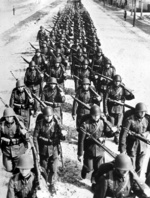 | 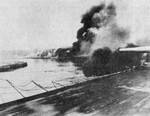 | 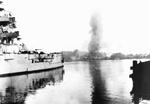 | 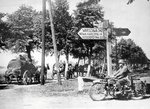 |
Invasion of Poland Timeline
| 3 Apr 1939 | Adolf Hitler, on his own authority, ordered the armed forces to prepare "Case White" for the invasion and occupation of the whole of Poland later in the summer. |
| 7 May 1939 | German Generals Rundstedt, Manstein, and other General Staff members presented to Hitler an invasion plan for Danzig and Poland. |
| 15 Jun 1939 | The German Army presented a plan to Adolf Hitler for the invasion of Poland, with much of the strategy focusing on concentrated surprise attacks to quickly eliminate Polish opposition. |
| 10 Aug 1939 | Reinhard Heydrich ordered SS Officer Alfred Naujocks to fake an attack on a radio station near Gleiwitz, Germany, which was on the border with Poland. "Practical proof is needed for these attacks of the Poles for the foreign press as well as German propaganda", said Heydrich, according to Naujocks. |
| 14 Aug 1939 | Adolf Hitler announced to his top military commanders that Germany was to enter in a war with Poland at the end of Aug 1939, and that the United Kingdom and France would not enter the fray, especially if Poland could be decisively wiped out in a week or two. |
| 17 Aug 1939 | The Germany military was ordered to supply the SS organization with 150 Polish Army uniforms. |
| 22 Aug 1939 | With a non-aggression pact nearly secured with the Soviet Union, German leader Adolf Hitler ordered the Polish invasion to commence on 26 Aug 1939. He told his top military commanders to be brutal and show no compassion in the upcoming war. |
| 24 Aug 1939 | In Berlin, Germany, journalist William Shirer noted in his diary "it looks like war" based on his observations throughout the day. |
| 24 Aug 1939 | M1 ferried 230 naval infantry troops of the German Navy Marinestosstruppkompanie to the battleship Schleswig-Holstein during the preparations for the invasion of Poland. |
| 25 Aug 1939 | In the morning, Adolf Hitler sent a message to Benito Mussolini, noting that the reason why Italy was not informed of the Molotov-Ribbentrop Pact was because Hitler had not imagined the negotiations would conclude so quickly. He also revealed to him that war was to commence soon, but failed to let him know that the planned invasion date was on the following day. Later on the same day, however, Hitler hesitated in the face of the Anglo-Polish mutual defense agreement; he would quickly decide to postpone the invasion date. Meanwhile, in Berlin, Germany, journalist William Shirer noted in his diary that war seems to be imminent. |
| 26 Aug 1939 | Some German units ordered to lead the invasion of Poland, originally planned for this date, did not receive the message that the invasion had been postponed in the previous evening and crossed the borders, attacking Polish defenses with rifles, machine guns, and grenades; they would be withdrawn back into Germany within hours. Because Poland had experienced so much German provocation in the past few days, Polish leadership brushed off the attacks as another series of provocation, despite having reports that the attacks wore regular uniforms. In the late afternoon, Adolf Hitler set the new invasion date at 1 Sep 1939. |
| 28 Aug 1939 | Citizens in Berlin, Germany observed troops moving toward the east. |
| 29 Aug 1939 | Adolf Hitler summoned the three leading representatives of the German armed forces, Walther von Brauchitsch, Hermann Göring, and Erich Raeder together with senior Army commanders to his mountain villa at Obersalzberg in southern Germany, where he announced the details of the recently-signed Soviet-German non-aggression pact, the plan to isolate and destroy Poland, and the formation of a buffer state in conquered Poland against the Soviet Union. |
| 31 Aug 1939 | The formal order for the German invasion of Poland was given; specific instructions were made for German troops on the western border to avoid conflict with the United Kingdom, France, and the Low Countries. |
| 1 Sep 1939 | German Foreign Minister Joachim von Ribbentrop warned Adolf Hitler that the invasion of Poland would compel France to fight. Hitler (exceptionally irritable, bitter and sharp with anyone advising caution) replied: "I have at last decided to do without the opinions of people who have misinformed me on a dozen occasions... I shall rely on my own judgement." |
| 1 Sep 1939 | Using the staged Gleiwitz radio station attack as an excuse, Germany declared war on Poland. Meanwhile, the radio station in Minsk, Byelorussia increased the frequency of station identification and extended its playing time in an attempt to help German aviators navigate. Among the opening acts of the European War, the German Luftwaffe bombed the town of Wielu in Poland, causing 1,200 civilian casualties. |
| 2 Sep 1939 | During the day, British Prime Minister Neville Chamberlain and French Prime Minister Édouard Daladier issued a joint ultimatum to Germany, demanding the withdraw of troops from Poland within 12 hours. During the late hours of the night, Chamberlain attempted to convince Dalalier to carry out the threat from the earlier ultimatum by declaring war on Germany early in the next morning. |
| 3 Sep 1939 | At 0900 hours, British Ambassador in Germany Nevile Henderson delivered the British declaration of war to German Foreign Minister Joachim von Ribbentrop, effective at 1100 hours; British Commonwealth nations of New Zealand and Australia followed suit. France would also declare war later on this day, effective at 1700 hours. In the afternoon, Adolf Hitler issued an order to his generals, again stressing that German troops must not attack British and French positions. Finally, Hitler also sent a message to the Soviet Union, asking the Soviets to jointly invade Poland. |
| 3 Sep 1939 | At 1115 hours, British Prime Minsiter Neville Chamberlain announced over radio that because Germany had failed to withdraw troops from Poland by 1100 hours, a state of war now existed between the United Kingdom and Germany. |
| 5 Sep 1939 | German Army units crossed the Vistula River in Poland. Meanwhile, Soviet Foreign Minister Vyacheslav Molotov responded to the German invitation to jointly invade Poland in the positive, but noted that the Soviet forces would need several days to prepare; he also warned the Germans not to cross the previously agreed upon line separating German and Soviet spheres of influence. |
| 6 Sep 1939 | German troops captured the Upper Silesian industrial area in Poland. |
| 7 Sep 1939 | In western Poland, the German 30th Infantry Division crossed the Warta River (German: Warthe) on bridges erected by German engineers. |
| 7 Sep 1939 | The city of Łódź, Poland was captured by the German 8th Army after the Łódź Army failed to halt their advance. |
| 7 Sep 1939 | German troops captured Kraków, Poland. |
| 8 Sep 1939 | German troops neared the suburbs of Warsaw, and the Polish government evacuated to Lublin. |
| 8 Sep 1939 | Polish defenders at Westerplatte, Danzig surrendered. |
| 9 Sep 1939 | In Moscow, Russia, Soviet Foreign Minister Vyacheslav Molotov informed the German ambassador that Soviet forces would be ready to attack Poland within a few days. |
| 9 Sep 1939 | Battle of the Bzura, also known as Battle of Kutno to the Germans, began; it was to become the largest battle in the Poland campaign. Elsewhere, German forces captured Łódź and Radom. South of Radom, Stuka dive-bombers of Colonel Gunter Schwarzkopff's St.G.77 finished off the great Polish attempt to cross the Vistula River, crushing the last pockets of resistance in conjunction with tanks; "Wherever they went", reported one Stuka pilot after the action, "we came across throngs of Polish troops, against which our 110-lb fragmentation bombs were deadly. After that we went almost down to the deck firing our machine guns. The confusion was indescribable." At Warsaw, German attempts to enter the city were repulsed. |
| 10 Sep 1939 | German troops made a breakthrough near Kutno and Sandomierz in Poland. |
| 13 Sep 1939 | The 60,000 survivors in the Radom Pocket in Poland surrendered. |
| 15 Sep 1939 | German troops captured Gdynia, Poland. Meanwhile, Polish troops failed to break out of the Kutno Pocket. At Warsaw, with it surrounded by German troops, the Polish Army was ordered to the Romanian border to hold out until the Allies arrive; the Romanian government offered asylum to all Polish civilians who could make it across the border; Polish military personnel who crossed the border, however, would be interned. In Berlin, Germany, German Foreign Minister Joachim von Ribbentrop asked the Soviet Union for a definite date and time when Soviet forces would attack Poland. |
| 16 Sep 1939 | Polish troops counterattacked, destroying 22 tanks of Leibstandarte SS "Adolf Hitler" regiment. Elsewhere in Poland, German troops captured Brest-Litovsk (now in Belarus). In Moscow, Russia, Soviet Foreign Minister Vyacheslav Molotov proposed that the Soviet Union would enter the war with the reason of protection of Ukrainians and Byelorussians; Germany complained that it singled out Germany as the lone aggressor. |
| 17 Sep 1939 | In Poland, German troops captured Kutno west of Warsaw. East of Warsaw, Heinz Guderian's XIX Panzerkorps of Army Group North made contact with XXII Panzerkorps of Army Group South, just to the south of Brest-Litovsk; virtually the whole Polish Army (or what remained of it) was now trapped within a gigantic double pincer. In Russia, Joseph Stalin declared that the government of Poland no longer existed, thus all treaties between the two states were no longer valid; Soviet troops poured across the border to join Germany in the invasion, ostensibly to protect Ukrainian and Byelorussian interests from potential German aggression. |
| 18 Sep 1939 | A Soviet-German joint victory parade was held in Brest-Litovsk in Eastern Poland (now in Belarus). |
| 19 Sep 1939 | West of Warsaw, Poland, at the bend of the Vistula River, German troops imprisoned 170,000 Polish troops as they surrendered. |
| 20 Sep 1939 | German General Johannes Blaskowitz noted in his order of the day that, at the Battle of the Bzura in Poland, also known as Battle of Kutno to the Germans, his troops was fighting "in one of the biggest and most destructive battles of all times." Elsewhere, German troops withdrew to the agreed demarcation line in Poland, with Soviet forces moving in behind them. Finally, also on this day, the remaining Polish garrison in Grodno managed to kill 800 Soviet troops and at least 10 tanks. |
| 21 Sep 1939 | 60,000 survivors of the Polish Southern Army surrendered at Tomaszov and Zamosz, Poland. |
| 22 Sep 1939 | Following the Battle of Bzura, Polish General Tadeusz Kutrzeba arrived in Warsaw, Poland where he was briefly appointed as the Deputy Commander of the Warsaw Army. However, his valiant efforts proved futile. The commander of the Warsaw Army, Juliusz Rómmel, could see the writing on the wall and implored his colleague to begin surrender talks with the Germans. Kutrzeba, later captured by the Germans, spent the rest of the war in various prisoners of war camps until he was liberated by the Americans in Apr 1945. |
| 22 Sep 1939 | Battle of the Bzura, also known as Battle of Kutno to the Germans, ended in Polish defeat; it was the largest battle of the Polish campaign during which more than 18,000 Polish troops and about 8,000 German troops were killed. At Lvov, over 210,000 Poles surrender to the Soviets, but at the Battle of Kodziowce the Soviets suffered heavy casualties. Also on this day, the Soviet NKVD began gathering Polish officers for deportation. |
| 23 Sep 1939 | German Foreign Minister Joachim von Ribbentrop expressed approval for the Soviet proposal on the partition of Poland. Meanwhile, at Krasnobrod, Poland, three squadrons of the Nowgrodek Cavalry Brigade attacked and surprised the German 8th Infantry Division which had entrenched on a hill. The German made a disorderly retreat to a nearby town, hotly pursued by the Polish cavalry. Despite heavy losses from machine-gun fire the Poles secured the town, capturing the German divisional headquarters including General Rudolf Koch-Erpach and about 100 other German soldiers. In addition forty Polish prisoners were freed. During the action Lieutenant Tadeusz Gerlecki, commanding the second squadron, defeated a German cavalry unit - one of the last battles in military history between opposing cavalry. |
| 25 Sep 1939 | Warsaw, Poland suffered heavy Luftwaffe bombing and artillery bombardment as Adolf Hitler arrived to observe the attack. To the east, Soviet troops captured Bialystok, Poland. Meanwhile, Joseph Stalin proposed to the Germans that the Soviet Union would take Lithuania which was previously within the German sphere of influence; in exchange, the Soviets would give the portions of Poland near Warsaw which were previously within the Soviet sphere of influence but had already been overrun by German troops. |
| 27 Sep 1939 | Warsaw, Poland fell to the Germans after two weeks of siege. Near Grabowiec, Soviets executed 150 Polish policemen. |
| 28 Sep 1939 | At Brest-Litovsk, Poland (now Belarus), Germans and Soviets signed the agreement denoting their common border in Poland. |
| 29 Sep 1939 | With the formal surrender of Poland, including the last 35,000 besieged troops in Modlin, the Germany and Soviet Union finished dividing up Poland. |
| 6 Oct 1939 | The final Polish forces surrendered near Kock and Lublin after fighting both Germans and Soviets. |
| 10 Oct 1939 | Adolf Hitler announced the victorious end to the Polish campaign and called on France and England to end hostilities, which was ignored by both governments. |
| 30 Oct 1939 | An act was signed in Moscow, Russia which formally annexed occupied Polish territories. |
Please consider supporting us on Patreon. Even $1 per month will go a long way! Thank you. Please help us spread the word: Stay updated with WW2DB: |


Visitor Submitted Comments
15 Oct 2006 01:04:15 PM
Concise, well written account of the brief but determined struggle by the Polish armed forces againt Hitler and the Soviets. Excellent
11 May 2007 09:19:50 AM
good
 Alan Chanter says:
30 Dec 2007 04:23:01 AM
To accuse the British Expeditionary Force of "Idling" is perhaps a little harsh. Great Britain has always relied on volunteers to man her army, rather than on forcible conscription. The Military Training Act was not passed until April 1939 and General conscription not announced until the October of that year. All these men, plus the many thousands who volunteered to serve at the announcement of a state of war would need a period of time for training (at least six months and sometimes longer for specialised trades). Nevertheless the BEF was still able to grow to a strength of 10 Divisions, a Tank Brigade, c.500 RAF Aircraft, plentifully supported by Artillery and Engineer units by May 1940. This force would only have grown larger as new Divisions from Home and Empire found their way to France. By Late 1940-Early 1941 the BEF would have been well able to commence offensive operations-But the Germans struck first.
7 May 2008 07:23:53 AM
In paragraph 3 of the section "Western Betrayal", you state that Brittain declared war on Poland...I think you meant ot say they declared war on Germany don't you?
Very interesting reading...
9 Jul 2008 07:57:39 AM
What is with the bloody French, anyway??
Too busy having croissant and tea to lend a hand?
9 Jan 2009 06:09:51 PM
i found this very helpful i am doing a project on hitler and the poland invastion was part of word war 2 right? please tell me at r_uknight101@yahoo.com
28 Jan 2009 09:47:03 PM
Excellent Work!
24 Mar 2009 07:38:40 AM
And where is your bibliography Professor? Haha, J/K. Good insight into the beginnings of the European war.
BILL says:13 May 2009 05:00:23 PM
Cry "Havoc"! and let slip the dogs of War.
_William Shakespeare, Julius Caesar,
BILL says:25 May 2009 08:38:50 AM
"Armies do not exist for peace. They exist solely for triumphant exertion in War"
Adolf Hitler
21 Sep 2009 10:24:28 PM
Very well written and informative. I enjoyed reading this article and learned a great deal.Most information I've come across on WWII deals with the Pacific islands, we all need to be reminded it was truly a World War.
One minor detail though, I must agree with Patrick Professor. Where is you bibliography? :)lol
17 Nov 2009 04:26:29 PM
Excuse me - what's this nonsense i read again on these "good" Allied history sites? These are blunt lies... oh yes, those bad, bad Germans, and the Allies are "good". LOL Yes we know. Seriously, why don't you guys get a history book? Look at this - you "good" Angloamericans claim:
"German military leaders had begun planning for war with Poland as early as the mid 1920s. Recovering the ethnically Polish territory of Pomerania, Poznan, and Silesia, as well as the largely German Free City of Danzig were the major objectives."
Pomerania was ethnically German - not Polish. Most of Silesia was German - not Polish. And both were part of Germany - so why should Germany want to wage a war aganist their own territory? LOL
Honestly,I really begin to wonder, who wrote these nonsense-articles? Its like saying "Yorkshire is ethnically Norwegian", lol.
The only thing that is half-true is that the Area of Poznan was Polish at the time, but with around 50 percent of the city's inhabitants German.
What Angloamericans usually try to cover up:
The "good" Allies had placed 2.1 Million Germans and 6 Million Ukrainians under Polish occupation. Poznan was half-Polish half-German, but Westprussia definetely had a German majority. It was given under the Tyranny of the Poles, without a democratic election. That's Angloamerican "democracy". lol
The great injustice on Millions of German families, who were forbidden democratic votes and brought under Alien yoke and tyranny instead, was one of the key reasons for World war two. It is easy to find out, who actually caused the mess in 1919, and thus, who actually is guilty of world war two.
I am not surprised all you "good" Allies hide your true history. How wicked to deliberately draw borders that create war and enslavemen of millions, and then blame the war you created yourself, on others. Disgusting.
Be ashamed to be British....not for what you have done, but for lying about your true history. Pathetic.
19 Dec 2009 10:12:52 AM
i am a 8th grade teacher and all of this information is all fake
3 Feb 2010 09:09:52 PM
qUOTE/ "German military leaders had begun planning for war with Poland as early as the mid 1920s. Recovering the ethnically Polish territory of Pomerania, Poznan, and Silesia, as well as the largely German Free City of Danzig were the major objectives...."
COMMENT: Pomerania and Silesia had a population consististing of 75% (Silesia) and 60% Germans. Poznan: 35%, Danzig: 97%. In 1920 the court of the League of Nations beagn its work, being appealed 75 times by Germany thereafter cc. mistreatment of German in Poland in areas, where they had the minority. 5 times mistreatment was confirmed, the other rulings were not yet found by myself.
Q2: "The battleship Schleswig-Holstein was moored at the port of the Free City of Danzig on a "courtesy visit" near the Polish military transit station of Westerplatte. The station was on a sandy, narrow peninsula in the harbor, garrisoned by a small force of 182 men. At quarter to five on September 1, 1939, the giant guns of the battleship opened up on the Polish outpost at point-blank range".
COMMENT: The "Schleswig Holstein" was a training ship, equipped with 4 guns caliber 28 cm. "Battleships" used 38 cm, British battleships 38.1 cm. The Polish ammunition depot (not "transit station") was allowed to hold 88 men of military personnel. That rule was ignored.
Q: "Polish forces had been partly mobilized in secret in the summer of 1939. Full mobilization was to be declared in late August, but was halted at French insistence. Mobilization was again declared on August 30, but halted to French threats to withhold assistance",
COMMENT: "Mobilization" is one method of declaring war, another one is "making war". International law does not require written declarations. Ask me for the sources, if necessary.
The rest of the pamphlet is of similar quality.
"Polish heroes vs. childslaughtering Huns". Polish airforce and ground troups suddenly disappeared by miracle during the Germans still were busy shooting at children.
13 Feb 2010 12:42:00 PM
I have to say I appreciate how well written and informative this site is.
10 May 2010 07:25:58 PM
so why were the poles so poorly prepared to resist the German invasion and How did German planning ensure rapid success in the invasion ??
please help, doing a thing for school but cant find my answers. these are the only questions i am having trouble with
6 Jul 2010 12:47:23 AM
Yes, the "huns" were murdering swine. Anyone who defends their invasion of Poland, is lower than a worm. Or perhaps murdering 6 million Poles? Peter and tmx, you nothing more than cowardly keyboard warriors.
27 Aug 2010 10:27:18 PM
So why was Poland so unprepared for the invasion ??
9 Sep 2010 01:34:05 AM
@Peter
All lands eastwards from Oder-Neisse line are Polish ethnic Territory.
Allied countries are proud of their history, and Germans might be only ashamed.
Because Germans started the war and they are guilty in 100% do you understand that, you revisionist?
Not in 99% - in full 100%
They invaded Poland as their mad leader ordered, and their goal was to terminate all Slavs, Jews, Russians and others, to get the living space for themselves
Yes. Germans were BAD.
9 Sep 2010 03:04:55 PM
Hitler said to his soldiers:
"kill without pity or mercy all men, women, and children of Polish descent or language... only in this way can we achieve the living space we need."
Hitler was mad and crimeous man, so we can't realy judge aboud his orders, becouse everyone knows that he was a war cr
Do you know what is the worst thing about that order?
The worst thing is, that German soldiers fullfilled that order.
Why?
Is there any German person here, who can explain me, why did the German soldiers slaughter millions of women and children during the occupation, while the almost all Polish army taken to captivity in September Campaign, remained intact until the liberation in 1945?
10 Sep 2010 12:34:50 PM
I have German heritage and have a masters in history focusing on the twentieth century. In the eyes of the German soldier, the Polish people were the enemy of Germany. Contrary to your statement, Polish soldiers suffered in both German and Russian camps and died by the thousands. I am confident that the vast percentage of the Polish military suffered heavily under both German and Russian occupation.
21 Oct 2010 08:28:37 AM
To the person who wrote "Message No 14" With due respect I'm surprised by your ignorant comment that your even an 8th grade teacher. If you don't have anything intelligent to say, Don't say anything at all.
Regards!
GREAT informative SITE.
10 Nov 2010 07:48:22 AM
After 1918 there were Germans, and Russians, and Austrians, living in Polish territory, because Poland had been invaded and colonized by these three powers. By the reasoning of the pro-Nazi propagandists who posted here, India did not deserve its independence from Britain, because there were British citizens living there, in some areas even significant percentage of them. As for Poland's preparation for the war: Given that Poland was invaded by Nazi-Soviet alliance, and completely betrayed by its supposed allies (betrayed both in 1939 and in 1945 later on), Poland was far better prepared for the war than Denmark, Netherlands, Belgium, and France in 1940, and all those countries faced only Nazi Germans invading them, were given British help, and Nazi Germans fought them generally following the laws of war, unlike in Poland, where they not only did not follow any laws of war, they did not even remote signs of humanity.
19 Nov 2010 03:08:34 PM
Peter and tmx - you are both sadly deluded and your opinions and historical arguments border on the farcial. Germans war crimes in Poland number in the thousands, examples of Polish cruelty to ethnic Germans pre-invasion are so few and insignificant as to pale in comparison. Whats worse, the murder of millions or a few examples of bullying and inequality?
And this made me laugh out loud:
Peter:
The great injustice on Millions of German families, who were forbidden democratic votes and brought under Alien yoke and tyranny instead, was one of the key reasons for World war two.
Hahaha were these the same German families with such great love for democracy who voted in Hitler and the Nazi party? You Sir are a complete and utter fool!
8 Jan 2011 10:57:24 PM
Actually around 10 milions of poles died during world war II. Anyway, someone said Allies weren't that good. You are right! As written in this article Poland occupied Czech city. Also Allies sold Poland to Soviet Union just to make it fight for them. Thanks to Allies Poland was under Soviet occupation for 45 years. Yes, Allies weren't all good. Also those Polish citizens who knows a bit of history feels badly betrayed by France and Britain. So nobody was any good at all.
In my personal opinion France were chickens in acting and fighting. Britain was chickens in acting but not fighting while Germany and Soviet Union were strong in both, acting and fighting. I personally like to think that Poland was also strong in acting (all those preparations that were made before 1 septermber in secret and they didn't care about France telling to stop because they knew they were going to be attacked) and fighting (Poland never surrendered and helped in battle of Britain, Monte Casino, Normandy, battle of Berlin...). The thing is I'm from Poland so I might be not really objective but I think I made those observations pretty objective.
4 Apr 2011 04:33:47 PM
Thanks! this was really helpful for a history prgect!! xx
6 May 2011 09:19:46 AM
"kill without pity or mercy all men, women, and children of Polish descent or language... only in this way can we achieve the living space we need."
I wish to see evidence for that quote.
29 Jun 2011 10:08:58 PM
While France and Britain were in the ideal position to invade Germany (when they invaded Poland in september 1939) I doubt they could make it stick, its highly likely they (particularly the French) would have squandered the opportunities. If they had a more coherent doctrine and better organisation (not to mention technology.e.g. radios and armour)
29 Jun 2011 10:12:30 PM
This is Hitler we're talking about.
Thats all the evidence you need
10 Jul 2011 07:26:39 AM
I thought that this would be interesting reading until I read some of the information contained herein which are outright LIES. This casts doubt on your whole article on the heroic Poles.
Quote: The Munich Pact, however, closed this option and Poland sent its troops to forcibly occupy the territory of Teschen and the nearby Bohumin rail junction to keep it out of German hands.
Lie. Poland annexed part of Czechoslovakia and just came in for the spoils. There was no altruistic reason behind this. A simple land grab. It's like the lie given by the allies during the war that the Soviets went into Eastern Poland to save that part of the country. Read your history and stop spouting lies.
Quote: One such force commanded by Lt. Jan Bolbot was attacked by tens of thousands of Red Army troops in their bunkers near Sarny. Bolbot’s surrounded men mowed down thousands of Soviet attackers who advanced in human waves.
Another LIE. So this guys unit was responsible for almost all of the Soviet losses during the campaign? Please check Soviet losses during this campaign. You can even quote Polish sources.
Some advice. Stop trying to do revisionist history.
9 Aug 2011 07:47:45 AM
JOE HAMILTON Yes, the "huns" were murdering swine.> If it is so, what could we say of that bastard british warmonders? for Your information, the GREET Atilla was a highly cultured man, who knew latin & greek. By this time the bretons were a barbaric people, like the rest of Europe.
For the victors everitrhinh is "revisoinist" wich tries to bring to light the other side of the history. The poor Polish people are the victims of wath? Victims of their own stupidity, shauvinisme and credulity. They fall victim of the British warmongers az Halifax and Churchill and that deganraited Roosvelt. Britain used Poland against Germany. The article tries to cleer of responsability the Poles.But don't forget: In Versailles the British and the French dicides the future of Europe. Who is to be blamed?
8 Sep 2011 02:04:34 PM
It's funny people always say that RUssia was an Allied country but yet it was responsible for so many deaths in the invasion of Poland. In cahoots with Nazi Germany, no less!
9 Sep 2011 06:29:53 AM
History makes this look like some 'long weekend', but it was a valiant, well-considered fight against the Nazis. We always see the 'Giant Stuka coming down on the old man in the ox-cart' but there were very few Stukas there: 26 of 29 flew into a mountain top just days before: performing for the German brass.
The Poles, then as now, defended themselves quite well, and only broke when their ability to communicate was lost.
12 Sep 2011 09:13:59 AM
Despite all of the circumstances concerning the Polish population during the Second World War, from the perspective of Germany and Russia, Poland never should have existed let alone been reestablished after the Great War.
20 Sep 2011 12:42:59 AM
I know it's not really true but when I read the comment alledging that the French were busy having a cafe au lait and crossant when they could have helped, I couldn't help but remember the old, flawed but nevertheless funny comment: "How many Frenchmen does it take to defend Paris? I don't know, it's never been tried".
20 Sep 2011 08:13:31 PM
Despite their obvious disadvantages in doctrine, unit organisation, technology and communication the Polish army held Poland till the end of September (although it was destroyed as a manouvreble fighting force in the first week). Such a duration is fairly impressive for such a small and young nation at the time, it would have been nigh impossible that the Poles could have held Poland for much longer. Such endurance would be uncommon for a similar country, and France bearly held for 2 weeks longer, where they were more on par with the Germans (except perhaps in morale).
10 Nov 2011 02:39:18 PM
The highest concentration of self-pity and disinformation I ever saw.
25 Jul 2012 11:09:09 AM
I think you over exaggerated the mass killing by their German military. I doubt Hitler would have openly said that to his regular generals...killing all poles.
I'm also not so sure if it is true that the Germans used concentration camp prisoners in the opening day because the concentration camps didn't exist in 1939. Check your sources and facts. Germandy was exporting Jews and others out of germandy in the early years.
I stopped reading around the battle of Westerplatte. I'll read more later. This seems anti-German propaganda then actual history with some truths in it to support propaganda.
30 Jul 2012 12:38:24 PM
There appear to be numerous neo-Nazis and various apologists for Hitler and the German army commenting on this article. Most of these comments are not worth the pixels they use.
Hitler's "kill without pity or mercy" order has been widely discussed and comes from German sources. Denying it is similar those who claim that Hitler never ordered the Holocaust.
It is nonsense to state that there were no concentration camps in 1939. Dachau existed since 1933 (http://www.ushmm.org/wlc/en/article.php?ModuleId=10005214), Ravenbruck since 1938, Buchenwald since 1937, Sachsenhausen since 1936, etc.
I appreciate the intelligent comments offered by many of the other readers. There is a list of sources offered at the end of the article, but the number of published sources on the September Campaign is now huge.
5 Nov 2012 02:03:56 AM
"Recovering the ETHNICALLY POLISH territory of Pomerania, Poznan, and Silesia, as well as the largely German Free City of Danzig were the major objectives."
You are a Liar and a Propagandist, Sir.
23 Aug 2013 07:17:26 AM
The histroy and cause of WW2 is utterly confusing: Goddies v Baddies, Oh it it were so Hollywood simple. It often overlooked that Russia was a large part of the 'good' allies! I am particularily interested why Britian declared war on Germany ... can any assist? The Germans were 'bad' because they invaded Czechoslovakia. That's a good reason to declare war on Germany till you realise that both Britain and France agreed with this action by Germany to take place. And the'good' Poles also invaded Czechoslovakia and militarily occupied an area where there were only 77,000 Poles, 20,000 Germans and 132,000 Czech.
Then we move onto to the 'fact' that Britain declared war on Germany BECAUSE Germany invaded Poland and the freedom of the Poles was dear to the heats of Britain that she declared war on the invader Germany. That view may have some credibility except not long after Germany invaded Poland 'good' Russia also invaded Poland. Your article failed to mention the terms of the military Treaty between Britain and Poland. Doesn't it go something like: The Agreement of Mutual Assistance between the United Kingdom and Poland contained promises of mutual military assistance between the nations in the event either was attacked by some (any) "European country". (Ummm, wasn't Russia a European country?)(NB. The treaty did not specify just an invading Germany.) So 'good' Britain, being true to their word, declared war on the invader 'bad' Germany BUT not war on the other invader ...'good' Russia??? So what have I missed???
OK, lets move on and assume for a moment that there must have been a good reason for Britain not to delcare war on Russia. So at the end of WW2, and at huge cost in life and resources, WW2 ends, the good Allies win and Poland is finally liberated .... which was 'the reason' why the Brits went to war. Whoops, what's that, the Allies won and Poland was NOT liberated? Aye???
So, what was the real reason why the Brits declared war on Germany?
Alan Chanter says:1 Sep 2013 02:23:03 AM
If Peter RJ had been better educated he would have been more aware that historically we, the Great British public, are characteristically opposed to the tyrant and the bully. We even have a maxim for this national characteristic along the lines of 'Do unto others as you would have them do unto you'.
6 Sep 2013 12:42:45 PM
This is a very informative and well written article about the Invasion of Poland and the French's chicken-ness in the art of war.I just realized that the deadliest form of mass destruction is "apathy".It is worst than Hitler's high efficiency death factories or Stalin's attempt to starve the whole of Ukraine...
10 Sep 2013 12:15:56 AM
I totally agree wkth Hans Solo
What about Germanic ex-Prussian territories "given" to Poland after The Great War. So, they are Polish, not Germanic people ? The Germans only wanted their territories back.
This article infusing Western propaganda with lies. So very Western clear
16 Sep 2013 11:07:35 PM
"...Your so-called Master Race has demonstrated that it is master only of crime, cruelty and sadism. You have lost the respect of the civilized world." ...and you are still loosing it,what is left...your souls?
21 Sep 2013 12:45:15 AM
Germany and USSR invades Polland. So true is that only on Germany it was declared war by France and Great Brittain. NO more to say! Romania(my country) after Ribbentrov-Molotov pact lose 1/3 of her territory(and I am not saiyng about Transilvania took by Hungarian troops of Horty), also Finland(they fight against USSR, Romania redraw...) In 1940 Romania is in chaos, The Iron Guard(pro nazi party) is on power and play as Germany says: "Hey, Romania! USSR took your land "that I give them by our pact Rib.-Molotov" !!! Go fight against them and took your land back. Guess what happend: Romania DECLARE war against USSR... OK, we are with the germans naw and fight for Bessrabia. Bessrabia is ours naw, yeeeeah! Huray to Romania! BUUUUT, why Romania put his boot on USSR soil and fight against USSR till Stalingrad it was a big mistake(we was not prepare for that and we'll never be). OK, we are with germans once more and we want to destroy USSR... Our friend(Germany) is on the wave with good wind from behind. Till Stalingrad. There is the most common thing for german nation: PRIDE! Thay know that the 2 romanian army are weak(no tanks, no antitank weapons, only chariots with dogs under them), they knew we hate hungarians and we were let in flanks of Stalingrad(with the proud 6-th german army in the middle). Guess what happends? USSR attack in flanks and crush romanian armies just like that and the germans(along with the rest of they'r allies) are trapped in Stallingrad. The rest is well known: the germans put the blame on romanians armies and statrt to act like we were traitors. After Stallingrad, romanian soldier know that we are in the wrong side of war, but the polliticians not! Speaking of traitors, in 1944 when Romania is invaded by USSR, Romania swich sides. Naw Germany is our enemy... The WWII for Romania was, in short writting, like this: you have 2 titans(Germany and USSR), they make the rules, they use little people like small countries, and after that they start to fight; Romania stais allways on the force side( a matter of surviving). After we get friends with the USSR, we fight for Transilvanya and german-hungarian armies(with good victoryes). Budapest is the example how a city can be taken: first you put romanian army to fight right in the middle of town and USSR army stay on flanks. That should Germany do in Stallingrad(my opinion). After the Budapest we fight in Tatra mountains and then the USSR commandants send un home because we supose not to win the war with them(that means we were not friends with them after we fight together), same thing like germans. Of course are many things to say or not agains that I write here but that was our destiny in WWII...
27 Sep 2013 02:16:02 PM
"Recovering the ethnically Polish territory of Pomerania, Poznan, and Silesia" not polish, but ethnically German territory. Also there's was some slaughter of the Germans living in this regions. Germany claimed around 40,000. The Allies recognize 4,000.
22 Jan 2014 03:07:55 PM
I love this information! i am doing a project and it is helping me so *** much !!
11 Feb 2014 10:19:23 AM
Yes, the anti German Bias of this article is quite astounding , mixed in with some dubious historical facts , if facts they can be called.It never ceases to amaze me how the German point of view is never told.Poland was a poor, backward country with Great Power pretensions , whose anti german agitation was blatant and hubristic.Hitler sincerely offered the Poles the carrot in the form of an alliance , but fortified by false British promises they arrogantly rejected it.The record of Poland's anti german activities in the 20's and 30's is extensive , go do some research on your own if you dont believe it.Is it any wonder there was no love lost between the two countries?In retrospect , polish stupidity and arrogance was astounding , considering that she was wedged between 2 powerful neighbours , both of which she antagonised endlessly.The other problem that I have with this article is that the author gives the impression that the poles may have had some small chance if only for a few unfortunate events .What nonsense ! The battle for Poland was effectively over after 4 days , the rest was just the time it took for the Polish army to stop convulsing and die.
31 May 2014 09:15:37 AM
Wait, so you admit Hitler was only baiting the Poles ("the carrot"), but at the same time they were somehow stupid to refuse it?
"The record of Poland's anti german activities in the 20's and 30's is extensive"
Yeah, like German–Polish customs war, tottaly fault of evil Poles.
"In retrospect , polish stupidity and arrogance was astounding"
So objective.
I guess "wise and polite" way would be for Poles to silently lay down and die, so the Germans and Soviets could partition Poland again?
4 Jun 2014 06:09:00 AM
No , I don't admit he was baiting the Poles.He sincerely wanted Poland in a anti Soviet alliance.Only when they refused to consider any negotiations did Hitler start to entertain the Russian option.Remember , Hitler forced through a Polish-German non aggression pact in 1934 against popular opinion. With regard to the customs war , that came from both sides.And yes , the Poles were pretty stupid to belief French and British promises of aid in the event of war , especially after it was announced that Russia and Germany had signed a non-aggression pact.Look at what happened !
12 Jul 2014 09:12:30 PM
I completely agree with you xel you have to cross referance every peice of information. The schools here in australia only show it from a western point of view and who tells the schools what to teach, the goverment. The americans are shockers as well let legal proceedings slide so they can get the information on how to build rockets and a bombs, hypocricey at its best. You can't do it but we can. Untill we stop being sheep and believing what we are taught at schools and from the media we are all doomed.
17 Aug 2014 01:25:08 PM
What's amazing is the number of people repeating wisdoms of Dr. Joseph Goebbels's propaganda, just wondering if it's been put online and filtered through or Grandpa's and Grandma's tales at home. Poland being a poor and backward country with all the polnische Straßen, polnische Wirtschaft and such still must have achieved wonders in cohesion and development after 123 years of partitions and nonexistence (only wasn't given the time needed) but legends of poor and backward served Adolf the Last and such to claim the 'bastard of Versailles' didn't deserve to exist.
Poland never surrendered to lose the war only at Yalta. Poland developed an underground state compared to which the famous French Resistance seems very modest. Poles are the largest national group of Yad Vashem's Righteous among World's Nations even though Poland was the only occupied country where hiding Jews meant effective death sentence for entire families if uncovered.
Lastly what also amazes me people who stress Polish wrongdoing against Germans somehow never try to reclaim Königsberg/Kaliningrad or Tilsit/Sovietsk (sic!) and never discuss two millions German women raped in the Greater Berlin area when the Red Army took it... Obviously Siemens and other economic giants have been doing too good a business with the SU and Russia to risk such inconvenience...
29 Jan 2015 10:20:08 AM
This is a very good and well written account and Anonymous has seen fit to attack it with typical Nazi propagandist language and distorted justifications of his arguments. However as the Nazis no longer have power, he had not even the courage to sign his name. He did not need to, everyone can make out the Goebbels signature at the bottom.
10 Feb 2015 01:47:42 AM
You resort to name calling yet you don't refute any of the points im making ? You sound like a typical liberal . If they cant win an argument they resort to name calling and personal smears.
28 Apr 2015 01:29:45 PM
If thousands of Americans were being slaughtered without end I'm sure we would be invading other countries as well.
Don't believe the propaganda.
David Stubblebine says:28 Apr 2015 05:50:24 PM
To Anonymous #57:
But since thousands of Germans were not being slaughtered without end, what’s your point? Sign your name, you coward.
29 Apr 2015 03:17:07 AM
As a matter of fact , thousands of Germans were slaughtered .Ever heard of Bromberg " Bloody Sunday " ? One of many such instances where Poles, in connivance with their government , enacted bloody atrocities on the German ethnic minority .It led in no small part to the German invasion.
David Stubblebine says:29 Apr 2015 12:10:59 PM
Since the Bromberg Bloody Sunday took place after the Germans crossed the Polish border, how exactly did this lead to the invasion? Since the number of people killed in this event is still a subject of considerable dispute but most credible parties revolve around a number close to 250, how is this “thousands of Germans slaughtered”?
The Bromberg event was a bad thing, I am not trying to defend it - but it was what it was, not what you wish it had been. Your free and easy rewriting of history to suit you is disturbing and unnecessarily adds artificial complications to an already complicated discussion of the history.
29 Apr 2015 10:15:28 PM
Like I said , Bromberg was one of many such instances. While it did take place after the invasion started , it illustrates clearly the Polish attitude toward the German minority.The persecution started escalating rapidly from the start of 1939. There is nothing artificial about the treatment of the German minority in Poland.I am not trying to rewrite history here , but I simply don't subscribe to the sole German war guilt clause . I think the root causes of the invasion was : 1 Polish great power aspirations . 2 The ludicrous provisions of the Versailles treaty . 3 The treatment of the German minority . 4 The British guarantee to Poland .
David Stubblebine says:30 Apr 2015 11:48:29 AM
Gerri:
To evaluate historical facts and then draw reasonable conclusions from them is the mark of a rational, objective historian. To start with the conclusion and then carefully select the facts to support it while discrediting the facts that don’t is the mark of a political hack or propagandist. You should hold whatever political views you want but you should not believe they will necessarily be supported by an objective view of history. It is true that history has always been written by the victors and this gives the objective historian some fog to sort through to get at the whole truth, but the “official” version of this history does not have it as wrong as you contend.
You say: “1 Polish great power aspirations.” Complete fabrication. Poland was such a weak state that it required the protection of Britain and France and its fate could be so easily decided ahead of time in the Molotov-Ribbentrop Pact (Aug 1939).
“2 The ludicrous provisions of the Versailles treaty.” Whatever harsh terms this treaty may have had, it is absurd to think that waging war was Germany’s best response.
“3 The treatment of the German minority.” No matter how truthful, this is a propagandist’s attempt to blame the victims and mask an aggressive intent. Also, when it came to how domestic minorities were treated, Germany had no room to be critical of others.
“4 The British guarantee to Poland.” Huh? British (and French) commitment to aid Poland meant Germany had no choice but to invade? I don’t get it.
My initial intent was to draw you into a more rational discussion and I think we have moved in that direction. But the Comments feature on this site is not meant to be a message board or a chat room so this will be my last post in this conversation. World War II was a very important event and any interest in that history is a good thing. It just deserves better than to be twisted for political purposes.
30 Apr 2015 12:45:09 PM
Mr. Stubblebine: "Gerri du Toit" is referring to a different piece of Nazi propaganda. (He is actually confusing two pieces of Nazi propaganda.) The Nazi regime claimed that the Poles were terrorizing the ethnic German population, which was a pretext for making territorial demands on Poland. Since no evidence of this existed, after 1939 they tried to use the executions of ethnic Germans who had taken up arms against Poland as evidence of "Polish atrocities."
So-called Bloody Sunday was a creation of Nazi propaganda. When citizens of a nation under invasion by a foreign power take up arms against their own country and are caught in the act, most law codes stipulate imposition of the death penalty. The city of Bydgoszcz, like much of Poland, was under martial law. From the standpoint of 2015 we can certainly look back and say due process wasn't followed or that some evidence against the accused wasn't convincing or even that imposing the death penalty in a summary manner (or any manner) was unjust, but it was hardly a massacre. The Abwehr used ethnic Germans as a weapon of war in Poland, Czechoslovakia, Norway, Holland, Belgium and France so it is no surprise they took some casualties.
Nazi apologists like "Gerri du Toit" should remember that the Hitler regime imposed the summary death penalty on tens of thousands of its own citizens for a wide variety of real and imagined offenses when Germany being invaded in 1945. Likewise the Czechs found and killed members of the Sudetendeutsches Freikorps in 1938 and there summary executions of similar fifth columnists in other countries the Nazis invaded, so this is hardly a unique event. Given that the Nazi regime went on to murder 3 million Polish Jews and 2 million Polish Christians for no legal or legitimate reason at all, the executions in Bydgoszcz were clearly justified.
2 May 2015 01:35:02 AM
David , you say Polish great power aspirations is a complete fabrication. Ever heard of Jozef Pilsudski , Polish nationalist and virtual dictator of Poland until his death in 1935 ? After his death , Polish foreign policy was the exclusive domain of Jozef Beck , who was an ardent admirer and follower of the erstwhile dictator .Perhaps you should do some research about these two men and other important strains of Polish foreign policy direction before you dismiss it as a "complete fabrication ".
After WW1 , Poland got more territory than she was entitled to get. As a matter of fact , territory was given to her that had always been German. Even the weak Weimar republic was never willing to ratify and endorse Polish gains on Germany's eastern border.No German government ,Hitler's or any other , would ever have accepted the situation.
Both you and John tends to think the mistreatment of the German minority a trivial thing .Perhaps you two could explain why it is that a million Germans left Poland in the 1920's and early 1930's ?
Lastly , the British guarantee strengthened the Polish refusal to even consider negotiating with Germany about Danzig and the corridor.It gave them a false sense of security which had disastrous consequences .As the British knew very well themselves ,there was no chance that any meaningful aid could be given to Poland in the event of a German Polish war.
5 May 2015 11:43:06 AM
Just to correct more of lies and misrepresentations of "Gerri du Toit":
1.Since I teach Polish and European history I am well versed on Pilsudski and Beck. You can read the works of Anna Cienciala and Jan Karski on Polish foreign policy if you are interested in more than repeating the Nazi party line. Pilsudski was hardly a dictator in the sense that either Hitler or Stalin was a dictator.
2. The territory Poland got was not "always German". It was Polish prior to 1772 when it was illicitly seized by Prussia (act which brought widespread international condemnation, including from many people in other parts of Germany). Poland was just as entitled to Poznan as Germany was to East Prussia (taken from its original Baltic inhabitants who were largely exterminated by the Teutonic Knights).
3. The German minority in Poland was treated correctly if not always warmly. There were Polish citizens of German ethnicity in all walks of life. Many Germans left Poland in the 1920s because they were bitter about being outside of Germany and many had imbibed racial hatred of Poles.
4. Poland was clearly right not to negotiate with Germany over territory, esp. given what had happened to the Czechs when they tried to negotiate. German foreign policy documents--long available in English--and Hitler's own statements show that he was not interested in negotiating. Why should a country give up its own territory, especially under threat of invasion? Poland would have fought regardless of the British guarantee.
Hitler was not interested in a few scraps of Polish territory. His orders were "kill without pity or mercy all men, women and children of Polish descent or language." Only in this way, he stated, can Germany acquire the living space it needed.
5. The Poles were well aware that Britain was not going to provide immediate aid. There was no false sense of security. The goal was to ensure that if Hitler attacked, Britain and France would be drawn into the war with Germany. Even though Polish leaders understood that Poland would be initially defeated by Germany, the combined weight of Anglo-French power would eventually triumph over Hitler and Polish independence could be restored. This is made clear in the article above in discussing Polish military dispositions.
5 May 2015 11:51:42 PM
John
I will concede that Pilsudski wasn't a dictator in the sense that Hitler or Stalin was , but Poland was hardly a functioning democracy. And really, are you deliberately ignoring Pilsudski's well recorded anti German animus ? How many times did he contemplate seizing Danzig ? How many times did he urge a preventative war against Germany ?
Again , I concede that Poznan had always been Polish but she had no claims to either Danzig or the corridor .There were also parts of Silesia that Poland was given that were historically German.
Your statement that the German minority was treated correctly is an outright lie.They were actively discriminated against and several Polonization drives were directed against them.To suggest that they left because of racial hatred towards the Poles is to deliberately ignore their plight.
Poland had every right not to negotiate with Germany over territory , but why did Poland go about it in the way she did ? Poland was wedged btween two powerful countries that had major grievances against Poland . Why did Poland refuse Russian troops entering her territory in the event of a German invasion ? Surely pragmatism and a sense of reality should enter the picture when conducting foreign policy ?
Poland dug her own grave when she refused Russian aid.It marked the point where Stalin started looking at Germany to provide a measure of security.You state that Polish leaders understood that Germany would defeat her but that Anglo-French power would eventually defeat her and restore Polis independence. Considering that Germany would almost certainly have won WW1 if not for America entering the war , it seems to me that their foreign policy was based on some dubious assumptions , especially after the Soviet Nazi non aggression pact was announced.
Even accepting that statement as truth , you seem to be saying that the Polish leaders were willing to see their country being occupied and partitioned , their armed forces annihilated and their people being subjected to incredible hardships .
If that is true , then it must rank as the most stupid piece of foreign policy direction in the history of civilization ! All that just because they were unwilling to discuss a change in the status quo of Danzig and the building of a extraterritorial railway across the corridor to East Prussia ?
17 Aug 2015 03:40:16 AM
Peter RJ, Re: what was the real reason why the Brits declared war on Germany?
Germany was doing so astonishing well, and was about too become a serious competitor to the Brizis. Germany had a jew-free Government and an independent currency, not controlled by the international bakers. They also had an successful international barter scheme going, so the Reich mark could become an accepted international trading currency, backed not by gold, but by German industrial products like the marvelous VW Beatle.
Just search Youtube for Hitler speech on Poland (about 26min) to get a grasp on the official reasons for the invasion. Gliewitz was never mention as any Causus Belli.
For more, if interested, read chapter 7 The Nameless War by Archibald Ramsey and watch Gerd Schultze-Rhonhof on The War That Had Many Fathers w/ English Subtitles
David Stubblebine says:18 Aug 2015 06:13:38 PM
To: El Buggo:
Your distorted view of history aside, Archibald Ramsay is hardly a credible source to be quoting. He was a raging anti-Semite who was a spy and traitor to his own country. Like all committed racists, his underlying axioms were so severely flawed that his conclusions are not to be trusted.
21 Sep 2015 01:16:15 PM
@Gerri du Toit
It just hurts to read your comments as you clearly don't know much about history and polish history in particular. Why would you try to sound smart I would not know. Maybe it is just a sick provocation to try to justify German invasion on whole world.Poland never was saint.No country is,and Britain the least.Poland was just first to stand it ground rather than giving up their territory...Especially considering history of Polish-German conflicts,more than hundreds years of persecution and many different tries to wipe Poland of the map.
Best Regards to all other readers. ;)
27 Sep 2015 04:25:55 AM
Anonymous
What truly hurts is your command of the English language . I am not even going to bother to refute the rest of your ramblings, because , quite frankly , I cant decipher your terrible English .
13 Jun 2016 11:21:30 AM
So Pilsudski should have uged a preventative war against Hitler - he could see what was coming.
At the Treaty of Versailles, Germany agreed to it's territorial losses as it's punishment. They were accepted by German leadership, only for the next government to turn around and kill millions of people because they were too harsh...
Claiming "poor Germans they had no representation" - no-one in Poland had representation! It was a fledgling country with no democracy. That's hardly racial prejudice.
At the time of WW2 Poland was one of the multicultural centres of Europe. Poles, Germans, Jews, Ukrainians, Russians all lived there. Do you have any real evidence for mistreatment of ethnic Germans? Gerri du Toit the fact that you brought up Bloody Sunday as mistreatment of ethnic Germans is laughable. They attacked the retreating Polish military.
Buggo, as for Germany's fantastic up-and-coming economy, that's a load of *** . Germany's pre ww2 economy was all based on debt. Germany kicked off it's economy with a military industrial complex, with borrowed money. Had Germany not had gone to war, it would have collapsed. It required the spoils of war to keep the wheels moving.
Frankly I find it disgusting to read all of these posts (no doubt linked here from Stormfront, at least I hope) justifying the murder of thousands of innocent civilians via the German invasion (they had no pity for ethnic Polish civilians).
Poland treated ethnic Germans poorly? Post some sources. According to my knowledge Poland never took ethnic Germans and forced them into slave labour. It was my Polish grandparents who were taken from their homeland and forced to work on German farms.
The Nazi German government commited some of the most vile attrocities in human history, and no Neo-Nazis revisionist *** will be able to change that.
6 Aug 2016 03:01:03 PM
As a person that has heavily researched WW2, I find this dribble devoid of truth and dangerous insofar as it promotes the lie.
Nearly every German hater has some story of German cruelty.
Quote Maxwell. "At the Treaty of Versailles, Germany agreed to it's territorial losses as it's punishment".
Lies in the extreme. German leaders did not agree.
Why won't you haters admit you are making it up?
2 Sep 2016 06:31:04 PM
"Why won't you haters admit you are making it up" you ask? because the Nazi Germans them selves with the same efficiency they built tiger tanks cataloged, documented and photographed their wrong doings and left all the evidence the world needed. A simple Google will provide you with all that you need. feel free to Google "Nazi crimes against the Polish nation". You won't have to go far. Then google "Polish crimes against the Nazi's". Perhaps the poor abused Nazi's just suppressed all the documentation about crimes committed against themselves while recording their own against others. All the armies in WWII had groups or individuals that committed crimes but certain armies made it a mandate with special groups for the purpose and entire battalions following the same orders. the acts are well documented and often time by the nation that conducted them. The mentality that these things are just made up are simply foolish and that's recognized by the majority which is why you keep having to ask the above question. If you feel the facts are wrong feel free to quote your sources so your feelings can be evaluated properly rather than adding toxic propaganda. I also think it should be made clear that reasonable people that hate on Nazi Germany are not hating on Germany today recognizing that 3/4 of the population was probably not alive or old enough to address what happened then. If some one is foolish enough to think so they should read about what led to Nazi Germany and realize it can happen any where including their home country and it starts with fear, hate and a feeling of ethnocentrism. beware for you have been warned.
Oh and to TMX two seconds on google would have told you the SMS Schleswig-Holstein[a] (pronounced [ˈʃleːsvɪç ˈhɔlʃtaɪ̯n] ( listen)) was the last of the five Deutschland-class BATTLESHIPS built by the German Kaiserliche Marine. The ship, named for the province of Schleswig-Holstein, was laid down in the Germaniawerft dockyard in Kiel in August 1905 and commissioned into the fleet nearly three years later. The ships of her class were already outdated by the time they entered service, being inferior in size, armor, firepower and speed to the new generation of dreadnought battleships. Though out dated he was a battleship and an outdated battleship shooting at you is still a battleship. So his statements are correct yours are not. it's not hard to see through the baloney. That goes for the rest of for Nazi enthusiasts out there.
22 Feb 2017 06:22:26 PM
I taught a boy Roger Olszewski who's father survived the Polish mounted infantry attack on Panzers. Is there a list of names. They were in Austin the 1970's
10 May 2017 04:41:04 AM
it was more the facts that everyone hated everyone. The Russians raped the Germans. The Germans raped the Russians. They all were in the wrong but the Germans were most in the wrong you know killing 11 million people and all 6 million of though being defenseless Jews
30 Aug 2019 07:58:10 AM
The major lessons to be taken include:
1. Don't be a "defenseless anything, Jew, Gentile, whatever". You get what you get.
2. Failure of the government to provide adequate defense of it's borders and population is indefensible and Polish leaders should have been executed by their own populace.
3. Reliance on other nations to provide for your defense is a laughable option. If you can't protect your own country, then you aren't really a country at all. Once again, you get what you get.
4. Appeasement never works. Lost opportunities to stop the Nazi onslaught are noted throughout the prewar years. Left-wing governance throughout Europe led directly to this tragedy. I include the Nazi's in this as despite revisionist historians, National Socialists were VERY Left wing.
5. Never, ever, ever, trust the French.
23 Oct 2022 02:44:44 AM
Poland wasn't weak, as with many countries prior to WWII, their technology wasn't up to the level Germany had achieved. Again, Germany was only technology advanced because the allies had chosen to ignore the obvious arms build up. Poland was hit on all borders, don't forget the Russians were invading them in the East at the same time, leading to a serious weaking of Polish forces. The put up an extremely brave defence, three weeks against the two major socialist nations. France had the largest and most advanced army in the world and they only lasted 6 weeks, with help. Let's not exclude the fact that Blitzkrieg was a surprise attack.
Poland were far from weak. Read accounts by German soldiers about Polish bravery.
All visitor submitted comments are opinions of those making the submissions and do not reflect views of WW2DB.

» Anders, Władysław
» Bismarck, Georg
» Blaskowitz, Johannes
» Bock, Fedor
» Brauchitsch, Walther
» Briesen, Kurt
» Bryan, Julien
» Catlos, Ferdinand
» Chuikov, Vasily
» Dietl, Eduard
» Falkenhorst, Nikolaus
» Frantisek, Josef
» Galland, Adolf
» Gehlen, Reinhard
» Giesler, Paul
» Golikov, Filipp
» Grabmann, Walter
» Greim, Robert
» Guderian, Heinz
» Heydte, Friedrich
» Hoth, Hermann
» Ilk, Iro
» Jodl, Alfred
» Kesselring, Albert
» Kleist, Paul
» Kluge, Günther
» Komorowski, Tadeusz
» Kuznetsov, Vasily
» Küchler, Georg
» Le Suire, Karl
» List, Wilhelm
» Löhr, Alexander
» Manstein, Erich
» Model, Walter
» Paulus, Friedrich
» Reichenau, Walther
» Roettig, Wilhelm
» Rundstedt, Gerd
» Rydz-Śmigły, Edward
» Schmidt, Kurt
» Schörner, Ferdinand
» Stettner von Grabenhofen, Walter
» Timoshenko, Semyon
» Weichs, Maximilian
» Weidling, Helmuth
» Zeitzler, Kurt
Locations:
» Danzig
» Poland
Ship Participants:
» M1
» Schleswig-Holstein
» Wilhelm Gustloff
Documents:
» Führer Directive 1
» German-Soviet Treaty of Friendship, Cooperation and Demarcation
» No. 106: Speech by Herr Hitler to the Reichstag
» No. 107: Herr Hitler's Proclamation to the German Army
» No. 119: Memorandum from Joachim von Ribbentrop to Nevile Henderson
» No. 120: Speech by Chamberlain to the House of Commons
» No. 121: Herr Hitler's Proclamation to the German People and the German Army
» No. 144: Chamberlain's Message to the German People
» No. 57-59, 69, 75, 76, 79-83, 87, 88, 91, 92, 99, 102, 103, 109-111, 114, 118: Messages Between Henderson and Halifax on Potential War
» No. 63, 66, 67, 70-73, 84-86, 90, 93-97, 100, 101, 112, 113, 115: Messages between Kennard and Halifax on Potential War
» No. 98: Message from Weizsäcker to Henderson
- » 1,182 biographies
- » 337 events
- » 45,119 timeline entries
- » 1,249 ships
- » 350 aircraft models
- » 207 vehicle models
- » 376 weapon models
- » 123 historical documents
- » 261 facilities
- » 470 book reviews
- » 28,412 photos
- » 365 maps
Winston Churchill, on the RAF

Please consider supporting us on Patreon. Even $1 a month will go a long way. Thank you!

Or, please support us by purchasing some WW2DB merchandise at TeeSpring, Thank you!
11 Mar 2006 09:57:15 AM
Ill bet these facts have not been taught in American schools for decades or any other schools for that matter., Great work