


Madagascar Campaign
Contributor: C. Peter Chen
ww2dbaseStrategically, Madagascar lay in an important position. It guarded the British convoy line around the southern tip of Africa, and the large island's long coastlines could serve as submarine bases for the Axis navies, particularly the long range Japanese submarines. Indeed, by early 1942, the Japanese Navy had considered expanding their influence into the Indian Ocean, and many submarines did enter the area, not to mention the successful Indian Ocean Raid conducted in late Mar to early Apr 1942.
ww2dbaseWith the position of the French Vichy government uncertain, Operation Ironclad was devised to take control of the French colony in mid-1942. The operation was so secretive that even the Free French command was not alerted of this operation until the landing operations had already started.
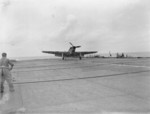
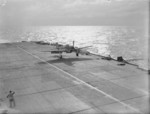
ww2dbaseOn 5 May 1942, under the overall command of Major General Robert Surges, 13,000 British troops landed near the harbor of Diego-Suárez on the northern tip of the island with air support from aircraft of the Indomitable and Illustrious. The obsolete battleship HMS Ramillies provided some naval gunfire support as well. A great deal of intelligence was provided by reconnaissance aircraft of the South African Air Force. French Governor General Armand Léon Annet's army of 6,000 Madagascan and Senegalese and 3,000 French troops were defeated two days later. The port became a major port for supplies to come in to support the subsequent campaign.
ww2dbaseOn 29 May, Japanese submarines I-10, I-16 and I-20 arrived with their midget submarines, damaging Ramillies and sinking an oil tanker on the day of their arrival. The British, too, sent in reinforcements. Though losing the British 5th Division to India, the arrival of the 22nd East African Brigade Group, the South African 7th Motorized Brigade, and the Rhodesian 27th Infantry Brigade significantly bolsters British numbers on the island over the summer of 1942.
ww2dbaseThe second phase of the Madagascar operations took place beginning on 10 Sep when the 29th and 22nd Brigade Groups carried out an amphibious landing at the port of Majunga in northwest Madagascar, followed by another landing at Tamataue on 18 Sep. By end of the month, the capital Tananarive and the nearby town of Ambalavao were secured without significant resistance. On 30 Sep, another landing took place near Tulear in the southern portion of the island. With Tulear secured, British forces declared the Madagascar Campaign a victory.
ww2dbaseRemaining French troops continued to resist, however. On 18 Oct, Annet called for an organized counteroffensive near Andriamanalina, but was defeated. He finally surrendered his forces on 5 Nov 1942 near Ilhosy. The Allied forces of mostly British and Commonwealth troops suffered 620 casualties during the Madagascar Campaign; Vichy French casualty numbers were unknown. In the end, even though German and Japanese naval strategies did not value Madagascar as a remote submarine base as the British feared, Operation Ironclad was extremely valuable to the British. The landing operation offered the British military valuable experience that would directly benefit them for the upcoming Operation Torch in North Africa.
ww2dbaseSources: the Second World War, Wikipedia.
Last Major Update: Sep 2006
Madagascar Campaign Interactive Map
Photographs
 |  |  |  |
Madagascar Campaign Timeline
| 5 May 1942 | British troops invaded French Madagascar in Operation Ironclad, landing in Courrier Bay at 0430 hours and Ambararata Bay shortly after. French and British troops clashed at Antsirane and Diego-Suárez. From the sea, carrier aircraft from HMS Indomitable and HMS Illustrious attacked the airfield and the port of Diego-Suárez, sinking French submarine Bévéziers, armed merchant cruiser Bougainville, and colonial sloop D'Entrecasteaux. British corvette HMS Auricula struck a mine in the entrance to Diego-Suárez Bay, suffering heavy damage. |
| 6 May 1942 | British corvette HMS Auricula, damaged on the previous day by a mine at the entrance of the Diego-Suárez Bay, Madagascar, sank. Meanwhile, on land, British troops made little progress in eastern Madagascar, held down by French defenders. To gain the momentum, British destroyer HMS Anthony dashed into Diego-Suárez Bay at 2000 hours at the risk of being hit by coastal guns and successfully landed 50 Royal Marines at Antsirane to disrupt French rear. |
| 7 May 1942 | With British Royal Commandos gaining a foothold at Antsirane and British troops slowly advancing toward Diego-Suárez, Madagascar, French morale became shaken and would soon surrender. The French coastal guns at the Orangia Peninsular continued to fire, however, until British battleship HMS Ramillies fired warning shots at the batteries before noon. British warships entered Diego-Suárez Bay at about 1200 hours. |
| 30 May 1942 | Before dawn, the floatplane of Japanese submarine I-10 conducted a reconnaissance mission over Diego-Suárez harbor, Madagascar, spotting British battleship HMS Ramillies, a tanker, a freighter, and an ammunition ship. At 1740 hours, I-16 and I-20 launched midget submarines M-16b and M-20b 10 miles from Diego-Suárez. M-20b fired her torpedo at 2025 hours, damaging HMS Ramillies and putting her out of action for a year. At 2120 hours, corvettes HMS Genista and HMS Thyme counterattacked with depth charges but failed to hit the Japanese midget submarines. Shortly after, M-20b fired her second torpedo, sinking British tanker British Loyalty. |
| 31 May 1942 | Japanese submarine I-10 launched her floatplane for a reconnaissance mission over Diego-Suárez harbor, Madagascar to evaluate damage caused by the midget submarine attack that had taken place during the previous night. |
| 10 Sep 1942 | British 29th and 22nd Infantry Brigades captured Majunga, Madagascar. Meanwhile, South African 7th Motor Brigade began advancing south from Diego-Suárez toward Tamatave. |
| 18 Sep 1942 | British 29th Infantry Brigade landed at Tamatave, Madagascar. |
| 23 Sep 1942 | East African 22nd Infantry Brigade captured Tananarive (now Antananarivo), Madagascar. |
| 18 Oct 1942 | French troops attempted a counter offensive at Andriamanalina, Madagascar, but it was soundly repulsed by British and Commonwealth troops. |
| 19 Oct 1942 | The British King's African Rifles regiment captured 800 Vichy French troops in Madagascar without incurring a single casualty of their own. |
| 5 Nov 1942 | Vichy French forces on Madagascar surrendered. |
Please consider supporting us on Patreon. Even $1 per month will go a long way! Thank you. Please help us spread the word: Stay updated with WW2DB: |


Visitor Submitted Comments
All visitor submitted comments are opinions of those making the submissions and do not reflect views of WW2DB.

» Dimoline, William
Location:
» Madagascar
Ship Participants:
» Devonshire
» Formidable
» Illustrious
» Indomitable
» Warspite
- » 1,182 biographies
- » 337 events
- » 45,119 timeline entries
- » 1,248 ships
- » 350 aircraft models
- » 207 vehicle models
- » 376 weapon models
- » 123 historical documents
- » 261 facilities
- » 470 book reviews
- » 28,409 photos
- » 365 maps
Winston Churchill, on the RAF

Please consider supporting us on Patreon. Even $1 a month will go a long way. Thank you!

Or, please support us by purchasing some WW2DB merchandise at TeeSpring, Thank you!
11 May 2011 06:45:14 PM
great thx this will help me a lot in my projects i never new that madagascar was even n the war