


Battle of Wake Island
Contributor: C. Peter Chen
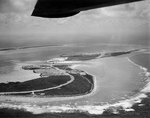
ww2dbaseAfter the successful attacks on Pearl Harbor in Hawaii Islands, Philippine Islands, British Malaya, and Guam in Mariana Islands, Rear Admiral Kajioka Sadamichi was tasked to take Wake Atoll, a United States Marine Corps base, with three light cruisers, six destroyers, and 450 Special Naval Landing Force troops. Wake, discovered by the British who named the atoll after Captain William Wake, was an atoll of three islands in a lagoon. It was strategically important, along with Guam, as they were situated halfway between Hawaii Islands and Philippine Islands, hence it was annexed by the United States in 17 Jan 1889. Without Guam and Wake, the US would not be able to supply Philippine Islands efficiently.
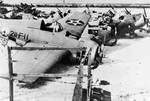
ww2dbaseThe atoll's air defenses came from 12 Wildcat figthers and a few anti-aircraft guns. 7 out of the 12 fighters were destroyed on the ground before they were able to take off, but the stationary naval battery were successful in sinking two destroyers (Hayate, Kisaragi) and damaging several other ships including Kajioka's flagship Yubari. The landing attempt was driven off by the remaining Wildcat fighters and the marines beach defenses. Admiral Kajioka would withdraw the attack force back to the Japanese base at Kwajalein. This would be the only unsuccessful attack during Japan's first wave of attacks. He would return on 23 Dec, along with Rear Admiral Abe Koki's two fleet carriers (Hiryu and Soryu) supported by heavy cruisers and destroyers (on the way back from the Pearl Harbor raid), and attempt to take Wake again. This time he would be successful, taking Wake away from the US.
ww2dbaseIn total, Japan lost over 800 dead before US Marine Corps commander Major James Devereux surrendered the atoll. Devereux had lost only 120 men. Wake would remain under Japanese control until 4 Sep 1945, after Japan's formal surrender.
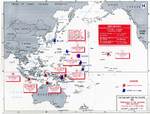
ww2dbaseWake was part of Japan's "Outline Plan for the Execution of the Empire's National Policy", a plan to expand the outer perimeters so wide that her enemies would not be able to attack by air against the home islands or the rich natural resources the Japan was about to acquire. This perimeter extended from the Kurile Islands down to Wake, Guam, Dutch East Indies, British Malaya, and up to Burma.
ww2dbaseSources: The Pacific Campaign, Wikipedia.
Last Major Update: Feb 2005
Battle of Wake Island Interactive Map
Photographs
 |  |  |
Maps
 |
Battle of Wake Island Timeline
| 2 Nov 1941 | Wake Island received reinforcement from the US Marine Corps 1st Defense Battalion in Pearl Harbor, US Territory of Hawaii. The island's defense now consisted of 15 officers and 373 enlisted Marines. |
| 28 Nov 1941 | US Navy Commander W. S. Cunningham relieved US Marine Corps Major James P. S. Devereux as the overall commanding officer of Wake Island. 9 US Navy officers and 58 sailors arrived with Cunningham aboard seaplane tender USS Wright. |
| 29 Nov 1941 | US Marine Corps Major Walter L. J. Bayler arrived at Wake Island with a detachment of Marines from Marine Aircraft Group 21 to set up air base communication facilities. |
| 4 Dec 1941 | 12 F4F-3 fighters of US Marine Fighter Squadron 211 arrived at Wake Island, delivered by USS Enterprise; they began daily patrols immediately. Meanwhile, Japanese aircraft scouted Wake Island undetected. |
| 8 Dec 1941 | Japanese invasion fleet for Wake Island departed from Kwajalein while aircraft of the Japanese Navy 24th Air Flotilla (based at Roi-Namur, Kwajalein) attacked Camp One, Camp Two, and the airstrip on Wake; Japanese aircraft destroyed seven of the Eight F4F-3 fighters were destroyed as well as a 25,000-gallon capacity aviation gas tank. Meanwhile, Pan American Airways aircraft evacuated Caucasians from Wake Island, leaving airline staff of Chamorro ethnicity behind. |
| 9 Dec 1941 | At Wake Atoll, Japanese Navy 24th Air Flotilla aircraft bombed Naval Air Station on Peale Island and Batteries A and E at Peacock Point. |
| 10 Dec 1941 | Japanese Destroyer Squadron 6 conducted amphibious invasion on Wake and Wilkes islands in failure, losing one destroyer and three other craft to shore battery and one destroyer to US aircraft, making them the first Japanese ships to be sunk in the Pacific War; this invasion was the only time in the Pacific War that shore defenders overcame an amphibious landing. In the air, USMC Captain Elrod shot down a Japanese G3M2 Type 96 land attack aircraft at Wake, which was the first USMC air-to-air kill of the Pacific War. On the same day, Japanese aircraft destroyed a 125-ton dynamite cache, and the resulting explosion caused damage to coastal batteries. |
| 11 Dec 1941 | The 2,890-ton Japanese light cruiser Yubari, flagship of Rear Admiral Sadamichi Kajioka, was seriously damaged by shell fire from two 5-inch guns at Peacock Point, Wake Island, and forced to retire listing heavily to port. |
| 12 Dec 1941 | Japanese reconnaissance flying boats bombed Wake and Peale Islands in a pre-dawn raid, followed by daylight bombing by land-based attack aircraft from Majuro, Marshall Islands; neither bombing caused significant damage. Aircraft from US Marine Fighter Squadron 211 reported a possible sinking of a Japanese submarine 25 miles southwest of Wake Atoll. |
| 14 Dec 1941 | Japanese reconnaissance flying boats from Wotje and Roi, Marshall Islands bombed Wake Island in a pre-dawn raid, damaging Camp One facilities, the airstrip, and a fighter; Wake Atoll's aircraft was now operating on only one airstrip. After daybreak, more Japanese land-based attack aircraft struck the atoll. |
| 15 Dec 1941 | Japanese reconnaissance flying boats bombed Wake Island. Meanwhile, US Navy Task Force 14 (USS Saratoga, USS Astoria, USS Tangier, with escorts; under Rear Admiral Frank Fletcher), carrying a US Marine Corps expeditionary force consisted of elements of the 4th Defense Battalion and Marine Fighter Squadron 211, departed Pearl Harbor, US Territory of Hawaii to reinforce Wake. |
| 16 Dec 1941 | Hiryu, Soryu, Tone, Chikuma, and two destroyers broke from the Pearl Harbor attack force to reinforce the Wake Island attack force. Meanwhile, Japanese naval land-based aircraft bombed Wake Island. |
| 17 Dec 1941 | Japanese aircraft attacked Wake Atoll, igniting a diesel oil tank on Wilkes Island and damaged an evaporator unit that was vital for the island's water supply. |
| 18 Dec 1941 | US Navy Commander-in-Chief of the Pacific Fleet Chester Nimitz ordered the submarines of Task Force 7 near Wake Atoll to move south out of the area until reinforcements arrived. |
| 19 Dec 1941 | Japanese Navy land-based attack aircraft from Roi, Kwajalein, Marshall Islands attacked Wake Atoll, seriously damaging defense battalion facilities at Camp One. |
| 20 Dec 1941 | The American garrison at Wake Atoll received its first guest since the start of the Pacific War as a US Navy PBY aircraft arrived from Midway Atoll. The PBY crew brought news that aircraft from Marine Fighter Squadron 221 and men from the 4th Defense Battalion were being prepared to reinforce Wake. |
| 21 Dec 1941 | The US Navy PBY aircraft which had arrived at Wake Atoll on the previous day departed with passengers; these passengers would be the last US personnel to leave the atoll. During the day, 29 Japanese carrier aircraft from Soryu and Hiryu attack the island, followed by 33 land-based aircraft four hours later, damaging Battery D on Peale Island. Meanwhile, American intelligence indicated a large Japanese air force build-up in the Marshall Islands and a possible Japanese fleet present east of Wake Atoll, the latter of which seriously threatened the attempts to reinforce Wake. |
| 22 Dec 1941 | 33 dive bombers and 6 fighters from carriers Soryu and Hiryu attacked Wake Atoll; during the aerial battle, one of the last two operational F4F Wildcat fighters of Marine Fighter Squadron 211 was shot down, while the other one was badly damaged. |
| 23 Dec 1941 | Before dawn, at 0235 hours, 1,500 troops of the Japanese Maizuru Second Special Naval Landing Force landed on Wake Island and Wilkes Island in the Wake Atoll; from the air, carrier aircraft from Soryu and Hiryu provided support by attacking targets on Wilkes, Peale, and Wake Islands. Given that defeat was now imminent, acting commander of the US Navy Pacific Fleet Vice Admiral William Pye recalled Task Force 14 with USS Saratoga; the force was originally dispatched to reinforce Wake. At 0800, the Americans surrendered. On Wilkes Island, the Americans attempted one final counterattack, killing 100 Japanese troops at the cost of 11 US Marines killed and 5 wounded. |
Please consider supporting us on Patreon. Even $1 per month will go a long way! Thank you. Please help us spread the word: Stay updated with WW2DB: |


Visitor Submitted Comments
16 Mar 2006 06:55:17 AM
crap
28 Jun 2006 10:32:34 PM
Defended w.6-5Naval Guns,12-3Dual A-A Guns.18Hvy.50 M.G.s,30Med.,Lth. Water-cooled M.G.s,12 F4F Wildcat Marine Corps fighters VMF-211,Elements of 1st Marine Defence Batt.449 Off.& men,68 U.S.N.Personnel,1,221 civilian Const.Workers.Attacked by IJN 3 cruisers,4 Destroyers,2 troop trans.and many land based aircraft.The SNLF- Special Naval Landing Force,naval personnel trained & equip. better than Army.No less than 400 were in one charge.Japan lost 1 destroyer by aerial bomb & 1 by artillery fire.Hvy. damage to Flagship crusier,also to a transport,and the 2 other destroyers,at least 20 aircraft shot down,and between 700-900 men.U.S. lost 52 military,70 civilians,12 aircraft and most of the LG.naval & AA Guns.Adm.Kajioka fell back to be reinforced by passing by IJN carriers Hiryu & Soryu,hvy. cruisers and destroyers.TheAlamo of the Pacific did surrender,but no till the last Marine Pilot,Capt.Henry T. Elrod flew into 22 enemy aircraft,shooting down 2,sinking the first enemy ship of the war w small bombs & strafing,and damaging other ships the same way,before losing his plane.Then while defending a flank gun position,died helping his men carry ammo to the gun emplacement.He was posthumously promoted to Major and his wife was presented with the Medal of Honor for his heroic actions.Dec.8th, the war started for Wake Island and lasted 16 days till the 23rd against a Japanese assualt force who needed help in making Wake Island surrender from Marine Commander Winfield Scott Cunningham in 1941.
18 Apr 2007 09:07:28 PM
To the first post: On Guam, 500 marines defended the island. The japanese took it from them.
5 May 2007 05:59:42 PM
I am doing a project on Wake Island and this information is very helpful. Thank You for posting this. I do not understand the person who put crap. This is valueable information.
4 Jun 2007 01:23:37 PM
it was good information
24 Jul 2007 12:43:29 PM
Winfield S. Cunnignham was in the Navy, not the Marines. The Marine CO of Wake, under Cunningham, was Maj. James Devereux. And the Marines also surrendered at Corregidor, but again, the higher CO wasnt a Marine, but this time Army.
26 Sep 2009 08:43:47 AM
I had the pleasure of meeting a gentleman who was on the original Garrison on Wake.
He was takenprisoner and sent to Japan.
During the day he'd work in the shipyard with the locals. Since they all had nothing, they shared what little food there was.
Standing Six foot five, escape was impractical as well as impossible. While prisoner he became very friendly with these people. Imet him while stationed in Korea.
Every 90 days we'd get R&R. He would go to Osaka and spend his time with his friends while prisoner. He told me he had no hard fellings toward the Japanese people.
This is what the warrant officer told me.
Tell the person who wrote crap, THAT is exactly what he is full of!!
27 Sep 2009 02:36:21 PM
I also had the pleasure of knowing one of the Original Pilots on the Japanese side. I was stationed in Japan for a year after Korea.
He was a pilot of a Torpedo plane on the IMS Hiryu. He was told the United States had declared war on them. They were on their way to Pearl Harbor to keep our fleet from sortieing. When he got to Pearl he was astouded to see if war was declared why eren't they shooting?
He later saw his ship sink at Midway
7 Jan 2010 12:21:32 PM
In the 1950s, my Sergeant Major in Marine
Air Support Squadron 1, 2MAW, was Herman L. Rasor. Herman was sent to Wake Island as a private in the Fall of 1941, assigned to the Marine coast artillery Bn. He wore the Wake Island device on his uniform. He was one of the finest NCOs I ever knew and served not only in WWII but Korea as well. He kept a framed photo of himself taken just after he was liberated. He was very emaciated. Semper Fi
20 Apr 2010 05:19:50 PM
the japanese captured the island of attu in the aleutians from the americans wake was the first to get captured but not the only one in the pacific theater
23 May 2010 11:07:34 PM
Does the name Jack Mestler ring a bell with anyone? He was supposed to have been on Wake, as well as in Pearl Harbor on the big day. Any info would be greatly appreciated.
31 Mar 2011 07:42:11 AM
Does anyone on here remember the name Walter E. Pritchett? That was my grandfather and he wishes to see if any of his old war buddies remember him, if anyone knows the name please contact me at Crtny_wrght@yahoo.com and i will gladly pass the information along. Thank you!!
5 May 2011 01:11:50 PM
wow!!
3 Jun 2011 09:33:38 PM
I lived on Wake Island in the 60's - early 70's. As a child I often found spent shell casings, Japanese Yen, hid in the bunkers while playing hide and seek and climbed on the canons. I knew that Wake Island played an important role during WWII but did not fully understand until I got older. I just recently found an American Legion Jacket that my Father left me after he passed away. It's pretty worn out however, the name on the jacket has Capt. Henry T. Elrod on the back. I just started researching Capt. Henry T. Elrod and found out that he was initially buried on Wake Island. Does anyone know where? The History of WWII (Battle of Wake Island)is fascinating and the story of Capt. Henry T. Elrod very heroic. Thank you for all the information!
26 Jun 2011 09:23:17 PM
CPT.Henry T. Elrod was posthumously promoted to Major, exhumed post war, and is buried in Arlington National Cemetery. The National Gravsite Locator on line (DVA) can give you the exact location at Arlington.
Also: Guam (perhaps 10 to 15 times the land mass of Wake surrendered on 10 December 1941. It was impossible for the roughly 500 marines and naval personnel to defend that great a land mass.
Wake Island, on 11 December 1941, was the only time an invasion force was defeated before it could land. And that is the only time in all of WWII (1939-45)
Request your Grandfather's military records from the National Personnel Records Center in St. Louis,MO. The request form can be downloaded on line but must be mailed, not electronically sent. Determine what units he was in and then go to the Net to see if his old Unit(s) have reunions or websites. You may find one of his Battle Buddies.
A complete list of all military who served on Wake in 1941 is in the National Archives. the M-K company has a list of the civilian contractors.
Hope this helps.
21 Jul 2011 08:55:22 AM
My Uncle Donald Sullivan was a civilian prisoner of war on Wake Island. He and another prisoner Elmer Macky escaped in a life boat around april. The other men answered roll call for them for 16 days. The *** comander said later they were captured down near the Marianna islands and delt with accordingly. I don't know if the comander was telling the truth or just trying to scare the rest of them. Is there any way to get ahold of Japanese military records to check this?
31 Jul 2011 10:23:59 PM
As punishment for the surrender the 4th Marines were not allowed to return to the united states and are now forever stationed in Okinawa.
18 Sep 2011 01:41:18 AM
My grandfather Tech Sgt. Vincent Bailey was assigned to Wake Island and executed aboard the POW ship Nitta Maru as it was sailing from Yokohama to Shanghai. I'd be very interested if anyone had any information at all about him.
9 Dec 2011 08:30:50 PM
The timeline for Dec. 10th states that "this invasion was the only time in the war that shore defenders overcame an amphibious landing" however this is untrue. The Canadian army along with the Royal Navy and Royal Air Force attempted to capture the port city of Dieppe in France in August 1942. The Battle of Dieppe was a disaster for the allies and Germans retained control of the city.
Just thought I would share.
 C. Peter Chen says:
10 Dec 2011 09:14:55 PM
Thanks for the note to the most recent anonymous poster; I have updated to say "this invasion was the only time in the Pacific War that shore defenders overcame an amphibious landing" to be more precise.
4 May 2012 08:25:50 AM
Were the marines who surrendered really not allowed to return to the US? I find this hard to believe. Warrior Poet ... where did you get this info?
21 Aug 2012 08:34:01 PM
I'm a documentary filmmaker working on a film about the Wake Island story, focusing largely on the civilian role. 1,145 civilian construction workers were on the island when it came under attack. Many hid, many helped with the defense.
I'd like to talk to "Sullivan" who posted last year. I've heard the story of their uncle and Mackay, and may have more info. My email is wakeislandfilm [at} gmail.com
Search for "Wake Island Film" on facebook if you'd like to follow the film.
Here are some things Cunningham said about the civilians:
“A surprisingly high number of [the civilian workers] did pitch in and help, faithfully and at personal hazard...
Already they were stationed all over the atoll in support of the defense battalion’s gun crews; they worked at filling sandbags, moving guns, delivering food and ammunition, operating heavy equipment to scoop out personnel shelters.
At the airstrip itself, they had accomplished much since the war began, bulldozing the surrounding area, making bunkers for the airplanes, helping to mine the landing strip, putting the radio station underground, assisting with the personnel dugouts. And their group had suffered the highest number of casualties on the atoll.”
—Admiral W. Scott Cunningham, Wake Island command
18 Sep 2012 03:01:55 AM
Seth Randal, are you aware of the Wake Island reunion for surviors and their families? It is held every year in Boise ID? I was held this past weekend. My step father was a civilian POW on Wake Island.
8 Dec 2012 04:57:14 AM
Admiral Cunningham, My grandfather was one of the MK contractors. His name was William Yeamans. Hired by MK for his expertise with commercial explosives he was eventually involved with the (attempted) destruction of the air field that he was originally sent to enhance. He survived the war and returned to his family in Idaho after nearly a year in southern California regaining strength at a military center. He never really came to terms with his experience. He was older than most of the MK employees and struggled with the memories of having seen so many of his younger co-workers (sons, in many respects) die in such appalling conditions during the internment. Bill died in the late '60s. He is survived by children born before his ordeal and children born after his return.
21 Jan 2013 02:00:22 AM
My Uncle Theodore Franklin USN was POW on Nitta Maru and executed on board. I would like to find any information about him. Thank you.
24 Jun 2013 08:04:41 PM
My uncle, Ben Holbrook, was a Navy petty officer on Wake. He was taken to Woosung prison in China initially, and later taken to Japan. He survived the war. I would appreciate any info about him. He died i the late 1970's.
19 Jul 2013 03:36:48 PM
Greeting again. To anonymous, we have been to the 2011 and 2012 annual reunions. The reunion for this year will be held at The Riverside Hotel in Boise in September.
To Mark Kull, have you seen the Bluebook, with photos of many of the civilians? Your grandfather is pictures in the book. I can send the pages to you if you wish.
I don't have much information about the Naval officers, including Theodore Franklin and Ben Holbrook.
If you'd like to follow work on the film, go to Facebook and search for Wake Island Documentary.
21 Nov 2013 02:18:38 PM
My grandfather was Bernard Dodge. He was a marine stationed on Wake Island. I would love any information on him; he passed away before I was born in 1968. Also, is there a website link to the reunion for Wake Island survivors and family?
21 Oct 2014 03:48:04 PM
I would love to hear from anyone with information on Donald Sullivan a civilian employee on Wake. He and Elmer Mackay ecaped in a life boat off the dredge Columbia and was caught and was told he was killed
11 Dec 2014 01:46:04 PM
My father was a Wake Island Marine defender.
Sgt. Bernard H. Manning Woosong and Hadioke. Also on the Nitta Maru. Also, my father's friend Father Eugene Lutz who became a Priest after his release. Would love to contact any survivors.
10 Mar 2015 09:18:00 AM
Hi im living on wake island and i stumbled across a gold medallion need info will give money for info
10 May 2015 08:27:27 PM
My father John Dale was one of the survivors featured on the History Channel Documentary. Unfortunately, he passed away in January, 2014 at the age of 93. I was especially interested in the comment concerning Father Gene Lutz. My father and Father Lutz stayed in touch with each other after the war and were close friends. They visited each other through the years and I remember his visits to see my father. My sister has a picture of Father Lutz with other mementos from my father. He was an important part of fathers life and had a difficult time when he passed away.
26 May 2015 10:16:14 AM
Guam was also taken from Marines by Japanese on 8 December 1941. There were 153 Marines on Guam at that time, not 500.
26 Sep 2015 09:37:42 AM
I served in the Marines with Sgt. James McWiggins in San Francisco circa 1946-48.
Mc Wiggins, Mac, was one of the gallant fighters on Wake and a really tough marine. I can give more info if interested.
11 Nov 2015 11:00:09 AM
My father, Gilson, enlisted in USMC in 1935. He was a Gunnery Sgt. w Battery E at Wake. He survived the POW camps and went onto serve 30 years in the Corps. Many of his innovations in Supply mgmt at the end of his career are still utilized today. What I remember most about Gilson's experience was his humility about his service and his commitment to professionalism. The epitome of the "squared away" Marine. The actions of the Marines at Wake cannot be overstated in their historical context of battles against all odds.
16 Mar 2016 10:13:59 AM
Ben Holbrook was my uncle as well as my cousin Bill's. Uncle Ben didn't talk much about the prison but he did say the prisoners went on strike to get their Red Cross packages. He died two days after my daughter was born in 1980.
1 Jun 2016 01:00:21 AM
My grandparents served on this island. He was a pic. He was also a survivor of the POWERADE camps. His name is Vincent H. Verga. Some of his close friends were Jack Skaggd, Jack cook, and WE Wade. We used to have some of the drawings from Major James Brown.
28 Jun 2016 09:52:52 PM
My father, Charles Curtis Gay, California was also a civilian on Wake Island when it was captured and spent the duration in POW camps in China and Japan. He initially was sent to Woosung, China Jan 1942, then to Kiangwang, China, Dec 1942. Then to Tokyo 5D Kawasaki Dispatch Camp in Aug 1943 and finally to Tokyo Niigata 5-B in on Jun 5, 1945. The camp was spotted from the air on Aug 5, 1945 and they were rescued. I was able to learn this by reading a lot on the following site and searching camp rosters for each camp. I also read some journals posted on line and could learn that a camp was closed and all civilians were moved to wherever...I would check that camp and roster and find his name again. Very detailed, time consuming but fascinating trying to put the pieces together. I had no idea how many camps there were. Most camps have a roster link. My dad talked little about all this. His experience was one of torture, starvation and loss. Here is the site and a place to start www.mansell.com/pow_resources/camplists/tokyo Also this link to Woosung, China where 800 civilians were initially taken. http://www.mansell.com/pow_resources/camplists/china_hk/kiangwan.html Click on Kiangwan from that link and you can see that a large portion were moved to Japan, Kawasaki 5D which is where I found my dad's name for the first time.
30 Mar 2017 04:06:02 PM
My grandfather, John E. Wallin, was a civilian working to build the airport at Wake Island when it was captured. He spend 4 years as a prisoner of war in Japan. I have the scrapbook my mother and great aunt compiled as well as a copy of t he book listing the civilian POWs. I know that what my grandfather experienced affected him for the rest of his life. He died in 1977.
22 Jun 2017 12:35:09 AM
I am doing research for the daughter of a former neighbor whose brother was a civilian worker killed on Wake Island. I have a typed bronze medal citation from SecNav stating the medal was being given posthumously to Herschel Lester Peterson. It says he died after assisting Squadron 211 in their final stand on 12-23-41. The family has no medal and I cannot find him listed in a database of Bronze Star Recipiants. I would like to find more information on the civilian workers who died during the battle, such as a list of personnel or any other details that might be available. This is both for my personal interest/knowledge as well as verification of the validity of the award citation. I would be greatly appreciative if anyone could shed some light on this aspect.
16 Jul 2017 03:50:58 PM
Ken Austin- Jack Cook was my Uncle. He was a Gunnery Sgt that enlisted in 1938. He passed away about 10 years ago. Interesting that he was friends with your Grandfather. I wish I had asked more questions now.
13 Oct 2017 01:26:41 PM
My father-in-law , George Schmaljohn was also a civilian carpenter working for Morris - Knudsen. He helped build then defended the island. He lost many friends from his home Boise Idaho. George's story has been chronicled in WW2 war crimes tribunals. He saw / was victim of grotesque Japanese war crimes and also Japanese civilian kindness, humanity toward U.S. POWs. In 2001, he was finally awarded the Purple Heart. He passed away in 2008. He was a humble, regular working man that was tougher than I can even imagine. I too, have the Morrison-Knudsen constructors hard bound book. BTW- Kelly Kirsten in this book it lists H.L. Peterson's home as Alameda California.
16 May 2018 10:49:59 AM
I'm writing a book about John I. Unger a Navy Corpsman who served at Wake and then 44 months as a POW. I'm trying to get connected with any Military personnel that served at wake tat are still alive. I understand there may only be a handful left. Any help in contacting any of them is appreciated
7 Dec 2018 09:40:29 AM
My uncle, Ernest Newton Gilley, Jr. was killed on Wake Island on December 23rd. He was my mother’s brother. He received a Purple Heart, which my mother cherished; however as a little girl she allowed me to take her scrapbook and Purple Heart to school. It was at school it was lost somehow to never be recovered even though I exhaustingly looked over the years. Here is an excerpt from a story about my uncle’s last day on earth. https://astro.temple.edu/~gurwin/fforich.htm
9 Jan 2019 09:50:34 AM
Looking for information on Albert Charles ALEXANDER. Albert signed on to the U.S. Revenue Cutter Perry in 1909 at San Pedro, and was returned to Seattle after the ship ran aground in 1910.
He is listed as a Teamster in San Francisco, for the Quartermaster Corps between 1912, and WWI, and I found him listed on his step-grandson's burial info at the Presidio. There, and in other places, I see "Civilian - Wake Island NAS", and that could not apply to the step grandson.
Would anyone have a thought on why that designation? I find no information on Albert after ~1917.
Thanks very much!
"Sanford, Norris Binford, d. 12/04/1912, Section PPE, Site 68, Son (Minor Child) of Alexander A C Sanford, CIVILIAN WAKE ISLAND NAS" - listing at the San Francisco National Cemetery
13 Nov 2020 01:21:59 PM
Is there a roster of all the Morrison Knudsen employers that were at Wake Islan during WWII. I have a Merine Corps helmet with the name D. Davis in it and I checked MSNC records and he is not list I believe he is a civilian contractor.
7 May 2021 01:17:11 PM
What was the last Japanese ship to visit wake during occupation?
28 Jun 2021 06:56:13 PM
John Malaspina: I have a Wake Island Morrison Knudsen roster. It does not have anyone with the Davis surname who also has a first name starting with the letter D. If you could send me a picture I could do a little more research. Sethrandal [at] gmail.com
13 Jan 2022 12:48:15 PM
Seth Randal could you send me that Roster of Morrison Knudsen..
My Uncle T. Porter and cousin R. Bryan did great service to the Marines. Cousin Bryan is mentioned in several books
5 May 2023 02:27:47 PM
Please share your copy of the Morrison-Knudsen roster from Wake.
Mahalo!
All visitor submitted comments are opinions of those making the submissions and do not reflect views of WW2DB.

» Abe, Hiroaki
» Fitch, Aubrey
» Harada, Kaname
» Yamaoka, Mineo
» Yanagimoto, Ryusaku
Location:
» US Pacific Islands
Ship Participants:
» Chikuma
» Furutaka
» Hiryu
» Soryu
» Tanikaze
» Tatsuta
» Tenryu
» Tone
» Yubari
Document:
» Interrogation Nav 10, Captain Mineo Yamaoka
- » 1,181 biographies
- » 337 events
- » 45,132 timeline entries
- » 1,249 ships
- » 350 aircraft models
- » 207 vehicle models
- » 376 weapon models
- » 123 historical documents
- » 261 facilities
- » 470 book reviews
- » 28,428 photos
- » 365 maps
Winston Churchill, on the RAF

Please consider supporting us on Patreon. Even $1 a month will go a long way. Thank you!

Or, please support us by purchasing some WW2DB merchandise at TeeSpring, Thank you!
14 Mar 2006 12:29:46 PM
A bit of trivia:
Wake was the only Island the Japanese took from the US Marines. All other times the Marines took the islands from the Japanese.