


Battle of Midway and the Aleutian Islands
Contributor: C. Peter Chen
Additional Contributions By: David Stubblebine
ww2dbaseWith Japan controlling nearly the entire western half of the Pacific, Japan's first phase of the Pacific War plan was coming to a conclusion. The next phase consisted of creating a defense buffer so that Japan would be free to transport materiel within these borders. Admiral Isoroku Yamamoto was driven by two reasons to establish a foothold at the Midway Atoll. First, the establishment of forward bases at Midway would expand this border of defense just far enough so that an attack like the one James Doolittle had pulled off would not occur easily again. Admiral Osami Nagano was personally dumbfounded by this surprise attack, observed to be murmuring "this shouldn't happen, this just should not happen" immediately after hearing the explosions in Tokyo, and Yamamoto and other officers swore to make sure that it would not happen again. Secondly, knowing American carriers were operating somewhere near the Hawaiian Islands, Yamamoto wanted to finish off what Vice Admiral Chuichi Nagumo could not do for him at Pearl Harbor in the US Territory of Hawaii.
ww2dbaseYamamoto's plan was not supported by everyone, however. The Imperial General Headquarters and the top Navy brass looked more so toward the south Pacific as the next step of conquest, looking to seal off Australia, a potential American base, by pushing toward New Caledonia, Fiji, and Samoa. The Japanese Army, also, was weary of any advance by the Navy that could demand more men as garrison troops; the Army was already feeling the pressure from the ever-draining Second Sino-Japanese War, and knew that by the conquest of more islands, demand for manpower and the accompanying demand for supplies could only increase. Nevertheless, through political intrigue and diplomacy, Yamamoto secured permission from Admiral Osami Nagano on 5 Apr 1942 to proceed with the attack on AF, a plan to conquer the Midway Atoll. Nagano, though was effectively coerced by Yamamoto to give permission for such an attack, got one of his demands through in the plan as well. Nagano, on behalf of the Naval General Headquarters, called for an attack on the Aleutian Islands in the US Territory of Alaska in the North Pacific as means to delay any possible American invasion of the Kurile Islands from that direction. Additionally, with proposed seaplane bases with range of 200 to 300 miles out of each location and the naval patrol between them, it would become harder for any shipping to slip through the North Pacific, whether it was convoys for eastern Russia or another attack on Japan. The possibility of using the Aleutian Islands and Midway as staging point for a future attack on the remainder of the Hawaiian Islands was discussed; there were no discussions for further attacks into Alaska.
ww2dbaseOriginally planned to be launched prior to the attack on Midway, on 16 Apr Nagano conceded to Yamamoto that the Aleutian Islands attack was to take place at the same time as the attack on Midway in order to maintain strategic surprise in north and central Pacific. Originally opposing the Aleutian Islands addition to his plan, Yamamoto delegated the entire planning of Aleutian Islands operation to Captain Kameto Kuroshima.
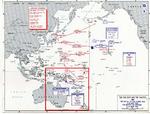
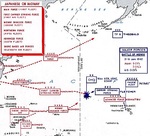
ww2dbaseAs shown by the lengths Yamamoto had to go through to acquire permission for the Midway operation, a lack of cohesiveness could be sensed from the top commanders in Japan. With the introduction of the Aleutian Islands operation, the invasion plan suddenly grew exponentially in scope. The original field of battle covering the entire chain of the Hawaiian Archipelago at 1,500 nautical miles was already large. With the inclusion of the Aleutian Islands, the battle zone was expanded into a huge 1,500nm by 1,650nm area. The seemingly invincible Combined Fleet's records at this moment perhaps instilled just enough arrogance in Yamamoto to continue on with his planning, though in hindsight his planning was overly complex and perhaps even doomed from the beginning. One major critique in modern times was the distance in which each task force traveled. Nagumo's main attack force containing four fleet carriers spearheaded the northern approach, nominally supported by the main battle force containing seven battleships, two light cruisers, and 12 destroyers headed personally by Yamamoto; several light carriers and seaplane tenders was also present with Yamamoto's command fleet. The phrase "nominally supported" was used because the main battle force was traveling 300 nautical miles behind Nagumo's fleet, therefore actually impossible to directly support Nagumo's ships if it was necessary. The Midway occupation transports headed by Nobutake Kondo and his support fleets of two battleships and various supporting ships approached from the south in three separate groups. The three task forces of the southern approach sailed closer together compared to the main attack force in the north, and they were spearheaded by a smaller fourth group in charge of minesweeping. If managing the numerous task groups over wide distances did not set off a warning flag to the reader, the plans for early warning sure would. Two cordons of early detection set up by submarines were planned, one to the north of the archipelago and another to the southwest, tasked with scouting for the American carriers that Yamamoto wished to lure out and destroy. While good on paper, the submarine positioning was ineffective. The shortcomings in the positioning actually was proven during a 25 May war game, where Japanese officers playing the part of the American fleet took a course that completely bypassed both cordons and critically damaging multiple Japanese carriers in one shift strike. Yamamoto, however, claimed such a movement was impossible; the chief of the Combined Fleet was already tired of the endless bickering among his peers, and chose to completely ignore this omen instead of tweaking his plan. The final weakness in Yamamoto's plan was regarding the strengths of the air units aboard Nagumo's carriers. By the middle of 1942, the combined efforts of Mitsubishi, Nakajima, and Aichi to supply Japan with aircraft were already falling behind the rate of losses despite endless Japanese victories. Nagumo's four carriers carried 267 aircraft only a half year before; for Midway, only 227 were found aboard the carriers. Even if one was generously adding the miscellaneous crafts found aboard various capital ships and aircraft tenders in the invasion fleet, Nagumo still only had 248 aircraft at his disposal. When compared to the 412 aircraft used for the Pearl Harbor attack, this was an awfully small quantity, especially considering Yamamoto's wish for Midway to become the decisive battle that would bring down the American carriers.
ww2dbaseThen, of course, were the similarly complex plans to invade the Aleutian Islands in the far north. The Aleutian Islands assault team consisted of two light carriers, two heavy cruisers, and destroyers. Submarines were also deployed between 7 to 10 days before the invasion to act as advance scouts over the entire north Pacific. The submarines assigned to reconnaissance duties focused on Adak, Attu, Kiska, and Amchitka.
ww2dbaseAs the greatest concentration of warships to date in the Pacific War was being prepared, US intelligence expert Joseph Rochefort and his cryptanalytic team was given the first clue as early as late Apr 1942, although they would not know of the significance for several weeks; while the team monitored Japanese Navy radio messages, they had discovered that of the six fleet carriers in the Japanese Navy inventory, Shokaku, Zuikaku, and Kaga (the last of which was actually placed in the list by mistake) were moved south for the engagement that would ultimately be named the Battle of Coral Sea, the remaining three fleet carriers remained a threat in Japan as they prepared for their next offensive operation; both of the Yamato-class battleships were reported to be available for operations in Japanese ports as well. As the month of May 1942 progressed, Rochefort learned that Japanese reconnaissance efforts had stepped up against Pearl Harbor and the Aleutian Islands, and slowly came to the conclusion that Japan might soon strike in an easterly direction. Shortly after, Rochefort determined that the target was Midway. In order to convince the US Navy leadership in Washington that Midway was indeed that target, Rochefort had his subordinate Lieutenant Commander Jasper Holmes send out a fake radio message announcing that Midway Atoll, which had no source of fresh water, was running out of its supply of fresh water and was requesting replenishment. Luck struck only a short time later when Rochefort's team intercepted a Japanese message noting "AF is short of water" and advising the invasion planners to reserve space on support ships to bring extra water supply. With this proof, Rochefort finally won confidence from US Navy chief Ernest King. The US forces were ordered to Point Luck about 300 nautical miles northeast of where Nagumo's carriers would most likely launch their strikes. While exposed to enemy attack without the ability to immediately call upon Midway's land-based planes for assistance, the American fleet was also able to possibly flank the Japanese carriers should the Americans achieve a successful ambush. As the American carriers sailed toward the Point Luck rendezvous point, no warnings came from the northern Japanese submarine cordon, simply because it was not there as planned. By the time the Japanese submarines arrived at their patrol locations on 3 Jun, two days behind the original plan, the American fleets had already sailed through the area. Coupled with failed scouting efforts of Pearl Harbor by Japanese seaplanes (Operation K), the Americans would enjoy an advantage even before the battle started: The Japanese was fighting against an enemy in which they had little concrete information of.
ww2dbaseOf course, the Americans were not exactly in full confidence of their intelligence. For one, Lieutenant Commander Edwin T. Layton, at the time of the Battle of Midway an intelligence officer based at Pearl Harbor, later noted that the Americans had no idea of the scope and scale of the Japanese attack; Nimitz, he said, for example, did not have Battleship Divisions 1 and 2 among his dispatched forces, reflecting that the Americans had little clue of the composition of the Japanese Midway invasion fleet, which included the most powerful surface fleet the world had yet seen. As the battle turned out, Yamamoto would never use the powerful surface fleet; had history played out differently, however, this failure of intelligence would certainly work against the Americans.
ww2dbaseAt Midway, constructions lasted through the entire days, rushing the building of trenches and fortifications against the invasion. The defense task was given to the Sixth Defense Battalion under the command of Colonel Harold D. Shannon. A hundred flights daily were detected by Japanese submarine I-168, indicating that the Marines detachment on Midway were preparing against an impending invasion. Why this observation did not tip off Yamamoto and Nagumo that the Americans knew what they were planning was unsure.
ww2dbaseIn the morning of 3 Jun, Ensign Jack Reid of VP-21 took off on his aerial patrol. At the extent of his range, he detected unidentified radio chatter, and decided to go further. He was rewarded with sighting Kondo's force at about 0900. He dropped to about 500 feet in altitude as he approached, pulled up to 1,000 feet to observe for a short period of time (and noted six large ships), and then dropped to 500 feet again, tracking Kondo's fleet for several hours despite being shot at several times. The US Navy officers made a mistake at this point, identifying this fleet as the main Japanese force. Captain Cyril T. Simard, commander at Midway, dispatched 19 US Army B-17 Flying Fortress bombers to attack Kondo's fleet with 600-lb and 500-lb demolition bombs. They found the Japanese force at 1623 and attacked, and the bombs failed to detonate anywhere near the ships. They enthusiastically reported damaging a battleship and a heavy cruiser, going as far as describing their victims as "motionless" and "issuing huge clouds of dark smoke", but that was not correct. Several PBY-5A Catalina aircraft did, however, damage oiler Akebone Maru with torpedoes.
ww2dbaseThe American forces first found the actual Japanese main attack force, the carrier group, at 0503 in the morning of 4 Jun 1942 when Lieutenant Howard P. Ady, Jr. in a PBY Catalina aircraft sighted a Japanese aircraft. At 0540, he found Nagumo's force, and at 0552 he reported finding "two carriers and main body of ships, carriers in front". Lieutenant (jg) William E. Chase made the second report at 0544, "[m]any planes heading Midway". At 0630 Midway time, bombs were falling on Midway by 108 attacking Japanese aircraft launched from Nagumo's carriers. US Marine Corps fighters bravely fought the attackers, but the more advanced Zeroes made the defensive efforts difficult. Commander John Ford, with a camera in hand at that time, recalled a moment in this phase of the attack:
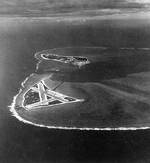
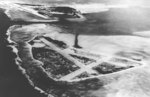
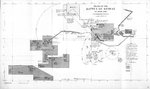
ww2dbaseThe attack on Midway was conducted according to plan. Level bombers made their run first, then the dive bombers led by Kaga's Ogawa Shoichi swooped in. Visibility was not perfect, and a full array of defensive weapons including flak and automatic weapons created hazards for the attackers. The anti-aircraft fire was much more accurate and deadly than what the Japanese pilots expected, though they were able to destroy many facilities, including several fuel storage tanks and a power generator. The damage was heavy, but by no means critical enough to put Midway out of action, and the leader of the attack Lieutenant Joichi Tomonaga knew it. The Japanese attack on the island itself was over by 0715. 17 out of 26 Marine planes were shot down by the escorting Zero fighters. On the Japanese side, 11 aircraft were lost, with another 14 heavily damaged (not all of the heavily damaged would make it home safely). At the end of this attack wave, Nagumo lost about 20% of his carriers' strength.
ww2dbaseCaptain Simard then launched the first American attack with six Avenger bombers; at the same time four Army Marauder bombers were also launched. Due to the lack of communications between the Navy Avengers and the Army Marauders, the Americans failed to combine their strengths during this attack. Instead, the Avengers fought the Hiryu, while the Marauders headed for the Akagi. With a combination of the slow American torpedoes and excellent Japanese maneuvers, this first American attack completely failed at the cost of most of the planes (only three air crafts out of 10 returned). Commander Kawaguchi Susumi of the Hiryu recalled:
ww2dbaseThe carrier Hiryu actually reported that she simply outmaneuvered many of the slow American torpedoes.
ww2dbaseAt the advice of Tomonaga, Nagumo ordered for a second wave of attack on the island. The planes were in the hangars armed with anti-ship weapons based on Yamamoto's orders, and with Nagumo's executive decision the crew were busy unloading the torpedoes and loading them with heavier bombs instead that are better suited for land targets. Unexpectedly, Nagumo received a report from a reconnaissance plane that an American fleet was discovered. Halfway through the re-arming, Nagumo ordered all re-arming process below decks stopped while he demanded more intelligence. The reconnaissance plane that first found the American fleet was cruiser Tone's seaplane running search line #4 at 100-degrees from the carrier fleet (although had everything been going exactly according to plans, it should had been search line #5 by cruiser Chikuma that would spot the American ships); however, the ships were reported to be mostly surface ships, which gave Nagumo a false sense of temporary security.
ww2dbaseDuring this time, Major Lofton Henderson led 16 Marine dive-bombers on an attack on the Hiryu. No hits were scored, and eight air crafts were lost, including Henderson's own. Meanwhile, Lieutenant Colonel Walter Sweeney's 15 B-17s dropped sixty tons of bombs on the Occupation Force fleet, but scored no hits either. Later, another attack was launched. Major Benjamin Norris' 11 Vindicator bombers dropped their bombs at the battleship Haruna, but again scored no hits. Lieutenant Commander John Waldron's attack with Devastator aircraft were equally ineffective. Thus far, American resistance against the Japanese attack was fairly useless, and the casualty rates were extremely high. Out of 51 torpedo bombers dispatched, for instance, only 7 had returned. However, the failed attacks had not been committed in vain. The constant attacks on the individual carriers, however ineffective as they had been individually, accomplished the most important task of the entire battle: keeping the Japanese carriers busy launching and recovery CAP (combat air patrol) fighters. With the flight decks busy with combat air patrol operations, the Japanese simply could not find the opportunity to gather a well-balanced attack force to attack the American fleet. So in a sense, the battle was over the first moment American aircraft made contact with the Japanese carriers.
ww2dbaseAdmiral Fletcher, receiving reports of the Japanese attack on Midway, calculated his options. While his carriers were still further away than he had hoped to be, an earlier launch could catch the Japanese planes re-fueling and re-arming. He decided to launch an attack led by Lieutenant Commander Clarence McClusky. After waves of waves of failed American attacks, finally this wave started to see some results. At this time, Japanese CAP fighters protecting the carriers were in disarray; they were not given the chance to regroup after they triumphantly destroyed the previous waves of American attacks. This gave the new American attackers a chance to strike at the carriers without getting through a fighter screen first. The Akagi took two bomb hits at 1026, tearing into below decks. The most damaging hit on Akagi came in the form of a near miss by Ensign Frederick Thomas Weber, which jammed the ship's port rudder, rendering her essentially unnavigable. Initially refusing to leave the ship, Admiral Nagumo was finally convinced by Captain Taijiro Aoki to transfer his flag to another ship after explaining to the admiral that commanding a fleet would be impossible on a burning ship without working radio; they transferred to the light cruiser Nagara. Kaga was hit four times, including one that wiped out the bridge; she was a sailing inferno as bomb stores exploded and gasoline burned. Soryu met with similar attacks as well, hit by dive bombers and later came under fire by submarine USS Nautilus; she sank at 1913. Kaga followed at 1925, about three hours after abandon ship order was given. Akagi remained afloat until 0200 the next morning when she was scuttled.
ww2dbaseEnsign George Gay, a downed American pilot, floated in the water and witnessed the devastation upon Japanese carriers. "The carriers during the day resembled a very large oil-field fire.... The fire coming out of the forward and after end looked like a blowtorch, just roaring white flame and the oil burning.... Billowing big red flames belched out of this black smoke... and I was sitting in the water hollering hooray, hooray!"
ww2dbaseUSS Nautilus was arguably the only somewhat effective American submarine in the whole battle, despite the presence of Task Force 7's 19 submarines present at Midway. The US Navy's philosophy of submarines called for "the maximum number of potential torpedo hits and the maximum service of information to the Commander-in-Chief"; they failed at both. Of all the submarines deployed by Rear Admiral Robert English of the Submarine Force of the Pacific Fleet, only two or three fired torpedoes, and they did not hit anything. The failure of American submarines was mostly blamed on ineffective submarine design and the poor quality of torpedoes.
ww2dbaseEnsign Wesley F. Osmus, who piloted a TBD Devastator against Soryu, was shot down and rescued by Japanese destroyer Arashi. Suffering only minor burns as reported by Arashi's doctor Lieutenant Katsukichi Ishizaka, he was interrogated for intelligence, which included information regarding Yorktown's location and strength. Upon completion of the interrogation, Commander Kosaku Ariga, commanding officer of Arashi, ordered Osmus' execution. He was thrown overboard, but in desperation to save his own life he held on to the railings and refused to let go. One of the Japanese sailors took a fire-axe and killed him with a blow to the back of his head. Osmus was not the only victim of Japanese atrocities during the Battle of Midway. Ensign Frank O'Flaherty and his radioman Bruno Gaido also survived the crashing of their aircraft (SBD Dauntless dive bomber) to be picked up by the Japanese. For six days they were interrogated, though treated reasonably well by Ensign Koju Kanechiku, an officer at the brig of destroyer Makigumo, but they were ultimately thrown overboard with five gallon kerosene cans filed with sea water attached to their bodies.
ww2dbaseAt 1057 on 4 Jun 1942, Lieutenant Michio Kobayashi and his 18-dive bomber unit took off from Hiryu to attack American carrier Yorktown, escorted by 6 fighters. Two-thirds of his attack force carried 250-kilogram semi armor-piercing bombs against Yorktown while the others carried high explosive bombs against the ship's crew. The force found Yorktown and commenced to attack. US Navy Lieutenant John D. Lorenz, the Battery Officer at Mount 3 just abaft of Yorktown's island, recalled when the first bomb hit near his battle station.
ww2dbaseThe sky was turning black from anti-aircraft fire but on they came. It was to be our last fight together but none of us realized it.... Moments passed, then I heard the word 'diving attack starboard beam.'... From then on it was smoke, flame, and tracer bullets. The explosive bullets were blowing our enemy apart. The Japanese bomb came loose from the plane, it fell towards us! The plane that dropped the bomb was gone so we merely shifted our fire to the next plane. We continued firing. Then the bomb hit.
ww2dbaseI don't remember much for the next few seconds. I was stunned, dazed and knocked down. I found myself back up against the splinter shield, my legs tangled beneath me, my helmet and pistol knocked off and my clothes torn open. It seemed that fire was all around me and the smoke made things worse.... The sight that met my eyes was appalling. The complete gun crew was down. it seemed strange and unbelievable to see them in a heap like this.... One sailor was lying on top of the rest, badly hit. I didn't want to know who he was.
ww2dbaseTwo more hits hit Yorktown subsequently. The second bomb pierced the flight deck near the island, detonating inside the ship and starting a large fire and many smaller ones. The third bomb hit her on the number one elevator and detonated above the fourth deck, starting a fire in the rag stowage space near the forward gasoline stowage and the magazines, but proper flooding of the magazine and filling the gasoline tanks with carbon dioxide prevented the damage from getting far worse. Although Kobayashi's attack was able to disable Yorktown, a high cost was paid. Out of the 24 aircraft sent on the attack, 18 of them were lost, and of the 6 that returned only 2 were in undamaged condition. Kobayashi was among those killed, shot down by Enterprise VF-6 pilots Thomas Clinton Provost and James Alex Halford who arrived too late to save Yorktown from becoming disabled but in time to intercept the attackers.
ww2dbaseWith Yorktown damaged, Fletcher transferred his command to cruiser Astoria, thus transferring the command of the American carriers to Spruance. This move was later criticized by Admiral Ernest King, implying that he was too conservative. His decision to depart from the wounded Yorktown was a wise one given the carrier's status, but he also could have transferred to another carrier via Astoria or Astoria's aircraft and continued to lead the American forces. By transferring command and not making sure that Spruance knew immediately of the transfer of command, Fletcher introduced a brief period of dangerous leaderless uncertainty.
ww2dbaseAt 1300, while the three Japanese carriers burned, the Japanese interrogated another downed American pilot Ensign Wesley Osmus, and finally learned that they were up against not one but three American carriers operating in two separate task forces. Hearts sank momentarily, but the Japanese leadership quickly regrouped to calculate the next steps of battle, which was not easy. Within a few hours of battle they had lost three precious carriers. The Americans paid dearly for the morning's victory, however, losing 70 aircraft (12 fighters, 21 dive bombers, and 37 torpedo bombers), some 40% of all aircraft launched that day. Nagumo, an old school gunnery officer, planned for a final attack by the aircraft of Hiryu, while the surface ships steamed toward the American task forces for a night surface attack. Admiral Kondo's ships also sailed northward at full speed in hope that the two forces would be able to join force during the surface battle. At 1330, Hiryu launched a wave of aircraft led by Tomonaga. As a brief chapter of revenge, this attack crippled the American carrier Yorktown. Tomonaga was shot down during one of the first attack runs on Yorktown, though he was not expected to return in any case: he had valiantly and determinedly chosen to fly a damaged torpedo bomber that could not carry enough fuel for a return trip. Hiryu would later be found, attacked, and disabled. Sustaining critical damage, she was scuttled by her accompanying destroyer Makigumo. The Japanese loss mounted to the devastating result of all four heavy carriers of the Mobile Force sunk.
ww2dbaseRear Admiral Spruance knew that he had dealt heavy damage to Japanese carriers, but could not be sure whether there were any others held in reserve. He wisely set his task force east to sail away from the enemy to avoid a night encounter, something that Nagumo and Kondo were indeed planning for. At 2255, with the Mobile Force essentially non-existent, Yamamoto sent the order to relieve the command of Nagumo; instead, Kondo was to be the overall commander in charge of the night attack that would never come to fruition. Spruance, out of Japanese range in the east, gave the order to turn back westward about midnight at a leisure pace of 15 knots, then took several hours off to get some sleep. By now Japan's ability to initiate battle had been long lost.
ww2dbaseSpruance had been criticized since Midway for not being aggressive enough, but right from the start he had been put in a difficult position. "I am one of those commanders who have two sets of orders", he said.
ww2dbaseFifty nautical miles off Midway, Takeo Kurita received word that the invasion had been called off, and unwillingly ordered his task force centered around his four Mogami-class cruisers to turn northwest to rendezvous with Yamamoto's main fleet. At 0238, American submarine Tambor found this force, throwing the Japanese task force into a frenzied emergency maneuvers. In the confusion, Mikuma sailed into the path of Mogami, resulting in a collision that crushed Mogami's bow. With Mikuma and Mogami now traveling at a slower speed, attack waves from Enterprise and Hornet finished off Mikuma. Mogami was able to limp home after receiving some battle damage.
ww2dbaseThe only favorable event at the stage of the battle was delivered by the submarine I-168. With an extremely daring maneuver, Lieutenant Commander Yahachi Tanabe infiltrated his submarine deep within a ring of escorting destroyers which all failed to detect despite usage of sonar. At 1331 I-168 fired four Type 89 torpedoes at the crippled Yorktown; two struck home while another struck the destroyer Hammann. Hammann was broken in half and sank quickly; a underwater explosion, likely triggered by depth charges aboard Hammann, caused further damage to Yorktown and killed many survivors in the water. Yorktown sank at 0701 on 7 Jun, marking the end of the most successful submarine attack in the entire war. I-168 barely survived the onslaught of depth charges launched immediately after her torpedoes struck and limped home to Kure.
ww2dbaseAuthor Peter C. Smith noted that "[b]y [Tanabe's] dogged perseverance and audacious and skilled attack, Commander Tanabe had achieved more than the entire kido Butai and main battle fleet combined had done". Indeed, although the Japanese Navy aircraft were the ones that disabled Yorktown, it was Tanabe and the crew of I-168 that actually achieved the only major scores of the battle for the Japanese.
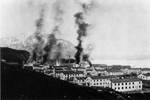
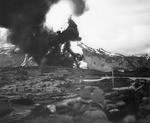
ww2dbaseRecall the Aleutian Islands taking place simultaneously; the pre-invasion air strike on Dutch Harbor started on 3 Jun 1942. Bad weather caused all of carrier Junyo's aircraft to turn back, and only 12 of Ryujo's aircraft could locate their targets, and they found Dutch Harbor anti-aircraft defense much stronger than expected. As a result, the invasion operation was delayed until a renew air strike could be mounted the next day. During the second air strike, the Japanese pilots were able to destroy the base's oil tanks and the hospital. A counterattack launched from Dutch Harbor located the Japanese fleet but failed to deal any damage before bad weather caused the Americans to lose contact with the enemy. The attack on Dutch Harbor pinned down local American air units and other forces that could had been used to reinforce Kiska and Attu. The landings at Kiska took place on 6 Jun 1942 by 550 men of the No. 5 Special Naval Landing Force under Lieutenant Commander Hifumi Mukai plus 700 construction troops, achieving surprise. The initial landing took place near the Salmon Lagoon then moved toward Kiska Harbor over land with naval gunfire support. The ten Americans of the US Navy Weather Detachment at the Kiska weather station were rounded up within a few days, except for one man who held up for 50 days before finally giving himself up. The island of Attu was taken on 7 Jun by 1,200 men of the 301st Independent Battalion of the Japanese Northern Army under Major Matsutoshi Hozumi. Before the Japanese invasion, many native inhabitants were already evacuated to Alaska; the 42 who remained was taken to a prison camp in Otaru, Hokkaido, Japan, where 16 of them later died. Adak, originally the third objective to be taken, was spared as a result of the operational delay. As such, Japan had taken two American pieces of territory shrouded in nearly constant mist and bitter cold. There were some Japanese officers who opposed the occupation of these newly conquered islands in the Aleutian Islands because the Midway operation had resulted in failure, but they were overruled.
ww2dbaseNow only with very light Japanese air cover provided by the ancient carrier Zuiho, American air power dominated the area. For example, the destroyer Tanikaze sent to rescue survivors of Hiryu was found by American aircraft sent to search for the same burning carrier. Failing to find Hiryu (because she had already sank), the American aircraft were able to attack Tanikaze almost at leisure. Finally, despite the presence of nearly the entire Japanese navy battle line, Yamamoto decided to cut his losses and headed home.
ww2dbaseWhen the news of the heavy losses at Midway reached Tokyo, Emperor Showa was a little shaken, but ultimately he sent an envoy to see Yamamoto to let the admiral know that the emperor understood that losses were to be expected in a war. Publicly, Emperor Showa supported the propaganda machine in proclaiming that the operation was a success; according to the Information Bureau, the Japanese only suffered one carrier lost and one damaged, while sinking two US carriers. The wounded sailor and officers brought back from the battle were quarantined into hospital ships and naval hospitals so to maintain secrecy; when recovered, many of these men were sent directly to South Pacific as replacements without granting them the opportunity to visit their families. Within the Navy, a direct result of the battle was the change in carrier construction and doctrine. Future carrier designs now included better damage control equipment and stronger flight deck armor; the consideration for refueling operations on the flight deck was introduced, as well as a complete rethinking of search and reconnaissance operations (given that Chikuma's scout planes' failure to detect American carrier groups was among key reasons for the defeat). For political reasons, Yamamoto and Nagumo were not sacked of their positions. Both continued to remain in most prominent positions in the Navy. The changes were honest and theoretically viable, but after Midway Japan had lost the initiative, thus making the changes too little too late in terms of effectiveness. Some historians argue that the manpower lost during this war surmounts to a decisive loss for Japan, although in truth the Japanese Navy lost 110 pilots during Midway out of the 2,000 pilots at her disposal at the start of the war; the loss was significant, but hardly decisive. What were painfully lost, however, were the skill sets the losses took away from Japan. The knowledge of aerial combat of the pilots, the efficiency of the armorers, and the experience of the aircraft mechanics were all something that would be nearly impossible to replace.
ww2dbaseSources:
Elliot Carlson, Joe Rochefort's War
Edwin T. Layton, And I was There
Jon Parshall and Anthony Tully, Shattered Sword
Peter Smith, Midway Dauntless Victory
Dan van der Vat, The Pacific Campaign
United States Strategic Bombing Survey Interrogations of Japanese Officials
Last Major Update: May 2010
Battle of Midway and the Aleutian Islands Interactive Map
Photographs
 |  |  |  |
Maps
 |  |  |  |
Battle of Midway and the Aleutian Islands Timeline
| 23 Mar 1942 | Intelligence experts at US Navy Station CAST at Corregidor, Philippine Islands tentatively linked the Japanese Navy code name AF to Midway Atoll. |
| 5 Apr 1942 | Japanese Navy leadership accepted the planned attack on Midway. |
| 16 Apr 1942 | The Japanese Navy issued Order No. 18 for the capture of Midway and Aleutian Islands. |
| 27 Apr 1942 | Joseph Rochefort's cryptanalytic team at Pearl Harbor, US Territory of Hawaii decrypted a radio message from Nobutake Kondo to Tokyo, Japan requesting navigation charts of the Aleutian Islands area and latest intelligence at AOE and KCN (which was determined to be Dutch Harbor and Kodiak in the Aleutian Islands). |
| 2 May 1942 | Joseph Rochefort's cryptanalytic team in Pearl Harbor, US Territory of Hawaii intercepted a radio message from Nobutake Kondo's chief of staff regarding the formation of task forces for an offensive operation. |
| 4 May 1942 | Joseph Rochefort's cryptanalytic team in Pearl Harbor, US Territory of Hawaii intercepted a radio message from battleship Kirishima to Isoroku Yamamoto's headquarters noting that due to Kirishima's repair work the battleship would not be able to participate in the upcoming campaign. |
| 6 May 1942 | Joseph Rochefort's cryptanalytic team in Pearl Harbor, US Territory of Hawaii intercepted a radio message from Kwajalein, Marshall Islands to Yokosuka, Japan noting the need for additional aircraft radio equipment for use with the AK campaign. |
| 8 May 1942 | Joseph Rochefort's cryptanalytic team in Pearl Harbor, US Territory of Hawaii detected hints that Japanese Navy fleet carriers and battleships were being attached, suggesting a large operation was being planned. |
| 9 May 1942 | Joseph Rochefort's cryptanalytic team in Pearl Harbor, US Territory of Hawaii intercepted a Japanese Navy radio message ordering carrier Akagi to make rendezvous with another fleet at Sasebo, Japan on 20 May 1942. |
| 11 May 1942 | Joseph Rochefort's cryptanalytic team in Pearl Harbor, US Territory of Hawaii intercepted a radio message from Nobutake Kondo noting that the occupation force for the upcoming campaign would proceed to Saipan, Mariana Islands to await the launch of the operation. Rochefort determined that this occupation force was likely to sail east rather than south, and Midway Atoll was a likely target. |
| 12 May 1942 | Naval leaders in Washington DC, United States disagreed with Joseph Rochefort's conclusion that the Japanese was planning on an attack on Midway. |
| 13 May 1942 | Joseph Rochefort's cryptanalytic team in Pearl Harbor, US Territory of Hawaii intercepted a radio message of Japanese warships requesting navigation charts of the Oahu, Hawaii area. Some time later, the team intercepted a message ordering aircraft transport ship Goshu Maru to embark the seaplane unit at Emidj island, Jaluit Atoll, Marshall Islands and sail to Saipan, Mariana Islands to join the AF campaign. Realizing that AF must already have a seaplane base or was a good location for a future seaplane base, Rochefort further confirmed that AF was Midway Atoll. Later in the evening, he sent this report to Chester Nimitz and the naval leadership in Washington DC, United States. |
| 14 May 1942 | Joseph Rochefort presented his Midway Atoll theory to Chester Nimitz's war plans officer Lynde McCormick. McCormick spent hours at Rochefort's office at the basement of the main navy building in Pearl Harbor, US Territory of Hawaii and was convinced that Rochefort's theory was likely correct. McCormick would return to Nimitz and would convince Nimitz to agree to this theory. |
| 15 May 1942 | Ernest King allowed Chester Nimitz to move the two carriers currently in the South Pacific to move up to the Central Pacific area, but King noted that he was still not convinced that Midway Atoll was the primary target of the suspected Japanese offensive. Later in the same day, Nimitz responded to the message, stressing that he believed the Japanese was likely to launch a three-prong attack against Midway Atoll, Aleutian Islands, and, likely at a two-to-three-week delay, Port Moresby in Australian Papua. |
| 16 May 1942 | Joseph Rochefort's cryptanalytic team in Pearl Harbor, US Territory of Hawaii intercepted a Japanese radio message containing Chuichi Nagumo's request for weather reports to be submitted to him at a location 50 miles northwest of AF starting from three hours prior to the pre-determined time of attack. |
| 17 May 1942 | From Washington DC, United States, Ernest King sent Chester Nimitz a message noting that King was now in agreement with the theory that Midway Atoll was likely one of the primary targets in the upcoming Japanese offensive. Later in the day, King messaged Harold Stark in London, England, United Kingdom, ordering him to relay the explanation for the US Navy removing two carriers from the South Pacific to British liaison officers. Also on this day, the US Office of Naval Intelligence also voiced its agreement in a report to King that the Japanese Navy code name AF was likely Midway Atoll. |
| 18 May 1942 | At Pearl Harbor, US Territory of Hawaii, Edwin Layton informed Joseph Rochefort that while Chester Nimitz would like to receive further evidence that Midway Atoll was indeed the next Japanese target. Meanwhile, Chester Nimitz ordered William Halsey to bring his carrier group back to the Hawaiian Islands as a precaution. |
| 19 May 1942 | US Navy intelligence officer Lieutenant Commander Jasper Holmes arrived at the idea that Midway Atoll could send out a fake message regarding the water distiller breaking down, thus the base desperately needed a supply of fresh water. Holmes' superior Joseph Rochefort gave him the permission to execute this idea in the hopes that the Japanese would pick up this message and provide Rochefort's team a clue on whether the Japanese Navy's reference of AF pointed at Midway Atoll. Rochefort's team also began to find the mention of a new code name, MI, in Japanese messages starting on this date; Rochefort quickly determined it to be the operational code name for the strike on Midway Atoll. |
| 20 May 1942 | The Japanese, having intercepted the fake message regarding Midway Atoll's water distiller breaking down, reported to the invasion fleet the news and advised the fleet to take on additional supplies of fresh water. This message was intercepted by the US Navy radio intelligence team at Pearl Harbor, US Territory of Hawaii, and it allowed the US to confirm that the target of the next Japanese offensive was indeed Midway Atoll. In response, US Navy and Marine Corps dispatched reinforcements to Midway Atoll and the Aleutian Islands in expectation of an assault. On the same day, US Navy intelligence also intercepted a Japanese message containing the order of battle for the Midway Atoll and Aleutian Islands assaults; this message would be decrypted over the next several days. |
| 21 May 1942 | The US Navy cryptanalytic team in Melbourne, Australia belatedly voiced its agreement that the Japanese Navy was likely targeting Midway Atoll. In Pearl Harbor, US Territory of Hawaii, Joseph Rochefort furnished the official report noting that Midway Atoll was confirmed as the Japanese target. Chester Nimitz, who had already began to prepare for such an attack, ordered his carriers to exercise radio silence to prevent the Japanese from learning of his attempt to gather Pacific Fleet carriers at Pearl Harbor. |
| 23 May 1942 | US Navy intelligence officers determined that the Japanese fleet targeting Midway Atoll would likely depart on 26 May 1942. |
| 24 May 1942 | All American warships in the Coral Sea area were recalled to Pearl Harbor, US Territory of Hawaii in anticipation of the Japanese attack on Midway Atoll. |
| 25 May 1942 | Japanese submarine I-9 launched her floatplane for a reconnaissance mission over Adak and Kanaga islands in the Aleutian Islands; on the same day, the Japanese Northern Area Fleet under Admiral Boshiro Hosogaya departed Japan for the conquest of nearby Attu and Kiska islands. On the US side, the Japanese radio message intercepted on 20 May 1942 was partially decrypted, giving the Americans a good idea of the scale of the Midway attack; the Americans missed one critical component, however, as the part regarding the battleship fleet, with Admiral Isoroku Yamamoto's personal participation aboard battleship Yamato, was not decrypted. |
| 26 May 1942 | The Japanese Navy Carrier Striking Force, composed of four carriers and an escort of battleships and lesser ships, sortied from the Inland Sea of Japan for Midway Atoll. In the Aleutian Islands in northern Pacific Ocean, Japanese submarine I-9 launched her floatplane for a reconnaissance mission over Kiska. In Japan, the naval leadership instructed the various fleets and bases to prepare for a new radio encryption scheme that would be deployed very soon. |
| 26 May 1942 | Kumano joined the Midway Invasion Transport Group at Guam, Mariana Islands. |
| 27 May 1942 | From Saipan and Guam in the Mariana Islands, an invasion fleet carrying 5,000 Japanese troops departed for Midway Atoll under Rear Admiral Raizo Tanaka. In the northern Pacific Ocean, Japanese submarine I-25 launched her floatplane for a reconnaissance mission over Kodiak Island, US Territory of Alaska, which spotted a US cruiser and two destroyers. To the west, still in the Aleutian Islands, I-19 was preparing to launch her floatplane when lookouts spotted an American aircraft; the submarine dove for cover, destroying the floatplane in the process. In Japan, the naval leadership affected a radio encryption coding change for all fleets and bases. At Pearl Harbor, US Territory of Hawaii, Joseph Finnegan and Wesley Wright, two intelligence officers working under Joseph Rochefort, broke the Japanese encryption used to secure operational dates after working on it for the entire previous night; with this new knowledge they determined that the Japanese were going to raid Dutch Harbor in Alaska on 3 Jun 1942 and to attack Midway Atoll on 4 Jun 1942. Finally, Rochefort visited Chester Nimitz's office to help him convince other admirals and generals of their belief that Midway was soon to be a Japanese target. |
| 28 May 1942 | Seaplane tender USS Tangier conducted a small raid on Tulagi in the Solomon Islands; during the attack, she transmitted radio messages that were purposefully composed as if she was a fleet carrier, thus giving the Japanese a false impression that the US was still operating fleet carriers in the South Pacific when in actuality all fleet carriers had been shifted back to the Hawaiian Islands. |
| 29 May 1942 | The Main Body of the Japanese Midway invasion fleet set sail; it was consisted of Battleship Division 1 (Yamato, Nagato, Mutsu), light carrier Hosho, seaplane/submarine tenders Chiyoda and Nisshin, light cruiser Sendai of Destroyer Squadron 3, nine destroyers, and Supply Group No. 1; the Main Body remained 600 miles behind the Carrier Striking Force. Meanwhile, the transport fleet set sail from Saipan in the Mariana Islands; it was consisted of 15 transports. |
| 30 May 1942 | The Japanese intercepted, but could not decode, a report by USS Cuttlefish returning from patrol near Saipan, Mariana Islands. Around midnight, the Japanese Navy 6th (Submarine) Fleet at Kwajalein, Marshall Islands also reported monitoring messages exchanged by two American task groups located 170 miles north-northeast of Midway Atoll, moving westwards. Aboard battleship Yamato, Admiral Yamamoto suggested that the information be relayed to the First Air Fleet flagship carrier Akagi, but senior staff officer Captain Kuroshima cautioned not to break radio silence. Elsewhere, the transport fleet of the Japanese Aleutian invasion fleet set sail from the main island of Honshu of the Japanese home islands; it was consisted of 8 transports. In the northern Pacific Ocean, Japanese submarine I-25 surfaced for the launching of her floatplane for a reconnaissance missiong over Dutch Harbor in the Aleutian Islands; an American cruiser sailed near by luck but failed to spot the submarine; I-25 would continue with the reconnaissance mission after a short while. |
| 31 May 1942 | Joseph Rochefort's cryptanalytic team in Pearl Harbor, US Territory of Hawaii intercepted a radio message noting that carrier Zuikaku's air group was being transferred out of the carrier, which provided a strong hint that Zuikaku was not going to participate in the upcoming offensive. Later on the same day, Chester Nimitz informed his carrier task forces commanders that the Japanese attack would likely take place on 3 Jun 1942, and the Japanese would be operating four fleet carriers. |
| 1 Jun 1942 | Joseph Rochefort's cryptanalytic team in Pearl Harbor, US Territory of Hawaii reported signs that their counterparts in Japan were monitoring carrier radio traffic in the Hawaiian Islands; Rochefort warned Nimitz of this fact, but the US carrier groups would not change their behavior. |
| 2 Jun 1942 | US Navy deployed 25 submarines west of Midway in an attempt to detect the incoming Japanese fleet, while Midway-based US Army B-17 bombers attacked Japanese transports 600 miles west of the atoll, inflicting no damage. |
| 3 Jun 1942 | USS St. Louis and USS Nashville joined with USS Indianapolis, USS Louisville, and USS Honolulu to round out Task Force 8 on patrol in the Gulf of Alaska. Upon hearing reports from Dutch Harbor, Alaska of an air attack by carrier planes, Task Force 8 immediately began searching for Japanese carriers operating south of the Aleutian Islands. |
| 3 Jun 1942 | In the morning, US PBY Catalina aircraft discovered the location of the Japanese transports west of Midway Atoll. At 1230 hours, nine Midway-based B-17 bombers launched from Midway, reaching and attacking Japanese transports 660 miles to west at 1830 hours, inflicting no damage; meanwhile, US Navy Task Forces 16 and 17 changed course in an attempt to gain a more favorable battle for the upcoming battle. On the Japanese side, submarines arrived to form a cordon to detect American warship movements from the Hawaii Islands toward Midway Atoll; they did not realize that the American carriers had already passed. Far to the north, aircraft from Japanese carriers Ryujo and Junyo bombed Dutch Harbor, US Territory of Alaska; one of the Zero fighters sustained damage and unsuccessfully crash-landed on Akutan Island. In response, US Navy dispatched a task force of 5 cruisers and 4 destroyers to counter the Japanese attacks in the Aleutian Islands. |
| 4 Jun 1942 | Starting at 0700 hours, US carriers launched torpedo bombers and dive bombers against the Japanese fleet in the Midway region. Japanese carriers wiped out the first few waves of US air attacks, but at about 1030 hours dive bombers were able to hit Soryu, Kaga, and Akagi. USS Yorktown was hit by Japanese dive bombers at about 1200 hours and by torpedo bombers at 1440 hours, forcing Rear Admiral Fletcher to transfer his flag to cruiser Astoria. At 1703 hours, the last undamaged Japanese carrier Hiryu was hit by a dive bomber. Soryu would sink at 1913 hours (711 were killed, 392 survived), and Kaga would be scuttled at 1925 hours (811 were killed, 900 survived). |
| 4 Jun 1942 | Yugure escorted the Aleutian Guard Force. |
| 4 Jun 1942 | Pilot Eugene Lindsey and gunner Charles Grenat were killed off Midway Atoll when their TBD Devastator aircraft was shot down by Japanese A6M2 Zero fighters while attacking carrier Kaga. |
| 4 Jun 1942 | Jack Kleiss, flying a SBD Dauntless dive bomber, scored bomb hits on Japanese carriers Kaga and Hiryu off Midway Atoll. |
| 4 Jun 1942 | In the Battle of Midway, USS Hammann shot down two Japanese aircraft attacking USS Yorktown, but nevertheless Yorktown would be disabled by the Japanese. Hammann rescued about 500 survivors from Yorktown. |
| 4 Jun 1942 | Japanese carriers launched 72 bombers and 36 fighters against the airfield at Midway Atoll at 0430 hours, hitting the atoll at 0620 hour and doing limited damage. |
| 5 Jun 1942 | At 0015 hours, Yamamoto ordered the night engagement at Midway to be canceled; at 0255 hours, he ordered the entire Operation MI to be canceled. In the battle zone, heavily damaged Japanese carriers Akagi and Hiryu were scuttled. To the west, heavy cruisers Mogami and Mikuma suffered a collision as they attempted to avoid submarine USS Tambor; Mogami suffered 92 killed and heavy damage in the collision. Far to the north, in the Aleutian Islands, aircraft from Japanese carriers Ryujo and Junyo attacked Dutch Harbor, US Territory of Alaska as Japanese troops occupied Attu. |
| 5 Jun 1942 | Japanese cruiser Kumano was leading a column of sister Mogami-class cruisers Suzuya, Mikuma, and Mogami withdrawing from Midway. Kumano spotted the surfaced American submarine USS Tambor and ordered an emergency 45-degree turn to starboard, but Mikuma mistakenly made a 90-degree turn. Mogami rammed Mikuma on the portside below the bridge crumpling 40-feet of Mogami’s bow and piercing Mikuma’s fuel tanks, causing her to leak oil uncontrollably. This trailing oil slick led to Mikuma’s demise the following day. |
| 5 Jun 1942 | Jack Kleiss, flying a SBD Dauntless dive bomber, dropped bombs on Japanese destroyer Tanikaze off Midway Atoll, but the bomb missed. |
| 5 Jun 1942 | Tanikaze was ordered to search for the disabled carrier Hiryu and to rescue survivors, but she was not able to find Hiryu (which already sank). Tanikaze was in turn attacked by 32 US Navy dive bombers. One of the five near-misses caused an explosion in the after turret, killing six. |
| 5 Jun 1942 | Portland took aboard 2,046 survivors of the stricken carrier USS Yorktown (Yorktown-class) in the Battle of Midway |
| 5 Jun 1942 | Yugure escorted the Aleutian Guard Force. |
| 6 Jun 1942 | While assisting damage control efforts aboard USS Yorktown, USS Hammann was struck by one Type 95 torpedo from I-168, breaking her in half, while Yorktown was struck by two of I-168's torpedoes. Hammann sank very quickly, then suffered a underwater explosion, most likely from her own depth charges, which killed many survivors in the water. 80 men were killed in the sinking. |
| 6 Jun 1942 | The crew of Tanikaze buried six crewmen at sea in the Pacific Ocean; they were killed on the previous day during an American dive bomber attack. |
| 6 Jun 1942 | Jack Kleiss, flying a SBD Dauntless dive bomber, scored three hits on Japanese cruiser Mikuma off Midway Atoll. |
| 6 Jun 1942 | Aircraft from USS Enterprise and USS Hornet attacked, damaging destroyer Arashio (37 were killed), destroyer Asashio (22 were killed), and cruiser Mogami (81 killed) and causing fatal damage to cruiser Mikuma, which would sink later in the day (650 killed, 240 survived). As US Navy Task Force 16 sailed eastward to refuel, thus breaking contact with the Japanese fleet, the Battle of Midway drew to a close. |
| 7 Jun 1942 | The American newspaper Chicago Tribune reported the Battle of Midway victory, hinting that the US Navy had knowledge of Japanese strengths prior to the engagement; this would later, in Aug 1942, trigger a Federal investigation. |
| 7 Jun 1942 | Japanese troops occupied Kiska, Aleutian Islands, US Territory of Alaska. |
| 8 Jun 1942 | 2 battleships, 1 escort carrier, and 2 heavy cruisers broke off from the retiring Japanese Navy Midway invasion fleet to reinforce the Aleutian Islands. |
| 8 Jun 1942 | Yugure was transferred to the Northern Naval Force. |
| 9 Jun 1942 | USAAF claimed part of the credit for the American victory at Midway despite that no land-based aircraft hit any Japanese warship. |
| 10 Jun 1942 | US patrol aircraft discovered the presence of Japanese troops on Kiska and Attu in the Aleutian Islands in the North Pacific. In Japan, the Information Bureau announced that during the Battle of Midway, one Japanese carrier and two US carriers were sunk; one Japanese carrier returned to Japan with some damage. |
| 16 Jun 1942 | Japanese Imperial Palace envoys visited Isoroku Yamamoto aboard battleship Yamato, bringing him the news that Emperor Showa understood losses (in regards to the devastation suffered at the Battle of Midway) were expected at a time of war and that the emperor was not overly concerned. |
| 21 Jun 1942 | A US PBY Catalina aircraft rescued two airmen who had lost their TBD Devastator torpedo bomber during the Battle of Midway. They were the last survivors to be rescued from the battle. |
| 7 Aug 1942 | In response to newspaper Chicago Tribune's 7 Jun 1942 issue hinting the US Navy had knowledge of the Japanese order of battle prior to the engagement, the US government ordered an investigation by a Federal Grand Jury. This investigation would later find that Chicago Tribune correspondent Stanley Johnston had stolen a report containing this information while he reported aboard USS Barnett days prior to the battle. |
| 7 Aug 1942 | Task Force 8 consisting of USS Indianapolis, USS Nashville, USS Louisville, USS Honolulu, USS St. Louis, and escorts bombard Japanese positions on Kiska Island near the western end of Alaska's Aleutian chain. |
| 8 Aug 1942 | The Federal Grand Jury investigation on newspaper Chicago Tribune revealing classified military intelligence information made headlines on major US newspapers. Inadvertently this might have led to, though not proven, the changing of Japanese Navy radio communications encryption on 14 Aug 1942. |
| 21 Jul 1943 | USS New Mexico shelled Japanese positions on Kiska, US Territory of Alaska. |
Please consider supporting us on Patreon. Even $1 per month will go a long way! Thank you. Please help us spread the word: Stay updated with WW2DB: |


Visitor Submitted Comments
2 Sep 2005 07:29:54 PM
I OFFER MY PERSONAL WEB SITE FOR VIEWING,www.karetkamidway.com
combatant and survivor.ANY QUESTIONS WILL RESPOND TKS
15 Sep 2005 08:21:36 PM
Can you tell me an interpretation of the significant events of the battle of Midway as they relate to current Marine Corps doctrine?
30 Sep 2005 07:28:13 AM
The participation of the movie director John Ford is missing. He filmed the battle. The film (The Battle of Midway) can be download from the Internet Archive (public domain).
24 Nov 2005 04:13:59 AM
study
19 May 2006 07:30:35 AM
During the battle, in what ship did Admiral Spruance sail?
 C. Peter Chen says:
19 May 2006 12:01:56 PM
During this battle, Rear Admiral Spruance was the commander of Task Force 16 which centered around two carriers, USS Enterprise (Capt George Murray) and USS Hornet (Capt Marc Mitscher). Spruance sailed aboard the Enterprise.
30 Jun 2006 08:10:59 AM
This website does explain the main details of the battle and I appreciate it.
14 Sep 2006 05:39:27 PM
what order was given by an admiral only once in naval history, it was given shortly after war was declared on japan
20 Dec 2006 05:49:22 AM
CAP operations would not hamper a launching of an immediate *as is* strike as per the advice of Rear Admiral Yamaguchi. Emergency landing CAP aircraft would be rerouted to only 1 of the 4 carriers, allowing the other 3 to launch without impediment. After the 3 completed launching the CAP would be rerouted and the fourth carrier would complete its launch.
7 Feb 2007 05:41:59 PM
Excuse my bad english.
I was interested to know about Cap.Simards actions at midway
My name is Bruno Simard
I live in Québec
20 May 2007 03:20:00 PM
My Dad is died in 1983. I heard he was in the Aleution Islands. He would never talk about the war, so I dont really know what he did and where. His name was Avon T Adams. I think he was also in Germany as was my Uncle Howard Adams. They were both in the army and met in Germany. I just watch Band of Brothers which as made even more interested. Does that could tell me more about it. any one know of him
28 May 2007 11:52:40 PM
Band of Brothers is awesome, Laneal. Ive seen it, its one of the things that got me interested in the war as well.
1 Mar 2008 03:26:36 AM
I am looking for statistics on american
aircraft on Hawaii islands during the battle of Midway. Seemingly, nobody knows a thing, and some researchers's guesses leaves me in confusion - according to some americans had ab. 360 planes on Oahu -some 200 fighters, 100 (!!) horizontal recon planes and some 60
hydroplanes (PBY, etc.) - and none of SBD, TDB, not even a single B-17.
Does anybody have any information?
20 May 2008 11:55:24 AM
i think this website is the boom!!!!
it help me on my report
8 Jun 2008 10:16:08 AM
Does this help? www.dive-bombers.co.uk./MidwayVictory.htm
Bill says:17 Feb 2009 01:53:11 PM
Vice Adm. Nagumo lost four carriers at midway, the cream of trained pilots and crews,loss of aircraft and equipment. after the first strike against midway, why didn't he split his carries two would hold with land bombs, the other two load with torpedo's. his zero fighter's low on fuel, no c.a.p. and no radar! For the U.S. Navy it was just luck! while the fighter's were shooting at the low flying torpedo bomber's the hell diver's came in for the kill, the zero's could not reach altitude fast enough. midway doomed japan.
7 Apr 2009 09:47:27 AM
this was a pretty cool battle. but it was just luck.
8 Apr 2009 08:54:54 AM
the battle was completely important it was the greatest turning point during WW2. but i think that the battle was very confusing.
21 Apr 2009 08:13:25 AM
these pepole don't know what their talking about. It was amazing srategic planning on the american side.
21 Apr 2009 04:14:36 PM
i really wish more dates would have been put in here.
12 Jun 2009 07:57:00 AM
tea for two, americans certainly used the code breaking information against the *** forces, so they could use 3 carriers against the 4 japanese carriers, but Nimitz knew that they needed to be the first ones to spot the japanese task force, so the rendez-vous point for the americans before the battle started was called "Point Luck" that said all about what they needed.
17 Feb 2010 03:23:52 PM
Could anyone please help me find out the colour scheme to the pby-5 catalinas during the battle of midway, Lt Howard Ady's crew names. I would love to know as Iam a model maker and I have been trying to finish a catalina dedicated to Lt Ady.
11 May 2010 08:17:44 AM
sweet
3 Dec 2010 07:35:01 AM
this was alllllll LUCK. forget usa!!
24 Jan 2011 06:30:37 PM
the war was really bad for alot of people
9 May 2011 02:03:15 PM
very interesting
13 Feb 2012 06:12:47 AM
i am looking for some information...i have the names and the planes launched off the enterprise at 9:06 on june 4th...all but the 10 wildcats used by VF-6...i need the planes by aircraft number...ie F-12 or F-4
Thank you
19 May 2012 04:07:25 PM
Thank you sooooooo much. this is such an awesome site to get info off. great info, great quotes, great stories. 10/10 from me.
20 Nov 2012 08:36:44 PM
my step dad flew sbd's off the york town right before midway his squadron was sent to the aleutians.since he lost his home york town he was transfered to the hornet.which also went to the bottom in the solomons.he ended up flying f4u corsairs and ended the war flyin along the pacific coast hunting for jap subs.he rarely ever talked about his missions.i saw him start to cry once telling how he splashed a zero and saw the pilot screaming because he on fire and was trapped in the plane
10 Jun 2013 08:28:08 AM
The quote from Commander John Ford regarding the inverted Zero is incorrect. He did not say "I did manage to get the picture.... You can see one big chunk coming for the camera." after what is written. That quote is where he was talking about the hangar that blew up and knocked him out.
"A Zero flew about 50 feet over it and dropped a bomb and hit it, the whole thing went up. I was knocked unconscious. Just knocked me goofy for a bit, and I pulled myself out of it. I did manage to get the picture. You may have seen it in [the movie] "The Battle of Midway." It's where the plane flies over the hangar and everything goes up in smoke and debris, you can see one big chunk coming for the camera."
8 Feb 2014 10:17:46 AM
"A Zero flew about 50 feet over it and dropped a bomb and hit it, the whole thing went up. I was knocked unconscious. Just knocked me goofy for a bit, and I pulled myself out of it. I did manage to get the picture. You may have seen it in [the movie] "The Battle of Midway." It's where the plane flies over the hangar and everything goes up in smoke and debris, you can see one big chunk coming for the camera."
23 Jun 2015 04:01:40 AM
This was a very engrossing account of Midway, had to read it all.. from beginning to end and then followed it with the timeline.. great stuff!! Thank God for Joseph Rochefort's cryptanalytic team in Pearl Harbor!
11 Feb 2016 09:44:46 AM
thanks
24 May 2016 03:41:53 PM
Those who said it was all luck are wrong. They ignore all the work the intelligence folks did to correctly determine the Japanese plans and strength, and to put American forces in the place they would do the most good. It also glosses over the keen strategic insight of Nimitz and tactical acumen of Spruance. Qualities that served us well throughout the war in the Pacific.
21 Jun 2016 05:51:06 PM
sou fascinado e estudioso da segunda guerra mundial, em particular da batalha de midway, pela sua importância histórica.
29 Jun 2016 10:33:58 PM
If you say it is luck, you are definitely wrong. There was no luck involved. Us Intelligence knew all the Japanese plans. Those that say it is Luck are either thickheads or never studied history.
David Stubblebine says:30 Jun 2016 02:47:36 PM
To Anonymous (Comment #37):
Interesting comment. Please help me find where to study history that will support a statement like, “US Intelligence knew all the Japanese plans.” All the history I have studied so far has stated something quite the opposite. Please share where you heard this or how you would support this (without calling us names - I am a thickhead but I do not need to be reminded).
14 Aug 2016 08:27:44 PM
Can find the above needed information in any decent and good text. This site is fully correct as to this battle
9 Nov 2016 10:36:54 AM
F14... That's my security code, seeing as I came here from the F4F page, the F-14 being another one of Grummans great accomplishments.... I just thought that was rather funny.
20 Nov 2017 10:27:49 AM
I am a middle schooler in MN and am preparing for my school’s history day competition. Are there any other good websites I should know about for taking notes?
21 Feb 2023 08:54:56 AM
I am doing this for my history project good thing its in a group
All visitor submitted comments are opinions of those making the submissions and do not reflect views of WW2DB.
» Amagai, Takahisa
» Aoki, Taijiro
» Ariga, Kosaku
» Browning, Miles
» Buckner, Simon
» Daigo, Tadashige
» Feeney, John
» Fletcher, Frank
» Fuchida, Mitsuo
» Harada, Kaname
» Inoue, Isamu
» Isawa, Yutaka
» Ito, Sukemitsu
» Ito, Taisuke
» Kaku, Tomeo
» Kaneko, Tadashi
» Kiefer, Dixie
» Jack Kleiss
» Kobayashi, Michio
» Kondo, Nobutake
» Kurita, Takeo
» Layton, Edwin
» Gene Lindsey
» Mitscher, Marc
» Murray, George
» Nagumo, Chuichi
» Ohara, Hisashi
» Okada, Jisaku
» Okumiya, Masatake
» Omori, Sentaro
» Ring, Stanhope
» Rochefort, Joseph
» Shiraichi, Kayutaka
» Soji, Akira
» Spruance, Raymond
» Tanabe, Yahachi
» Tanaka, Raizo
» Tinker, Clarence
» Tokuno, Hiroshi
» Tomonaga, Joichi
» True, Arnold
» Yamaguchi, Tamon
» Yamamoto, Isoroku
» Yanagimoto, Ryusaku
Locations:
» Alaska
» US Pacific Islands
Ship Participants:
» Abukuma
» Akagi
» Amagiri
» Arashio
» Asagumo
» Astoria (New Orleans-class)
» Atago
» Chikuma
» Chokai
» Cuttlefish
» Ellet
» Enterprise
» Flying Fish
» Fuso
» Haguro
» Hammann
» Haruna
» Hiryu
» Honolulu
» Hornet (Yorktown-class)
» Hosho
» Hyuga
» I-68/I-168
» Ise
» Jintsu
» Junyo
» Kaga
» Kirishima
» Kiso
» Kitakami
» Kongo
» Kumano
» Maya
» Mikuma
» Minegumo
» Minneapolis
» Mogami
» Monaghan
» Murasame
» Mutsu
» Myoko
» Nachi
» Nagara
» Nagato
» Nashville
» Nautilus
» New Orleans
» Nisshin
» Northampton
» Oi
» Pensacola
» Portland
» Ryujo
» Sendai
» Soryu
» St. Louis
» Suzuya
» Takao
» Tama
» Tanikaze
» Tone
» Vincennes
» Yamashiro
» Yorktown (Yorktown-class)
» Yugure
» Yukikaze
» Yura
» Zuiho
Notable Aircraft:
» F4F Wildcat
» SBD Dauntless
Documents:
» Emmons Report on Battle of Midway
» Interrogation Nav 1, Captain Takahisa Amagi
» Interrogation Nav 4, Captain Taijiro Aoki
» Interrogation Nav 13, Captain Yasuji Watanabe
» Interrogation Nav 2, Captain Susumu Kawaguchi
» Interrogation Nav 20, Commander Masatake Okumiya
» Interrogation Nav 24, Captain Taisuke Ito
» Interrogation Nav 39, Captain Hisashi Ohara
» Interrogation Nav 46, Lieutenant Commander S. Yunoki
» Interrogation Nav 60, Captain Yasumi Toyama
» Interrogation Nav 64, Rear Admiral Toshitane Takata
» Interview with Bert Earnest
» Interview with Clarence Dickinson
» Interview with Earl Gallaher
Related Books:
» And I Was There: Pearl Harbor and Midway-Breaking the Secrets
» Joe Rochefort's War
» Midway: Dauntless Victory
» Never Call Me a Hero
» Pearl; December 7, 1941
» Shattered Sword
Affiliated Link:
» Shattered Sword
|
- » 1,167 biographies
- » 337 events
- » 44,615 timeline entries
- » 1,244 ships
- » 350 aircraft models
- » 207 vehicle models
- » 376 weapon models
- » 123 historical documents
- » 261 facilities
- » 470 book reviews
- » 28,517 photos
- » 365 maps
Winston Churchill, on the RAF

Please consider supporting us on Patreon. Even $1 a month will go a long way. Thank you!

Or, please support us by purchasing some WW2DB merchandise at TeeSpring, Thank you!
8 May 2005 05:04:49 PM
i thnk that you should put more dates that go along with what is happening