


WASP: Women in the WW2 US Army Air Force
Contributor: C. Peter Chen
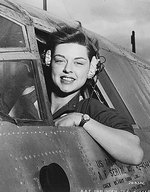 As American pilots, some female, went overseas to fight, directly or indirectly, in WW2 in Britain and China, many began to see that should the United States enter the war, the demand for pilots would increase dramatically. Independently, female pilots Jackie Cochran and Nancy Harkness Love submitted proposals to the USAAF, arguing that placing female pilots in non-combat roles would free up their male counterparts for combat missions. In 1941, with the support of Colonel Robert Olds and Eleanor Roosevelt, Cochran's proposal broke through to General "Hap" Arnold despite Arnold's initial resistance. Arnold asked Cochran to take a group of qualified female pilots to Britain to learn more from the Air Transport Auxiliary of the Royal Air Force, which had already begun employing female pilots.
When WW2 began, it was finally apparent that demands for aviators exceeded the supply. Colonel William H. Tunner of the USAAF Air Transport Command and Love drew up a proposal for female pilots to deliver military aircraft from factory to military air bases; on 5 Sep 1942, Love was named the commander of the Women's Auxiliary Ferrying Squadron, "WAFS", which was based at Newcastle Army Air Base, Delaware, United States. The typical WAFS pilot had 1,400 hours of flight time and had 30 hours of Army training (mostly administrative details). Requirements of the WAFS pilots were American citizenship, between 21 and 35 years of age, minimum of high school education, Commercial Pilot's Certificate, 500 hours of flight time with 50 hours within the past year, 200 horsepower rating, and two letters of recommendation. The average pay for WAFS pilots was about US$250 per month with US$6 per diem while on duty. They began ferrying USAAF aircraft very soon after the start of the program.
Arnold, seeing the promise of Tunner's WAFS program and also noting the experience Cochran had acquired in Britain, finally completely set aside his prior prejudice and on 16 Nov 1942 established the 319th Women's Flying Training Detachment, "WFTD", at Municipal Airport, Houston, Texas, United States under Cochran's command. The WFTD had fewer resources than their WAFS counterparts, which meant that they had no uniforms, no life insurance, no crash truck, and no fire truck. Morale became an issue that was never truly resolved with WFTD, especially after the 7 Mar 1943 incident where pilot trainee Margaret Oldenburg and instructor Norris G. Morgan were killed in a crash south of Houston.
In Jul 1943, to streamline command and to better distribute resources, the two programs merged together to form the Women Airforce Service Pilots, "WASP"; the disbanding of WAFS and WFTD programs took place officially on 5 Aug 1943. Although administered by the US Army, WASP was designated a civil service branch. The repercussion of this would be felt by the families of the 38 WASP aviators who lost their lives while performing their duties during WW2, who were deprived of military honors and even the public funding to transport their remains home for burial. On 21 Jun 1944, the United States House of Representatives attempted to improve the situation by granting WASP military status, but the bill was narrowly defeated.
On 1 Jul 1944, uniforms were finally ordered for WASP pilots from the Philadelphia Quartermaster Depot. The uniform consisted of a blue blouse with three buttons, a matching skirt, and a white shirt with black necktie. Many of the women also wore A-2 or B-3 leather flight jackets over their uniforms when performing ferrying missions.
 WASP training was centralized at Sweetwater, Texas, United States, and trained pilots were deployed to 120 various air bases within the United States. By the end of the WASP program in Dec 1944, over 1,000 pilots were trained (including the predecessor programs WAFS and WFTD), who flew more than 60,000,000 miles of operational flights, which included the ferrying of aircraft from aircraft factories to ports and air bases, towing targets for live anti-aircraft artillery practice, simulated strafing missions, and transporting cargo. Speaking specifically of the ferrying missions, pilots of WASP delivered 12,650 aircraft during the war, which made up of over 50% of combat aircraft built in the United States during that time period.
On 20 Dec 1944, Arnold disbanded WASP. Originally prejudiced against the potentials of female pilots, by now the female pilots had won him over. In fact, one of the reasons for him to disband WASP was due to the unsuccessful attempt of the Congress to make WASP personnel members of the military. On 7 Dec 1944, during a speech he delivered at Sweetwater, he said that the "WASP have completed their mission. Their job has been successful.... The Air Forces will long remember their service and their final sacrifice."
In 1975, Colonel Bruce Arnold, son of General "Hap" Arnold, began lobbying for WASP pilots to be recognized as veterans. They were eventually successful. In 1977, with support of Senator and former ferry pilot Barry Goldwater, President Jimmy Carter signed the G. I. Bill Improvement Act which granted WASP pilots full military status.
Sources: The US Home Front, Wikipedia.
Last Major Update: Feb 2008
WASP: Women in the WW2 US Army Air Force Timeline
| 26 Oct 1944 | 32-year-old WASP pilot Gertrude Tompkins Silver took off from Mines Field in Inglewood, California in a newly-manufactured North American Aviation P-51D Mustang on a ferry flight to Palm Springs. She was supposed to have taken off to the west, turn 180-degrees over Santa Monica Bay, and then overfly the airfield on an easterly course toward Palm Springs but neither she nor the airplane were never seen again after taking off. Gertrude Tompkins remains the only WASP pilot still unaccounted for. |
Photographs
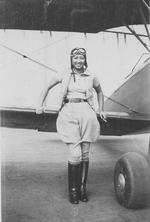 | 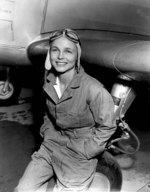 | 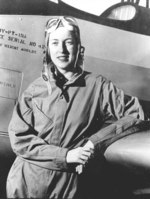 | 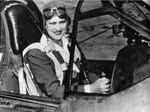 |
WASP: Women in the WW2 US Army Air Force Interactive Map
Please consider supporting us on Patreon. Even $1 per month will go a long way! Thank you. Please help us spread the word: Stay updated with WW2DB: |


Visitor Submitted Comments
25 Mar 2008 06:15:25 PM
This information is great!
This was my favorite website for learning about the WASPs!
Thank you!
8 May 2008 02:42:45 PM
this really isnt helping :[
22 Sep 2008 09:42:37 AM
I am portraying a WASP as a reenactor and need information on what they wore. From my research and emailing actual women who were WASP they tell me they did not wear a hat, tie until the last five months of the WASP when the uniform was issued. I was told by one WASP that she wore Officer's pink trouser and matching shirt. I've seen photos of Khaki pants that they bought at the local PX and matching shirt. I do have an A2 Flight Jacket and wish to be correct in my portrayal - no rank was worn either as I understand - In my research I have read much about what they did - but I need to know how they were dressed - any comments welcomed. Thank you.
13 Apr 2009 10:49:56 AM
There was no rank worn, of course, since there was no rank. These women were civilian "volunteers" - at the time, part of the Civil Service - and had no military status whatsoever until decades later. Though flying was (and is) an inherently dangerous game, the WASPS had no insurance and no right even to a military funeral for those 38 women who died in the cockpit. The WASP A2 jacket normally carried a USAAF patch on the left sleeve, and Fifinella on the front left of the jacket.
When a WASP refers to "pink" trousers, she's talking about the shade of khaki worn during WWII. Almost a beige, it had a slight pink sheen to it. The same shade was worn by men as it was the standard khaki back then.
If you asked the earliest WASPs what they were issued, however, I'm sure you'll hear horror stories of surplus mechanics' overalls in size 44 and up! That must have been quite the sight - a petite 5'2" woman trying to look dignified in work overalls twice here size!
12 May 2009 12:27:21 PM
Did any of the WASP pilots ferry Air Force planes to England during WW2 ?
20 Aug 2009 11:43:36 PM
Yes they did near Preston, Lancs.They also wore allsorts of different combinations of dress while they were doing this,they really wore what they wanted or could get their hands on. Thanks Rick.
27 Oct 2009 09:12:45 AM
NO, ABSOLUTELY NOT--WASP DID NOT LEAVE THE CONTINENTAL US. THEY NEVER FERRIED PLANES TO ENGLAND. NEVER.
THERE WERE FEMALE PILOTS FERRYING IN ENGLAND-- FOR THE RAF-- THEY WERE ATA.
please see our website for more information:
http://www.wasp-wwii.org
7 Jan 2010 09:18:13 AM
this site is okay very informative where do you find the organization title?
12 Jan 2010 10:50:28 AM
HELP these people are my history prject and i need to know almost everything about these peeps!!
15 Mar 2010 09:32:23 AM
I am very pleased that the WASPS finally received the recognition they fully deserved
decades ago. As a now-retired male pilot, I am ashamed that apparently male pilot resistance may have played a significant role
in Congress's unsuccessful effort to do the right thing by the WASPS!!
Bob Lyons
15 Mar 2010 06:24:42 PM
Were there any African American WASP. I am writing a research paper
25 Mar 2010 02:11:15 PM
This sight works great, but if u need more info go to the WASP official website. www.wingsacrossamerica.us
28 Mar 2010 10:26:00 AM
What route was taken in ferrying planes from north America to Europe during WW-2 ?.
Thanks
29 Apr 2010 11:47:51 PM
I'm researching the Ferrying Squadron emblems of WW-2 thier designs/colors and thw where/what Groups they were with, please contact me if you can help with photos,information, this is a little known part of WW-2 military aviation and very interesting to me, thanks !
Johnny
WeBeEmblems@aol.com
16 Oct 2010 04:08:50 PM
Let us remember these heroic ladies and all non-coms of WW2. They should be recognized at veterans, just as all non coms should be. The combat veterans relied heavily on non coms such as transport pilots, ambulance drivers, their instructors and even General of the Army Marshall himself.
23 Feb 2011 10:56:06 AM
There has been so virtually no recognition, an honor these courageous women so richly have earned and deserve. At the time they were treated as "second class citizens" or "also-rans", no rank, no benefits, and very little respect. Recent times have changed that, none too soon as there are few of these WASPS still living.
13 Jan 2012 05:59:49 PM
this info is great with very good pics. thank you :)
28 Feb 2012 12:01:45 PM
RIVETING!
12 Sep 2012 06:38:07 AM
PLease message me the article and the local and foreign .. i need to my project .. Thank you .
25 Nov 2012 08:08:49 AM
I have just pick up A2 42"
for the WASPS would any one like to buy it?
25 May 2013 11:53:59 PM
30 years or so ago, I saw a movie about the WASPS and I can't remember it nor can I find info on it.
anyone have any info on this?
13 Nov 2013 06:21:45 PM
this was an ok site but they did not fight overseas and well honestly im a little confused by all of this.
22 Apr 2014 12:44:44 PM
I am trying to locate information on a WWII female pilot who my father knew by the name Meg Connor for a book he is writing. She transported higher ranking officers and other VIPs to various meetings around the country, as well as routine gunnery target flights. She was stationed in Hondo Texas circa 1943-45, and flew an A-20 converted to passenger duty. Apparently she was quite a character and well known. Pointers to any information about her, or the transport unit at Hondo (which, at the time, was hush-hush because of the people they were carrying), would be appreciated. My email address is losborne@chaminade.edu.
8 Oct 2014 12:52:27 PM
looking for any info on Sally Pollock now deceased, whom I believe
was a WASP
12 Oct 2014 03:30:28 PM
To add to my earlier request of info on Sally Pollock having been in the WASPs, I would like to add that in her later years she was a beloved principal in the Hermosa Beach school district. Mothers of kindergarteners in 1974 started a book club and are still meeting. Recently I read a book by Fannie Flagg about the WASPs and it reminded me that Sally had talked lovingly of her involvement in some organization flying planes in WWII. It must be the WASPs. I would love to recommend this book for our next meeting since we all loved Sally. I'd like to honor her, but I want to make sure this is the organization she told us about. Please send me any available data so we can get the ball rolling. You can reach me at roblorn@verizon.net. Thank you
27 May 2015 11:55:23 AM
There was a Sally Lamar. She was a trainee from what I can find. I'm not sure if it is the same lady. Sally Lamar was with the Class 44-W-2 Trainees
19 Nov 2015 06:12:36 AM
i really think that the WAPS ARE great women
15 Dec 2015 08:24:48 PM
I was surprised to see how many died in "training" and "routine" flights. Totally ignorant about realities of piloting. Is that just to be expected?
17 Mar 2017 03:10:05 PM
This is in response to comment #29: Thirty-eight women died as members of the WASPs. They actually had a slightly better percentage than their male counterparts. Piloting airplanes is a dangerous pursuit, but these women were highly capable and navigated with just a compass, watch and map.
10 May 2017 11:37:35 AM
Truly sad that it took until 1977, well over thirty years too long, to grant these honored veterans full military status. God know they earned it, and then some.
As a retired Air Force member I salute your service, dedication and sacrifice. We may have been able to win the war without their contribution but the cost in both time and lives would have been so much greater.
I know a little too late, but God Bless them and their service.
17 May 2017 10:48:50 AM
Bullpoop! Jackie Cochran got tired of trying to help our "boys" and tired of meeting this resistance, she organized twenty-five American women to fly for Great Britain. It was HER decision!
16 Jun 2017 02:31:33 PM
As an aside to the ATA and the WASP units the Russian Red Air Force, decades ahead of the Brits and Yanks, had women combat pilots. There were a number of aces and one very famous ace who was called the "White Lily", a somewhat tragic story. When German pilots recognized her plane they tried to edge away and not get in a dogfight with her. At Stalingrad there was a unit of women fighter pilots the Germans called the "Night Witches". They flew these older bi-planes, not because they weren't trusted but because at night
(the only light being burning buildings) they'd approach the city then kill their motor to glide the rest of the way in to drop their bombs. They were a psychological attack on the Germans. The Germans would hear the plane aways off then silence..the Germans had a hard time sleeping not knowing where the Night Witches bombs would fall next, would they be next to get the chop? So this wore the Germans out even more than they already were.
5 Jul 2017 04:16:53 AM
Bonjour. J'ai eu connaissance de ce texte : "Souvenirs de guerre par Sœur Edwige DUMAS
" Une autre fois, c’est une jeune femme qui va être sacrifiée en pleine jeunesse de ses vingt ans, descendue du ciel car pilote de chasse anglaise abattue par un soldat en uniforme noir. Sœur Edwige constate avec effroi en soignant la prisonnière que « la vue du gradé allemand qui l’a capturée est terrible ». « Elle est frêle, toute jeune, blonde, le regard égaré, elle ne semble pas être blessée », mais son destin est aux mains de l’ennemi. Soeur Edwige ne peut que prier pour la malheureuse que la brute inhumaine lui arrache comme un forcené une fois ses soins terminés. "
Serait-il possible d'identifier cette femme, abattue probablement en 1944 dans la région de Calais (France, Pas de Calais)
MERCI
21 Nov 2017 07:56:22 AM
This was a lot of help for my school report.
24 Jan 2018 06:03:46 PM
It’s a shame that these ladies did such a good service for our country that they had to fight for the right to be called veterans.
All visitor submitted comments are opinions of those making the submissions and do not reflect views of WW2DB.

- » US State Lawmaker John Winter Caught Using Racial Slur "Jap" and Apologized (11 Jun 2025)
- » Köln/Cologne Evacuated After Discovery of WW2 Bombs (4 Jun 2025)
- » US Women's Army Corps "Six Triple Eight" Awarded with Congressional Gold Medal (30 Apr 2025)
- » Race, Holocaust, and African-American WW2 Histories Removed from the US Naval Academy Library (7 Apr 2025)
- » US Government Plans to Purge WW2 Information (17 Mar 2025)
- » See all news
|
- » 1,177 biographies
- » 337 events
- » 44,938 timeline entries
- » 1,245 ships
- » 350 aircraft models
- » 207 vehicle models
- » 376 weapon models
- » 123 historical documents
- » 261 facilities
- » 470 book reviews
- » 28,477 photos
- » 365 maps
Winston Churchill, on the RAF

Please consider supporting us on Patreon. Even $1 a month will go a long way. Thank you!

Or, please support us by purchasing some WW2DB merchandise at TeeSpring, Thank you!
16 Jan 2008 06:23:43 PM
when was the article last modified? i need the information for a project. thank you.