


Charles Portal
| Surname | Portal |
| Given Name | Charles |
| Born | 21 May 1893 |
| Died | 22 Apr 1971 |
| Country | United Kingdom |
| Category | Military-Air |
| Gender | Male |
Contributor: C. Peter Chen
ww2dbaseCharles Frederick Algernon Portal was born in Hungerford, England. He attended Christ Church but did not complete his education. During WW1, he first served as a dispatch rider in the motorcycle section of Royal Engineers on the western front; later in the war he was given command of all riders in the 1st Corps Headquarters Signals Company. In 1915, he transferred to the Royal Flying Corps, and in 1918 he became an officer in the new Royal Air Force, commanding the Number 7 Squadron. In 1934, he led British forces in Aden, relying heavily on air power to subdue local insurrections. He was promoted to the rank of air commodore in 1935 then air vice-marshal in 1937.
ww2dbaseAs the European War was about to begin, Portal was appointed a member of the air council and Director of Organization in the Air Ministry. In Apr 1940, he became the commander-in-chief of the RAF Bomber Command. In that position, he advocated strategic area bombing against cities of German industrial regions instead of targeting specific factories; this was a decision that sometimes believed to be a precursor to the German Luftwaffe's retaliatory bombings on London. In Oct 1940, after being knighted, he was appointed the Chief of the Air Staff with the rank of air chief marshal. With bomber units of both Britain and the United States under his command (excluding the duration of Operation Overlord in Normandy), he continued to improve the efficiency of bombing against German cities in industrial regions. In 1944, he was promoted to the Marshal of the Royal Air Force. Near the end of the war, he thought bombing should play a support role to the Allied offensive, but Arthur Harris, his head of Bomber Command, overruled him, arguing continued carpet bombing continued to be a critical component of the overall strategy.
ww2dbasePortal retired from the RAF shortly after the war's end. He was made a baron in Aug 1945 then a viscount in 1946. Between 1946 and 1951, he was the Controller of Atomic Energy. Between 1958 and 1959, he joined the civilian workforce as the Chairman of British Aluminium; two years later, in 1960, he was elected the chairman of the British Aircraft Corporation.
ww2dbaseSource: Wikipedia.
Last Major Revision: Dec 2006
Charles Portal Interactive Map
Photographs
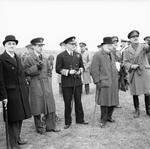 | 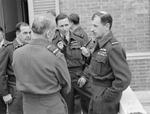 |  | 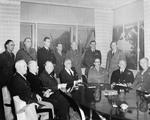 |
Videos
 |
Charles Portal Timeline
| 21 May 1893 | Charles Portal was born. |
| 4 Oct 1940 | Sir Cyril Newall retired as British Chief of Air Staff and was replaced by Sir Charles Portal. |
| 31 Aug 1944 | Chief of the Air Staff Charles Portal asked Commander-in-Chief RAF Mediterranean and Middle East John Slessor if dropping supplies from a higher altitude with delayed parachutes would keep aircraft safer when they delivered supplies to resistance fighters on the ground in Warsaw, Poland. |
| 22 Apr 1971 | Charles Portal passed away. |
Please consider supporting us on Patreon. Even $1 per month will go a long way! Thank you. Please help us spread the word: Stay updated with WW2DB: |


» Casablanca Conference
» Quadrant Conference
» Cairo Conference
» Octagon Conference
» Malta Conference
» Yalta Conference
- » 1,167 biographies
- » 337 events
- » 44,617 timeline entries
- » 1,244 ships
- » 350 aircraft models
- » 207 vehicle models
- » 376 weapon models
- » 123 historical documents
- » 261 facilities
- » 470 book reviews
- » 28,518 photos
- » 365 maps
Lt. Gen. Lewis B. "Chesty" Puller, at Guadalcanal

Please consider supporting us on Patreon. Even $1 a month will go a long way. Thank you!

Or, please support us by purchasing some WW2DB merchandise at TeeSpring, Thank you!