


Zhang Xueliang
| Surname | Zhang |
| Given Name | Xueliang |
| Born | 3 Jun 1901 |
| Died | 15 Oct 2001 |
| Country | China |
| Category | Government |
| Gender | Male |
Contributor: C. Peter Chen
ww2dbaseWith the fall of the Qing Dynasty, regions of China fell under spheres of influence, whether the newborn republic, regional warlords, or foreign powers. Japan, with her rapidly growing industrial sector, eyed the Manchurian region of northeastern China for its natural resources, especially coal and oil. However, Japan was also worried that the region would ally with factions in China Proper in response to Japanese designs. Japan sought for the former Emperor Puyi in hopes of gathering support from ethnic Manchus. At the same time, Japan contacted Zhang Xueliang, son of a recently assassinated warlord governor of Manchuria (at the hands of the Japanese military). Zhang was an opium addict, and Japan thought he would be easily manipulated as a puppet. However, Zhang proved to be more capable than originally thought, as he declared northeastern China's loyalty for Chiang Kaishek and the Nationalist Party. In 1929, he executed pro-Japanese officials at a dinner party to show his determination. He also opposed Soviet military built-up and Soviet influence in his territory.
ww2dbaseIn 1930, warlords Feng Yu-hsiang and Yen Hsi-shan attempted to overthrow Chiang's government. Zhang Xueliang led his men in support of Chiang. He led his men to hold the railroads and the city of Tianjin. In the following year, on 18 Sep 1931, Japan sent its army into northeastern China and installed Puyi as first the puppet Chief Executive of Manchukuo on 10 Nov 1931. Zhang withdrew from northeast China without serious attempts to defend against the invasion, which he knew he could not win. He traveled to Europe briefly before returning to China to join the Nationalist forces. In his new capacity, the former warlord led troops in campaigns against Chinese Communist forces in the provinces of Hebei, Henan, and Anhui. On 6 Apr 1936, General Zhang met with Communist leader Zhou Enlai to negotiate an end of the Chinese civil war and to establish a united front against Japanese aggression. On 12 Dec 1936, Zhang and General Yang Hu-cheng kidnapped Chiang, later coined Xi'an Incident, and forced him to temporarily ally with the Communists to fight against the Japanese. Chiang nominally agreed to the temporary alliance, but continued to strike at the Communists whenever opportunities were presented. As one of the conditions for the alliance, however, Zhang was arrested for this insurrection.
ww2dbaseAfter the Nationalists lost the civil war in 1949, Zhang retreated to Taiwan with the Nationalists and remained under house arrest. He was pardoned in 1990 by President Chiang Chingkuo, the son of Chiang Kaishek, and moved to Honolulu, Hawaii, United States. He passed away in Hawaii from pneumonia, leaving behind the legacy of being history's longest-serving political prisoner.
ww2dbaseSource: Wikipedia
Last Major Revision: May 2006
Photographs
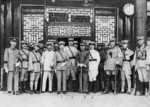 | 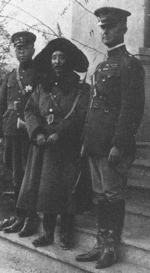 | 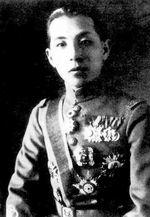 | 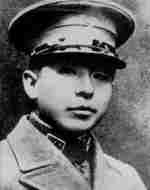 |
Zhang Xueliang Timeline
| 3 Jun 1901 | Xueliang Zhang was born. |
| 18 Sep 1930 | Zhang Xueliang pledged military support for the Nationalists during the Central Plains War. As he committed over 40% of his forces, it would weaken the overall defense of northeastern China, thus giving the Japanese an opportunity to seize control. |
| 12 Mar 1933 | Zhang Xueliang resigned his position as the head of the Beiping Military Committee. |
| 15 Oct 2001 | Xueliang Zhang passed away. |
Did you enjoy this article or find this article helpful? If so, please consider supporting us on Patreon. Even $1 per month will go a long way! Thank you. Share this article with your friends: Stay updated with WW2DB: |


Visitor Submitted Comments
 C. Peter Chen says:
23 May 2007 10:17:08 AM
No, Zhang Xueliang was not a communist sympathizer and remained a staunch Nationalist supporter until (or perhaps after) the Xian Incident. He only opposed Chiang Kaishek's focus on the Communists because he felt the Japanese invasion was a greater threat to China than the civil war. After his release from being a political prisoner in 1990, Zhang emigrated to Hawaii and refused to partake in anything that might suggest any support to either one of the two Chinas, therefore still showing no evidence that he was a communist sympathizer.
16 Nov 2007 09:24:25 PM
..... and also showing no evidence that he was opposed to the communists.
All visitor submitted comments are opinions of those making the submissions and do not reflect views of WW2DB.
» Mukden Incident
» First Battle of Hebei
» Xi'an Incident
- » 1,150 biographies
- » 337 events
- » 44,024 timeline entries
- » 1,242 ships
- » 350 aircraft models
- » 207 vehicle models
- » 375 weapon models
- » 123 historical documents
- » 260 facilities
- » 470 book reviews
- » 28,623 photos
- » 431 maps
James Forrestal, Secretary of the Navy, 23 Feb 1945

Please consider supporting us on Patreon. Even $1 a month will go a long way. Thank you!

Or, please support us by purchasing some WW2DB merchandise at TeeSpring, Thank you!
23 May 2007 09:55:28 AM
Was Zhang Xueliang a communist? Or communist sympathiser?