


Voroshilov
| Country | Russia |
| Ship Class | Kirov-class Light Cruiser |
| Builder | #198 Marti South, Nikolayev, Ukraine |
| Laid Down | 15 Oct 1935 |
| Launched | 28 Jun 1937 |
| Commissioned | 20 Jun 1940 |
| Displacement | 7,890 tons standard; 9,436 tons full |
| Length | 628 feet |
| Beam | 58 feet |
| Draft | 19 feet |
| Machinery | Six Yarrow-Normand boilers, Ansaldo geared turbines, two shafts |
| Bunkerage | 610t oil normal, 1,290t oil full |
| Power Output | 113,500 shaft horsepower |
| Speed | 36 knots |
| Range | 3,750nm at 17.8 knots |
| Crew | 872 |
| Armament | 9x180mm/57 MK-3-180 guns, 6x100mm/56 B-34 DP guns, 6x45mm/46 21-K guns, 4x12.7mm DK machine guns, 6x533mm 53-38 torpedoes, 96 mines, 20 depth charges |
| Armor | 50mm belt, deck, turrets, barbettes, and transverse bulkheads; 150mm conning tower |
| Aircraft | two KOR-1 floatplanes |
| Peacetime Crew | 734 |
| Sold for Scrap | 2 Mar 1973 |
Contributor: C. Peter Chen
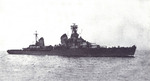
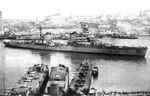
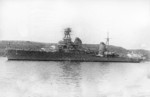
ww2dbaseLight cruiser Voroshilov was assigned to the Black Sea Fleet in mid-1940. Between 14 and 20 Jun 1941, she participated in fleet maneuvers. On 23 Jun, after the Axis invasion of the Soviet Union began, she shelled Constanza, Romania with other ships, and that action resulted in the loss of Russian destroyer Moskva. On 19 Sep, she shelled German troops near Sevastopol in southern Ukraine. On 2 Nov 1941, she was hit by two 250-kilogram bombs, with the first bomb flooding turret 3's magazine and jamming the rudder and the second bomb blowing a hole above the waterline and starting a fire in turret 3's magazine (which was extinguished by flooding caused by the first bomb); she was repaired between 4 Nov 1941 and 18 Mar 1942. On 2 Apr, she bombarded Feodossiya. On 10 Apr, she was lightly damaged by near misses during a German aerial attack by Ju 88 aircraft. On 8 and 11 May, she bombarded German troops near Tash-Alchin. On 27 May, she transported troops of the Russian 9th Naval Infantry Brigade to Sevastopol, and was attacked by aircraft; she claimed two He-111 aircraft, but was damaged, requiring being taken out of service for repairs that lasted through 24 Jul. On 29 Nov, she shelled Feodonisi and was damaged by mines, putting her out of commission again for repairs between 10 Dec 1942 to 30 Jan 1943. On 31 Jan, her gunfire supported Russian troops near Novorossiysk. She saw no further action for the remainder of the war, partly due to Joseph Stalin's order which forbade large warships from entering action. Voroshilov received the Order of the Red Banner on 8 Jul 1945. In Apr 1954, she began a major refit, but in the middle of the refitting work naval leadership decided that it was not worth it to modernize her. On 17 Feb 1956 she was reclassified a testing vessel for missile weaponry, which completed in mid-1961, leading to her recommissioning as OS-24 on 31 Dec 1961. Between 11 Oct 1963 and 1 Dec 1965, she was modernized once again. On 6 Oct 1972, nearing obsolescence, she was converted into a floating barracks ship by the name of PKZ-19. She was sold for scrap in 1973.
ww2dbaseSources: Warship 2009, Wikipedia.
Last Major Revision: Nov 2009
Photographs
 |  |  |  |
Voroshilov Operational Timeline
| 20 Jun 1940 | Light cruiser Voroshilov was commissioned into service. |
| 15 Jun 1941 | Light cruiser Voroshilov began participation in a week-long exercise. |
| 20 Jun 1941 | Light cruiser Voroshilov completed a week-long exercise. |
| 23 Jun 1941 | Light cruiser Voroshilov bombarded Constanza, Romania. |
| 19 Sep 1941 | Light cruiser Voroshilov bombarded Axis troop positions near Sevastopol, Russia. |
| 2 Nov 1941 | Light cruiser Voroshilov was damaged by two 250-kilogram bombs from German aircraft, flooding a magazine, causing a fire in turret No. 3, and jamming the rudder. |
| 4 Nov 1941 | The repair work on light cruiser Voroshilov, damaged two days prior by German aircraft, began. |
| 18 Mar 1942 | The repair work on light cruiser Voroshilov completed. |
| 2 Apr 1942 | Light cruiser Voroshilov bombarded Axis troop positions Feodossiya, Russia. |
| 9 Apr 1942 | Soviet light cruiser Voroshilov was damaged by German aircraft at Novorossiysk, Russia. |
| 10 Apr 1942 | Light cruiser Voroshilov received light damage from German Ju 88 aircraft. |
| 8 May 1942 | Light cruiser Voroshilov bombarded German troop positions near Tash-Alchin, Russia. |
| 11 May 1942 | Light cruiser Voroshilov bombarded German troop positions near Tash-Alchin, Russia. |
| 27 May 1942 | Light cruiser Voroshilov delivered troops of the Russian 9th Naval Infantry Brigade to Sevastopol, Russia, suffering damage by German air attack but also claiming two He 111 aircraft shot down. |
| 24 Jul 1942 | The repair work on light cruiser Voroshilov completed. |
| 29 Nov 1942 | Light cruiser Voroshilov bombarded Axis positions near Feodonisi, Russia and was damaged by German naval mines. |
| 10 Dec 1942 | The repair work on light cruiser Voroshilov, damaged by mines on 29 Nov 1942, began. |
| 30 Jan 1943 | The repair work on light cruiser Voroshilov completed. |
| 31 Jan 1943 | Light cruiser Voroshilov bombarded German troop positions near Novorossiysk, Russia. |
| 8 Jul 1945 | The crew of light cruiser Voroshilov was awarded the Order of the Red Banner. |
| 17 Feb 1956 | Light cruiser Voroshilov was reclassified a testing vessel for missile weaponry and would soon be decommissioned for this conversion. |
| 31 Dec 1961 | Upon completion of conversion work, light cruiser Voroshilov was recommissioned as OS-24, a testing vessel for missile weaponry. |
| 11 Oct 1963 | Testing vessel OS-24 was decommissioned for modernization. |
| 1 Dec 1965 | Testing vessel OS-24's modernization completed. |
| 6 Oct 1972 | Testing vessel OS-24 was converted into a floating barracks ship and was renamed PKZ-19. |
Did you enjoy this article or find this article helpful? If so, please consider supporting us on Patreon. Even $1 per month will go a long way! Thank you. Share this article with your friends: Stay updated with WW2DB: |


» Battle of Sevastopol
Related Books:
» Warship 2009
- » 1,150 biographies
- » 337 events
- » 44,024 timeline entries
- » 1,242 ships
- » 350 aircraft models
- » 207 vehicle models
- » 375 weapon models
- » 123 historical documents
- » 260 facilities
- » 470 book reviews
- » 28,627 photos
- » 431 maps
Winston Churchill, 1935

Please consider supporting us on Patreon. Even $1 a month will go a long way. Thank you!

Or, please support us by purchasing some WW2DB merchandise at TeeSpring, Thank you!