


Operation Torch
Contributor: C. Peter Chen
ww2dbaseAs the United States Army was becoming ready for war, although the Americans had wanted a direct assault on occupied Europe, American President Franklin Roosevelt lost the "the transatlantic essay competition" to British Prime Minister Winston Churchill, resulting in the attention being placed on eliminating Axis forces from North Africa rather than a direct assault on continental Europe. The long term goal was to relieve the pressure on the Allied forces in Egypt and to establish a base for a future invasion of Southern Europe. The operation was to be placed under the overall command of US Lieutenant General Dwight Eisenhower, who would issue orders from Gibraltar. He had approved an attack plan that called for simultaneous landings at several ports along the Casablanca-Oran railway. Although the operation targeted territory under Axis influence, politically it was not as straight-forward, as it was Vichy French territory. Although the Vichy government had aligned with Germany, the Allies took the assumption that the 125,000 French and colonial ground troops would put up no more than token resistance. The potential response of the French Navy, however, was more difficult to predict, as the British attacks on French naval forces at Mers-el-Kébir and Dakar in French West Africa, with the deaths of over 1,000 French servicemen, had severely strained British-French relations.
ww2dbaseInitially the planners wished to strike east of Gibraltar to directly threaten Tunisia, which with Tunis and Bizerte represented two of the best deep water ports in North Africa, but ultimately the Allies conservatively chose landing sites much further west due to the threat of Spain potentially allowing the Germans to cross Spanish territory to invade Gibraltar, which might cut off any Allied contingents between Gibraltar and Tunisia.
ww2dbaseTwo weeks before the attack, on 21 Oct 1942, Eisenhower dispatched Major General Mark Clark aboard British submarine HMS Seraph (under disguise as an American submarine) to meet with Vichy French officers in an attempt to gain support, while Eisenhower also conducted several rounds of persuasion at Gibraltar. Among the high ranking French officers was General Henri Giraud, who was offered the post of commander-in-chief of French forces in North Africa after a successful operation should he choose to support it. Giraud demanded the position as overall commander of the operation in return, which was something that cannot be fulfilled by the Allies; nevertheless, he pledged to remain inactive at Gibraltar once the invasion began, thus eliminating him as a potential enemy. The influential French Admiral François Darlan, on the other hand, was offered by Eisenhower the position of overall French chief in French North Africa should he choose to join the Allies. This was met with fury by the Free French and the French Resistance as this represented a Vichy French-controlled North Africa rather than a Free French one. French General Antoine Béthouart was persuaded to join the Allies; at the eve of the invasion, 7 Nov 1942, he would attempt a failed coup d'etat, which, instead of causing confusion among French leadership, it actually alarmed those in command, who ordered defenses be bolstered.
ww2dbaseCasablanca, French Morocco
8-16 Nov 1942
ww2dbaseSailing toward Casablanca was the Western Task Force under the overall command of US General George Patton, with US Rear Admiral Henry Hewitt as the naval commander of the fleet of 102 ships. Aboard, the 35,000 Americans organized in two infantry divisions and one armored division were shipped directly from the United States. US Army Major General Jimmy Doolittle's aircraft covered the operation, while naval aircraft from carrier USS Ranger also provided air cover.
ww2dbaseThe French defenses at Casablanca were formidable, as the port was a major French Navy base. The coastal batteries contained four 194-millimeter guns, four 138-millimeter guns, three 100-millimeter guns, and two 75-millimeter guns; the incomplete battleship Jean Bart, acting as a stationary gun platform, added four 380-millimeter guns mounted in one turret to the defensive armament. One light cruiser, two flotilla leanders, seven destroyers, eight sloops, eleven minesweepers, and eleven submarines were present on the day of the invasion.
ww2dbaseThe invasion fleet arrived at Casablanca to unprepared French defenses despite the French had detected this large fleet passing by the Strait of Gibraltar. The fleet broke up into three groups as follows.
- Northern group (Operation Goalpost): Battleship USS Texas, cruiser USS Savannah, six destroyers, six troopships, and two cargo ships; 9,000 men of US 60th Infantry Regiment and 65 light tanks; assigned to attack Port Lyautey and its airfield
- Southern group (Operation Blackstone): Battleship USS New York, cruiser USS Philadelphia, six destroyers, four troopships, and two cargo ships; 6,500 men of US 47th Infantry Regiment and 90 medium and light tanks; assigned to attack Safi
- Center group (Operation Brushwood): Battleship USS Massachusetts, many cruisers, many destroyers, fifteen troopships, many cargo ships; 19,500 troops of US 3rd Infantry Division with 79 light tanks; assigned to attack Fedala 15 miles northeast of Casablanca
ww2dbaseAt 0000 hours, center group troopships dropped anchor 8 miles off of Fedala, which was 15 miles northeast of Casablanca. At 0210 hours, French troops manning the battery at Pont Blondin reported the presence of American naval activity off Fedala, and an alert was ordered at 0325 hours. American guide boats set out at 0145 hours and they were all in place by 0500 hours. At 0357, French personnel at Safi reported the sighting of enemy destroyers. At about 0400, American aircraft began dropping propaganda leaflets over Casablanca. At 0420 hours, French fleet at Morocco, Marine Maroc, ordered submarines to patrol off Casablanca. At 0430 hours, French auxiliary sloop Estafette was boarded by the Americans, and the crew's distress signal led to a general alert issued by Marine Maroc. At 0505 hours, French Admiralty ordered the Marine Maroc to sortie against Allied shipping traffic west of Gibraltar. The first wave of American landing craft approached the landing beaches at 0545 hours, before daybreak. French coastal guards illuminated the American vessels by searchlights, but the lights were quickly destroyed by machine guns mounted on Allied ships. By dawn, 3,500 American troops had already landed. Just before 0700 hours, two French aircraft approached the fleet, but they were driven off by anti-aircraft gunfire. At 0700 hours, French submarines Amazone, Antiope, Meduse, Orphee, and La Sybille began maneuvering to defensive positions. Shortly after 0700 hours, the coastal batteries opened fire, damaging destroyers USS Ludlow and USS Murphy. Although Patton had been instructed not to conduct any pre-invasion naval bombardment to minimize the bloodshed on the defenders as to achieve a better political standing with the French, at 0720 hours, Admiral Hewitt authorized returned fire on the French guns. Destroyers USS Ludlow and USS Wilkes were successful in silencing the French guns at the Point Blondin battery, while cruiser USS Augusta silenced the guns at the Fedala battery. At 0750 hours, French fighters engaged the oncoming American bombers with escorting fighters, with 7 French and 5 American fighters lost in the ensuing fight, but the French fighters were unsuccessful in stopping the American bombers, which dropped bombs on Casablanca harbor at 0804 hours, sinking French submarine Amphitrite, and at least 12 other civilian and military ships.
ww2dbasePatton landed on the beach at 0800 hours to personally lead the invasion from the front lines.
ww2dbaseShortly after, battleship USS Massachusetts and cruisers USS Wichita and USS Tuscaloosa, with a screen of four destroyers (USS Mayrant, USS Rhind, USS Wainwright, and USS Jenkins), joined the attack on the French coastal batteries. The guns of the El Hank battery straddled USS Massachusetts with its first salvo at 0804 hours, while a salvo from Jean Bart also landed 600 yards off the starboard side of the American battleship at 0808 hours and then another to port shortly after. USS Massachusetts chose to target Jean Bart, hitting her with the 5th salvo at 0825 hours (7 minutes after Jean Bart was hit by an aerial bomb), which jammed her turret rotating mechanism, rendering her guns useless. Between 0835 and 0836 hours, shells from Massachusetts, although missing Jean Bart, caused damage. Massachusetts ceased fired between 0840 and 0848 while attempting to find out Jean Bart's condition, and after spotter aircraft reported that Jean Bart remained operational, Massachusetts opened fire again at 0848 hours.
ww2dbaseWhile the American and French ships exchanged shells, American aircraft bombarded the port. Passenger ships Porthos, Savoie, and Lipari, some still under the process of being evacuated of their civilian passengers from Dakar, were hit as well.
ww2dbaseAt 0900 hours, off Fedala, seven ships of the French 2nd Light Squadron sortied, making smoke as they approached the American ships. At 0918 hours, a F4F Wildcat fighter launched from USS Ranger spotted the French column; the pilot reported the findings via radio and expressed his intention to strafe the French ships with other fellow pilots. Two minutes later at 0920 hours, French destroyer Milan, leader of the attack with Contre-Amiral Raymond de Lafond aboard, spotted the American ships, but at the same time the American F4F Wildcat fighters struck, injuring Lafond and killing the executive officer of destroyer Brestois. At 0925 hours, Milan led the other French destroyers in attacking destroyers USS Wilkes, USS Swanson, and USS Ludlow; the American ships fled northward amidst geysers of missed rounds, though Ludlow was hit once. At 0930 hours, Milan's guns turned and fired at the Higgins boats carrying American troops toward the shore; one boat was sunk and another was damaged; this was the only time that an American amphibious assault was attacked by hostile forces from the sea. 0934 hours, French destroyer Albatros hit USS Ludlow, blasting a hole in the main deck and wounding four men. At 0940 hours, Milan spotted USS Augusta and USS Brooklyn; outgunned, Lafond turned around in the hope that he would be able to lure the American cruisers closer to the coastal guns at El Hank, but the Americans did not follow. Three minutes later, USS Augusta opened fire, followed by USS Brooklyn a moment later. At 1115 hours, USS Brooklyn hit French light cruiser Primauguet, causing minor damage. Five minutes later, Primauguet was hit three more times, but none of the American shells detonated. At 1140 hours, Albatros was damaged at the bow by a near miss. At 1145 hours, tug Lavandou approached the battle-damaged Milan to evacuate the wounded, while Contre-Amiral Lafond relocated his command to the sloop Commandant Delage. Milan was beached to prevent sinking shortly after. At 1146 hours, Albatros hit USS Brooklyn's No. 1 5-inch gun mount, wounding 5, but the shell failed to detonate thus the American cruiser avoided worse damage. USS Massachusetts was hit by light cruiser Primauguet at 1157 hours, but it only caused minor damage. About five minutes later, the American observed that the French naval resistance was in general becoming ineffective, thus USS Massachusetts was ordered to cease fire to conserve ammunition in case the French battleship Richelieu appeared on the scene; shortly after, USS August also disengaged from battle. Although fighting continued off Casablanca, actions were not great. At 1456 hours, USS Augusta's spotter aircraft reported all surviving French ships as heavily damaged. Between 1500 and 1600 hours, sloop Commandant Delage attempted to rescue French seamen in the sea, but it was strafed by American aircraft on several occasions. At 1605 hours, American ships withdrew. Primauguet and Albatros were beached to prevent sinking. During the fighting, French submarine Amazone fired a salvo of torpedoes against USS Brooklyn, but all torpedoes missed.
ww2dbaseAt the end of the day, the Americans believed that Jean Bart had been disabled for good, but they did not realize that French shipyard workers were on the double in the repair of the damaged turret rotating mechanism.
ww2dbaseSafi surrendered in the afternoon of 8 Nov.
ww2dbaseThe American attack on Port Lyautey (now Kenitra, Morocco) was under the command of Major General Lucian Truscott. The landing forces easily overwhelmed the light defenses at the beach village of Mehdiya. US Colonel Demas Craw and Major Pierpont Hamilton approached Port Lyautey in the morning of 8 Nov in pursuit of a diplomatic end to the attacks, but as they approached a road fork outpost, a nervous French soldier pulled the trigger on his machine gun out of instinct, killing Craw. Hamilton proceeded with his mission, meeting French Colonel Charles Petit, only to find that Petit lacked the authority to make any decision to cease fighting. On 9 Nov, American troops continued their attack on the fort of Kasbah, which began on the previous day.
ww2dbaseOn 10 Nov 1942, French ships Commandant Delage, La Gracieuse, and La Servannaise sortied at 1110 hours to open fire on American troops advancing on the ground from Fedala to the outskirts of Casablanca, successfully driving back the American attack. USS Augusta and destroyers USS Edison and SS Tillman responded, driving the French ships back into Casablanca harbor; Commandant Delage was hit once, killing 5 men. The American ships were caught by surprise, however, as the large caliber guns of Jean Bart fired on them, driving them back. USS Ranger dispatched nine dive bombers to attack Jean Bart, hitting her with two 450-kilogram bombs, causing flooding, sinking her in shallow waters at 1600 hours. In response, French submarines Le Tonnant, Meduse, and Antiope counter attacked USS Ranger, USS Massachusetts, and USS Tuscaloosa, respectively with torpedoes, but none hit; Meduse was damaged by American gunfire during the attack and had to be beached off Cape Blanc by her crew.
ww2dbaseOn 10 Nov, the Americans captured Kasbah near Port Lyautey, which led to the fall of the port as well as the nearby airfield. Patton later praised French efforts at the Port Lyautey area, particularly at the face of overwhelming American strength.
ww2dbaseOne hour prior to the scheduled ground invasion on Casablanca on 11 Nov, the French garrison there surrendered. French submarines Amazone and Antiope escaped to Dakar, while Orphee returned to Casablanca after it had surrendered.
ww2dbaseAlso on 11 Nov, German submarines arrived to attack the American fleet. In the early morning, U-173 attacked destroyer USS Hambleton, oiler USS Winooski and troopship USS Joseph Hewes; the former two were damaged, and USS Joseph Hewes sank, taking 100 lives. Later on that day, French submarine Sidi Ferruch was sunk by TBF Avenger torpedo bombers of squadron VGS-27 from escort carrier USS Suwanee. In the afternoon of 12 Nov, U-130 sank troopships USS Tasker H. Bliss, USS Hugh L. Scott, and USS Edward Rutledge with torpedoes, killing 74 men. On 13 Nov, an American PBY Catalina aircraft detected French submarine Le Conquerant off Villa Cisneros, Spanish Morocco; Le Conquerant's crew scuttled her off Cadiz, Spain on 15 Nov. On 16 Nov, American destroyers sank German submarine U-173 off Casablanca.
ww2dbaseOran, French Algeria
8-9 Nov 1942
ww2dbaseUS Major General Lloyd Fredendall commanded the Center Task Force, which was tasked to invade Oran; British Commodore Thomas Troubridge acted as the naval commander. The transports of the task force carried one infantry division, one armored division, and one paratrooper regiment, totaling 18,500 American servicemen. Major General Doolittle's American aircraft also supported this invasion target, along with Casablanca.
ww2dbaseThe invasions took place on four sites, two west of Oran, Arzew to the east of Oran, and the port of Oran itself. Landings at the westernmost beach was delayed by the unexpected presence of a French convoy and the unexpected shallowness of the water that damaged some landing craft; the latter would prove to be a lesson to be learned regarding the importance of proper intelligence gathering for later amphibious operations in the European War. At Arzew, the US 1st Ranger Battalion captured the coastal battery smoothly. The landing attempt at Oran harbor, however, proved to be costly; although the French warships defending the port was driven off, damage to Allied warships caused many casualties. Proving the Allied planners wrong, French troops at Oran fought on stubbornly, surrendering only on 9 Nov after a heavy naval bombardment by British battleships.
ww2dbaseSimultaneous to the 8 Nov amphibious invasion, an airborne assault was also conducted at Oran, targeting at Tafraoui and La Senia airfields 15 and 5 miles south of Oran. This attack conducted by the US 509th Parachute Infantry Regiment represented the first major American airborne operation. They were flown from Britain, over Spain, to the drop zone. The operation was marred by various communications and weather-related problems; because the latter, 30 of the 37 transport aircraft experienced so much trouble that they landed in the dry salt lake to deliver their loads of troops rather than having the men jump. Nevertheless, both airfields were captured to prevent French interference from the air.
ww2dbaseAlgiers, French Algeria
8 Nov 1942
ww2dbaseThe third and final major target of Operation Torch was Algiers, which fell under the responsibility of British Lieutenant General Kenneth Anderson's Eastern Task Force; British Vice Admiral Sir Harold Burrough served under him as the naval commander of the fleet of 650 ships, while US Major General Charles Ryder was to be placed in command for the amphibious operation. The 20,000 men sailing with this invasion force were of a mix of British and American servicemen, with one British infantry division, one American infantry division, and two British commando battalion-sized units. Above, British aircraft under the command of Air Marshal Sir William Welsh supported the ground and naval operations.
ww2dbaseThe invasion on Algiers was preceded by the uprising of 400 French Resistance fighters under the leadership of Henri d'Astier de la Vigerie and José Aboulker. The uprising by the resistance fighters, which began at 0000 hours, seized control of the telephone exchange, radio station, governor's house, the headquarters of French 19th Corps, and most importantly, all of the coastal artillery batteries. At the governor's house, General Alphonse Juin and Admiral Darlan (whose presence was not expected) remained under captivity by the resistance fighters until the fighters were surrounded and defeated by French Gendarmerie military police after daybreak.
ww2dbaseThe landings of Allied troops were planned to target three separate beaches near Algiers, but in the confusion some of the troops were delivered to the wrong location. Nevertheless, French coastal defense at Algiers proved to be minimal, especially with all the coastal guns under the control of resistance fighters. The only major fighting in the invasion took place in the port of Algiers (Operation Terminal), where two British destroyers attempted to land US Rangers were met with heavy artillery fire. Only one of the two destroyers was able to disembark passengers, and the 250 Rangers promptly took control of the docks.
ww2dbaseGeneral Juin surrendered Algiers at 1800 hours on 8 Nov 1942.
ww2dbaseEpilogue
ww2dbaseOn 9 Nov, amidst fighting, Darlan signed an armistice with Eisenhower. On the following day, Darlan distributed a message to all French forces to cease fighting against the Allies. The ease of French leaders being persuaded to remain inactive or to cooperate alarmed Adolf Hitler, who would soon decide to act against Vichy France to prevent such an occurrence should the Allies invade Southern France. The Vichy government, with Philippe Pétain at its head, also immediately moved against Darlan, dismissing him dishonorably. Darlan, embarrassed by to dismissal, felt the need to rescind his order, but he was dissuaded by Clark.
ww2dbaseBeginning on 9 Nov, Axis forces began building up in Tunisia in response of the Anglo-American invasion to the west. French General Barré, with some delay, set up a defensive line from Teboursouk to Medjez el Bab in Tunisia to curb Axis movement, but this line was penetrated by the Axis troops under Walter Nehring after two attacks.
ww2dbaseSources:
John Jordan, Warship 2011
Wikipedia
Last Major Update: Feb 2011
Operation Torch Interactive Map
Photographs
 | 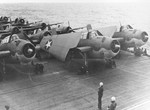 |  | 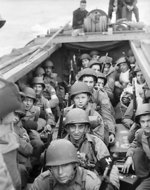 |
Maps
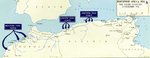 | 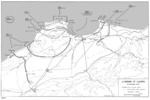 | 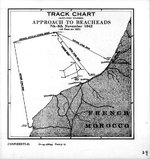 |
Operation Torch Timeline
| 8 Mar 1941 | Erich Raeder warned Adolf Hitler of a possible American landing in northwest Africa should the United States enter the war. |
| 8 Jul 1942 | Winston Churchill urged Franklin Roosevelt to agree to Operation Gymnast, a plan to jointly invade North Africa, since "[n]o responsible British general, admiral, or air marshal is prepared to recommend [a cross channel attack] as a practicable operation in 1942." |
| 14 Jul 1942 | US President Franklin Roosevelt ordered the Joint Chiefs of Staff to abandon major offensive operations in the Pacific Theater and instead direct planning efforts on the invasion of North Africa. |
| 24 Jul 1942 | With the US High Command threatening to withdraw entirely from the European theatre of war, President Franklin Roosevelt interceded and informed Prime Minister Winston Churchill that he now accepted the British point of view regarding delaying the opening of a Second Front in North West Europe until 1943 or 1944. At the same time he agreed to a proposed Anglo-American landing in French North Africa later in the year. |
| 9 Oct 1942 | Galeazzo Ciano noted in his diary that Italian intelligence had learned that the Allies were planning on invading North Africa, and it concerned him as a successful Allied campaign there would put Italy in danger. |
| 15 Oct 1942 | Alfred Jodl suggested to Adolf Hitler to order Vichy France to strengthen its defenses in North Africa as intelligence indicated a possible Allied attack; Hitler rejected the suggestion as he thought the Italians would object to any moves that strengthened France. |
| 21 Oct 1942 | US Major General Mark Clark, aboard British submarine HMS Seraph (which was under disguise as an American submarine), began negotiations with Vichy French commanders in North Africa in preparation of Operation Torch. |
| 23 Oct 1942 | Allied convoy UCF 1, containing troops and equipment for the invasion of French North Africa, departed Chesapeake Bay, United States. |
| 25 Oct 1942 | USS Ranger departed Bermuda as part of Task Force 34 bound for the invasion of North Africa (Operation Torch). |
| 26 Oct 1942 | Allied convoy UCF 1, containing troops and equipment for the invasion of French North Africa, was met by a covering force of battleships and cruisers which had sailed from Casco Bay, Maine, United States. |
| 28 Oct 1942 | Allied convoy UCF 1, containing troops and equipment for the invasion of French North Africa, was met by carriers Ranger, Sangamon, Suwannee, Chenango, and Santee which had sailed from Bermuda. Task Force 34 now contained the full invasion force of 102 ships, carrying 35,000 American troops; the force sailed for Casablanca. |
| 5 Nov 1942 | German intelligence reported that a large Allied fleet had departed Gibraltar. |
| 7 Nov 1942 | Vichy French General Antoine Béthouart attempted a failed coup d'etat in North Africa, which alarmed defenses. |
| 8 Nov 1942 | Two former US Coast Guard cutters renamed HMS Walney (Captain F. T. Peters R.N.) and HMS Hartland (Commander Godfrey P. Billot) each carrying 200 American infantry entered Oran, Algeria with the intention of denying the harbour facilities to the Vichy French. Both vessels came under intense crossfire from French warships and were sunk with heavy losses. The survivors were taken prisoner. Captain Peters miraculously survived but was killed in a plane accident two days later. He was posthumously awarded the Victoria Cross and the American Distinguished Service Cross. Commander Godfrey P. Billot of Hartland won a Distinguished Service Order. |
| 8 Nov 1942 | Primauguet suffered heavy damage at the hands of US battleships and dive bombers at Casablanca, Morocco. To avoid sinking, her commanding officer sailed her to shallow waters. At anchor, she was abandoned and would burn overnight. |
| 8 Nov 1942 | Allied forces attacked French forces at Moroccan ports of Safi and Casablanca during Operation Torch, capturing the former. |
| 8 Nov 1942 | Allied forces attacked French forces at Algerian ports of Oran and Algiers during Operation Torch. Algiers surrendered at 1800 hours. |
| 9 Nov 1942 | American troops continued to attack the French fort of Kasbah, French Morocco. Meanwhile, in French Algeria, the French garrison at Oran surrendered in the face of overwhelming British naval power and American airborne attack in its rear. French Admiral Darlan signed an armistice with American General Dwight Eisenhower, but fighting would continue for two more days. |
| 9 Nov 1942 | German Luftwaffe combat aircraft consisting of 27 Bf 109G fighters from 1/JG53 and 24 Ju 87D Stuka dive bombers of II.StG 3 were transferred to Tunisia from Sicily, Italy. The Tunis airfields were found to be in good condition with concrete runways and revetments. Once a ground organisation had been created, relays of Ju 52/3m aircraft would commence the movement of ground troops into the region. On the front lines, Axis troops under Walter Nehring attacked Vichy French positions as Vichy French forces in North Africa were apparently switching sides to aide the Allies. |
| 10 Nov 1942 | French submarine Le Tonnant attacked USS Ranger off French Morocco at 1000 hours; all four torpedoes missed, and the American counterattack was equally ineffective. On land, American troops captured the French fort of Kasbah, which led to the fall of Port Lyautey. At Casablanca, American ships sortied to respond to an attack by French sloops only to be surprised by an operational Jean Bart; aircraft from USS Ranger were launched to sink Jean Bart in shallow water by bombing. |
| 11 Nov 1942 | TBF Avengers from escort carrier USS Suwannee, using aerial depth charges, attacked and sank a Vichy-French submarine southwest of Casablanca in what would be the first successful attack of an enemy submarine by aircraft from an escort carrier. |
| 11 Nov 1942 | Germany withdrew 25 submarines from the North Atlantic to attack the Allied shipping off North Africa; on the same day, submarine U-173 damaged destroyer USS Hambleton, oiler USS Winooski and troopship USS Joseph Hewes near Casablanca, French Morocco, sinking Joseph Hewes and killing 100. On land, the French garrison at Casablanca officially surrendered to the Americans. |
| 12 Nov 1942 | USS Ancon departed waters off Fedala, French Morocco. |
| 12 Nov 1942 | German submarine U-130 sank troopships USS Tasker H. Bliss, USS Hugh L. Scott, and USS Edward Rutledge with torpedoes, killing 74. |
| 13 Nov 1942 | US Navy pilot Lieutenant H. S. Blake flying a PBY-5A Catalina with Patrol Bombing Squadron VPB-92 detected Vichy French submarine Le Conquerant 700 miles off Casablanca, French Morocco, which refused to answer recognition signals when challenged. Blake attacked, blowing off the conning tower, and sank the submarine with all aboard lost. |
| 13 Nov 1942 | USS Ranger began her withdrawal from the Moroccan coast and began steaming westward bound for Bermuda. |
| 15 Nov 1942 | USS Ancon arrived at Casablanca, French Morocco. Later on the same day, she departed as a part of a convoy sailing for Norfolk, Virginia, United States. |
| 16 Nov 1942 | American destroyers sank German submarine U-173 off Casablanca, French Morocco. |
Please consider supporting us on Patreon. Even $1 per month will go a long way! Thank you. Please help us spread the word: Stay updated with WW2DB: |


Visitor Submitted Comments
28 Dec 2014 06:35:52 AM
My grandad was a duck driver foes anyone know anyone who would know my grandad jack pickering
26 Apr 2015 09:44:03 AM
hello;
l want informations about allied army installed in NEMOURS and BERAOUN (ALGERIA) during Torch Operation .
Thanks
26 Oct 2015 09:20:48 AM
Like to see pics of Ike's north African headquarters.My Dad was a clerk/typist there.
4 Oct 2016 04:06:20 PM
There is no evidence Le Tonnant attacked the Ranger on the day indicated. At the time and day her diary just says periscope sighted. Although her records show she was attacked more than three times by submarines.
 David Stubblebine says:
4 Oct 2016 09:36:29 PM
CE MacKay:
The book *World War II Sea War, Vol 7: The Allies Strike Back* by Donald A. Bertke, Gordon Smith, & Don Kindell on page 296 says Le Tonnant unsuccessfully attacked Ranger off Casablanca on 10 Nov 1942 and named the destroyer Ellyson as the escort. It is not clear what their sources were. Ellyson’s War Diary says they spotted a periscope and dropped one pattern of depth charges on it.
9 May 2017 05:02:11 PM
My father Ralph P. Breitenbucher USN was on mine sweeper in the opening days of TORCH which i'm pretty sure sailed from a Texas port. I am interested in the names of any such vessels and would like to know how to find out which one my dad was on. Any help would be greatly appreciated.
4 Jun 2019 07:08:54 PM
Great Torch information, I was there, just missing was the other 3 aircraft carriers, Suwannee, Santee & and the Chinango with 74 Army P40 fighters
4 Jun 2019 11:48:22 PM
sorry I forgot all 4 of the converted tankers were there called the Big CVE's, The Sangamon & when Halsey heard the great job we did, said I want them here NOW, I was on the Suwannee,Chenango & Tulagi
13 Sep 2019 04:39:08 PM
I was able to get all of my fathers navy records 1936-57 look for military records - Tom 2-3 years
28 Sep 2022 08:11:05 AM
How do I find a list of Norfolk soldiers
who served in Operation Torch? I have someone on ancestry who is a fourth cousin in North Africa. We are trying to find out who her grandad's father was. He lived in Norfolk and his surname is Durrant.
Anyone can help at all with guidance please?
14 Nov 2022 04:26:28 AM
My grandad Thomas mcinerney, died on hms hartland, (was uss pontchartrain.
Looking for anymore information when the sunken ship was sunken and scuttled at cape roux Antarctica.
Many thanks
All visitor submitted comments are opinions of those making the submissions and do not reflect views of WW2DB.

» J. J. Clark
» Cunningham, Andrew
» Darlan, François
» Doolittle, James
» Eisenhower, Dwight
» Giraud, Henri
» Stan Laurie
» Patton, George
Locations:
» Algeria
» French Morocco
Ship Participants:
» Ancon
» Augusta
» Formidable
» Gunnel
» Jean Bart
» Massachusetts
» New York
» Primauguet
» Ranger
» Rodney
» Texas
» Tuscaloosa
Related Books:
» An Army at Dawn
» Warship 2011
- » 1,182 biographies
- » 337 events
- » 45,115 timeline entries
- » 1,248 ships
- » 350 aircraft models
- » 207 vehicle models
- » 376 weapon models
- » 123 historical documents
- » 261 facilities
- » 470 book reviews
- » 28,413 photos
- » 365 maps
General Douglas MacArthur at Leyte, 17 Oct 1944

Please consider supporting us on Patreon. Even $1 a month will go a long way. Thank you!

Or, please support us by purchasing some WW2DB merchandise at TeeSpring, Thank you!
20 Oct 2011 03:59:40 AM
i was there,you landed at fedala 20 km from casablanca i have a leaflet that was dropped that morning i picked it that morning i was 8 years old. would you like to buy it