


Attack on Pearl Harbor
Contributor: C. Peter Chen
ww2dbaseIn Jun 1940, US President Franklin Roosevelt moved the American Pacific Fleet from San Diego, California on the west coast of the United States to Pearl Harbor in the Territory of Hawaii as a response to Japan's aggression toward China, followed by the embargo of vital raw materials to the newly industrialized Japan. Meant to coerce Japan to back off from her aggressive policies toward her neighbors, these moves instead tempted Japan to escalate the situation. The advancing of the Pacific Fleet was viewed as the most current of a long series of insults on Japanese pride, while the embargo only tempted the Japanese to secure South Pacific islands rich with oil, rubber, tin, and tungsten for themselves.
ww2dbaseAdmiral Isoroku Yamamoto, whose personal opinion was against a war with the United States, was tasked with constructing the very war plan. He was confident that he could engineer a devastating attack on the US Navy, but he also believed that unless Japan had a way to march her armies straight to Washington, it was not wise to engage in war with US for an extended period of time due to the vast US industrial potential. In Oct 1941, the Japanese naval general staff gave final approval to Yamamoto's general plan of attack. In Nov 1941, Yamamoto added Pearl Harbor to the list of targets. Yamamoto's strike plan for Pearl Harbor, with contribution from Commander Minoru Genda, involved six fleet carriers, thus making it the largest carrier strike in history. The plan called for multiple waves of attack, systematically targeting and destroying specific ships, airfields, aircraft, and drydocks. In order to effectively use torpedoes in the shallow harbor, the torpedoes were fitted with fins so that they would run closer to the water's surface without diving into the mud. Yamamoto assigned the task of attacking Pearl Harbor to Vice Admiral Chuichi Nagumo. A total of 24 vessels supported the six aircraft carriers in its journey from Hitokappu Bay in the Kurile Islands in northern Japan toward Hawaii via a northern route on 26 Nov 1941.
ww2dbaseIn the basement of the Pacific Fleet headquarters building in Hawaii, Joseph Rochefort and his intelligence team had been tasked with keeping an eye on the disposition of Japanese warships for months, with much of the information sourced from intercepted radio messages. Events such as the Japanese changing warship call signs twice in a short period of time, the increased level of radio message encryption, and the sudden disappearance of at least four fleet carriers from US knowledge (his team had mistakenly placed one or two Japanese carriers in the Marshall Islands) made him suspicious of Japanese intentions. While he faithfully reported his findings, which all pointed to war, to Commander-in-Chief of the Pacific Fleet Admiral Husband Kimmel on a daily basis, he also noted his sentiment, one that was shared by most others at Pearl Harbor and Washington, that Pearl Harbor was safe from Japanese attacks for the time being. Vice Admiral William Pye, the commanding officer of the Battle Fleet, was among those who expected war to break out in Asia rather than in Hawaii, thus there was no need to send his battleships out to sea to avoid being caught in an air attack.
ww2dbaseWhen the Japanese fleet departed from the Kurile Islands, Nagumo had ordered any non-Japanese vessel that came in contact with the strike fleet to be quickly destroyed before they could send out any warning. On 5 Dec 1941, the Japanese fleet came across Russian transport Uritsky, carrying US-built M2 medium tanks and other war materials, sailing toward Vladivostok, Russia. All guns of the Japanese fleet were trained on the transport, but Nagumo, reneging on his previous order, chose to let Uritsky go, for he knew the top officials at Tokyo wished to maintain the non-aggression pact between the Soviet Union and Japan. It was never proven, but some sources indicated that the Uritsky did indeed radio Soviet authorities of the finding, and the Soviets notified the Japanese fleet that if Uritsky was to be spared, the Soviet Union would not report the incident to anyone, namely, the United States. Had this exchange really taken place, it appeared that both sides held their ends of the bargain; Uritsky arrived at Vladivostok safely, while the Japanese fleet sailed otherwise undetected across the northern Pacific. Some speculated that the Soviet silence might be due to Moscow's wish for the United States to enter the war, thus putting direct pressure on Germany while keeping the Japanese occupied.
ww2dbaseOn 7 Dec 1941, the first contact of the battle was made by United States Coast Guard ship Condor at 0350 hours less than 2 miles southwest of the Pearl Harbor entrance buoys. After receiving visual warning from Condor at 0357 hours, destroyer USS Ward began patrolling the harbor entrance. At 0637 hours, Ward sighted the periscope of a Japanese submarine. Ward attacked the area with depth charges as destroyer USS Monaghan set sail to join her in the submarine hunt. At 0740 hours, a telephone call was made to Kimmel's office, reporting the submarine contact, but nothing material came out of that report.
ww2dbaseA few minutes before 0800 hours, the Japanese aircraft arrived over Hawaii. When the large cloud appeared on the radar screen, the US Navy radar crew dutifully called in this finding, but the radar men were told by US Army officers that they were probably seeing a group of B-17 bombers scheduled to arrive later on this day. At 0755 hours, the now-well-known message "ENEMY AIR RAID - NOT DRILL" was sent from the Navy Yard Signal Tower as the incoming aircraft began dropping their bomb load.
ww2dbaseThe first targets were air fields. Dive bombers dropped bombs (mainly incendiary) and strafed Hickam Field and the Naval Air Station on Ford Island. Many American aircraft were caught on the ground. At 0758 hours, "AIR RAID, PEARL HARBOR. THIS IS NOT DRILL!" was broadcast to all ships in the area. At about the same time, another group of aircraft attacked the battleships moored on the south side of Ford Island in the center of Pearl Harbor. The torpedoes and bombs hit with precision, detonating USS Arizona's forward ammunition magazine, engulfing the ship in a fierce ball of fire. Anti-aircraft gunfire commenced very quickly after Japanese aircraft were sighted, while larger caliber weapons took anywhere from three to seven minutes before they began firing.
ww2dbaseBetween 0825 hours and 0840 hours, Japanese aircraft continued to dominate the skies over Pearl Harbor, although bombing activities largely ceased.
ww2dbaseAt 0840 hours, 30 Japanese high level bombers appeared, mostly still targeting battleships, along with 18 dive bombers. Damage from this second wave of attack was reported as "serious".
ww2dbaseWith careful planning on part of Yamamoto and his staff, and perfect execution of Nagumo and his air command, the surprised Americans suffered greatly as few larger warships escaped unharmed. Battleship USS West Virginia sank very quickly, and battleship USS Oklahoma capsized before sinking. The bomb hit suffered by USS Arizona at 0810 hours would take the lives of 1,000 sailors. Battleships USS California, USS Maryland, USS Tennessee, and USS Nevada all suffered various degrees of damage during the raid. At 0830 hours, Nevada attempted to get underway, but realized if she was sunk at the harbor opening she would block the harbor entrance, thus she was ultimately beached at nearby Hospital Point.
ww2dbaseBy 0940 hours, most Japanese aircraft had left the vicinity, but American anti-aircraft fire continued to fire at any sign of hostile movement; tense atmosphere led to a few friendly fire incidents where US fighters that finally got a chance to take off were shot down. By 1000 hours, the skies over Pearl Harbor were clear. Final tally revealed that five of eight battleships at Pearl Harbor were sinking, sunk, disabled, or heavily damaged. A total of 21 US ships were sunk. 188 aircraft were destroyed, and 159 were damaged. Over 2,400 American were killed (this figure includes civilian deaths of 68 caused by friendly fire, killed by US anti-aircraft shells that landed in the city of Honolulu). The Japanese suffered only 29 aircraft shot down and 5 midget submarines sunk.
ww2dbaseWhile the attack was devastating, the US Navy would later realize that it could have been worse. While Vice Admiral Pye's decision to keep the battleships in port meant they were sitting ducks for the Japanese air attack, had he sailed the warships out of the harbor, there would have been a possibility that they would be attacked at sea, and the ships would be forever lost instead of merely sinking in shallow waters and allowed the possibility of refloating. US fleet carriers, all of which would play critical roles in later chapters of the war, were far from Pearl Harbor, thus removed from harm.
ww2dbaseImmediately after the attack, the Americans made an attempt to launch a counterattack against the Japanese fleet. Mistaking that the Japanese had attacked from the south, USS Enterprise was ordered to sail in that direction to intercept. Naturally, the US carrier found nothing and returned empty-handed. Many historians speculated, however, that had she been sent in the right direction, she would be no match for the powerful Japanese fleet and would probably be sunk.
ww2dbaseStaying on the theme of counterfactual history, there were criticisms against Nagumo for not launching a third strike on Pearl Harbor to destroy port facilities and fuel stores, for doing so would eliminate Pearl Harbor as a viable naval base, thus forcing the US Navy to fall back to bases on the west coast of the United States. Had Nagumo actually launched a third wave of attack, Japanese doctrine dictated that the warships that had survived the first two waves of attacks to be targeted, thus making this criticism invalid.
ww2dbaseOn the diplomatic side, Japan was supposed to declare war on the United States precisely 30 minutes before the attack started. However, due to decryption difficulties, the Japanese embassy was not able to deliver the message until the attack had already started. Making the most out of the situation, President Roosevelt announced to the American public that the attack was a sneak attack, thus able to rally the previously isolationist country to fully participate in war in order to seek revenge.
ww2dbaseAdmiral Kimmel and his US Army counterpart Lieutenant General Walter Short were made the scapegoats, shouldering the blame for the devastation. Nine investigations were conducted, finding Kimmel and Short guilty of dereliction of duty. Their names would not be cleared by the United States Senate until 1999, after both of them had passed away, but the Department of Defense continued to place blame on Kimmel and Short.
ww2dbaseNiihau Incident
7-13 Dec 1941
ww2dbaseDuring the Pearl Harbor attack planning, Japanese naval leadership designated the Hawaiian island of Niihau as the designated location to land damaged aircraft that could not fly back to their carriers. A submarine was to be dispatched to pick up any downed pilots on that island. It was thought that the island was uninhabited when in fact it had a small population of 136.
ww2dbaseOn 7 Dec 1941, Japanese Navy pilot Airman 1st Class Shigenori Nishikaichi from carrier Hiryu, who had taken part in the second wave of the Pearl Harbor attack, crash-landed his damaged A6M2 Zero fighter on Niihau. When he came down, he was merely 20 feet from resident Hawila Kaleohano who was completely unaware of neither international politics between Japan and United States nor the Pearl Harbor attack that had just taken place. He took Nishikaichi's pistol and documents, and then helped him out of the damaged aircraft. Nishikaichi was treated with a party in the late afternoon, as he was a rare guest on this remote island. Meanwhile, the islanders sent for first-generation Japanese-American Ishimatsu Shintani to act as translator; Shintani was aware of the attack, and only exchanged a few words with Nishikaichi before leaving. The islands then sent for Yoshio Harada and his wife Irene, both second-generation Japanese-Americans. The Haradas were not aware of the attack beforehand, and Nishikaichi shared the news; the Haradas decided not to translate that portion to the islanders to prevent panic or anger. Nishikaichi asked Kaleohano to return the documents that Kaleohano had taken from him previously, but Kaleohano refused.
ww2dbaseLater in the evening of 7 Dec, the islanders learned of the attack via radio, and only at this time Harada shared what Nishikaichi had told him earlier regarding the attack. The islanders decided that on the next day, when the island's owner Aylmer Robinson would have arrived for his weekly visit, Robinson would escort Nishikaichi to the proper authorities. On the next day, Robinson failed to arrive to the surprise of the islanders, nor did he visit in the following few days; unbeknownst to them, a ban on boat traffic had been implemented due to the state of war. Nishikaichi had stayed with the Haradas during those days (with guards outside the residence).
ww2dbaseAt 1600 hours on 12 Dec, Shintani approached Kaleohano on behalf of Nishikaichi with $200 in cash, asking to purchase Nishikaichi's documents. Kaleohano rejected the offer. Yoshio Harada and Nishikaichi, without waiting for Shintani's return, attacked the lone guard outside of the house as Irene Harada played music with a loud volume to cover up any noise of struggle. They retrieved a shotgun and Nishikaichi's pistol from a warehouse, and then locked the guard in the same warehouse building. Harada and Nishikaichi went to Kaleohano's house to demand the papers; they could not find Kaleohano, who had saw them coming, with weapons, and decided to hide in the outhouse. After a few minutes, Harada and Nishikaichi gave up looking for Kaleohano, and headed for the downed plane. It was when Kaleohano decided it was his chance to flee. As he made a dash, he was discovered by Harada and Nishikaichi, who yelled "Stop! Stop!" and fired a warning shot, and Kaleohano kept running, and got away. Kaleohano reached the village and warned of the situation, joined shortly by the guard who had escaped the warehouse. The islands evacuated the village. Kaleohano, who still had possession of the documents at the time, gave the documents to a relative for safekeeping before setting out on a ten-hour paddling trip by boat to the nearby island of Kauai to see Robinson. Meanwhile, Nishikaichi reached his aircraft, made contact with the Japanese Navy, and then proceeded to set the aircraft on fire to avoid its capture by American authorities. At 0300 hours on 13 Dec, Harada and Nishikaichi burned down Kaleohano's house, hoping that the documents that Nishikaichi desperately tried to recover were hidden somewhere inside.
ww2dbaseAt Kauai, Robinson was already hinted of trouble on Niihau when other islanders tried to signal him with lanterns and reflectors, but he was denied visit the island due to the ban on boat travel.
ww2dbaseAfter day break on 13 Dec 1941, Harada and Nishikaichi kidnapped islander Beni Kanahele and his wife Ella. They kept Ella Kanahele as hostage, and ordered Beni Kanahele to bring back Kaleohano. Kanahele, who knew Kaleohano had already left the island, pretended to make a search. When he returned in failure, Harada said that Nishikaichi would kill Ella, along with others from the village, if Kaleohano was not found. During that conversation, Kanahele attacked Harada and Nishikaichi. Kanahele grabbed the shotgun, and Nishikaichi attempted to retrieve his pistol from his boot, but Ella grabbed his arm and slowed him down. Pushing Ella aside, Beni Kanahele shot Nishikaichi three times with the shotgun, then picked him up and threw him against a wall. To ensure his death, Ella Kanahele bashed Nishikaichi with a rock, followed by Beni Kanahele's slashing of Nishikaichi's throat. Witnessing the attack, Harada grabbed the shotgun that Kanahele had just set aside, shooting and killing himself.
ww2dbaseOn 13 Dec, Kaleohano's party reached Kauai, and brought back Robinson and military authorities. Irene Harada and Shintani were taken into custody. Irene Harada was imprisoned for 31 months, having released in Jun 1944. Shintani was sent to an internment camp in the continental United States, but returned to Niihau after the war.
ww2dbaseSources:
Elliot Carlson, Joe Rochefort's War
Dan van der Vat, The Pacific Campaign
Armchair Reader World War II
United States Army
United States Navy Naval History and Heritage Command
United States Navy Report of Japanese Raid on Pearl Harbor
Wikipedia
ww2dbaseAdditional Information
ww2dbasePearl Harbor Attack Timetable
Last Major Update: Aug 2012
Attack on Pearl Harbor Interactive Map
Photographs
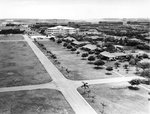 |  |  |  |
Maps
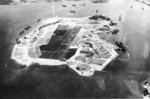
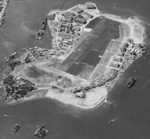
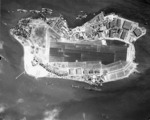
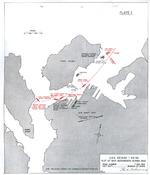 | 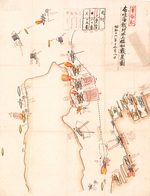 | 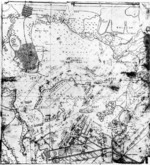 | 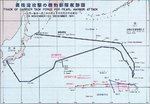 |
Attack on Pearl Harbor Timeline
| 31 Mar 1941 | Husband Kimmel and Walter Short received a report noting the weakness of the base at Pearl Harbor, US Territory of Hawaii to surprise air attacks. |
| 26 Jul 1941 | US Navy Admiral Husband Kimmel ordered long range air patrols to be conducted from various Pacific Ocean bases in case Japan reacted aggressively against US President Franklin Roosevelt's executive order to freeze Japanese assets. |
| 29 Jul 1941 | Joseph Rochefort reported to US Navy Admiral Husband Kimmel that the Japanese fleet detected outside of Japanese home waters were heading back to Japan, thus there was no immediate threat of an aggressive Japanese response to Franklin Roosevelt's decision to freeze Japanese assets. |
| 5 Sep 1941 | Joseph Rochefort's cryptanalytic team detected sudden increase in Japanese naval radio traffic. |
| 8 Sep 1941 | Joseph Rochefort's cryptanalytic team detected increased radio traffic between carriers and land bases, and interpreted it as the Japanese Navy conducting fitting out operations of carriers with new air groups. |
| 9 Sep 1941 | Joseph Rochefort's cryptanalytic team in US Territory of Hawaii noticed carrier Akagi was using new call signs in her radio communications. |
| 27 Sep 1941 | Joseph Rochefort warned US commanders at Pearl Harbor, US Territory of Hawaii that the Japanese communication codes were being changed. |
| 28 Sep 1941 | Joseph Rochefort warned US commanders at Pearl Harbor, US Territory of Hawaii that the recent Japanese Navy communications changes might mean the preparation of a large exercise or another major action. |
| 17 Oct 1941 | Harold Stark informed Husband Kimmel that in his personal opinion that while he expected Japan to take action some time in the near future, an attack on Pearl Harbor, US Territory of Hawaii was not likely. |
| 1 Nov 1941 | On this date, Japan time, the Combined Fleet Order No. 1 was issued for additional radio communications to be generated to make US cryptanalytic efforts more difficult. Meanwhile, on the other side of the international date line, Joseph Rochefort's cryptanalytic team of the US Navy in Pearl Harbor, Territory of Hawaii reported that all Japanese Navy call signs had changed. |
| 3 Nov 1941 | Chief of the Japanese Naval General Staff Admiral Osami Nagano approved the draft plan for the attack on Pearl Harbor, US Territory of Hawaii. On the other side of the international date line, Joseph Rochefort's cryptanalytic team of the US Navy in Pearl Harbor, Territory of Hawaii was realizing that the Japanese were inflating the amount of radio traffic. |
| 5 Nov 1941 | Joseph Rochefort's cryptanalytic team in US Territory of Hawaii detected improvements in security of Japanese naval communications and the recall of some of the merchant ships back to home waters. |
| 6 Nov 1941 | Joseph Rochefort's cryptanalytic team in US Territory of Hawaii continued to encounter a great deal of dummy radio traffic being sent by the Japanese Navy. |
| 11 Nov 1941 | Ten Japanese submarines departed from Yokosuka Naval Base in Japan for Kwajalein of the Marshall Islands, where they would proceed for US Territory of Hawaii. |
| 13 Nov 1941 | Japanese Admiral Yamamoto gathered his commanders at Iwakuni air base at Yamaguchi, Japan to discuss Pearl Harbor tactics. |
| 16 Nov 1941 | Obsolete Japanese battleship Settsu began to sail around the Inland Sea in Japan to generate fake radio communication messages at different ports. |
| 17 Nov 1941 | Japanese Navy Admiral Yamamoto revealed the Pearl Harbor attack plan to the naval leadership. |
| 18 Nov 1941 | Five large Japanese carrier submarines, each containing midget submarines, departed from Kure Naval Base, Japan for Pearl Harbor, US Territory of Hawaii. Meanwhile, Joseph Rochefort's US Navy cryptanalytic team reported no Japanese carrier movement. |
| 21 Nov 1941 | Joseph Rochefort's US Navy cryptanalytic team in Pearl Harbor, US Territory of Hawaii detected the arrival of a Japanese submarine squadron in the Marshall Islands. |
| 22 Nov 1941 | US Navy issued Task Force Ultrasecret Operation Order 1: warships were to proceed to Hawaiian waters in secrecy, with mission to conduct pre-emptive strikes on any potential threats against Hawaii. |
| 23 Nov 1941 | Japanese carriers made a rendezvous at Hitokappu Bay, Kurile Islands, Japan in preparation for the Pearl Harbor attack. On the other side of the international date line, Joseph Rochefort reported to his superiors that his cryptanalytic team had detected a Japanese submarine squadron moving into the Marshall Islands. |
| 26 Nov 1941 | At Pearl Harbor, Hawaii, Joseph Rochefort sent a report for his superiors that his cryptanalytic team had detected Japanese fleet movements and that the Japanese warships were moving out of the Kurile Islands region and seemingly staging for actions in the South Pacific. |
| 26 Nov 1941 | Vice Admiral Chuichi Nagumo led the Japanese Carrier Division 1 (Akagi and Kaga), Carrier Division 2 (Hiryu and Soryu), Carrier Division 5 (Shokaku and Zuikaku), first section of Battleship Division 3 (Hiei and Kirishima), Cruiser Division 8 (Tone and Chikuma), Destroyer Squadron 1, Destroyer Squadron 17, and Destroyer Squadron 18 out of Hitokappu Bay in the Kurile Islands for the Hawaii Operation, the attack on the US Pacific Fleet at Pearl Harbor, US Territory of Hawaii. |
| 27 Nov 1941 | American radio intelligence analysts stationed in the Philippine Islands reported their suspicion that, contrary to the findings of their counterparts in the Hawaiian Islands, the Japanese warships detected to have been recently moved into the Marshall Islands were likely to take actions eastward rather than southward. Also, they concluded that main Japanese carrier force was still at Sasebo, Japan rather than in the Marshall Islands. |
| 1 Dec 1941 | Radio messages sent from Sasebo, Japan using outdated call signs tricked US Navy cryptanalysts in US Territory of Hawaii into believing that carrier Akagi was still in home waters. Later on the same day, the cryptanalysts realized that all Japanese warships' call signs had changed. |
| 2 Dec 1941 | Japanese carrier fleet refueled in the North Pacific at 42 degrees north and 170 degrees east; at 2000 hours, the code "Niitaka Yama Noboru 1208" was issued, indicating that the attack on Pearl Harbor, US Territory of Hawaii was to be launched on 8 Dec 1941 Tokyo time, 7 Dec on the other side of the international date line. Meanwhile, at Pearl Harbor, Admiral Husband Kimmel was briefed of the disposition of the Japanese fleet, with the whereabouts of Carrier Division 1 and Carrier Division 2 (four fleet carriers total) not known; the best American guess was that they were at Kure, Japan. Finally, at Honolulu, Hawaii, Consul-General Nagao Kita was asked to provide a report regarding the presence of any barrage balloons or torpedo nets. |
| 3 Dec 1941 | The Japanese carrier fleet tasked with the Pearl Harbor attack turned south after refueling on the previous day, approaching the Hawaii Islands with increased speed. At Pearl Harbor, the American intelligence report on the location of Japanese Navy warships had "no information on submarines or carriers". Elsewhere in Hawaii, Consul-General Nagao Kita received orders to burn code ciphers and important papers; this was noticed by the Americans, who also received intelligence that several Japanese embassies around the world were doing the same. |
| 4 Dec 1941 | Schedule of Pearl Harbor attack was transmitted to the Japanese submarine fleet along with the latest intelligence and weather information. |
| 5 Dec 1941 | Japanese submarines surrounded Hawaii Islands. |
| 6 Dec 1941 | Japanese carrier fleet reached the rendezvous point at 34 degrees north, 158 degrees west, and then began a high speed approach for Pearl Harbor, US Territory of Hawaii. At the same time, the 30 Japanese submarines in the Hawaii area began to tighten the ring around the islands; I-74 spotted USS Lexington, but no action was taken. At Pearl Harbor, Admiral Husband Kimmel told a reporter from the news agency Christian Science Monitor that the chance of a war in the Pacific Ocean involving the United States was slim. Nearby, Vice Admiral William Pye told Kimmel (via intelligence officer Edwin Layton) that war with Japan was inevitable, although Pearl Harbor was not a likely target, thus there was no need to send the battleships out to sea as a precaution. Finally, at Honolulu, Hawaii, Consul-General Nagao Kita sent a cable to Japan that he observed no barrage balloons over Pearl Harbor and he did not believe there were torpedo nets around the battleships. |
| 7 Dec 1941 | Submarine USS Narwhal was moored at the Submarine Base at Pearl Harbor, Hawaiʻi when the Japanese attacked the harbor. Narwhal's gunners claimed hits (along with gunners from other vessels) on two Japanese torpedo bombers that were destroyed. |
| 7 Dec 1941 | During the raid on Pearl Harbor in the US Territory of Hawaii, USS Helena was damaged when an aerial torpedo passed underneath the ship and exploded against the hull of USS Oglala moored alongside. |
| 7 Dec 1941 | Five Japanese Type A Ko-hyoteki-class midget submarines are launched south of Oahu, Hawaii from mother submarines I-16, I-18, I-20, I-22, and I-24 as part of the overall Japanese attack on Pearl Harbor. All five were lost. |
| 7 Dec 1941 | Destroyer USS Helm patrolling off Honolulu harbor was straddled by two 100-pound bombs dropped from an Aichi D3A1 'Val' bomber that caused minor structural damage. |
| 7 Dec 1941 | USS St. Louis was among the first capital ships to depart Pearl Harbor, Hawaii from the inner harbor following the Japanese aerial attack. Upon arrival at the harbor entrance, St. Louis reported immediately taking a Japanese midget submarine under fire with uncertain results. |
| 7 Dec 1941 | USS Honolulu was at the repair piers in Pearl Harbor, Hawaii when the Japanese attack began. One 500-pound bomb went through the concrete dock beside Honolulu and exploded under the water caving in a section of Honolulu’s hull. |
| 7 Dec 1941 | At 4:35 PM Hawaiian time, following the morning's attack by the Japanese, Hawaiian Territorial Governor Joseph B. Poindexter and Army area commander General Walter C. Short jointly declared martial law over all of the Hawaiian Islands. Among the many actions that quickly followed, some 360 Japanese American residents of Hawai'i were taken into administrative custody in coordinated efforts by the Army’s Military Police and the F.B.I. |
| 7 Dec 1941 | At 1630 hours local Hawaiian time, submarine USS Thresher was approaching Pearl Harbor several hours after the Japanese air attack. Thresher made her pre-arranged rendezvous with destroyer USS Litchfield but Thresher released her escort so Litchfield could join the ships heading out to search for the Japanese fleet. Both vessels received orders to rejoin and enter Pearl Harbor as originally planned but when attempting the second rendezvous, Thresher mistakenly surfaced near the destroyer/minelayer USS Gamble thinking Gamble was Litchfield. Gamble fired on Thresher but missed; Thresher quickly submerged again and evaded. |
| 7 Dec 1941 | Mitsuo Fuchida led the Pearl Harbor attack, remaining over the target area throughout both waves of attacks to observe the degree of damage done to the American fleet. |
| 7 Dec 1941 | Isaac Kidd became the first US Navy flag officer to be killed in action during WW2. |
| 8 Dec 1941 | USS Helena entered Dry Dock #2 at Pearl Harbor, Oahu, US Territory of Hawaii to repair damage sustained in the Japanese attack the day before. Dry Dock #2 was still under construction but almost completed by the time of the Japanese attack and Helena was the first ship to enter it. |
| 10 Dec 1941 | Aircraft from USS Enterprise sank Japanese submarine I-70 in Hawaiian waters. |
| 11 Dec 1941 | US Secretary of the Navy Frank Knox arrived at Hawaii to personally assess the damage inflicted on 7 Dec 1941 by the Japanese. Meanwhile, Japanese submarine I-9 shelled the unarmed US freighter Lahaina about 800 miles northeast of Honolulu. |
| 13 Dec 1941 | Niihau Incident: Downed Japanese pilot attempted to recover sensitive documents seized from him by Niihau islanders; two of the islanders attacked and killed the pilot. |
| 14 Dec 1941 | Japanese submarine shelled Kahului and Maui, US Territory of Hawaii. |
| 15 Dec 1941 | Japanese submarine I-22 shelled Johnston Island, destroying a 1,200-gallon oil tank; another submarine, I-1, shelled Kahului, Maui, Hawaii Islands. |
| 18 Dec 1941 | At Honolulu, US Territory of Hawaii, the Roberts Commission began investigating the American preparations prior to the Pearl Harbor attack. |
| 30 Dec 1941 | Japanese submarine I-1 shelled Hilo, US Territory of Hawaii. |
| 31 Dec 1941 | Japanese submarines shell Hawaiian Islands of Kauai, Maui, and Hawaii. |
| 10 Jan 1942 | The Roberts Commission completed its investigation work at Honolulu, US Territory of Hawaii and departed for Washington DC, United States. |
| 23 Jan 1942 | The Roberts Commission found Husband Kimmel and Walter Short guilty of dereliction of duty for the Pearl Harbor disaster. |
| 20 Jul 1944 | The US Army formed the Pearl Harbor Board to analyze the Japanese attack of Pearl Harbor, US Territory of Hawaii of 7 Dec 1941. |
| 29 Aug 1945 | US President Harry Truman released the reports of the US Army and Navy Boards of Inquiry into the Pearl Harbor disaster. The Army Board placed blame primarily on the failure of Lieutenant General Walter Short for failing to alert his command. The US War Department also came in for criticism (for failing to keep the president's office informed of developments in negotiations between Japan and the United States) as does Secretary of State Cordell Hull (for delivering America's counter proposals on 26 Nov 1941, thereby preventing time for war preparations). The Navy Board's report blamed Admiral Husband Kimmel for not rotating the in-port periods of US warships in a less routine manner. |
Please consider supporting us on Patreon. Even $1 per month will go a long way! Thank you. Please help us spread the word: Stay updated with WW2DB: |


Visitor Submitted Comments
12 Oct 2005 03:38:21 PM
could you e mail me a list of all survivors on ships that was at pearl my brother was there and i need conformation please his name was charles dresser thank u
5 Feb 2006 03:09:56 PM
do you know were i might find primary sources on pearl harbour and the japanese bombings. primary being written at the time of the event. please email me.
11 Apr 2006 09:58:08 AM
cool
24 May 2006 05:00:06 PM
NEED ANY INFO ON THE DEATH OF ADMIRAL I.C.KIDD. HAD HIS FLAG ABOARD USS ARIZONA.
30 Jul 2006 01:13:46 AM
Great site. I lived on Ford Island for many years as a boy and studied the history of the attack. I recall very clearly, at low tide that one could see the guns of the number 1 turret on the Arizona. They appear to have dropped and no longer appear at low tide. I was shocked to read that the National Geographic Society was surprised to learn that the ship still had a main gun with barrels present.
9 Sep 2006 04:19:17 PM
I am seeking information on how the Japenese failed to attack a crucial target which was the oil storage facilities.
31 Jan 2007 08:20:13 PM
I always thought we knew hours before that Japan was going to attack Pearl Harbor. Please email me info on this if you have any. thank you...
19 Feb 2007 07:23:01 PM
my question was not answered on whether or not pearl harbor was a wise idea.
18 Apr 2007 03:00:20 PM
To give the *** credit, Pearl Harbor was a smart idea on the outside we were the only navy in the pacific which could stop their imperialist invasions of Asia. They didnt count on us repairing most of the ships they sunkdestroyed, and joining the war.
The oil reserves werent attacked because the third wave was never launched, of which the oil was a target. The *** commander thought a third wave would alert the US carriers to their position, which were out of port.
There were signs that pear harbor was going to be attacked beforehand. Generals ignored it though. They were court marshialed after the war was over.
19 Apr 2007 09:41:26 PM
Something interesting about USS Oklahoma is that it was also later raised, despite the fact it had capsized, and put in drydock in Pearl. However, damages were too extensive and it could not be repaired. After the war, it was scheduled to be scrapped. But as it was towed to the mainland, the ship took on a list (again), and was cut loose and capsized (again). So instead of being scrapped it recieved an honorable burial at sea while the band on the ship that towed it played a burial song.
26 Apr 2007 08:03:31 AM
I fought in WWII and I want you to know that it is a great honor that you made this
29 May 2007 08:33:17 PM
So wait...where was USS Pennsylvania during all this? California and Nevada were both moored alone...USS Oklahoma was outboard of Maryland...West Virginia was inboard of Tennessee, right? And Arizona was next to Vestal...that makes seven battleships, but every place says Pennsylvania was there too, so where was it?
29 May 2007 08:35:49 PM
Never mind, I just found it was in dry dock, not on Battleship row.
25 Aug 2007 02:35:34 PM
i think that the attack was really bad and that it should never happen again.
7 Dec 2007 11:32:49 AM
Never forget the 2,000 men who died on this day, 66 years ago today, making the ultimate sacrifice before they even knew who or why they were fighting.
28 Jan 2008 08:23:46 AM
i dont think war is ever the right answer i dont think people have to risk there own lives because so many people are judge mental on peoples race there color of there skin...who they like what they wear where their from what they do how they act god created us to be all equal and why cant everyone see it that way...we should all be free and do what we want to with out being judged by other people...there are so many face people out in the world because they are worried about being judged if they be themselves...its so sad how things had to end up like this its 2008 and its getting worse and worse as the days and the years go on...no one deserves to be judged or treated differnet because of there race there skin color there religion how they act what they wear how rich or how poor they are...were all the same inside we all have a HEART!
9 Mar 2008 09:44:12 AM
hi
17 Mar 2008 10:00:17 AM
civc oration...on pearl harbor
9 Apr 2008 07:08:38 AM
War ih hell that's all I got to say. War Is never the answer to any problem unless it's like Pearl Harbor or 9/11.
25 Apr 2008 11:22:44 PM
I guess it was known as in New York 11 September because it seems like that the USA knew that it would happen.The USA expected the War in Pearl Harbor. but i can't understand what they did after all this?
6 Sep 2008 06:09:58 PM
That was the best article I've ever read!!!! Keep it up!!!!
6 Sep 2008 06:35:54 PM
what happened to them after? did the army d anything after the attack? help please!!!!
18 Nov 2008 08:54:26 PM
what about this attack made the U.S.A. join WWII
2 Dec 2008 09:11:13 AM
Pearl Harbor was awesome!!!!!!!!!!!!!!!!!!!!!!!!!!!!!!!!!!!!!!!!!!!!!!!!!!!!!!!!!!!!!!!!!!!!!!!!!!!!!!!!!!!!!!!!!!!!!!!!!!!!YES
30 Dec 2008 11:59:03 AM
in your article it seems to me you feel the government knew what was to happen as you stated the u.s. forsed the japanese to war. i've heard this before and agree. one has to ask. where were the escort ships for the carriers delivering planes to wake and mid-way? the're should have been cruisers as well as destroyers as the threat of war was present.the fleet was at pearl and the so valued carriers are running around with-out proper protection? history says we knew what and where and when this was going to happen. our gov't will never admit it allowed all those people to die so we could enter the war.the're too many things that say if the admirals and generals were allowed to do their jobs this would not have happened.
14 Feb 2009 11:05:35 AM
than for the information it was really goood
18 Mar 2009 11:50:51 AM
i love this subject
6 May 2009 03:55:34 PM
history is great
13 May 2009 03:30:42 PM
Did the carriers get destroyed that attacked pearl harbor?
29 May 2009 12:18:52 PM
Jan 15, 1898: Maine incident... Cuba
Jan 16, 1917: Zimmermann telegram... WWI
Dec 7, 1941: Pearl Harbor.. WWII
...Korea
... Vietnam
Set 11... WTC...Irak
... and so.. and so...
This tale never end???
30 May 2009 03:34:06 AM
In the United States, it is true to have received the Pearl Harbor attack beforehand.
Japan is said that the declaration of war declaration has been done before the attack of the Pearl Harbor and the diplomat's in Japan of incapable [ga] informing the United States of it slowed.
Japan's having determined starting the war has full state intervention and the economic sanction etc. of the United States.
To face the war, U.S.A. Government has fueled the public sentiment by the propaganda of cruelty etc. of a Japanese army.
And, it succeeded in the lead into the war by the Pearl Harbor attack.
23 Nov 2009 02:48:55 PM
i know alot of bull sh!t bout pearl harbor and u just added some more info thanks (
10 Jan 2010 06:12:00 PM
my father angelo volpe was on the pennsylvania at pearl he was a bm 3
if any one knew him id be glad to hear from them
23 Feb 2010 08:56:24 AM
pearl harbor was a shocking horribly but yet an eye opener. that day has woken us up too show be ready for any thing and every thing.
16 Apr 2010 02:34:22 PM
is there any better sites
13 Jun 2010 11:56:54 PM
thanks, but can someone please tell mee how the Pearl Harbour had changed the World Forever? Because its for my assignment. And I really need help! please someone.
Thanks.
5 Aug 2010 07:59:46 PM
this site is dumb as need more info anout stuff peoples need to update more stuff .... :(
14 Sep 2010 07:50:35 PM
thanks, but can someone please tell mee how the Pearl Harbour had changed the World Forever? Because its for my assignment. And I really need help! please someone.
Thanks.
17 Nov 2010 02:38:18 AM
So i have this assignment atm.. "Is the battle scene and lead up to it, in the movie Pearl Harbour accurate in the historical evidence?" can you help me with this?? i am sooo suck for ideas!!! :(
8 Dec 2010 04:46:57 PM
the only thing the Japennes did wrong was they did not have a follow up attack on the Hawaiian island's.
10 Dec 2010 06:57:07 PM
Remember Pearl Harbor -- Keep America Alert!
(Now deceased) America's oldest living Medal of Honor recipient, living his 101st year is former enlisted Chief Petty Officer, Aviation Chief Ordnanceman (ACOM), later wartime commissioned Lieutenant John W. Finn, U. S. Navy (Ret.). He is also the last surviving Medal of Honor, "The Day of Infamy", Japanese Attack on the Hawaiian Islands, Naval Air Station, Kaneohe Bay, Oahu, Territory of Hawaii, 7 December 1941.
(Now deceased) 'Navy Centenarian Sailor', 103 year old, former enlisted Chief Petty Officer, Aviation Chief Radioman (ACRM, Combat Aircrewman), later wartime commissioned Chief Warrant Officer Julio 'Jay' Ereneta, U. S. Navy (Ret.), is a thirty year career veteran of World War One and World War Two. He first flew aircrewman in August 1922 flew rearseat Radioman/Gunner (1920s/1930s) in the tactical air squadrons of the Navy's first aircraft carriers, USS LANGLEY (CV-1) and USS LEXINGTON (CV-2).
Visit my photo album tribute to these centenarian veteran shipmates and other Pearl Harbor survivors:
http://news.webshots.com/album/123286873BFAAiq
http://news.webshots.com/album/141695570BONFYl
San Diego, California
10 Dec 2010 10:03:01 PM
War monger Roosevelt forced the Japanese into striking the 1st blow.. Roosevelt is responsible for those American boys death..
Just like Bush is responsible for the victims of 9/11..
25 Feb 2011 09:31:38 AM
My grandfather was the captain of the U.S. Air Force and my dad says he was on one of the battleships during the attack at Pearl Harbor. His name was formally known as Capt. Max Taunton Sr.And my question is which ship was he on?
4 Mar 2011 05:15:40 PM
this is stupid y cnt u jus tell me specific detials bout wat happend to pearl harbor..not all this other crap i dnt need to kno
17 Mar 2011 12:02:11 PM
This is great, It helped me finish my assignment..(:
4 Apr 2011 10:11:18 AM
Please could you send me a list of all of the countries involved in the Pearl Harbor attack.
Thank you. I am sorry but I need this quite soon it is very important. Thanks again.
19 Aug 2011 11:05:33 PM
the A6M Zero and the D3A Val should be included in the notable aircraft.
3 Jan 2012 08:27:15 AM
Can you please tell send me a list of survivors at Pearl Harbor, a list of the ships that made it through the battle and are still up and running today, and some of the biggest people that helped allot that day for my history fair. Thank You!
6 Jan 2012 12:34:57 PM
There are certain historical facts that cannot be negated by wishful thinking, such as the fact that the IJN attacked Pearl Harbor without warning or declaration of war. Also, the United States was not morally obligated to supply Japan with oil and scrap metal to feed their war machine in China; claiming that an embargo, regardless of motive, is grounds for war is essentially terrorist rhetoric, e.g., "If you don't give me what I want, it's your own fault if I kill you for it." Japanese militarists had been gearing up for war with the United States for decades when they attacked Pearl Harbor, and the only way we could have avoided war would have been to withdraw from the Philippines and then do nothing as the Japanese Empire occupied every island and coastal nation in the Pacific. Given the culture of cruelty then prevalent in the Japanese armed forces, such an extension of the Japanese Empire would have meant more wholesale slaughter and maltreatment for millions of civilians in the occupied areas, and any U.S. or Allied attempt to retake the Pacific against such an entrenched defensive perimeter might well have been deemed prohibitively costly. Minoru Genda, of Pearl Harbor and Midway fame, once said that he was certain the Japanese high command would have used the Atomic Bomb without hesitation, had they possessed the technology. We now know that neither Japan nor Germany was all that close to weaponizing atomic energy in 1945, but had we failed to engage Japan when we did, we would not only have given them a chance to expand their boundaries, but we would also have delayed or entirely avoided our entry into the war against Hitler, since he declared war on America only after Pearl Harbor. This would also have meant Russia would have faced Hitler's legions without the essential benefit of American aid, since we only became allies with Russia once we were at war with Germany. Therefore, the apocalyptic totalitarian regimes of both Japan and Germany would have had more time and resources to develop their military technology. I am surprised anyone would argue that Roosevelt should have allowed the world to be divided into two hemispheres of oppression, suffering, and murder.
11 Mar 2012 06:23:05 PM
Who shot down Fusata Iida's plane on December 7, 1941?
I have seen several references where Chief Aviation Ordnanceman John Finn was given the credit. However, GORDON PRANGE, author of AT DAWN WE SLEPT, gives Aviation Ordnanceman SANDS the credit on page 532.
29 Mar 2012 03:47:29 PM
John Baxter is 99.9% right on everything. Exceptions are that the Nazi had finally discovered "heavy water" and were close to making the 1st A-bomb. The U.S. chose to ignore the Japan threat @ "too small to be a problem for our nation." We did stop supplying oil and material to Japan because the U.S. tried to be neutral. There is no such thing as being "neutral," YOU ARE EITHER FRIEND OR FOE IN WAR TIME, that includes Switzerland too. Emperior Hirohito received some education in Calif. and liked America. He told Tojo "Your Hawaii attack only awoke a sleeping giant!" He was right! He also refused Tojo seppuku (hororable stomach suicide)permission. Tojo believed died in U.S. Army prison. If we had lost WWII, everyone would be speaking Nazi now. Semper Fi - Andrew
18 Aug 2012 01:03:10 PM
Question, years ago I watched doc/tv/show about the Japanese fleet's return home from Pearl Harbor. It was about the U.S. attacking the fleet days latter and the airplanes that where in the battle flew into the fleet (dive bomb/suicide). These where U.S. aircraft, where can i find more info on this counterattack by the U.S. days after attack Dec.7 1941!!
18 Aug 2012 01:48:47 PM
The Japanese fleet on their way home, day/days after Pearl Harbor/ Was their a counterattack by U.S. air force ?
28 Oct 2012 12:12:13 PM
good 4 my english project about historical event thx!
7 Nov 2012 10:06:52 PM
Need more info on Kahului Harbor shelling Dec. 1941. Where and what was hit ? Story please. Mahalo
30 Nov 2012 08:47:28 PM
I just found out that my Grandma Belle Elore who's husband was John Edward Smith, was sent out on the USS Arizona after being married only 2 weeks. John was one of the bodies that were never recovered. I would really love to find any info about him. Pictures or anything.
18 Dec 2012 04:51:43 PM
I need some materials such as historical data to contrast the military force of USA and Japan before Pearl Harbor Attact.(Because in the article the author said that USA is weak in Pacific Ocean.) Can you help me?
28 Jan 2013 02:53:33 AM
Was the dropping of the atomic bomb on Japan justified?
27 Jun 2013 05:32:11 PM
I have a album i acquired that is in Japanese and is the album of Admiral Yamamoto.. it is very old.. would say 40's.. I got it from a man that was actually in the war....he said he had it from then.....it is a complete of Yamamoto.. even before the war.. from child all the way to death..How would i find out more about it ...as it is in Japanese.
25 Jul 2013 02:24:25 AM
In reponse to Comment # 52"Your Hawaii attack only awoke a sleeping giant!" I don't think the Emperor said that. It was the reponse of Admiral Isoroku Yamomoto when he was congratulated about the sucess of the Pearl Harbor attack. And what he said was something like this. Im afraid that all that I/ We have done is to awaken a sleeping giant.
3 Nov 2013 06:51:59 PM
Thanks, Victor. I was going to comment on that as well. It was Yamamoto. The Emperor, being god, did not get much publicity. ... If anyone has a curious turn about the quality of our language recorded in Chen's articles and these comments, Q.E.D. Atrocious spelling, punctuation and grammar.
3 Apr 2014 06:33:58 PM
I was visiting the The Pearl Harbor
Memorial in March 2014. I saw there was a Moss, I was married to a Moss, he has passed on. Just wondering if I could get some information for my children. Thanks
19 May 2014 06:05:27 PM
Widebody747- in your article it seems to me you feel the government knew what was to happen as you stated the u.s. forsed the japanese to war. i've heard this before and agree. one has to ask. where were the escort ships for the carriers delivering planes to wake and mid-way? the're should have been cruisers as well as destroyers as the threat of war was present.the fleet was at pearl and the so valued carriers are running around with-out proper protection? history says we knew what and where and when this was going to happen. our gov't will never admit it allowed all those people to die so we could enter the war.the're too many things that say if the admirals and generals were allowed to do their jobs this would not have happened.
Gather around children, it is time for a story. This book is called, "widebody747's History lesson(and butt whooping)!"
widebody747 are u stupid? First off, you need to spell some things right, I could barely understand you. Second, the "so valued carriers" were being protected, with the eight destroyers and battleships that were harbored in the port. Since the nation wasn't in a state of war the cruisers needed no protection. By the way, there were no aircraft carriers in the harbor, so nobody knows what you are talking about when you say why weren't there ships protecting them. No aircraft carriers were sunk. Soooooo... What are you talking about? Normally they didn't need protection anyways, planes did the job pretty well back then. You said that there was a "imminent threat of war," which there wasn't yet because this was a accidental sneak attack. Third, nobody wants to go to war. So I am severely offended that you dare say that the government would "want" to go into a war. NEWSFLASH: For the past 150 years we actually didn't like getting involved with other countries. It was called "Isolationism". Fourth, the U.S. didn't like Japan pushing China around. That's why we cut off trade with them. They invaded China and then invaded the city of Nanking. You probably never heard of it, have you. Not surprised. Anyways, Nanking is were Japanese soldiers:
a. They killed over 300,000 Nanking civilians.
b. Bashed the heads of babies into walls.
c. Used live children as bayonet practice.
d. Burned and buried men alive.
e. Machine gunned and strafed civilians from planes.
f. Rapped 20,000 to 80,000 women.
or g. All of the above.
If you answered "G," you were correct! DING DING DING! WINNER!
This event became known as, "The Rape of Nanking,"
And you dare say we wanted to go to war. This was a mini-holocaust. How about you do some research before you insult people. And learn how to write English properly for the love of God. And one last thing, do the world a favor and don't breed.
Good History lesson? Convinced? Good.
And that was the end of the story.
(Children go, "Yeah!!!"
 David Stubblebine says:
19 May 2014 10:52:04 PM
To Widebody747 #26:
More to the point, your premise is incorrect. The two carriers that were at sea during the Pearl Harbor attack each had a proper compliment of screening vessels.
Enterprise, on her way to Wake, was screened by cruisers Salt Lake City, Northampton, and Chester and destroyers Gridley, Craven, McCall, Maury, Dunlap, Fanning, Benham, and Ellet.
Lexington, on her way to Midway, was screened by cruisers Chicago, Portland, and Astoria and destroyers Porter, Mahan, Drayton, Lamson, and Flusser.
This is exactly what would be expected of a carrier screen during pre-war 1941. There is nothing here (or anywhere else) to suggest the US had prior knowledge of the details of attack or somehow baited Japan into war. Sorry the actual history conflicts with your wishes for what you wanted the history to be.
21 Jun 2014 05:46:41 AM
The lead pilot of the Pearl Harbor attack survived the war and he wrote an autobiography. His name was Shintaro Fuchida.
24 Nov 2014 01:52:15 AM
On your timeline for Dec. 15, check out the following webpage for more detailed info on the Kahului shelling.
http://maui-meshworks.com/kahuluishelling1Fd.htm
16 Mar 2016 08:49:15 AM
who is the author porfavor?
26 Nov 2017 07:15:19 AM
When was this published and who was the author?
25 Jun 2018 03:27:30 PM
When did you publish this information.
17 Oct 2018 05:08:40 PM
My father, Albert Lucchetti and S. Biernacki were on Helena 12/7/41. Killed on that date was J. C. Pensyl, I have been trying to find where he was from and a relative, have photo and want to know if he is in it. Great job and resource! Thank you
Alan Chanter says:30 Dec 2019 06:09:52 AM
The United States Department of the Interior reported that 53 civilians were killed during the attack on Pearl Harbor on December 7, 1941 - 24 of these had Japanese surnames.
16 Apr 2020 11:23:57 AM
Does anyone have a copy of CINCPAC/CINCPACFLT message to CNO indicating attack on Pearl Harbor? Thanks!!
7 Dec 2023 05:17:10 AM
My grandad knows a guy who defended pearl harbor, lived through the war, and was there of the signing of the surrender at tokyo bay.
All visitor submitted comments are opinions of those making the submissions and do not reflect views of WW2DB.

» Abe, Hiroaki
» Amagai, Takahisa
» Fuchida, Mitsuo
» Genda, Minoru
» Hara, Chuichi
» Harada, Kaname
» Hasegawa, Kiichi
» Hashimoto, Mochitsura
» Holden, Carl
» Iida, Fusata
» Iwasa, Naoji
» Kaneko, Tadashi
» Kidd, Isaac
» Kimmel, Husband
» Kurusu, Saburo
» Layton, Edwin
» Miller, Doris
» Minami, Yoshimi
» Miwa, Shigeyoshi
» Nagumo, Chuichi
» Nomura, Kichisaburo
» Okada, Jisaku
» Omori, Sentaro
» Rochefort, Joseph
» Short, Walter
» Welch, George
» Yamaguchi, Tamon
» Yamamoto, Isoroku
» Yamaoka, Mineo
» Yanagimoto, Ryusaku
» Yoshikawa, Takeo
Location:
» Hawaii
Ship Participants:
» Abukuma
» Akagi
» Arizona
» Cachalot (Cachalot-class)
» California
» Chikuma
» Cummings
» Detroit
» Farragut
» Ha-19
» Helena (St. Louis-class)
» Helm
» Henley
» Hiryu
» Honolulu
» Hulbert
» Hull
» I-68/I-168
» Kaga
» Kirishima
» Maryland
» Monaghan
» Mugford
» Narwhal
» Nevada
» New Orleans
» Oklahoma
» Pennsylvania
» Phoenix
» Raleigh
» Ralph Talbot
» San Francisco
» Settsu
» Shaw
» Shokaku
» Soryu
» St. Louis
» Tanikaze
» Tennessee
» Thresher
» Tone
» Ward
» West Virginia
» Zuikaku
Notable Aircraft:
» A6M Zero
» B5N
» D3A
Documents:
» Fourteen Part Message from Japan to the United States and Hull's Response
» Interrogation Nav 13, Captain Yasuji Watanabe
» Interrogation Nav 29, Captain Mitsuo Fuchida
» Interrogation Nav 6, Captain Mitsuo Fuchida
» Interview with Earl Gallaher
» Part 3: Joint Session of the Congress, Monday, December 8, 1941 (Infamy Speech)
» US Navy Report of Japanese Raid on Pearl Harbor
Related Books:
» Admiral Kimmel’s Story
» Advance Force Pearl Harbor
» And I Was There: Pearl Harbor and Midway-Breaking the Secrets
» Japan 1941: Countdown to Infamy
» Japan 1941: Countdown to Infamy
» Joe Rochefort's War
» Pearl Harbor Ghosts: The Legacy of December 7, 1941
» Pearl Harbor: FDR Leads the Nation Into War
» Pearl Harbor: From Infamy to Greatness
» Pearl; December 7, 1941
Additional Content:
» Pearl Harbor Attack Timetable
- » 1,182 biographies
- » 337 events
- » 45,132 timeline entries
- » 1,249 ships
- » 350 aircraft models
- » 207 vehicle models
- » 376 weapon models
- » 123 historical documents
- » 261 facilities
- » 470 book reviews
- » 28,431 photos
- » 365 maps
Captain Henry P. Jim Crowe, Guadalcanal, 13 Jan 1943

Please consider supporting us on Patreon. Even $1 a month will go a long way. Thank you!

Or, please support us by purchasing some WW2DB merchandise at TeeSpring, Thank you!
12 Jul 2005 08:02:49 AM
Keep it up !!! Lets have WWIV !!!