


Battle of Khalkhin Gol
Contributor: C. Peter Chen
ww2dbaseThe village of Nomonhan sat near the border in an area disputed between Mongolia, a territory of China which had broken away with Soviet support but not yet internationally recognized, and Manchukuo, which was a Japanese puppet state in northeastern China. The Japanese considered the river Khalkhin Gol the border between the two territories, while the Mongolians thought the border was 16 kilometers further east, just past Nomonhan.
ww2dbaseOn 11 May 1939, a Mongolian cavalry unit consisted of 70 to 90 men neared Nomonhan in search of grazing land for their horses, and was driven west of Khalkhin Gol by Manchukuo cavalry. Two days later, the enraged Mongolians returned with a sizeable force and occupied the Nomonhan region. The aggressive Japanese Kwantung Army took this incident as an excuse to move into the Russian sphere of influence, and dispatched Colonel Takemitsu Yamagata and Lieutenant Colonel Yaozo Azuma into Mongolia on 14 May with two regiments from the Japanese 23rd Division. They were able to drive the Mongolian forces back across the river. Shortly after, Mongolian troops returned, and Azuma returned with his troops again, but this time, the Japanese were surrounded by Soviet and Mongolian troops, and the Japanese troops were wiped out on 28 May; the Japanese lost 8 officers and 97 men killed and 1 officer and 33 men wounded, a total of 63% casualty rate.
ww2dbaseImmediately after this engagement, both sides built up strength in the area. The Japanese moved 30,000 men toward Mongolia Area, while Moscow dispatched corps commander Lieutenant General Georgy Zhukov to lead an offensive. Zhukov arrived in the area on 5 Jun 1939 with armored cars, light tanks, and aircraft. On 27 Jun, the Japanese 2nd Air Brigade attacked the airfield at Tamsagbulag, and both sides lost several aircraft; this attack was conducted by the Kwantung Army without approval from Tokyo, and after learning of the attack, Tokyo ordered that no further air strikes were to be launched.
ww2dbaseThroughout the month of Jun 1939, small scale clashes took place between Mongolian and Manchukuo units.
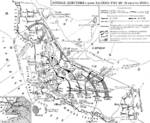
ww2dbaseAt the end of Jun 1939, Lieutenant General Michitaro Komatsubara of Japanese 23rd Division was given the permission to attack. He planned for a two-pronged approach. One force, consisted of 26th Infantry Regiment, 71st Infantry Regiment, 72nd Infantry Regiment, and a battalion of 64th Infantry Regiment, marched for Baintsagan Hill and then Kawatama Bridge. Another force, consisted of 3rd Tank Regiment, 4th Tank Regiment, part of 6th Infantry Regiment, a battalion of 28th Infantry Regiment, and a battalion of 13th Field Artillery Regiment aimed to attack Soviet positions on the east bank of the river Khalkhin Gol and north of the Holsten River. As the northern prong crossed Khalkhin Gol and drove Soviet troops from Baintsagan Hill, Zhukov launched a counterattack with 450 tanks and armored cars without infantry support. The Soviet armored force attacked the Japanese on three sides, forcing the Japanese to fall back over the river on 5 Jul. Meanwhile, the Japanese southern prong, which commenced on 2 Jul, met stiff Soviet resistance throughout the advance; it was able to reach the Kawatama Bridge where it was supposed to make contact with the northern prong, but by 9 Jul, the force would be defeated by a concerted Soviet counterattack.
ww2dbaseOver the next two weeks, the two sides continued to engage each other near the confluence of Khalkhin Gol and Holsten River, though none of the engagements were significant. During this time, while both sides were distant from their bases of supply, Zhukov effectively made use of a 2,600-truck fleet to bring food and ammunition to the front, while the Japanese lacked motored transport.
ww2dbaseOn 23 and 24 Jul 1939, Japanese artillery bombarded Soviet positions at the Kawatama Bridge, while 64th and 72nd Infantry Regiments launched probe attacks. On 25 Jul, 64th and 72nd Infantry Regiments launched a major attack, but it too, would fail to dislodge the Soviets. The Japanese suffered over 5,000 casualties in the series of failed attacks at the Kawatama Bridge region.
ww2dbaseWhile the Japanese planned for a third offensive for late Aug 1939, Zhukov struck first. On 20 Aug, 57,000 men, 498 BT-5 and BT-7 tanks, and 557 aircraft, supported by two Mongolian cavalry divisions, moved in surprise against the weakly defended Japanese front manned by only Japanese 23rd Infantry Division reinforced by several smaller infantry units. As the Japanese were pinned down by artillery and aircraft, Soviet tanks attacked them from the flank and rear, achieving a double envelopment. On 25 Aug, Soviet forces linked up at Nomonhan, enveloping Japanese 23rd Infantry Division. After failed attempts by the Japanese to break the encirclement, Japanese 23rd Division was effectively destroyed by 31 Aug.
ww2dbaseLieutenant General Komatsubara gathered his forces for a counterattack, but he was frustrated by messages from Tokyo requesting him to hold his position. In early Sep, politicians of the two nations successfully negotiated an agreement, and a ceasefire was signed in Moscow, Russia on 15 Sep 1939. The Soviet Union and Japan agreed that the border between the break-away state of Mongolia and the puppet state of Manchukuo was to be at Nomonhan, which was what the Mongolians perceived as the border at the start of the conflict. Japanese Army claimed that it had suffered 8,440 killed and 8,766 wounded in series of engagements out of the 75,000 men committed, but actual number of troops killed might be in the 20,000s or 30,000s. The Soviet Union claimed that it had suffered 9,284 casualties out of the 57,000 men committed, but the Soviets might had understated the figure as well; the actual number of casualties might be between 21,000 and 24,000. For his success, Georgy Zhukov was awarded the Hero of the Soviet Union and was promoted to the rank of general.
ww2dbaseThis battle was known in Japan as the Nomonhan Incident, Battle of Khalkhin Gol in the Soviet Union, and the Battle of Halhin Gol in Mongolia.
ww2dbaseThe result of the battle significantly influenced the future direction of Japanese expansion. Due to the inability to expand into Mongolia, the Japanese Army lost prestige at the Imperial General Headquarters in Tokyo. The Japanese Navy, stepping up to fill the void that the Army had once occupied, gained support for its plan to move against European holdings in the Pacific Ocean. Looking further down the road, the ceasefire at the end of this battle would slowly evolve into the basis for the 1941 Soviet-Japanese Neutrality Pact, which would free up the bulk of Soviet forces in Asia for actions in the Russo-German war.
ww2dbaseSource: Wikipedia.
Last Major Update: Dec 2009
Battle of Khalkhin Gol Interactive Map
Photographs
 |  |  |  |
Maps
 |  |
Battle of Khalkhin Gol Timeline
| 11 May 1939 | Small Mongolian and Manchukuo cavalry units clashed near the village of Nomonhan in the border region. |
| 13 May 1939 | Mongolian cavalry forces occupied the area near Nomonhan, Mongolia Area, China. |
| 14 May 1939 | Two regiments of Japanese 23rd Division drove off Mongolian troops in the Nomonhan area in the Mongolia Area of China. |
| 28 May 1939 | A combined Soviet and Mongolian force, having surrounded a two-regiment Japanese force near Nomonhan in Mongolia Area of China days earlier, wiped out the Japanese. |
| 5 Jun 1939 | Corps commander Lieutenant General Georgy Zhukov arrived in the Mongolia Area of China, bringing reinforcement of armored cars, light tanks, and aircraft. |
| 27 Jun 1939 | Aircraft of Japanese Army 2nd Air Brigade attacked the Soviet airfield at Tamsagbulag, Mongolia Area, China. Both sides lost several aircraft. |
| 2 Jul 1939 | The southern prong of the Japanese offensive in Mongolia Area of China commenced. |
| 5 Jul 1939 | Georgy Zhukov's counterattack forced the northern prong of the Japanese offensive to retreat across river Khalkhin Gol in Mongolia Area of China. |
| 9 Jul 1939 | A Soviet counterattack defeated the southern prong of the Japanese offensive in the Mongolia Area of China. |
| 23 Jul 1939 | Japanese artillery bombarded Soviet positions at the Kawatama Bridge in Mongolia Area of China while infantry units launched small scale attacks. |
| 24 Jul 1939 | Japanese artillery bombarded Soviet positions at the Kawatama Bridge in Mongolia Area of China while infantry units launched small scale attacks. |
| 25 Jul 1939 | Japanese 64th Infantry Regiment and 72nd Infantry Regiment launched a failed main attack on Soviet forces defending the Kawatama Bridge in Mongolia Area of China. |
| 20 Aug 1939 | Georgy Zhukov commenced a large-scale surprise offensive against Japanese forces in the Mongolia Area of China. |
| 25 Aug 1939 | Soviet forces linked up at Nomonhan, Mongolia Area, China, enveloping Japanese 23rd Infantry Division. |
| 26 Aug 1939 | A Japanese attack failed to break the Soviet envelopment at Nomonhan, Mongolia Area, China. |
| 27 Aug 1939 | Japanese 23rd Infantry Division attempted and failed to break out of the encircled village of Nomonhan, Mongolia Area, China. |
| 31 Aug 1939 | Japanese 23rd Infantry Division was effectively wiped out at Nomonhan, Mongolia Area, China. |
| 15 Sep 1939 | Soviet Union and Japan signed a ceasefire in Moscow, Russia, ending the Battle of Khalkhin Gol. |
Please consider supporting us on Patreon. Even $1 per month will go a long way! Thank you. Please help us spread the word: Stay updated with WW2DB: |


Visitor Submitted Comments
7 Jan 2012 02:30:06 PM
Para 5 states that the Japanese were fielding "2 light armor divisions": this is incorrect, by this time the japanese force consisted of 23 IJA Inf Div, with strong reinforcing units, drawn from a number of sources, including 7 IJA Inf Div. There were no significant IJA armor elements present at this time.
See Alvin Coox's "Nomonhan"
All visitor submitted comments are opinions of those making the submissions and do not reflect views of WW2DB.
» Choibalsan
» Morihiro
» Zhukov, Georgy
Location:
» China
- » 1,161 biographies
- » 337 events
- » 44,601 timeline entries
- » 1,243 ships
- » 350 aircraft models
- » 207 vehicle models
- » 376 weapon models
- » 123 historical documents
- » 261 facilities
- » 470 book reviews
- » 28,630 photos
- » 429 maps
General Douglas MacArthur at Leyte, 17 Oct 1944

Please consider supporting us on Patreon. Even $1 a month will go a long way. Thank you!

Or, please support us by purchasing some WW2DB merchandise at TeeSpring, Thank you!
26 Dec 2009 01:20:21 AM
hrefhttp://history-of-wars.ru/war_hrono/350-boi-na-xalxin-gole.html>http://history-of-wars.ru/war_hrono/350-boi-na-xalxin-gole.html