


Canada
| Full Name | 13 Dominion of Canada | |
| Alliance | Allies - Minor Member Nation or Possession | |
| Possessing Power | United Kingdom | |
| Entry into WW2 | 10 Sep 1939 | |
| Population in 1939 | 11,267,000 | |
| Military Deaths in WW2 | 45,300 |
Contributor: C. Peter Chen
ww2dbaseOn the eve of the European War in 1939, Canada only had a population of 11 million people despite its vast size. Her army was small, her navy was but a fleet of 15 ships, and her air force consisted only of 275 aircraft most of which were obsolete. Despite the lack of military strength, she had great war potential. When Britain declared war on Germany, Prime Minister Mackenzie King called for Parliament debates on whether Canada should also join in the war beside Britain. On 10 Sep 1939, Canada produced a declaration of war for the approval of King George VI of the United Kingdom, which was approved immediately. In the mean time, Canada did not sit idle. In the ten days since Germany's invasion of Poland, Canada purchased US$20,000,000 worth of arms from the United States in preparation for war.
ww2dbaseThe Canadian Army was the largest branch of the Canadian military at the start of the European War; it had 4,261 officers and men in the permanent army and 51,000 in the reserves. That number grew dramatically during the course of the war. By mid-1942, the size of the Canadian Army increased to over 400,000, and by the end of the war, over 730,000 men and women. Initially lacking properly equipment and weapons, the Allied war effort quickly remedied that problem. Famously, the bravery of Canadian troops contributed to the Allied victories at Sicily and Normandy. On the industrial front, Canadian factories built more than 800,000 trucks for the Allied war effort. Many historians, including those who wrote the British Official History, cited Canada's truck production being Canada's greatest contribution to the eventual Allied victory. Soldiers of the Canadian Army fought in the Battle of Hong Kong in 1941, the Dieppe Raid in 1942, the invasion of Sicily and then Italy in 1943, the Normandy landings in 1944, the liberation of the Netherlands, and the advance into the heart of Germany that ended in 1945.
ww2dbaseThe Royal Canadian Navy boasted only a small fleet of 15 ships, but the mere 1,800 officers in active service were very well trained, thanks to exchange programs with the British Royal Navy. With a sound echelon of leaders, when the Canadian industries began increasing naval production, the RCN had little trouble finding capable officers to command them. At the end of the war, the RCN operated a powerful fleet of small ships, mainly destroyers and corvettes, that played a critical role in escorting Allied convoys across the Atlantic Ocean; by 1944, RCN ships also had an increased presence in the Pacific Ocean. When the war ended in 1945, the RCN suddenly found itself as the world's third-largest navy with 95,000 personnel (which included 6,000 women) and 471 ships. In addition to building most of the 471 naval ships, the Canadian industries also built over 400 merchant ships between 1939 and 1945; these merchant ships completed more than 25,000 trips across the Atlantic.
ww2dbaseIn Sep 1939, the Royal Canadian Air Force had 4,061 personnel, only 235 of which were pilots. Out of the 275 aircraft available, only 19 were considered modern. The RCAF was the weakest of Canada's military branches, but that did not diminish Canada's contribution to the Allied war effort in the air at the start. During WW2, Canada ran the British Commonwealth Air Training Plan, which trained 131,553 air crew, which included 49,507 pilots; more than 70,000 of the 131,553 were Canadian. The RCAF's contribution should not be ignored, as by 1945 it boasted 86 squadrons and 249,000 personnel (17,000 were women); they played a part in the Allied advance across Western Europe, among other successful campaigns. In addition, thousands of Canadians fought under the banner of the British Royal Air Force. On the civilian front, Canada produced more than 16,000 aircraft of various types. President of the United States Franklin Roosevelt praised Canada as the "aerodrome of democracy".
ww2dbaseDuring the war, Canada supplied 40% of the Allies' total aluminum production. The number for nickel was even higher at 95%. Wheat production was also increased dramatically, along with other civilian products that aided the war effort.
ww2dbaseSource: Armchair Reader World War II.
Last Major Update: Dec 2007
| People | ||
| Aikman, Frederick | Greyeyes, Mary | Simonds, Guy |
| Beaverbrook | Keller, Rodney | Slotin, Louis |
| Cohen, Morris | King, Mackenzie | Worthington, Frederic |
| Crerar, Henry | McNaughton, Andrew | |
| Events Taken Place in Canada | ||
| Internment of Japanese-Americans and Japanese-Canadians | 1 Jan 1942 - 1 Apr 1949 | |
| Quadrant Conference | 14 Aug 1943 - 24 Aug 1943 | |
| Octagon Conference | 11 Sep 1944 - 16 Sep 1944 | |
| Aircraft | ||
| C-64 Norseman | ||
| Ships | ||||
| Anticosti | Trillium | |||
| Vehicles | ||
| C15TA | Kangaroo | Sexton |
| CMP | Ram | |
| Facilities | ||
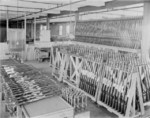
| Small Arms, Ltd. | Factory | |
| Toronto Inglis Factory | Factory | |
Photographs
 |  |  |  |
Canada in World War II Interactive Map
Please consider supporting us on Patreon. Even $1 per month will go a long way! Thank you. Please help us spread the word: Stay updated with WW2DB: |


Visitor Submitted Comments
 Alan Chanter says:
30 Dec 2007 03:57:21 AM
Nice to see the correct Canadian flag being depicted-The current flag not being adopted until 1965. Well Done
8 Feb 2009 09:52:30 PM
Canadian involvement in world affairs is often portrayed as passive and insignificant. Events of WWI and WWII clearly reveal that Canada will not hesitate to fight and is a powerful ally despite its small population.
5 Mar 2009 08:45:59 AM
Go canada!
There's nothing here about them making tanks for commonwealth and soviets though. Itsn't that another huge contribution?
14 Mar 2009 11:48:27 AM
MY FATHER WAS IN THE CANADIAN ARMY .HIS NAME WAS RENE........ANYONE KNOW OF HIM?......THANKS
8 Apr 2009 12:13:23 PM
My dad specialized in aluminum and bronze during his 40+ year career in the foundry. During the war he worked for AA Aluminum Foundry in Vancouver BC. Came to the States after the war. At AA Aluminum, they were making this new 'skin' for state-of-the-art aircraft. Due to his knowledge and foundry skills, he was deemed an 'important person' and not allowed overseas with his buddies as they joined up with the RAF and Armies of Canada and Great Britain. He did spend some time in Vernon BC in the Reserves, but stayed within the Province. Thanks for the information - I'm researching our family history and didn't know much of this. Great info.
8 May 2009 11:00:31 AM
Great info. This really helped me with my research. Thanks!
6 Jun 2009 11:47:15 PM
I know that the major WWI Canadian battlefields include Ypres, Somme, Beaumont-Hamel, Vimy Ridge, and Passchendaele.
"To the south of the Canadians, the 1st British Corps entered the city of Le Havre on September 3. In the meantime, the troops of the 1st Polish Armoured Division crossed the Somme and led the 2nd Canadian Corps as they drove northward. On September 5, the 4th Canadian Armoured Division took St. Omer and on the 6th crossed the Franco-Belgian border and overcame enemy forces at Ypres and Passchendaele (sites of well-known First World War Canadian battles). On September 7 they reached Roulers, Belgium."
source: http://www.vac-acc.gc.ca/remembers/sub.cfm?sourcehistory/secondwar/belgium/road
Are there any records/documents/memoirs of WWI veterans who returned to these same battlefields during WWII in the liberation of Belgium?
if so, I can only imagine the shear horror of retracing their steps!
24 Aug 2009 06:46:23 PM
great site peter-i was wondering how do i find info on my father's russell james hepburn journey as he spoke rarely - on the war and has since passed away i know he spoke of holland- and italy can you steer me in the right direction and thx so much keep up to good work sir
7 Sep 2009 10:45:55 PM
Then there's the role of Canadian Spy Master, William Stephenson, especially trusted by Winston Churchill for special missions.
"Sir William Samuel Stephenson, CC, MC, DFC (January 23, 1897 – January 31, 1989) was a Canadian soldier, airman, businessperson, inventor, spymaster, and the senior representative of British intelligence for the entire western hemisphere during World War II. He is best-known by his wartime intelligence codename of Intrepid. A lot of people consider him to be one of the real-life inspirations for James Bond."
http://en.wikipedia.org/wiki/William_Stephenson
He was creator of Camp X , located in Canada, which trained paramilitary and commandos meant for landing behind the Axis lines and in occupied countries.
http://en.wikipedia.org/wiki/Camp_X
9 Oct 2009 06:49:13 PM
MESSAGE TO RENEE VERRET.
Hello Renee, I am your cousin from Canada, Claude Godin, the son of the sister of your father, Madeleine. I tried to find something about him in Internet and I find your message! Is it possible for you to give me your email here? Regards. Claude
15 Oct 2009 10:21:13 PM
As much as I agree with the entry above...
Canada IS NOT A DOMINION.
C. Peter Chen says:16 Oct 2009 07:28:42 AM
Hello Anonymous who posted on 15 Oct 2009: This article primarily focuses on Canada during the World War II years, and during those years, Canada was officially a Dominion in the British Empire, despite legislative independence. In the 1950s, Canada began to phase out the usage of the word Dominion. It was not until 1982 that Canada officially became independent from the United Kingdom.
31 Oct 2009 08:10:28 PM
My father served in the Air Force in the early 1940's in Penfield New Brunswick.Would appreciate any info or contacts he may have had.His name was Chester Ellis Stothart
10 Dec 2009 05:50:06 PM
This is an awesome website. Helped for my essay. Hope it helps lots of people. My Grandpa was in the airforec too.
1 Mar 2010 01:16:12 PM
My Father was also stationed at Penfield during WWII. His name was Francis "Pat" McKean, although he has passed. The only person he ever mentioned was someone with the nickname "Roppy" (sp). The website for New Brunswick never even mentions Penfield as if it never existed.
7 May 2010 06:03:07 PM
It is actually "Pennfield" and/or "Pennfield Ridge". Would be interested in hearing more about Chester Ellis Stothart & Francis "Pat" McKean.
Regards,
G Christian Larsen
President Pennfield Parish Military Historical Society
http://www.rootsweb.ancestry.com/~nbpennfi/penn8bAirStation.htm
12 Aug 2010 01:48:48 PM
A big thank you for those who helped to free our country!
Hello,
my name is Rene Oosterwijk. My Granddad H.J. Oosterwijk was a dutch painter and he lived in Zwolle from 1886-1979. We've had an exhibition a couple of weeks ago and I heard that during WW2 a lot of paintings we're sold to canadian soldiers. Now I'm looking for people who're willing to either sell them or sent me photo's from the paintings. We're trying to publish a book and therefore I'mdesperately looking for as many paintings/ photo's as I can get.
Can you help me ?
Regards
Rene Oosterwijk
The Netherlands
20 Dec 2010 05:56:15 PM
U suck!
21 Jan 2011 05:53:22 PM
Further to Andy Banman's comment (poster 3), let us not forget Canada's significant contribution to the Korean War effort, as well as its ongoing efforts in present-day Afghanistan. Canada's contributions to these wars, as well as WW1 and WW2, remain out of proportion to its comparatively small population and small military.
27 Mar 2011 10:25:10 AM
My father Henry Chartrand was in 1st Canadian Div Defence.& for some of the time Lorne Scot, joined as volunteer1941,travelled to England 1942-1943 left June 1943 for attack on Sicily/Italy.
He came from Sudbury Ontario,did anyone Know him or have any information of him or his regiment.
9 Sep 2011 08:37:26 PM
My father in law Alfred Partridge served in the RCN. Served on a destroyer i think. His ship was hit and he lost a kidney. Anyone have connections with or knew him?
22 Oct 2011 06:18:59 PM
i have been trying for some time to identify the armoured vehicles in a picture with my grandfather in diepenheim, Holland 1945, you picture finally solved it,THANKS
16 Nov 2011 12:26:37 AM
I am trying to figure out my father's military career in the Canadian navy. His name was ROSS THOMPSON Walton and was from Windsor, Ontario, Canada
Can amnyone suggest to me how to go about this searcg?
Thank you.
16 Nov 2011 12:29:42 AM
Can anybody tell me if there was a Canadian attempt to capture a german ship during WWII? I think the ship was called "OMA".
Any information would be greatly appreciated.
Thank.
7 Dec 2011 03:38:01 PM
I find it offensive that Canada is listed as a minor nation while France is listed as a major player.
19 Dec 2011 04:08:58 PM
I agree 100% with blinkin.
France did absolutely nothing in comparison to Canada!
30 Dec 2011 03:47:53 PM
In regards to Question 22
Was Alfred Partridge by any chance an artist?
31 Dec 2011 10:45:31 PM
to comment 26, agreed, france was a battleground, their army lost, instead there was a resistance
11 Jun 2012 11:26:24 AM
It is 73 years later, and our military is in the same condition once again. The next war is just around the corner, and once again, Canadians will jump into action, with out even a hesitation. We always have and we always will, it is what makes us who we are.
18 Sep 2012 05:38:31 AM
Comments 26,27 and 29... France did everything they could at the onset of the war,and the free French did what they could thereafter. History shows it quite clearly how at the end of WW1 all countries were exhausted from the war (mentally, physically, economically and also in arms and ordinances).
You have to take into consideration that most of the infantry was stuck at Dunkirk when Hitler invaded. Their tank brigades unsupported by air due to United States not delivering on aircrafts purchased.
After occupation the Vichy government was nothing but puppets to the reich's will and this did not help anyone.
Canada just seem to have done more because due to it's size of population and economy.... well it just seems that way. Canadians aren't daily flag wavers... just when it's the right occassion.
unfortunately I think 73 years later...we've never been more ripe for invasion than ever. You watch we'll loose our northern borders as the weather warms.
11 Nov 2012 07:58:01 AM
Is there any where I can find information on my grandfather Alvin Edgar Switzerland known as BUD
He fought in this war and was Canadian. He rarely spoke of it but I know he was on a ship or traveled on them. He has since passed away and I would really like if you can lead me to some way of finding out about him. Thank you
11 Nov 2012 05:20:58 PM
Michelle says:
11 Nov 2012 07:58:01 AM
above post should read ALVIN EDGAR SWITZER not Switzerland
Is there any where I can find information on my grandfather Alvin Edgar Switzer known as BUD
He fought in this war and was Canadian. He rarely spoke of it but I know he was on a ship or traveled on them. He has since passed away and I would really like if you can lead me to some way of finding out about him. Thank you
11 Nov 2012 07:24:07 PM
my dad robert m thomson dob jan 1923 . was a coder on hmcs vallyfield k329 also on k242 when it sunk the sub , and hmcs niagara and i think the hmcs haida i have no info on him from 1941 1947 in 1947 he was in the R,C.A.F,,,his rank was ld aircraftman . #8619.the day k329 left port my dad was to go on leave, to get married to my mom hazel read . 15 min befor ship was to go his relief showed up . i know there where 2 coder on k329 rudd john sydney of calgary and archie w mills of essex ont like to find who relived my dad and if anyfamily members are stillwith us pls help if you can . son of vet who wonders ever day
27 Nov 2012 01:34:56 AM
My grandfather served in WW2 with the air force. His name was Francis B. Hussey. He was the rear gunner in a Lancaster bomber and fought in Morocco and Sicily. That is all the information I have.
If anyone has any information or a link to some information please let me know.
4 Jan 2013 02:16:43 AM
Can anyone provide me with info on a Ralph William MacPherson who served in ww2 and was from eastern canada possibly newfoundland? Or pplease ehlp me out. Ive been researching this for quite sometime.. please contact me if you have any leads or info.. Thank you very kindly.
5 Feb 2013 06:25:24 AM
does anyone recall lieutenant john dent who was based at foremark hall derbyshire during ww2
3 Mar 2013 12:39:25 PM
Does anyone recall Sgt. John Duchak airgunner, served in Englad, WWII RCAF
Send smduchak@gmail.com
7 Apr 2013 01:05:22 PM
"Canada supplied 40% of the Allies' total aluminum production"
WOW.
14 May 2013 02:13:21 PM
Does anyone know where might be the stats regarding the total number of Canadian generals and admirals during WWII? I have a great deal regarding total men, officers, etc but nothing for that specific set of ranks. Thanks.
12 Sep 2013 09:41:10 AM
Great overview of Canadian contribution. It's time, perhaps, for some more detail on two groups of ships: the corvettes, themselves (the often-unsung heroes of the North Atlantic runs) and Canada's 4 Tribal-Class destroyers, one of which--the Athabaskan--was sunk at night in the English Channel with a loss of 128 men, in what Maclean's Magazine called "the navy's most significant wartime loss." That loss may have occurred when the already-crippled ship was the victim of "friendly fire"--a torpedo from a British motor torpedo boat, when flares were mistaken for enemy fire. For more: Unlucky Lady, the Life and Death of HNCS Athabaskan.
Just one of the many Tribals exists today, HMCS Haida--restored and preserved on the lakefront in Toronto. Only one of many Canadian Corvettes exists--restored HMCS Sackville, in Halifax.
Rich Mole, Calgary
19 Sep 2013 09:26:30 PM
Researching a 23 year old man H.J. Gimblett who enlisted in WW1 Dec. 11 1915. As far as I know he was a coloured man from Whitby Ontario. We have all his medals and tags that were purchase recently from a garage sale.
We feel the need to know more of this person who
was more then the few dollars spent on his valuable past medalions.
Attestation papers only found, mother was Katherine Margaret Gimblett.
3 Oct 2013 09:48:52 PM
Hi Mr. Chen, would you be able to provide the page numbers in Armchair Reader World War II specifically about the statistics regarding the number of Canadians in the military, navy and air force? Also the page numbers about the production of war materials? This would greatly aid in my research. Thank you very much.
11 Jan 2014 02:10:36 PM
There's only one problem. Canada was independent of the United Kingdom and a was Realm since December 11th 1931, with His Majesty King George VI as King of Canada.
8 Mar 2014 06:54:15 AM
I was born in 1943 , the daughter of a Canadian serving in the Canadian Royal Air Force in England . I only know that his name was Walter Mcready ( I have no idea if this is the right spelling) his mother was French she was a dancer. and there was also some connection to Toronto. He must have been a lovely man, I remember wonderful Christmas present arriving from Canada when I was a little girl. I am an historian and now writing a family history and it would be wonderful for my daughters and grandchildren to know something about their grandfather and greatgrandfather. Can anyone help? Thank you
22 Sep 2014 12:34:13 PM
My father's young brother, William I Jones went to Canada following his high school graduation around 1939. He volunteered for the CRAF and completed Pilot Officer training. He was then sent to Scotland. We have his medals for service in the war and specifically for air service in the Atlantic and Europe as well as the Battle of Britain. We also have the Silver Memorial Cross and tragic letters of his death sent to my Grandmother in 1942. He was 19 years old.
One of the photos he sent home had some names of his fellows:P/O "Pip" Deeks,Sgt Rado or Rapo,Sgt Hemp (Yank),Sgt Alerthorne,P/O Taylor,Sgt Shafer"Buck" (Yank),Sgt Argue "Puny",Sgt Wilson "Young Al",and P/O Jones, "Billy the Kid."I am in the process of making a display of his memorabilia including pictures taken on his base in Scotland. If this is of special interest to anyone, I would be happy to share.
23 Sep 2014 08:33:48 AM
I should have mentioned that my Uncle Billy, AKA "Billy the Kid," was a "Yank," from Kansas City, MO.
23 Sep 2014 10:23:49 PM
Oops.. That would be the RCAF. Apologies.
3 Nov 2014 04:59:25 PM
I am very interested in knowing the total manpower of the Canadian Armed Forces at the end of WW II.
I would also like to know how many Generals, and Admirals there were at the end of the war.
Thank you
5 Nov 2014 11:40:45 AM
I am wondering if there happens to be a photo somewhere of my Grandpa,Private Joseph Moses Gervais who served in WWII. He was from Loon Lake, Saskatchewan. I am not certain where he was stationed but I do know that he did not go overseas as he was flat footed. I would love to see a picture of him in uniform. Any help would be great.
26 Dec 2014 11:17:28 AM
Looking for information on a pilot with the last name of Patton served in the RCAF
21 Jan 2015 09:53:14 PM
Trying to find out more about my grandfathers military past. Would anyone have info on Pte. Ross Thompson. He was a cook. I believe he was from Frontenac, Ontario.
Thanks
23 Jan 2015 09:56:38 AM
please tell me when WW2 ended
7 Feb 2015 07:49:58 AM
I have my Dads army number how can I go about finding info on him.
8 Feb 2015 11:20:11 AM
Can anyone record the numbers of merchant seamen who served in the RCNR during WW2? I understand that many, if not the majority of Canadian corvettes, were commanded by RCNR Officers.
3 Mar 2015 02:09:26 AM
My grandad was James Hershey married to my nan Irene Hershey but he moved back to Canada at end of the war & my nan not go so I never new him & no nothink about how to find out who my grandad was etc & he be dead now so may be harder::
9 Apr 2015 08:28:44 AM
what was happening in the government during woeld war 2
6 Jul 2015 02:03:00 PM
I am trying to help my half sister trace her father he was stationed in England during ww11 he was known to come from new Brunswick, Nova Scotia his name was Roy Albert Forsyth he was a farmer can anybody help.
11 Jul 2015 08:22:05 PM
My grandparents were from PEI, but settled in Boston about 1895. One of their sons (Bob) was teaching at Dartmouth College in New Hampshire in '39 when Hitler invaded Poland. He and a number of others at Dartmouth immediately went to Canada and enlisted. He was close to 40 but trained for the infantry...and was assigned to the Black Watch. He ended in London by 1940...and when the US came into the war...he was reassigned to a joint US/British film unit to covered from Normandy to evidentiary filming for the post war Nurenberg trials. I know a lot of Americans served in the RCAF...does anyone know what the total number of Americans who served in the other Canadian forces in WWII? And how many Americans served in the British forces. By the way, I was also proud to have a Canadian volunteer serving in the cavalry troop I commanded in Vietnam in '67 to '68. He was one of thousands of Canadians who served with with distinction, courage and honor.
24 Jul 2015 08:35:00 AM
Hi, I'm looking for my grandfather, he was we think a French Canadian serving in Aldershot with the Canadian Army in WW2, My father was born in 1943. My fathers grandmother for a few years would send my father food parcels from East Bathhurst, New Brunswick in Canada and she would call him Bran instead of Brian, so the family in Canada were aware of him. My fathers mother was called Mary Dove. If anyone could help please email me on lisa.pearce.home@talktalk.net
27 Sep 2015 11:36:11 AM
My father, Harold "Harry" Ayton Arch served in World War 2. The only information I know of his service history is that he was from Ontario and he was stationed in Nova Scotia and/or Botwood, Newfoundland. He never went overseas but I believe he was some type of support troop. He met and married my mother ( a Newfoundlander) in Botwood Newfoundland in 1944. I have a photo of their wedding picture and the only thing really visible on his uniform is a badge with "MT" on it. I believe this stood for "motor transport". If anyone can enlighten me on anything else I would greatly appreciate it. Thanks!
7 Dec 2015 05:40:42 PM
we are searching for info about our uncle Bill or William Stone as he was called then. He served as a navigator with the American Eagles. Born in 1903 in Lithuania, he came to America in 1920 and then when Hitler came and threatened, he went up to Canada and joined the American Eagles. He was shot down over the North Sea and recuperated in a hospital in Iceland.
please direct us so we can find info about his heroic actions.
11 Dec 2015 11:24:42 AM
My grandfather Charles hazlehurst hill was in the raf during ww2. He was shot down in a Lancaster bomber (navigator) then went to Canada. My mum now has Alzheimer's so I am grateful if anyone has any information.
He was a pianist and my mum thinks he may have entertained troops on the radio?
20 Jan 2016 08:25:11 PM
my father walter Reginald Bennett left nz and joined the Canadian airforce at beginning of ww2 we are trying to find out if they were ever stationed in England,
27 Mar 2016 05:43:39 PM
Any info on Charles (Charley) William David Lewis who joined the RCN in 1945. He was my father who passed away in 1982. We would love to learn more about his ear time service on a Corvette sub chased.
16 May 2016 10:52:59 AM
My Dad Ted Johnson I.E. Cyril White Johnson and My Uncle Babe ,Harold John Hurd he served on the Corvette R.C.N. Shawnigan ,That was Sunk by U-1228 In the Cabot Strait just off Duck Island. On Nov. 25th they say at about 2:30 Am all 91 died. I was Trying to find out the Corvette my dad was on ? Ted Johnson
I don't know why this has all of a sudden come to my mind that I have to fine more info on this ? The Commander of the U-Boat was Friedrich Wilhelm Marinfeld is the one that had the K-136 sunk. He passed at age of 53 Aug 26 1973 . I wonder what was going though his mind when he saw K-136 and fired on her. His only Victory of the war. And the price of 91 souls he took.
23 Jun 2016 12:40:45 PM
I am an American as was my father (deceased in 1986). He told us that he was in the Canadian Army in WWII but would never speak of it. We saw one photo of him in uniform so I know he was in some military. After retirement he said he received a "pension from the Queen." Does anyone know of any way I could get a record of this from Canada?
30 Sep 2016 04:04:12 AM
To Eichard Leigh. Check for Library and archives Caanada online to search for records of for your father at http://www.bac-lac.gc.ca. The records will not be open but there may be contact information. It may be that you will have to contact Veterans Affairs.
2 Oct 2016 01:09:09 AM
My mother was born in Reading, England in Feb 1945. My Nan apparently was seeing a Canadian Airman for a time before & older cousins & relations strongly believe my mothers father to be this Canadian fella. I would love to find out more but not sure how to go about it.🤔🙏. My Nan & mother are both gone now😢. I've been told the name "Fred" was widely used by my Nan back then.🤔🤔🤔🤔🤔
20 Oct 2016 01:48:55 PM
I am hoping to trace my biological father. He was a Canadian soldier based in Aldershot England during WW2 The name I have been given is Stuart Robertson . He was aged about 25 in 1945. I was hoping there might be some records of soldiers based in England during this time.
30 Oct 2016 10:27:24 AM
I am looking for my biological father .in Grantham 1942 in the raf only name Balyard on my adoption papers mother chantry
5 Nov 2016 01:15:24 PM
I am looking for any information about my recently deceased fathers career as an RCAF pilot flying in various squadrons of RAFs Coastal Command
He finished the war Flight Leitenant Patrick J McManus DFC and was a POW for six months. He joined in Ottwa in 39 or 40 and trained in Pats Bay, Victoria BC and Gander before overseas deployment. What public records are available? Many thanks.
5 Nov 2016 06:49:39 PM
my great uncle ted was in world war 2 he served under the Canadian army ,his full name is ted lavender and he is still alive with some photo's of war is anyone believes their relative may have served with him please email me at alloythehero@gmail.com
25 Mar 2017 08:27:26 PM
My grandfather was in the Royal Canadian Artillery branch of the armed forces during WW2, and was stationed somewhere near Kent, England, UK. While there sometime between 1940 and 1945 he fathered 2 daughters by a woman, and they remained in England when he returned to Ontario, Canada. My grandfather's name was Frederick Theodore Helsdon. He was born in 1905. Before he died, my Dad was hoping to find his half sisters, who now would be in their 70's. We never could find any information on them. If anyone could help find them or their children, it would be greatly appreciated.
1 Apr 2017 01:58:13 PM
My father, also called John Conway, was flight engineer/navigator on RAF Halifax Bombers in 1943-45. Rest of his aircrew were all Canadians. I have a photo he took of 2 Canadians at RAF Breighton, in March 1945, & an undated photo of the 7 airmen incl my father. I think the pilot's last name was Landry
I am happy to share these photos.
I am trying to establish my Dad's record during WW2. I live in USA now.
Thanks in advance for any assistance.
1 Apr 2017 04:15:58 PM
Now 71, I was born in Hounslow, Middlesex ( now called West London ) England in
October 1945, to Winifred Mallinson and John Edgar Wilson, a Canadian serviceman known as Eddie. Brought up happily, in foster care, I feel this is a last chance to search for relatives in Canada. I've already traced a half sister in England, 15yrs younger than myself. So know where my nose comes from !!. But not where my dark red hair originated. If you know my blood father's family, I'd love to meet another half brother or sister and look for family traits.
1 May 2017 05:00:50 PM
If anyone reading these comments/ questions, knows anything about John Edgar ( Eddie ) Wilson, stationed in Uk during Christmas 1944 into the new year of 1945, would they send details to KaitlinUk@outlook.com......at my age, there's not much time left to make contact with relatives !
12 May 2017 11:42:36 AM
I'm still alive !. Please, if you know anything abut my birth father, contact.
7 Jul 2017 07:57:14 AM
I was born in November 1944 in 'Assisi', Grayshott, Hampshire. I then moved with my birth mother to Ewhurst Farm House, near Basingstoke, Hampshire. I traced my (now late) birth mother in 2014. I know that my birth father was in the Canadian Forces (Pilot?). How can I begin to trace him?
6 Aug 2017 09:59:56 AM
I'll be 72 this October 2017. Still looking for my birth father. relatives state his surname might not be Wilson but sound something like it. My birth mothers name was Winifred Mallinson. I believe my birth father was something to do with the Princess Patricia regiment.
15 Aug 2017 12:38:01 PM
Trying to trace family of my Canadian father George Brinicombe or Brimicombe (no sure that this is an accurate spelling but sounds like). His mother's name was Christine or Christina. He was in Haywards Heath sussex during WW2
14 Nov 2017 12:12:06 PM
Can you help me find out about my father? His name was John Francis Picco. He was in the Royal Navy, 3rd Contingent. His service # was 181417 or 281417. Both have been listed.
Thanks sooooooooooooo much
23 Nov 2017 04:58:12 PM
my stepfather william anderoski from sandy lake manitoba served in second world war.
8 Jan 2018 02:11:52 PM
my friends father was called Maurice beaucolet or similar. As her mother was married at the time little information was recorded. Can anyone help trace him? He is believed to be Canadian and was darkskinned.
14 Jan 2018 12:17:52 PM
Where can I find the names of soldiers who has fought in Belgium in ww2. I'll try to find information about Arthur Van Damme.
26 Jan 2018 01:43:03 AM
my father Anthony Louis Matys from ompah, served in ww2.
he was with "reinforcement" and arrived in Italy in April 1944.
Where can I find further information?
14 Feb 2018 09:51:07 AM
Canadian volunteers
15 Feb 2018 11:55:06 AM
Still looking for my Canadian fathers family. Now 72, havn't much time left. Looking for relatives of John Edgar Wilson ( or Willison/Wyson or similar. Known as Eddie. Born circa 1923 KaitlinUk@outlook.com
27 Apr 2018 04:17:12 AM
I am looking for information about my uncle Reginald Whitesmith who lived in Toronto before the war but was in the Canadian forces in England during the conflict.He also had a daughter Diane Gale her married name is Diane Arnold who I am desperately trying to contact she will be in her seventies now.Please help. Peter Donnelly
12 Jun 2018 03:58:51 PM
My grandfather, Frederick Theodore Helsdon, bd June 8, 1905, was from Ontario, Canada, and was a gunner with the RCA, stationed in Kent, England during WW2.
He had a girlfriend while there and they had two daughters. They would be somewhere in their 70's by now.
My Dad was hoping to locate them prior to his death but we were not able to do so. I'm still hoping to find them.
The only thing I know about them is that their Mom had a short last but anyone who knew what it was has crossed over.
If anyone could help me find them or their family, it would be awesome!! I have done the DNA testing on Ancestry.ca and 23andMe hoping to find them but so far have not.
29 Sep 2018 11:58:07 PM
He was married in 1921 in Ontario with three children born 1927, 1929 and 1932.
There are no female birth registrations on FreeBMD under the name Helsdon in Kent during the war years. Need at least a last name to look them up.
9 Nov 2018 09:39:26 AM
My mother and I are looking for the uncles of a friend. Their names were James, Raymond, Ned(Edward?), and Bernard Speagle and we believe they all died during WW2. There was also a fifth brother--Walter--who survived, as well as several sisters. One of the deceased brothers may have been a reverend or chaplin. It's possible they were from the Kingston, ON area.
Any info would be welcome. Thank you very much.
11 Nov 2018 09:37:17 AM
Kim Croteau...All their names are mentioned in their sister Mary's obit from Kingston in 2003 at this link..https://www.genealogiequebec.com/necro/obituary/131555-SPEAGLE-Mary..It is also on the yourlifemoments website...Also her brother Walter appears to be connected to St.Josephs Catholic Church in Kingston,Ont along with his wife Anna - as they did a mass their on May.4th.2017...Hope this helps...Good Luck.
15 Nov 2018 01:33:31 PM
Hi Tammy,
Thank you very much for the info. We had that info already, unfortunately (it's where we got the siblings names and location to begin with), but it was so kind of you to look.
Alan Chanter says:6 Aug 2019 03:04:58 AM
Over France, with two engines out and the fuselage on fire, Pilot Officer Andrew Mynarski, a Canadian gunner in a No. 419 Squadron Lancaster, was ordered to bale out. However, he saw that the rear gunner was trapped and tried to free him even though his own clothing and parachute were on fire. Hopelessly stuck, the rear gunner signaled to Mynarski that he should save himself. The Canadian gallantly stood to attention and saluted his comrade before jumping out. He was found by the French but died later of his terrible injuries. Amazingly, the rear gunner was thrown clear when the Lancaster crashed and survived, as did the other crew members who had jumped. When they returned and told their story after the war, Mynarski was posthumously awarded the Victoria Cross.
8 Nov 2019 07:21:15 PM
LOOKING for otty corbett awarded MBE...north shore regiment
25 May 2021 01:51:00 PM
Just to let you know that Canada in 1939 was not a possession of the United Kingdom. Canada could have remained neutral but declared war as an independent country. The number of Canadians who served in the armed forces was about 1,100,000. The RCAF had 48 squadrons overseas including 14 heavy bomber squadrons which formed Group 6 of Bomber Command. Group 6 flew 40,822 sorties from 1943 to 1945. Canadian soldiers liberated Rome by breaching the Hitler line, causing the Germans to withdraw from Rome. Canadians also advanced the furthest inland on D-Day.. From there they cleared the coast from Normandy to the Netherlands, which country was liberated by the Canadians. Canada also produced thousands of tanks, self propelled guns, naval guns, machine guns and rifles. All of the ships of the RCN were produced in Canada. By the end of the war Canada had the 3rd largest navy and 4th largest air force in the world. Battles were fought in the Gulf of St Lawrence and the St Lawrence river, with 28 ships being sunk in Canadian waters by German uboats, killing 360 people including civilians on the passenger ferry the SS Caribou in October 1942. Some 47,000 Canadians were killed and 54,000 wounded. Canada was hardly a "minor" ally.
10 Dec 2024 10:30:24 AM
My grandfather was in WWII his name was Harold James Parker, he was stationed in Belgium, Italy, Utrecht Netherlands, England and after the war he was stationed in Baffin Island and Canadian High Artic.
All visitor submitted comments are opinions of those making the submissions and do not reflect views of WW2DB.
- » Wreck of M-49 Found (10 Apr 2025)
- » Japanese Emperor Visited Iwoto (Iwo Jima) (8 Apr 2025)
- » Race, Holocaust, and African-American WW2 Histories Removed from the US Naval Academy Library (7 Apr 2025)
- » US Government Plans to Purge WW2 Information (17 Mar 2025)
- » See all news
- » 1,167 biographies
- » 337 events
- » 44,606 timeline entries
- » 1,243 ships
- » 350 aircraft models
- » 207 vehicle models
- » 376 weapon models
- » 123 historical documents
- » 261 facilities
- » 470 book reviews
- » 28,500 photos
- » 365 maps
Chiang Kaishek, 31 Jul 1937

Please consider supporting us on Patreon. Even $1 a month will go a long way. Thank you!

Or, please support us by purchasing some WW2DB merchandise at TeeSpring, Thank you!
30 Dec 2007 03:54:09 AM
In Italy the Canadians displayed a considerable talent for street fighting. It has been noted that, whenever a British Battalion was undertaking a mission that was likely to involve street fighting, it was quite a normal occurrance for the Canadians to be called upon to provide instructors for training.