


Zuikaku
| Country | Japan |
| Ship Class | Shokaku-Class Aircraft Carrier |
| Builder | Kawasaki Dockyards, Kobe, Japan |
| Launch Date | 27 Nov 1939 |
| Commission Date | 25 Sep 1941 |
| Sunk Date | 25 Oct 1944 |
| Displacement | 29,800 tons standard; 32,000 tons full |
| Length | 845 feet |
| Beam | 85 feet |
| Draft | 29 feet |
| Machinery | 8 boilers, 4 Kampon geared turbines, 4 shafts |
| Bunkerage | 4,100t fuel oil |
| Power Output | 160,000 shaft horsepower |
| Speed | 34 knots |
| Range | 6,588nm at 18 knots |
| Crew | 1,660 |
| Armament | 16x127mm Type 89 guns, 36x25mm Type 96 anti-aircraft guns |
| Aircraft | 72 operational, 12 in reserve |
Contributor: C. Peter Chen
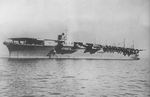
ww2dbaseCommissioned with Captain Yokokawa Ichibei in command only three months before the Pearl Harbor attack, fleet carrier Zuikaku nevertheless participated in the attack that started the Pacific War. During the Pearl Harbor attack, the first wave of 30 aircraft launched from her flight deck attacked Wheeler Field and Naval Air Station at Kaneohe, while the second wave of 44 aircraft attacked Hickam Field and battleships California and Maryland. The attack was a stunning success, and the pilots returned as heroes.
ww2dbaseOn 20 Jan 1942, Zuikaku's aircraft attacked Rabaul. On 21 Jan, they attacked Lae, New Guinea. In Apr 1942, she was a member of the task force that ventured into the Indian Ocean and struck the British naval bases at Ceylon.
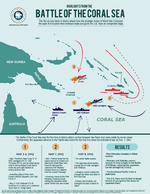
ww2dbaseIn May 1942, Zuikaku participated in Operation MO, which was the invasion plan of Port Moresby. The Japanese signals were intercepted and decrypted by Allied intelligence, and carriers Yorktown and Lexington were dispatched. The ensuing Battle of the Coral Sea cost her half of her aircraft, while her sister ship Shokaku was heavily damaged by three bombs. As a result, both carriers were unable to participate in the Battle of Midway in the following month, where the presence of these two additional fleet carriers could have resulted in a much different outcome.
ww2dbaseUnder the command of Captain Tameteru Notomo, Zuikaku sailed for the Solomon Islands in Aug 1942. During the Battle of the Eastern Solomons on 24 Aug 1942, Zuikaku and Shokaku's air groups heavily damaged Enterprise with three 1,000-lb bomb hits, but Enterprise's effective damage control kept the American carrier from becoming disabled. A second wave of dive bombers from Shokaku and Zuikaku failed to locate the damaged Enterprise, thus while Enterprise would end up being sidelined for repairs for three months, she survived to fight later in the war.
ww2dbaseIn Feb 1943, Zuikaku and her aircraft covered the evacuation of Guadalcanal. Later that year, Captain Kikuchi Tomozo took over command of the carrier and countered American naval forces in the Marshall Islands area.
ww2dbaseIn Jun 1944, Zuikaku participated in Operation A-Go which led to the Battle of Philippine Sea. At the end of the battle, 429 Japanese aircraft were destroyed, along with the destruction of Taiho and Shokaku by submarines. Zuikaku was now the last surviving carrier of the Pearl Harbor attack.
ww2dbaseIn Oct 1944, Zuikaku was Admiral Jisaburo Ozawa's flagship for the decoy fleet that successfully lured away Admiral William Halsey's fleet, therefore allowing the Battle off Samar to take place. On 25 Oct 1944, Halsey's overwhelmingly powerful force caught up with Ozawa's. The first American attack wave at 0830 hours scored three bomb hits and one torpedo hit, causing fires and heavy flooding, but Zuikaku's experienced damage control teams extinguished all fires and corrected the listing by 0850 hours. At 0953 hours, the second wave came, and within 15 minutes denied the Japanese from using any of their flight decks, thus any Japanese aircraft remaining in the air must ditch in the water when they would run out of fuel. At 1032 hours, due to Zuikaku having lost communication capabilities, Ozawa's flag was transferred to cruiser Oyodo; Ozawa's staff completed the transfer by 1100 hours. At 1308 hours, the third attack wave was sighted; this attack wave landed several torpedoes on Zuikaku, causing massive flooding and several fires in the hangar, leading to her being dead in the water by 1325 hours. In the lull of combat after the third wave, Captain Takeo Kaizuka ordered all survivors to the flight deck and addressed them one final time, letting them know that he would go down with the doomed ship. With a bugler playing the National Anthem, the ensign was lowered. The abandon ship order was formally given at 1358 hours. She rolled to port and sank by the stern at 1414 hours. Including Captain Kaizuka, 843 men died in Zuikaku's loss.
ww2dbaseSources:
Combinedfleet.com
Wikipedia
Last Major Revision: Jun 2025
Aircraft Carrier Zuikaku Interactive Map
Photographs
 |  |  |  |
Maps
 |
Zuikaku Operational Timeline
| 25 May 1938 | The keel of the future Zuikaku, though not yet named, was laid down at the Kawasaki Dockyards in Kobe, Japan. |
| 27 Nov 1939 | Zuikaku was launched at the Kawasaki Dockyards in Kobe, Japan. |
| 15 Nov 1940 | Captain Yokokawa Ichibei was made the Chief Equipping Officer of Zuikaku. |
| 8 Jan 1941 | Zuikaku departed Hiroshima, Japan for Truk, Caroline Islands. |
| 25 Sep 1941 | Zuikaku was commissioned into service with her Chief Equipping Officer Captain Yokokawa Ichibei remaining as the commanding officer She departed Kobe, Japan to join the 1st Air Fleet at Kure to the west. |
| 26 Sep 1941 | Zuikaku arrived at Kure, Japan. |
| 7 Oct 1941 | Zuikaku departed Kure, Japan. |
| 8 Oct 1941 | Shokaku arrived at Kure, Japan and joined new sister ship Zuikaku for the first time. She moved around in Kure, Oita, Saeki area in the remainder of the month. |
| 16 Oct 1941 | Zuikaku departed Oita, Japan. |
| 20 Oct 1941 | Zuikaku departed Saeki Bay, Oita Prefecture, Japan. |
| 25 Oct 1941 | Zuikaku departed Sukumo Bay off Kochi Prefecture Japan, arriving at Saeki Bay, Oita Prefecture, Japan later in the same day. |
| 2 Nov 1941 | Zuikaku departed Oita, Japan for a training cruise. |
| 3 Nov 1941 | Zuikaku arrived at Ariake Sea, southwestern Japan. |
| 5 Nov 1941 | Zuikaku departed Ariake Sea, southwestern Japan. |
| 7 Nov 1941 | Zuikaku arrived at Oita Bight, Japan, completing a training cruise. |
| 9 Nov 1941 | Zuikaku departed Oita Bight in southwestern Japan, arriving at Kure, Japan later that day. |
| 13 Nov 1941 | Zuikaku was assigned to Carrier Division 5 while at Kure, Japan. |
| 14 Nov 1941 | At Kure, Japan, Shokaku was relieved of her status as the flagship of Carrier Division 5 as Rear Admiral Chuichi Hara broke his flag on Zuikaku. |
| 16 Nov 1941 | Zuikaku departed Kure, Japan for Saeki Bay, Oita Prefecture, Japan. |
| 17 Nov 1941 | Zuikaku departed Saeki Bay, Oita Prefecture, Japan. |
| 18 Nov 1941 | Zuikaku departed Oita Bight, Japan. |
| 19 Nov 1941 | Shokaku and Zuikaku departed the Inland Sea for Hittokappu Bay in the Kurile Islands to join the ships massing for the Hawaii Operation. |
| 22 Nov 1941 | Carrier Division 5, centered around Shokaku and Zuikaku, arrived at Hitokappu Bay in the Kurile Islands as part of a last-minute addition to the Carrier Striking Force. |
| 26 Nov 1941 | Vice Admiral Chuichi Nagumo led the Japanese Carrier Division 1 (Akagi and Kaga), Carrier Division 2 (Hiryu and Soryu), Carrier Division 5 (Shokaku and Zuikaku), first section of Battleship Division 3 (Hiei and Kirishima), Cruiser Division 8 (Tone and Chikuma), Destroyer Squadron 1, Destroyer Squadron 17, and Destroyer Squadron 18 out of Hitokappu Bay in the Kurile Islands for the Hawaii Operation, the attack on the US Pacific Fleet at Pearl Harbor, US Territory of Hawaii. |
| 26 Nov 1941 | Zuikaku, under construction at Kobe, Japan, was officially named. |
| 7 Dec 1941 | The Japanese Navy launched two strike waves against the US fleet at Pearl Harbor on the island of Oahu, Hawaii, sinking or damaging 8 battleships, 3 cruisers, 3 destroyers, 1 anti-aircraft training ship, 1 minelayer; destroying 188 aircraft; and killing 2,459 (57 of which were civilian; 1,177 of which occurred aboard USS Arizona) and wounding 1,282 (35 of which were civilian). The Japanese lost only 29 aircraft and 5 midget submarines; 55 were killed and 10 were wounded. Akagi's torpedo planes were instrumental in sinking the battleships USS Oklahoma and USS West Virginia. Zuikaku, with less experienced pilots, attacked land targets. Vice Admiral Nagumo ordered a withdrawal following recovery of the second attack wave. |
| 23 Dec 1941 | Akagi, Kaga, Shokaku, and Zuikaku arrived at Hashirajima island in Hiroshima Bay, Japan, along with escorts Shigure, Shiratsuyu, Ariake, and Yugure. |
| 24 Dec 1941 | Zuikaku arrived at Kure, Japan. |
| 30 Dec 1941 | Zuikaku entered drydocks at Kure Navy Yard, Japan. |
| 3 Jan 1942 | Zuikaku exited drydocks at Kure Navy Yard, Japan. |
| 5 Jan 1942 | Shokaku and Zuikaku departed Kure, Japan for Hiroshima Bay. |
| 8 Jan 1942 | Zuikaku departed Hiroshima, Japan. |
| 14 Jan 1942 | Zuikaku arrived at Truk, Caroline Islands. |
| 16 Jan 1942 | Zuikaku departed Truk, Caroline Islands. |
| 17 Jan 1942 | Joseph Rochefort's cryptanalytic team in US Territory of Hawaii detected Japanese carrier Zuikaku at Truk, Caroline Islands. |
| 20 Jan 1942 | Shokaku and Zuikaku launched strikes against Rabaul, New Britain. After the aircraft were recovered, the pair set sail toward eastern New Guinea island. |
| 21 Jan 1942 | Shokaku and Zuikaku launched strikes against Lae and Salamaua, Australian New Guinea. |
| 23 Jan 1942 | At 0230 hours, Japanese troops began landing on New Britain on three beachheads, two of which were defended, but in general the Japanese had little difficult overcoming the defenses. Carrier aircraft from Akagi, Kaga, and Zuikaku supported the invasion after dawn, enjoying air superiority thus losing only one pilot (Flight Petty Officer 2nd Class Isao Hiraishi) all day. As the troops entered and captured Rabaul, New Britain, Bismarck Islands, as reported by Tolai natives later, Japanese troops mutilated corpses of Australian troops with axes and bayonets. On the same day, Japanese troops including the No. 2 Maizuru Special Naval Landing Force delivered by Tenryu also landed at Kavieng, New Ireland. |
| 25 Jan 1942 | Zuikaku received 16 A5M (Navy Type 96) fighters of Chitose Naval Air Group. |
| 29 Jan 1942 | Shokaku and Zuikaku returned to Truk, Caroline Islands. |
| 1 Feb 1942 | Akagi, Kaga, Zuikaku, Hiei, Kirishima, and Chikuma departed Truk, Caroline Islands in an attempt to catch the enemy carrier force that had attacked the Marshall Islands. They were escorted by destroyers Shiranuhi, Kasumi, and Urakaze. |
| 8 Feb 1942 | Akagi, Kaga, and Zuikaku arrived at the Palau Islands, having abandoned the pursuit of the American fleet. |
| 9 Feb 1942 | Zuikaku departed Palau, Caroline Islands. |
| 13 Feb 1942 | Zuikaku arrived at Yokosuka, Japan. |
| 16 Feb 1942 | Zuikaku departed Yokosuka, Japan for Mikawa Bay. |
| 28 Feb 1942 | Zuikaku conducted air group training at Suzuka Naval Base, Mie Prefecture, Japan and later departed Ise Bay. |
| 2 Mar 1942 | Zuikaku arrived at Kure, Japan. |
| 6 Mar 1942 | Zuikaku departed Kure in search of the US Navy Task force 16. |
| 11 Mar 1942 | Shokaku and Zuikaku accompanied Vice Admiral Takasu Shiro's First Fleet (Ise and Hyuga) on a sortie to sweep for enemy believed to approaching Japan. |
| 16 Mar 1942 | Shokaku and Zuikaku returned to Yokosuka, Kanagawa, Japan. |
| 17 Mar 1942 | Shokaku and Zuikaku departed Yokosuka, Japan for Staring Bay, Celebes, Dutch East Indies to join Operation C. They were escorted by Arare, Kagero, and Akigumo. |
| 24 Mar 1942 | Shokaku and Zuikaku arrived at Staring Bay at Celebes, Dutch East Indies. |
| 26 Mar 1942 | Vice Admiral Chuichi Nagumo's Japanese First Air Fleet, built around a nucleus of five aircraft carriers (Akagi, Hiryu, Soryu, Shokaku, and Zuikaku), and supported by battleships (Kongo, Hiei, Haruna, and Kirishima), cruisers (Tone, Chikuma, Abukuma), and destroyers, sailed from Staring Bay, Celebes, Dutch East Indies to the west of Timor into the Indian Ocean with the intention of attacking the Royal Navy's bases at Colombo and Trincomalee in Ceylon. |
| 3 Apr 1942 | The Japanese fleet under the command of Vice Admiral Chuichi Nagumo entered the Indian Ocean. |
| 5 Apr 1942 | In the morning, Japanese carriers launched 36 D3A2 dive bombers and 53 B5N2 torpedo bombers, escorted by 36 Zero fighters, against the British naval base at Colombo, Ceylon, sinking merchant cruiser HMS Hector, damaging port facilities, while shooting down 25 British aircraft; 7 Japanese aircraft were lost in this attack. Around noon, cruiser Tone's floatplane spotted British cruisers HMS Cornwall and HMS Dorsetshire 200 miles southwest of Ceylon; 53 carrier aircraft were launched to attack, sinking Dorsetshire at 1350 hours (234 killed) and Cornwall at 1400 hours (190 killed); 1,122 survived from both ships. |
| 9 Apr 1942 | Japanese carrier aircraft attacked the harbor at Trincomalee, Ceylon at 0700 hours. Two hours later, empty British aircraft carrier HMS Hermes and Australian destroyer HMAS Vampire were detected 90 miles further south. At 1035 hours, Japanese carrier aircraft attacked and sank HMS Hermes (307 killed) and HMAS Vampire (9 killed); hospital ship Vita rescued survivors from both warships. At 1207 hours, 20 Japanese carrier dive bombers sank British oiler Athelstane (all aboard survived) and British corvette HMS Hollyhock (48 were killed, 17 survived) in the Indian Ocean. |
| 10 Apr 1942 | Japanese Navy Carrier Division 5 (Shokaku and Zuikaku) was ordered by Isoroku Yamamoto to detach from the returning Indian Ocean raid fleet and sail for Mako (now Makung), Pescadores Islands. |
| 18 Apr 1942 | Shokaku and Zuikaku arrived at Mako, Pescadores Islands. Destroyers Hagikaze and Maikaze escorted them along the way and returned to rejoin the returning Indian Ocean raiders fleet. Shokaku and Zuikaku embarked provisions at Mako. |
| 19 Apr 1942 | Shokaku and Zuikaku departed Mako, Pescadores Islands to participate in Operation MO in the Coral Sea commencing 20 Apr 1942. They were escorted by Ariake, Yugure, Shigure, and Shiratsuyu. |
| 25 Apr 1942 | Shokaku and Zuikaku arrived at Truk, Caroline Islands. |
| 1 May 1942 | Carriers Shokaku and Zuikaku departed from Truk to support the Port Moresby, New Guinea invasion under the overall command of Vice Admiral Takeo Takagi. |
| 2 May 1942 | Shokaku and Zuikaku attempted to transfer 9 fighters to reinforce the Tainan Air Group at Rabaul, New Britain, but this failed due to poor weather. |
| 3 May 1942 | Shokaku and Zuikaku attempted to transfer 9 fighters to reinforce the Tainan Air Group at Rabaul, New Britain, but this failed due to poor weather. |
| 7 May 1942 | At Coral Sea, Japanese carriers attacked US oiler Neosho and destroyer Sims thinking they were a carrier and cruiser, while US carriers attacked escort carrier Shoho (sank at 1135 hours after 13 bomb and 5 torpedo hits; 631 were killed, 203 survived) and nearby cruisers and destroyer thinking it was part of the main carrier force. At 1747 hours, 12 Japanese dive bombers and 15 torpedo bombers in search of the US carrier fleet was intercepted by 11 US fighters; 9 Japanese and 3 US aircraft were destroyed during the subsequent engagement. At the end of the day, both sides decided against a night battle and prepared for new attacks at dawn. |
| 8 May 1942 | Japanese and US carrier fleets at Coral Sea discovered each other in the morning, each closing in to attack. Japanese carrier Shokaku was damaged by 3 bombs at 1057 hours (223 casualties), while American carrier USS Lexington was hit by two bombs at 1120 hours (191 killed at 1120 hours; gasoline explosion at 1247 hours killed another 25; scuttled by USS Phelps at 1915 hours) and American carrier USS Yorktown was hit by a bomb (66 casualties). Meanwhile at Port Moresby, an Australian cruiser force successfully defended itself against land-based aircraft attack as it blocked the Japanese invasion fleet for Port Moresby, New Guinea. As both sides withdrew due to damage and losses, the Japanese scored a tactical victory, but lost strategic momentum as the Port Moresby invasion must now be delayed. |
| 9 May 1942 | Yugure and Ushio took on fuel from a tanker in the Coral Sea at 0015 hours. At 0515 hours, Yugure was ordered to escort the damaged Shokaku to Yokosuka, Japan; Shokaku was administratively reassigned to Carrier Division 5 of 1st Air Fleet for the upcoming dramatic dash past a cordon of American submarines alerted to intercept the Japanese carrier. Meanwhile, Ushio was ordered to escort Zuikaku, which was ordered to pursue any American ships remaining in the Coral Sea area. |
| 10 May 1942 | Takeo Takagi ordered Shokaku and Zuikaku to set sail for Rabaul, New Britain at 1000 hours after deciding the American fleet was out of the area. |
| 12 May 1942 | Zuikaku received orders to return to Japan. |
| 13 May 1942 | The Japanese Combined Fleet determined that Japanese Navy Carrier Division 5 (Shokaku and Zuikaku), with the recent losses at Coral Sea, could not be used for the upcoming Midway invasion. |
| 15 May 1942 | Zuikaku arrived at Truk, Caroline Islands for refueling. |
| 16 May 1942 | Zuikaku, escorted by Ushio and Akebono, departed Truk, Caroline Islands. At 1600 hours, USS Greenling detected Zuikaku. |
| 21 May 1942 | USS Pollack attacked Zuikaku and her escorts with four Mark X torpedoes in the Pacific Ocean south of Shibushi Bay at 0208 hours; all four torpedoes missed. Zuikaku arrived at Kure, Japan later in the day. |
| 5 Jun 1942 | Captain Tameki Nomoto was made the commanding officer of Zuikaku while at Kure, Japan. |
| 11 Jun 1942 | Zuikaku departed Kure, Japan. |
| 14 Jun 1942 | Zuikaku arrived at Hashirajima anchorage in the Seto Inland Sea of Japan. |
| 15 Jun 1942 | Zuikaku departed the Hashirajima anchorage in the Seto Inland Sea of Japan. |
| 20 Jun 1942 | Zuikaku was assigned to Rear Admiral Kajuji Kakuta's No. 2 Striking Force of 1st Air Fleet. |
| 23 Jun 1942 | Zuikaku arrived at Ominato Guard District in Mutsu, Aomori Prefecture, Japan and joined with Junyo, Ryujo, and Zuiho to form the No. 2 Striking Force of 1st Air Fleet. |
| 28 Jun 1942 | No. 2 Striking Force of the Japanese Navy 1st Air Fleet (Junyo, Ryujo, Zuiho, and Zuikaku) departed Ominato Guard District in Mutsu, Aomori Prefecture, Japan to patrol waters south of Kiska of Aleutian Islands. |
| 6 Jul 1942 | No. 2 Striking Force of the Japanese Navy 1st Air Fleet (Junyo, Ryujo, Zuiho, and Zuikaku) departed waters near Kiska, Aleutian Islands. |
| 12 Jul 1942 | Zuikaku arrived at Oita, Japan. |
| 13 Jul 1942 | Zuikaku departed Oita, Japan for the Hashirajima anchorage in the Seto Inland Sea. |
| 14 Jul 1942 | Zuikaku was assigned to Striking Force, 3rd Fleet, Carrier Division 1, joining Shokaku and Zuiho. Chuichi Hara's flag was struck from Zuikaku upon this assignment. |
| 20 Jul 1942 | Zuikaku departed Hashirajima anchorage in the Seto Inland Sea of Japan. |
| 30 Jul 1942 | Zuikaku entered drydock at Kure Navy Yard, Japan. |
| 12 Aug 1942 | Zuikaku exited drydock at Kure Navy Yard, Japan. |
| 15 Aug 1942 | Zuikaku arrived at Hashirajima anchorage in the Seto Inland Sea of Japan and joined Carrier Division 1. |
| 16 Aug 1942 | Shokaku (as flagship) and Zuikaku were assigned to Main Body, Striking Force, 3rd Fleet, Carrier Division 1. They departed the Hashirajima anchorage in Japan to support operations in the Guadalcanal area. |
| 24 Aug 1942 | A Japanese force centered around carriers Shokaku and Zuikaku sailed down into the Solomon Islands with light carrier Ryujo and cruiser tone operating independently south of the main fleet. At 0415, 19 torpedo bombers and 7 seaplanes were launched to search for American ships. At 1250, the search plane from cruiser Chikuma reported sighting USS Saratoga and USS Enterprise; the search plane was quickly shot down, but the Japanese nevertheless gained an idea of the American position. Shokaku launched 18 dive bombers and Zuikaku launched 9 dive bombers starting at 1300 hours. At 1315, two bombers from Enterprise surprised Shokaku, but the torpedo they launched would fail to hit the Japanese carrier. At 1400 hours, a second strike was launched by Shokaku (9 dive bombers and 3 fighters) and Zuikaku (18 dive bombers and 6 fighters). At around the same time, Battle of the Eastern Solomons crew its first casualty when Ryujo was discovered and fatally damaged by several 1,000-pound bombs. At 1440, the first attack wave from the Japanese carriers attacked Enterprise, scoring three bomb hits (70 were killed, 70 were injured), but the Japanese would lose 18 dive bombers and 6 fighters in the engagement. The second wave failed to locate the American carriers and returned before dark. Japanese warships attempted to engage the US fleet after dark, but the force failed to locate the American fleet, and discontinued the search at 2330 hours. |
| 5 Sep 1942 | Zuikaku arrived at Truk, Caroline Islands. |
| 10 Sep 1942 | Zuikaku departed Truk, Caroline Islands in the early morning. |
| 23 Sep 1942 | Zuikaku arrived at Truk, Caroline Islands. |
| 11 Oct 1942 | Vice Admiral Chuichi Nagumo led a fleet out of Truk, Caroline Islands consisted of Shokaku, Zuikaku, Zuiho, Kumano, Amatsukaze, Hatsukaze, Tokitsukaze, Yukikaze, Arashi, Maikaze, Teruzuki, and Hamakaze to cover a major Guadalcanal convoy reinforcement. |
| 15 Oct 1942 | At 0937 hours, Vice Admiral Chuichi Nagumo's carrier fleet received a sighting report of a US light cruiser and a tugboat towing a floating drydock east of Guadalcanal in the Solomon Islands. Shokaku launched 8 fighters and 21 dive bombers and Zuikaku launched 9 torpedo bombers to attack the Americans. At 1025 hours, they came upon what turned out to be destroyer USS Meredith, fleet tug USS Vireo, and a gasoline barge southeast of San Cristobal, Solomon Islands. USS Meredith was sunk after multiple bomb and torpedo hits; 192 were killed, 81 survived. The Japanese lost one dive bomber and two torpedo bombers. |
| 26 Oct 1942 | Kumano screened the carriers Shokaku, Zuikaku, and Zuiho in the Battle of the Santa Cruz Islands. |
| 27 Oct 1942 | Vice Admiral Chuichi Nagumo transferred his flag from destroyer Arashi to carrier Zuikaku at 1332 hours. Zuikaku, with Junyo in escort, set sail for Truk. |
| 30 Oct 1942 | Zuikaku and Junyo arrived at Truk, Caroline Islands. |
| 4 Nov 1942 | Zuikaku, Myoko, Hatsukaze, and Tokitsukaze departed Truk, Caroline Islands. |
| 9 Nov 1942 | Zuikaku, Myoko, Hatsukaze, and Tokitsukaze arrived at Kure, Japan. |
| 21 Nov 1942 | Zuikaku departed Kure, Japan and arrived at Tokuyama Bay, Japan. |
| 6 Dec 1942 | Zuikaku arrived at Murozumi Bight off Yamaguchi Prefecture, Japan. |
| 10 Dec 1942 | Zuikaku arrived at Tokuyama Bay, Yamaguchi Prefecture, Japan. |
| 16 Dec 1942 | Zuikaku arrived at Kure, Japan. |
| 22 Dec 1942 | Zuikaku arrived at Iwai Island, Yamaguchi Prefecture, Japan. |
| 26 Dec 1942 | Zuikaku departed Kure, Japan. |
| 28 Dec 1942 | Zuikaku arrived at Yokosuka, Japan and prepared to receive a Type 21 radar. |
| 31 Dec 1942 | Zuikaku departed Yokosuka, Japan with personnel of Army Air Force 45th Sentai and the unit's Ki-48 Type 99 bombers aboard. She was escorted by Hatsukaze and Tokitsukaze. |
| 4 Jan 1943 | Zuikaku arrived at Truk, Caroline Islands. |
| 7 Jan 1943 | Zuikaku, Mutsu, and Suzuya departed Truk, Caroline Islands, escorted by Yugure, Inazuma, Isonami, Asashio, and Ariake. |
| 12 Jan 1943 | Zuikaku, Mutsu, and Suzuya arrived at Oita, Japan, escorted by Yugure, Inazuma, Isonami, Asashio, and Ariake. |
| 14 Jan 1943 | Zuikaku departed Oita, Japan and arrived at Kure, Japan later in the day. |
| 16 Jan 1943 | Zuikaku departed Kure, Japan. |
| 17 Jan 1943 | Zuikaku arrived at Iwakuni, Yamaguchi Prefecture, Japan. |
| 18 Jan 1943 | Zuikaku departed Iwakuni, Yamaguchi Prefecture, Japan, escorted by Yukikaze and other warships. |
| 23 Jan 1943 | Zuikaku arrived at Truk, Caroline Islands. |
| 29 Jan 1943 | Zuikaku departed Truk, Caroline Islands. |
| 8 Feb 1943 | Zuikaku arrived at Truk, Caroline Islands. |
| 11 Feb 1943 | While at Truk, Caroline Islands, Zuikaku detached a part of its air group to Buin, Bougainville Island, Australian Territory of New Guinea. |
| 15 Feb 1943 | While at Truk, Caroline Islands, Zuikaku detached a part of its air group to Kavieng, New Ireland, Australian Territory of New Guinea. |
| 1 Apr 1943 | Zuikaku and Zuiho departed Truk, Caroline Islands to deliver aircraft to Rabaul, New Britain, Australian Territory of New Guinea. |
| 2 Apr 1943 | While at sea, Zuikaku and Zuiho launched aircraft to reinforce Rabaul in New Britain (dive bombers and torpedo bombers), Buin in Bougainville (dive bombers), and Kavieng in New Ireland (torpedo bombers). |
| 17 Apr 1943 | Zuikaku and Zuiho arrived at Truk, Caroline Islands. |
| 3 May 1943 | Destroyer Yukikaze departed Truk, Caroline Islands to escort carrier Zuikaku and Zuiho to Japan. |
| 8 May 1943 | Zuikaku, Zuiho, and Yukikaze arrived at Kure, Japan. |
| 23 May 1943 | Zuikaku departed Yokosuka, Japan. |
| 25 May 1943 | Zuikaku departed Yokosuka, Japan. |
| 29 May 1943 | Zuikaku arrived at Yokosuka, Japan. |
| 31 May 1943 | Shokaku and Zuikaku departed Yokosuka, Japan for the Inland Sea. |
| 2 Jun 1943 | Shokaku and Zuikaku arrived at Kure, Japan. |
| 11 Jun 1943 | Zuikaku entered drydock at Kure, Japan. |
| 19 Jun 1943 | Zuikaku exited drydock at Kure, Japan. |
| 21 Jun 1943 | Captain Tomozo Kikuchi was named the commanding officer of Zuikaku. |
| 24 Jun 1943 | Zuikaku departed Kure, Japan for a training cruise in the western Seto Inland Sea. |
| 10 Jul 1943 | Zuikaku departed Kure, Japan. |
| 15 Jul 1943 | Shokaku and Zuikaku arrived at Truk, Caroline Islands. |
| 18 Sep 1943 | Yamato, Nagato, Shokaku, Zuikaku, Takao, Atago, Myoko, Haguro, and a destroyer screen sortied from Truk, Caroline Islands to Brown Island (Eniwetok), Marshall Islands with Combined Fleet under Vice Admiral Jisaburo Ozawa's tactical command in response to the US Task Force 15 carrier raids on Tarawa and Makin. |
| 20 Sep 1943 | Shokaku and Zuikaku arrived at Eniwetok, Marshall Islands. |
| 23 Sep 1943 | Shokaku and Zuikaku departed Eniwetok, Marshall Islands for Truk, Caroline Islands. |
| 25 Sep 1943 | Yamato, Shokaku, and Zuikaku arrived at Truk, Caroline Islands. |
| 15 Oct 1943 | Shokaku and Zuikaku departed Truk, Caroline Islands. |
| 16 Oct 1943 | Shokaku and Zuikaku arrived at Truk, Caroline Islands. |
| 17 Oct 1943 | Yamato, Musashi, Fuso, Nagato, Kongo, Haruna, Shokaku, Zuikaku, Takao, Atago, Maya, Chokai, Mogami, Suzuya, Tone, Chikuma, Agano, Oyodo, and a destroyer screen sortied from Truk, Caroline Islands to Eniwetok, Marshall Islands with Combined Fleet under Admiral Mineichi Koga's command in response to US Task Force 16 carrier raids on Wake Island. |
| 19 Oct 1943 | Yamato, Musashi, Fuso, Nagato, Kongo, Haruna, Shokaku, Zuikaku, Takao, Atago, Maya, Chokai, Mogami, Suzuya, Tone, Chikuma, Agano, Oyodo, and a destroyer screen arrived at Eniwetok Atoll, Marshall Islands. |
| 20 Oct 1943 | Mineichi Koga ordered the commanders of Shokaku and Zuikaku to prepare for Operation RO, the reinforcement of the Rabaul and New Britain air forces with carrier air groups. |
| 23 Oct 1943 | Yamato, Musashi, Fuso, Nagato, Kongo, Haruna, Shokaku, Zuikaku, Takao, Atago, Maya, Chokai, Mogami, Suzuya, Tone, Chikuma, Agano, Oyodo, and a destroyer screen departed Eniwetok Atoll, Marshall Islands and sortied to a position 250 miles south of Wake Island. |
| 26 Oct 1943 | Yamato, Musashi, Fuso, Nagato, Kongo, Haruna, Shokaku, Zuikaku, Takao, Atago, Maya, Chokai, Mogami, Suzuya, Tone, Chikuma, Agano, Oyodo, and a destroyer screen arrived at Truk, Caroline Islands. |
| 30 Oct 1943 | Shokaku and Zuikaku transferred designated sections of air group ashore to Truk, Caroline Islands; these air groups would soon be flown to reinforce Rabaul, New Britain. |
| 7 Dec 1943 | Zuikaku departed Turk, Caroline Islands. |
| 12 Dec 1943 | Zuikaku arrived at Kure, Japan. |
| 18 Dec 1943 | Captain Takeo Kaizuka was named the commanding officer of Zuikaku while the carrier was at Kure, Japan. |
| 8 Jan 1944 | Zuikaku entered drydock at Kure Navy Yard, Japan. |
| 17 Jan 1944 | Zuikaku exited drydock at Kure Navy Yard, Japan. |
| 1 Feb 1944 | Zuikaku departed Kure, Japan for a trainig cruise in the western Seto Inland Sea. |
| 6 Feb 1944 | Shokaku and Zuikaku western Seto Inland Sea for Singapore; they were escorted by Chikuma, Yahagi, Hatsuzuki, Wakazuki, Akigumo, Kazagumo, and Asagumo. |
| 13 Feb 1944 | Shokaku and Zuikaku arrived at Singapore, the new advance base for decisive operations. |
| 20 Feb 1944 | Zuikaku departed Singapore. |
| 27 Feb 1944 | Zuikaku arrived at Kure, Japan. |
| 5 Mar 1944 | Zuikaku departed Kure, Japan for a training cruiser in the western Seto Inland Sea. |
| 8 Mar 1944 | Zuikaku departed western Seto Inland Sea with B6N1 and A6M5 aircraft aboard for 601st Naval Air Group at Singapore; she was escorted by Kongo, Haruna, Mogami, Akigumo, Kazagumo, and Asagumo. |
| 11 Mar 1944 | USS Lapon made contact with the Japanese carrier group centered around Zuikaku at around 1228 hours in the Pacific Ocean; she lost contact with the Japaese ships at around 1314 hours. |
| 14 Mar 1944 | Zuikaku and Mogami arrived at Seletar, Singapore. |
| 20 Mar 1944 | Zuikaku departed Seletar, Singapore, arriving at Lingga Roads later on the same day. |
| 25 Mar 1944 | Zuikaku departed Lingga Roads, arriving at Seletar, Singapore later on the same day. |
| 26 Mar 1944 | Zuikaku entered drydock at Seletar, Singapore. |
| 31 Mar 1944 | Zuikaku exited drydock at Seletar, Singapore. |
| 3 Apr 1944 | Zuikaku departed Seletar, Singapore, arriving at Lingga Roads, Dutch East Indies later in the same day. Shokaku also arrived at Lingga Roads. |
| 30 Apr 1944 | Zuikaku arrived off Lubang island, Philippines. |
| 2 May 1944 | Zuikaku arrived at Singapore and entered drydock at Seletar, Singapore. |
| 3 May 1944 | Zuikaku exited drydock at Seletar, Singapore. |
| 6 May 1944 | Zuikaku departed Sigapore. |
| 7 May 1944 | Zuikaku arrived at Lingga Roads, Dutch East Indies. |
| 12 May 1944 | Shokaku, Zuikaku, and Taiho departed Lingga Roads, Dutch East Indies for the Tawi-Tawi anchorage in the Philippine Islands. |
| 13 May 1944 | USS Lapon made contact with a Japanese force consisted of carriers Shokaku, Zuikaku, and Taiho in the South China Sea west of Dutch Borneo at 0618 hours, and was in turn detected by the Japanese as well. The Japanese attacked the America submarine with depth charges, which kept the submarine away but caused o damage. |
| 14 May 1944 | USS Bonefish made contact with a Japanese force consisted of carriers Shokaku, Zuikaku, and Taiho in the Sulu Sea northwest of Tawi-Tawi, Philippines at 1400 hours. |
| 15 May 1944 | At 0120 hours, USS Bonefish radioed in a report regarding the sighting of a Japanese carrier fleet in the Sulu Sea northwest of Tawi-Tawi, Philippines on the previous date. At 1030 hours, this Japanese carrier fleet, consisted of Shokaku, Zuikaku, and Taiho, arrived at Tawi-Tawi. |
| 13 Jun 1944 | Shokaku, Zuikaku, Taiho, Ryuho, Haguro, Myoko, Yahagi, Asagumo, Isokaze, Urakaze, Hatsuzuki, Wakazuki, Akizuki, and Shimotsuki departed Tawi-Tawi, Philippines toward Saipan, Mariana Islands in anticipation of an American attack. At 1830 hours, Japanese Combined Fleet leadership ordered the preparation of A-Go Operation. |
| 14 Jun 1944 | Shokaku, Zuikaku, Taiho, Ryuho, Haguro, Myoko, Yahagi, Asagumo, Isokaze, Urakaze, Hatsuzuki, Wakazuki, Akizuki, and Shimotsuki arrived at Guimaras island, Philippines in the afteroon. |
| 15 Jun 1944 | The Japanese Combined Fleet activated A-Go Operation at 0717 hours as the Americans commenced their invasion of Saipan, Mariana Islands. At 0800 hours, Shokaku, Zuikaku, Taiho, Ryuho, Haguro, Myoko, Yahagi, Asagumo, Isokaze, Urakaze, Hatsuzuki, Wakazuki, Akizuki, and Shimotsuki departed Guimaras Island, Philippines toward Saipan, passing through San Bernardino Strait at 1730 hours. |
| 16 Jun 1944 | Shokaku, Zuikaku, Taiho, Ryuho, Haguro, Myoko, Yahagi, Asagumo, Isokaze, Urakaze, Hatsuzuki, Wakazuki, Akizuki, and Shimotsuki commenced refueling operations in Philippine waters. |
| 17 Jun 1944 | Shokaku, Zuikaku, Taiho, Ryuho, Haguro, Myoko, Yahagi, Asagumo, Isokaze, Urakaze, Hatsuzuki, Wakazuki, Akizuki, and Shimotsuki departed Philippine waters ad sailed toward Saipan, Mariana Islands at 1530 hours. At 2015 hours, USS Cavalla made radar contact with the Japanese carrier fleet in the Philippine Sea; Commander Herman Kossler decided to sail away in order to surface later, at 2245 hours, to send the contact report to his superiors. Receiving this news, US Navy leadership ordered search planes to be sent to look for this carrier fleet, thus setting up for the subsequent Battle of the Philippine Sea. |
| 18 Jun 1944 | A search plane from Shokaku detected US Navy Task Force 58 in the Philippine Sea about 380 miles west of Yap Island in the Philippine Sea. At 2000 hours, as planned, the Japanese carrier fleet divided up in two. |
| 19 Jun 1944 | At dawn, flagship Taiho, Shokaku, and Zuikaku launched launched combat air patrol fighters. At 0756 hours, the first major strike force was launched (48 fighters, 53 bombers, and 27 torpedo bombers; led by Lieutenant Commander Akira Tarui). At 0810 hours, USS Albacore hit Taiho with a torpedo in the starboard bow, but Taiho's damage control team allowed the carrier to remain in formation; destroyer Hatsuzuki was left behind to hunt for USS Albacore. At 1020 hours, Zuikaku launched a second strike force (4 fighters and 4 bombers) to join the fourth big raid on on US Navy Task Force 58. Meanwhile, Taiho suspended flight operations due to gas vapor issues and Shokaku was busy with combat air patrol duties through well past 1100 hours. At 1100 hours, Shokaku began recovering 10 fighters; while the recovery process continued, at 1122, Shokaku was hit by three torpedoes from USS Cavalla on the starboard side; two forward near the switchboard and generator room, one aft of amidships. Large fuel fires were ignited in the hangar and No. 1 boiler room went offline. Shokaku remained underway, but began to list to starboard. Counterflooding over-compensated, giving her a port list. Meanwhile flooding and heat of the fires forced shutting down of the boiler rooms. She continued to settle forward. Though damage control initially hoped to save her, the flooding forward and the fires intensify in the following hours. By 1210 hours Shokaku had come to a halt when fires detonate an aerial bomb on the hangar, setting off volatile gases from a cracked forward tank. Large induced explosions wrecked the carrier, and hope began to fade. The list to port and bow trim both increased. Carriers Zuikaku and Taiho were ordered to leave damaged Shokaku behind, while cruiser Yahagi and destroyer Urakaze remained with Shokaku. At 1350 hours, Shokaku strike planes returned, but were ordered away, redirected to Zuikaku and Taiho. By the time Taiho's aircraft returned, the gas vapor leak problem became extremely worrisome, and some of Taiho's aircraft were redirected to Zuikaku. At this time Captain Hiroshi Matsubara of Shokaku had ordered the carrrier abandoned and the crew mustered on the flight deck for flag lowering. However, before the evacuation can proceed far, the bow dipped under and water pours into No. 1 elevator well, causing the carrier to corkscew to port and up-end. Shokaku went down by the bow at 1401 hours, stern raised high. Between 1408 and 1411, four underwater explosions were registered. 58 officers, 830 petty officers and men, 376 members of Air Group 601, and 8 civilians were killed, totalling 1,272 deaths in the sinking of Shokaku. Light cruiser Yahagi and destroyers Urakaze and Hatsuzuki rescued Captain Hiroshi Matsubara among 570 other survivors. At 1432, another disaster struck as the gas vapor aboard Taiho detonated; the explosion engulfed the flagship. Zuikaku was ordered to proceed while Vice Admiral Jisaburo Ozawa to transferred his flag to cruiser Haguro. At the end of the day, the Japanese Navy lost 244 of the 374 aircraft that it had launched during this battle. The US Navy had only lost 20 aircraft. |
| 20 Jun 1944 | At 1130 hours, the Japanese Mobile Fleet, withdrawing west from the losses sustained on the previous day during the Battle of the Philippine Sea, paused to refuel from tankers while Vice Admiral Jisaburo Ozawa transferred his flag aboard Zuikaku. At 1500 hours, cruiser Atago reported seeing an American scout plane, and Ozawa ordered the refueling to be stopped and the fleet was to sail to the northwest at the speed of 24 knots. At 1725 hours, a large incoming American strike was detected. The Japanese mustered 17 fighters for defense, while the Haguro, Myoko, Yahagi, and seven destroyers formed a tight circle around Zuikaku. 95 American fighters, 54 torpedo bombers (most of which were armed with bombs rather than torpedoes), and 77 dive bombers from USS Hornet, USS Yorktown, and USS Belleau Wood arrived at 1730 hours, hitting Zuikaku once with a bomb, causing some damage. |
| 22 Jun 1944 | The Mobile Fleet, including Yamato, arrived at Nakagusuku Bay, Okinawa, Japan at 1300 hours. The survivors of Hiyo and Taiho were transferred to carrier Zuikaku from over-crowded cruiser and destroyers. |
| 23 Jun 1944 | Zuikaku departed Nakagusuku Bay, Okinawa, Japan. |
| 24 Jun 1944 | The Mobile Fleet, including Yamato and Zuikaku, arrived at Hashirajima island in Hiroshima Bay, Japan. |
| 14 Jul 1944 | Zuikaku entered drydock at Kure Navy Yard, Japan. |
| 2 Aug 1944 | Zuikaku exited drydock at Kure Navy Yard, Japan. |
| 10 Aug 1944 | Zuikaku was assigned to 3rd Fleet, Carrier Division 3 while at Kure, Japan. |
| 24 Aug 1944 | Zuikaku departed Kure, Japan for a training cruise in the western Seto Inland Sea. |
| 30 Aug 1944 | Prince Nobuhito of Takamatsu inspected carrier Zuikaku at Kure, Japan. |
| 13 Sep 1944 | Zuikaku arrived at Oita, Japan. |
| 19 Sep 1944 | Zuikaku began a period of training in the Seto Inland Sea off of Oita, Japan. |
| 21 Sep 1944 | Zuikaku completed a period of training in the Seto Inland Sea off of Oita, Japan. |
| 22 Sep 1944 | Zuikaku arrived at Oita, Japan. |
| 7 Oct 1944 | Zuikaku arrived at Kure, Japan. |
| 15 Oct 1944 | Captain Takeo Kaizuka, commanding officer of Zuikaku, was promoted to the rank of rear admiral. He remained the carrier's commander. |
| 20 Oct 1944 | Zuikaku departed Oita, Japan with 28 A6M5 fighters, 16 A6M fighter-bombers, 7 D4Y2 reconnaissance aircraft, and 14 B6N2 attack aircraft on board. |
| 24 Oct 1944 | Zuikaku launched 29 aircraft, her final offensive operation. |
| 25 Oct 1944 | Off northeastern Luzon, Philippines, aircraft from US Navy Task Force 38 attacked the Japanese carrier force consisted of fleet carrier Zuikaku and light carriers Zuiho, Chitose, and Chiyoda in the Battle off Cape Engaño. The Japanese force was escorted by two battleship-carrier hybrids (Hyuga and Ise; aircraft-less on this date), three light cruisers (Oyodo, Tama, and Isuzu), and nine destroyers at about 0830 hours, 26 minutes after those planes were detected by Zuikaku's radar. The overwhelmingly larger American force, under Admiral William Halsey, centered around fleet carriers USS Lexington, USS Intrepid, USS Essex, USS Franklin, USS Enterprise, further bolstered by a great many light carriers, battleships, cruisers, and destroyers. Zuikaku was damaged by skilled damage control teams extinguished the fires and corrected the listing by 0850 hours. Chitose was fatally damaged by the first attack wave, sinking at 0937 hours. At 0953 hours, a second attack wave struck, fatally damaging Chiyoda, leaving her dead in the water to be sunk by American destroyers later at 1655 hours. The second wave also damaged Zuiho's flight deck, the last functional flight deck of Vice Admiral Jisaburo Ozawa's force; Japanese combat air patrol planes in the air would need to ditch when they ran out of fuel. At 1032 hours, Ozawa transferred his flag from the damaged Zuikaku to Oyodo. At 1308, the Japanese sighted an incoming third wave of American aircraft. Six torpedoes struck Zuikaku, causing massive flooding and several fires in the hangar; the commanding officer addressed the surviving crew, ordered the lowering of the ensign, and gave the abandon ship order at 1358 hours; Zuikaku sank by the stern at 1414 hours. Zuiho suffered two torpedo, two bomb hits, and a great many near-misses during the third attack wave, and she was dead in the water at 1445 hours. At 1455 hours, a fourth wave struck, sealing the doom of Zuiho with ten near-misses, leading to Zuiho's commanding officer giving the abandon ship order; she sank at 1526 hours. |
| 26 Aug 1945 | Zuikaku was removed from the Japanese Navy List. |
Please consider supporting us on Patreon. Even $1 per month will go a long way! Thank you. Please help us spread the word: Stay updated with WW2DB: |


» Genda, Minoru
» Iwamoto, Tetsuzo
» Kondo, Masaichi
» Yamaoka, Mineo
Event(s) Participated:
» Attack on Pearl Harbor
» New Guinea-Papua Campaign, Phase 1, Bismarck Islands
» Raids into the Indian Ocean
» Battle of Coral Sea
» Guadalcanal Campaign
» Solomon Islands Campaign
» Mariana Islands Campaign
» Philippines Campaign, Phase 1, the Leyte Campaign
Document(s):
» Interrogation Nav 10, Captain Mineo Yamaoka
» Japanese Aircraft Carrier Functions
» Japanese Aircraft Carrier Operational Status By Month
» Japanese Aircraft Carrier Specifications
» Japanese Aircraft Carrier Time Operational
Partner Sites Content:
» Zuikaku Tabular Record of Movement
- » 1,182 biographies
- » 337 events
- » 45,131 timeline entries
- » 1,249 ships
- » 350 aircraft models
- » 207 vehicle models
- » 376 weapon models
- » 123 historical documents
- » 261 facilities
- » 471 book reviews
- » 28,434 photos
- » 365 maps
Joachim von Ribbentrop, German Foreign Minister, Aug 1939

Please consider supporting us on Patreon. Even $1 a month will go a long way. Thank you!

Or, please support us by purchasing some WW2DB merchandise at TeeSpring, Thank you!