


Japan
| Alliance | Axis - Major Member Nation | |
| Entry into WW2 | 7 Jul 1937 | |
| Population in 1939 | 71,380,000 | |
| Military Deaths in WW2 | 2,000,000 | |
| Civilian Deaths in WW2 | 600,000 |
Contributor: C. Peter Chen
ww2dbaseDuring WW1, the Japanese military seized German colonies in China and in the Pacific, and after the war the western powers allowed Japan to keep the territories, thus recognizing Japan as a regional power. China, which was on the victors' side, protested against this betrayal, but to little effect as Japan would continue to assert effective control over Shandong Province through WW2. During the 1920s and 1930s, military leaders slowly gained political power in Japan. They convinced the country that democracy was divisive, and that Japan, which had been viewed as a second-rate power, deserved to be on-par with western powers such as the France, United Kingdom, and the United States.
ww2dbaseIn 1928, assassins dispatched by the Japanese Army took the life of Chinese warlord Zhang Zuolin in northeastern China. When Zhang's son and successor Zhang Xueliang unexpectedly emerged to be an anti-Japanese and pro-Nationalist figure, Japanese troops marched into northeastern China. Japan appeased the League of Nations with promises of withdraw, but in actuality the plans to establish a puppet state were already in the works. Manchukuo was established on 18 Feb 1932 under the leadership of deposed Chinese Emperor Puyi. To distract the League of Nations from the events in northeastern China, Japan instigated the First Battle of Shanghai in Jan 1932. Angered by continued international condemnation, Japan left the League of Nations in 1933. Between that time and the formal start of the Second Sino-Japanese War on 7 Jul 1937, several small scale engagements took place between Japan and China. In 1937, the already deadly on-going conflict between China and Japan officially escalated into a full scale war, thus making Japan the aggressor that started WW2 in Asia, more than two years prior to the German-Soviet joint invasion of Poland that started the European War. On 27 Sep 1940, Japan, Germany, and Italy signed the Axis Pact. In Jul 1941, after a series of events that worsened relations between the United States and Japan, the US announced the embargo of key raw materials, including oil, against Japan; other western powers followed suit. This was the point of no return for Japan for that it gave fuel to the hawks in Japan's top leadership.
ww2dbaseIn Dec 1941, after China, Europe, and North Africa were already engulfed in war for at least two years, Japan made WW2 a truly global war by starting the Pacific War with a raid on Pearl Harbor in the Hawaiian Islands. In a series of wildly successful attacks, Japan wiped out any force that could pose immediate threat to her in the Pacific in a handful of months. By mid-1942, Japanese military reached as far southwest as Burma and Malaya and as far south as New Guinea, an empire of staggering size.
ww2dbaseJapan's luck began to turn in 1942, however. The war in China seemed to be progressing slowly, but it was becoming evident that China was so large a territory to conquer that it was sucking in more resources than Japan wished to devote to. With a series of strategic losses in the Pacific such as Battle of Coral Sea (failure to secure Port Moresby), Battle of Midway (loss of four fleet carriers, along with irreplaceable aircraft and crew), and the Guadalcanal Campaign (a series of battles that unwisely frittered away Japan's strength), Japan suddenly found herself losing the initiative. Last but not least, Japan became a victim of her own success. With territory so vast, her own shipping capacity was no longer capable to adequately supply all the faraway garrisons and expeditionary forces. Finally, over time, with an inability to replace machines of war and trained men to operate them, the war pushed closer and closer to her. The loss of Saipan was the first devastating piece of news. Then came the loss of Iwo Jima and Okinawa, islands that were considered part of the home islands.
ww2dbaseFrom this point on, it was only the matter of time before Japan acknowledged defeat. While Japanese leaders negotiated for truce unsuccessfully, the incessant bombings turned some Japanese cities into towering infernos. Then, the new atomic weapon the United States unleashed on Hiroshima shocked the world. Japan was now on the verge of admitting surrender unconditionally, but perhaps due to shock, no official reaction was sent to the Allied powers. Finally, on 8 Aug 1945, Russia (whom Japan viewed as relatively friendly) declared war on Japan, invading Manchukuo, and a second atomic bomb destroyed Nagasaki. It was not until then that, Emperor Showa interfered with the government and brought Japan to surrender. On 14 Aug 1945, in a surprising move, Emperor Showa announced the surrender personally over public radio.
ww2dbaseAt the end of the war, Japan was stripped of all of her overseas possessions, and the home islands were occupied by Allied personnel headed by US General Douglas MacArthur. Japan did not regain her sovereignty until Apr 1952.
ww2dbaseSource: Wikipedia.
| Events Taken Place in Japan | ||
| Japan's Refusal of Washington Treaty | 19 Dec 1934 | |
| Doolittle Raid | 18 Apr 1942 | |
| Greater East Asia Conference | 5 Nov 1943 - 6 Nov 1943 | |
| Battle of Iwo Jima | 19 Feb 1945 - 26 Mar 1945 | |
| Bombing of Tokyo and Other Cities | 19 Feb 1945 - 10 Aug 1945 | |
| Okinawa Campaign | 1 Apr 1945 - 21 Jun 1945 | |
| Preparations for Invasion of Japan | 14 Jul 1945 - 9 Aug 1945 | |
| Atomic Bombing of Hiroshima and Nagasaki | 6 Aug 1945 - 9 Aug 1945 | |
| Japan's Surrender | 14 Aug 1945 - 2 Sep 1945 | |
| Tokyo Trial and Other Trials Against Japan | 3 May 1946 - 12 Nov 1948 | |
| Territories, Possessions, and Nations Under the Influence of Japan | ||
| Caroline Islands | Mariana Islands | Taiwan |
| Korea | Marshall Islands | |
| Facilities | ||
| Atsugi Airfield | Air Base | |
| Fuchu Prison | Prison Camp | |
| Haneda Airfield | Air Base | |
| Imperial Palace Complex | Government Building | |
| Ishigaki Airfield | Air Base | |
| Kure Naval Arsenal | Shipyard | |
| Maizuru Naval Arsenal | Shipyard | |
| Mitsubishi Nagasaki Shipyard | Shipyard | |
| No. 9 Army Technical Research Laboratory | Other | |
| Sasebo Naval Arsenal | Shipyard | |
| Yokosuka Naval Arsenal | Shipyard | |
| Yontan Airfield | Air Base | |
Weather
WW2-Era Weather Data for Japan
Photographs
 |  |  |  |
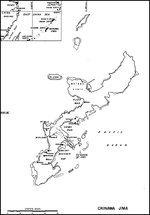 |  | 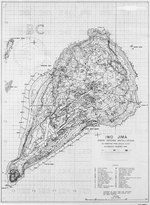 | 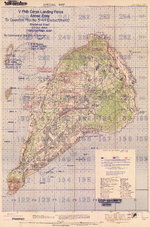 |
Japan in World War II Interactive Map
Please consider supporting us on Patreon. Even $1 per month will go a long way! Thank you. Please help us spread the word: Stay updated with WW2DB: |


Visitor Submitted Comments
2 Feb 2011 10:20:42 AM
i cant find anything i need
18 Nov 2016 10:26:36 PM
Iam searching for the name of an airstrip at Choiseul islands, Solomon islands near a village call Kakaza/sobi island. This airstrip is build by Japan during WWII. Please provide details n maps etc...
25 Mar 2017 08:25:47 PM
the town is called Kakaza it is near a town called Luti on the south coast of Choiseul. There appears to be three (3) airfields nearby which are Japanese, these are: Ballale, with two more on the southern tip of Bougainville. This came of US Intelligence maps
12 Mar 2018 03:38:04 PM
Does anyone know the square mileage of Japan during WW2?
11 May 2018 06:56:26 PM
the square mileage of japan during ww2
was the same as after the war.
18 Jun 2018 11:22:14 AM
Good day, I have found a dog tag and a pilot sign pen belonging to a Japanese soldier of worl war II with his name engraved. M.G. K. MATSADA
5 Sep 2018 11:43:41 PM
During ww2 in 1943 my uncle who is still alive now told me that he was accompanied by japan soldiers for 2 months helping the japan government and also he was awarded with one certificate during the time of japan left the place after ww2 end .
6 Nov 2018 04:18:36 PM
is this a primary source?
25 Jun 2019 01:50:07 PM
Is there any information on the coastal defense forts in the Tokyo bay or in the Kyushu area? I heard that there were reports from soldiers tasked to dismantle them.
25 Jan 2020 06:13:41 PM
is there a data base of Japanese casualties form WWII with names listed? I have an item might want to return .
10 May 2020 09:02:05 AM
Japan technically entered the war on December 7, 1941 when it bombed Pearl Harbor and you could say 1937 was when the Sino-Japanese War was ignited, and when Pearl Harbor was bombed it became a usual battlefront like in Burma and Australia.
15 Aug 2021 08:48:03 PM
Wow - some alternative reality text description for japanese audience. Wake up n read some real history written by non-japanese.
All visitor submitted comments are opinions of those making the submissions and do not reflect views of WW2DB.
- » WW2DB's 20th Anniversary (29 Dec 2024)
- » Wreck of USS Edsall Found (14 Nov 2024)
- » Autumn 2024 Fundraiser (7 Nov 2024)
- » Nobel Peace Prize for the Atomic Bomb Survivors Organization (11 Oct 2024)
- » See all news
- » 1,150 biographies
- » 337 events
- » 44,186 timeline entries
- » 1,243 ships
- » 350 aircraft models
- » 207 vehicle models
- » 376 weapon models
- » 123 historical documents
- » 260 facilities
- » 470 book reviews
- » 28,658 photos
- » 431 maps
Lt. Gen. Lewis B. "Chesty" Puller, at Guadalcanal

Please consider supporting us on Patreon. Even $1 a month will go a long way. Thank you!

Or, please support us by purchasing some WW2DB merchandise at TeeSpring, Thank you!
7 Dec 2009 05:33:55 PM
For a good reason why the POWs of the Japanese died at a rate many times that of the POWs held by the Germans check this out.
But the Japanese did not just pick on American POWs, the killed anyone and everyone in every possible way.
Read the book "Rape of Nanjing" or Unit 731 and see what Japanese Honorable sons did to their victims. Two Japanese Lt's. had a contest to see who could behead the most Chinese POWs. It ended only when the one Lt. sword was damaged cutting a Chinese POW in half from the head down.
This site will tell you the rest of the story.
http://members.iinet.net.au/~gduncan/massacres_pacific.html#Pacific