


New Guinea-Papua Campaign, Phase 3
Contributor: C. Peter Chen
ww2dbaseJapanese Decision to Abandon New Guinea Island
30 Sep 1943
ww2dbaseOn 30 Sep 1943, the Imperial General Headquarters in Tokyo, Japan endorsed a plan to reduce Japan's defense perimeter, a plan which was drawn up 15 days before. This new defense perimeter went from Burma through Dutch New Guinea, the Caroline Islands, and finally to the Marshall Islands. Although it was a serious effort to consolidate conquests and to shorten supply lines, this plan meant the abandonment of 300,000 troops outside of the perimeter, who were unable to be evacuated easily due to Allied air superiority. At this time, 120,000 Japanese personnel were located in eastern New Guinea island, many groups of which were running out of food and supplies. First Lieutenant Toshiro Kuroki commanded the Third Company of the 20th Engineer Regiment attached to the 20th Division, stationed in New Guinea at the time. He recalled the rice supplies running thin as days wore on:
ww2dbasePotatoes, potatoes! The battle in the Finschhafen area was full of potatoes. It would be impossible to live without potatoes. Since our arrival on November 11 we have had hardly any rice. We added a few potatoes to what rice we have had and continued the fight. We have an army, a division and an area army, with a commander-in-chief, a divisional commander, a chief of staff, a director of intelligence and what have you, but in the front line we have to contend with a rotten supply situation and live a dog's life on potatoes.
ww2dbaseYou will not find many smiling faces among the men in the ranks in New Guinea. They are always hungry; every other word has something to do with eating. At the sight of potatoes their eyes gleam and their mouths water. The divisional commander and the staff officers do not seem to realize that the only way the men can drag out their lives from day to day is by this endless hunt for potatoes. How can they complain about slackness and expect miracles when most of our effort goes into looking for something to eat!
ww2dbaseWith the Japanese troops stranded, Allied troops began their slow movement across this second largest island in the world.
ww2dbaseCarrier Raids on Rabaul
5 and 11 Nov 1943
ww2dbaseRabaul on the island of New Britain, which was administratively part of Australian New Guinea, was the stronghold of Japanese defense in the region. The base featured multiple airfields (with a large aircraft maintenance staff) and an excellent anchorage ("The Pearl Harbor of the South Pacific"). For some time, Rabaul had already been subjected to aerial attacks by US Army Air Forces long range bombers based in Port Moresby, Australian Papua, but in early Nov, the Americans stepped up the effort by launching carrier strikes, with the goal of pinning down Japanese naval and air forces to prevent their interference of the invasion of Bougainville in the nearby Solomon Islands (see Solomon Islands Campaign). On 5 Nov, US Task Force 38 under Rear Admiral Frederick Sherman, with carriers USS Saratoga and USS Princeton, launched a total of 97 aircraft (33 F6F, 16 TBF, and 22 SBD aircraft from USS Saratoga; 19 F6F and 7 TBF aircraft from USS Princeton) against Rabaul. The dive bombers caught the Japanese Cruiser Division 4 by surprise, damaging several cruisers and destroyers; the torpedo bombers, however, were generally ineffective. At the cost of only 9 aircraft and 14 lives, the Americans achieved the short term goal of preventing Japanese forces from reaching the American ships off Bougainville, the medium term goal of putting several major Japanese warships out of action, and the long term goal of starting the final step in the process to isolate and then neutralize Rabaul.
ww2dbaseOn 11 Nov, a follow-up raid was conducted, this time with the addition of USS Bunker Hill, USS Essex, and USS Independence, launching a total of 276 aircraft (36 F6F-3, 23 SBD-5, and 19 TBF-1 from USS Saratoga; 20 F6F and 9 TBF from USS Princeton; 27 F6F, 19 TBF, and 23 SB2C from Bunker Hill; 29 F6F, 28 SBD, and 18 TBF from USS Essex; 16 F6F and 9 TBF from USS Independence). The carrier strike was joined by 23 land-based F4U-1 fighters and several land-based F6F fighters, and it was preceded by a bombing run by 23 B-24 bombers of US Army Air Forces 43rd Bomb Group on the Lakunai Airfield. The US Navy aircraft successfully sank one destroyer (Suzunami; 148 killed including commanding officer Captain Masao Kamiyama) and damaged several other destroyers and destroyed 11 Japanese aircraft, at the cost of only 9 US aircraft (although an additional 7 aircraft would later be written off due to extensive battle damage). In addition to losses in equipment and lives, the Japanese garrison at Rabaul would also suffer a blow to its morale after this second major raid within days, after a long series of bombings by land-based USAAF bombers.
ww2dbaseIn an attempt to avenge the morning strike, the Japanese mounted a counterattack in the afternoon. At 1410 hours on 11 Nov 1943, D3A, 14 B5N, 4 D4Y, and 33 A6M aircraft (32 Japanese Army fighters were also launched but they lost their way) attacked the US carrier fleet. The attack would prove to be a disaster for the Japanese. For the 33 aircraft lost (and the loss of famed pilot Lieutenant Masao Sato), they failed to sink any American carriers and had only destroyed 2 F4U, 2 F6F, 1 TBF, and 1 SB2C aircraft.
ww2dbaseLandings on New Britain
15 Dec 1943-22 Apr 1944
ww2dbaseOn 15 Dec 1943, American 112th Cavalry Regiment landed at Arawe on the southwestern coast of New Britain. This move was aimed to disrupt Japanese supply lines. On 26 Dec 1943, Major General William H. Rupertus' US 1st Marine Division landed at nearby Cape Gloucester. Major General Iwao Matsuda's Japanese 17th Division opposed the American landings.
ww2dbaseIn hindsight, the nearly concurrent Bougainville operation, which would ultimately end in a US victory, would achieve the goal of isolating Rabaul, thus making the landings at Arawe and Cape Gloucester unnecessary. Nevertheless, the presence of Americans in southern New Britain guaranteed the isolation effort.
ww2dbaseAdmiralty Islands
26 Feb-25 Mar 1944
ww2dbaseThe Admiralty Islands were on the US target list also for cutting off Rabaul. Additionally, gaining the Admiralty Islands would secure the right flank of the Allied advance across the northern coast of New Guinea island. Intelligence photographs given to Douglas MacArthur showed airfields that appear abandoned, confusing his staff the actual number of defenders there; it was the tactic of Colonel Yoshio Ezaki, who wished to remain mysterious and keep his enemies guessing on his strength. All Ezaki's men were hidden in the jungles, ordered not to fire at enemy aircraft. US Army Air Forces thought the island was only held by a small number of Japanese troops, while the Army thought Ezaki's strength was somewhere between 4,000 and 5,000. Ezaki's actual strength was about 4,450.
ww2dbaseOn 29 Feb 1944, Vice Admiral Thomas Kinkaid's ship provided transport for part of Brigadier General William Chase's First Cavalry Division, about 1,000 dismounted men, to Los Negros. Unlike typical amphibious assaults, the landing force was small, largely due to the lack of intelligence on Japanese strength. They were ordered to secure the nearby airfield, and either fall back if the airfield if it was heavily defended or hold the airfield if only moderately defended; in both cases, they would be reinforced later. The landing was conducted with surprise, and the airfield was taken relatively easily by the 2nd Squadron of the 5th Cavalry Regiment. They set up a defensive line near the coast so that any attacking Japanese would need to dash across the open airfield with little cover. Repeated Japanese counterattacks, all in the form of small night attacks during the next few nights, instilled fear with American soldiers, but all of the attacks were fought off. The support force finally arrived on 4 Feb, followed by the arrival of the 12th Cavalry Regiment on 6 Mar and the 2nd Cavalry Brigade on 9 Mar. The 2nd Cavalry Brigade secured the small adjacent islands over the following few days, including the landing on Manus on 15 Mar to occupy the Japanese airfield on that island.
ww2dbaseLos Negros Island was cleared of Japanese forces on 25 Mar, but Manus Island was not cleared until May. At the Admiralty Islands, about 4,400 Japanese were killed and 75 prisoners were taken. The Americans, all of whom belonged to the US 1st Cavalry Division (Special), suffered 290 killed and 977 wounded. Despite outnumbering the American forces at the start of the battle, which was extremely rare at this stage of war, Colonel Ezaki was unable to capitalize on the numerical advantage to secure a victory, which would have provided the morale boost that Japan desperately needed. With Admiralty Islands under Allied control, MacArthur commented that "the noose was complete." Rabaul was now choked off with its large garrison of troops idling in frustration.
ww2dbaseAitape and Hollandia
22 Apr 1944-Aug 1944
ww2dbaseOn 22 Apr 1944, a two-pronged attack was launched to attack Aitape and Hollandia on the northern coast of New Guinea island in the Australian Territory of New Guinea. MacArthur had hopes that these two locations would provide the valuable airfields needed to further his attack across the island, and perhaps even bomber fields that might later be used to attack the Philippine Islands. Both landing forces achieved complete surprise. "No withering fire met us at the beach", said MacArthur. "Instead, there was only disorder-rice still boiling in pots, weapons and personal equipment of every kind abandoned. No more than token resistance was met at any point, and there was no interference from the enemy's air or naval forces. In postwar interrogations, Jo Iimura, a Japanese defender in the region at the time, said "[t]he allied invasion of Hollandia and Aitape was a complete surprise to us. After considering the past operational tactics of the enemy... we believed they would attempt to acquire an important position somewhere east of Aitape.... Because we misjudged... we were neither able to reinforce nor send war supplies to their defending units."
ww2dbaseOnce on land, however, Eichelberger's troops discovered that Lieutenant General Hatazo Adachi's 18th Army had regrouped. Adachi's men counterattacked in strength multiple times near Aitape, causing serious casualties. "I cannot find any means nor method which will solve this situation strategically or tactically", said Adachi to his troops. "Therefore, I intend to overcome this by relying on our Japanese Bushido." The first of the such massed attacks took place on 11 Jul, attacking in multiple waves despite heavy casualties from Allied machine guns and artillery. For the next two weeks the Japanese attacks persisted, but to little success. Adachi later acknowledged that he felt he lost ten thousand men during the offensive. On 13 Jul, the Allied forces launched a double enveloping counteroffensive that divided Adachi's remaining troops into two groups, soon rendering them useless. All effective resistance ceased on 10 Aug, though small elements harassed Allied troops in the region until the end of the war.
ww2dbaseWakde
17 May 1944-Aug 1944
ww2dbaseEven before Aitape and Hollandia were secured, MacArthur had already marked Wakde as his next target, mainly due to the fact that Aitape had proved to be unsuitable for the building of major airfields. Lieutenant General Walter Krueger's Sixth Army ("Alamo Force") landed at Wakde on 17 May. They met a similar level of stubborn resistance at Wakde mainly because of Wakde being well established with numerous storage depots. MacArthur claimed to have gained Wakde as an usable base of future operations, but some troops were bogged down in the area until nearly the end of the war.
ww2dbaseBiak
27 May 1944-22 Jul 1944
ww2dbaseAcross Geelvink Bay north of western New Guinea island lay the island of Biak and its three airfields, which could prove to be dangerous as Allied troop transports operated closer and closer to the western tip of New Guinea. With its additional strategic value as an excellent jump-off point for the Philippines, MacArthur sent Major General Fuller and his 41st Division on Operation Hurricane to take the island. "The light enemy resistance at the beachhead held little hint of what was to come", recalled MacArthur. Lieutenant Colonel Naoyuki Kuzume put up a fierce defense that included tanks, which was rare for Japanese troops in this theater of the Pacific War. Kuzume utilized his knowledge of the island's topography and devised a brilliant defense plan that fully utilized the terrain. He was further reinforced by the Second Amphibious Brigade of the Southern Army from Mindanao via "Tokyo Express" during Operation Kon. His effective defense even rendered the airfields, newly captured by the Allies, useless. On 28 Jun, Kuzume's command post, located in one of the numerous caves, was breached. He committed ritual suicide. The remaining caves continued to fight ferociously. Frustrated American troops soon discovered the brutal tactic of simply dynamiting the caves, causing the cave roofs to collapse on the defenders hiding inside. The island was finally secured on 22 Jul.
ww2dbaseAt the conclusion of the Biak actions, Americans killed all but 150 of the 7,200 Japanese defenders (the 150 escaped), while losing 438 of their own. The Americans, similar to other Pacific actions, lost more men from the front lines to diseases than deaths and battle wounds. Biak turned out to be an important battle for another reason. It was the first time Japanese troops effectively used caves as defensive strongholds. Before this point, Japanese troops defended the islands at the beach; when all was lost, surviving troops formed a banzai charge, and the battle was over. After the battle, the Japanese began to include caves as an option, which dramatically increased American casualty rates during operations to secure the subsequent islands.
ww2dbaseNoemfoor
2-7 Jul 1944
ww2dbaseAllied troops landed on the island of Noemfoor, a small island directly west of Biak in Dutch New Guinea, on 2 Jul. After sporadic resistance, the island was declared secure on 7 Jul.
ww2dbaseVogelkop Peninsula and the Conclusion of the New Guinea-Papua Campaign
ww2dbaseThe last obstacle in liberating all of New Guinea island was the Vogelkop Peninsula in Dutch New Guinea. The Japanese resistance on the peninsula gathered at Manokwari, and MacArthur did not wish to contest with this force. Instead, his "hit 'em where they ain't" strategy took the Allied forces to a number of undefended beaches near Cape Opmaria and Sansapor. Like Rabaul, the 25,000 men at Manokwari were now stranded, frustratingly idling uselessly.
ww2dbaseIn Sep 1944, Allied troops occupied the Halmahera Islands, concluding the New Guinea Campaign. MacArthur was now only several hundred miles from the Philippines. In his memoir, MacArthur attributed to the Allied victory over New Guinea to mobility and the ability to achieve surprise at key confrontations. Additionally, he also insisted that his refusal to deploy military governors over conquered regions helped his command focus on the task at hand. Instead, he brought in Dutch and Australian civil administrators immediately after the area had been deemed secure. "The success of this method was reflected in the complete lack of friction between the various governments concerned", he noted.
ww2dbaseAlthough Allied attention would move toward the Philippine Islands by this time, small pockets of Japanese resistance would continue to fight until late May 1945.
ww2dbaseSources:
Douglas MacArthur, Reminiscences
Bruce Gamble, Fortress Rabaul
Bruce Gamble, Target Rabaul
William Manchester, American Caesar
William Manchester, Goodbye, Darkness
Gordon Rottman, World War II US Cavalry Units
Dan van der Vat, The Pacific Campaign
Wikipedia
Last Major Update: Aug 2006
New Guinea-Papua Campaign, Phase 3 Interactive Map
Photographs
 |  |  |  |
Maps
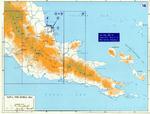 | 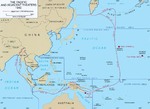 | 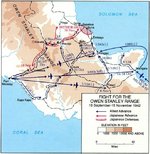 | 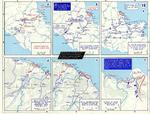 |
New Guinea-Papua Campaign, Phase 3 Timeline
| 17 Aug 1943 | As a build up to the landings at Lae, Australian Papua the US 5th Air Force commenced a two-week blitz on the Japanese airfield in the Wewak area in Australian New Guinea. 12 B-17 and 26 B-24 bombers from Jackson Field and Ward's Strip at Port Moresby, Australian Papua hit the two Japanese airfields at Wewak starting at about 0000 hours; the Americans lost 3 B-24 bombers while the Japanese suffered 13 aircraft destroyed, 20 heavily damaged, 34 slightly damaged, and 70 men killed. At 0600 hours, 61 modified B-25 bombers, with fighter escort, were launched from Port Moresby; although 21 aircraft turned back due to poor weather, the remainder hit Wewak between 0750 and 0845 hours, destroying about 30 aircraft that were parked in rows in preparation of the arrival of a high ranking Japanese officer. The series of blitz paved the way for the autumn invasion that resulted in the capture of the western flank of Rabaul, New Britain. |
| 4 Sep 1943 | Lae-Salamaua on New Guinea was recaptured by Allied forces. |
| 5 Sep 1943 | Men of US 503rd Parachute Infantry Regiment conducted an airborne operation at the village of Nadzab west of Lae, Australian Territory of New Guinea. They were supported on the ground by elements of Australian 2/4th Field Regiment. Douglas MacArthur personally observed the operation in a B-17 aircraft. Military engineers immediately began the preparations for the building of an airfield. |
| 15 Sep 1943 | The Japanese abandoned Lae, Australian New Guinea. |
| 19 Sep 1943 | The Australian 7th Infantry Division opened an offensive in the Ramu valley, Australian New Guinea. |
| 20 Sep 1943 | Two Ki-49 aircraft of Japanese 7th Flying Regiment attacked Port Moresby, Australian Papua. |
| 22 Sep 1943 | Three Australian battalions landed at Finschhafen, Australian New Guinea. |
| 4 Oct 1943 | Gregory Boyington led 8 US Marine Corps squadron VMF-214 F4U fighters to escort USAAF bombers over Kahili Airfield on Bougainville island; US Army Air Forces also launched P-38 fighters for escort duty. Boyington claimed 3 Japanese shot down while the USAAF claimed 4 more. Japanese records would later reveal that only 1 fighter was shot down and 2 were written off from heavy damage. |
| 6 Oct 1943 | Lieutenant Kay Klages successfully conducted a photographic reconnaissance mission over Rabaul, New Britain. |
| 9 Oct 1943 | US 8th Photo Reconnaissance Squadron successfully took photos of Rabaul, New Britain. |
| 9 Oct 1943 | Japanese aircraft attacked the Dobodura Airfield in Australian Papua, setting oil dumps on fire. On the same day, 2nd Bomb Squadron (flying B-25 and B-26 aircraft) of USAAF 22nd Bomb Group was transferred to Dobodura. |
| 10 Oct 1943 | US 8th Photo Reconnaissance Squadron successfully took photos of Rabaul, New Britain. |
| 11 Oct 1943 | Neel Kearby led a fighter sweep over Wewak, Australian New Guinea; his flight shot down several Japanese aircraft, including one carrying Lieutenant Colonel Tamiji Teranishi, commanding officer of 14th Flying Brigade. |
| 11 Oct 1943 | US 8th Photo Reconnaissance Squadron successfully took photos of Rabaul, New Britain. |
| 11 Oct 1943 | 13 Beaufighter aircraft of 30 Squadron RAAF from Goodenough Island and 2 squadrons of US 38th Bomb Group arrived at Dobodura Airfield in Australian Squadron in preparation of a planned strike on Rabaul, New Britain on the next day. |
| 12 Oct 1943 | 8 squadrons of bombers launched from Dobodura Airfield, Australian Papua, with escorting US and Australian fighters, attacked Rapopo Airfield, Vunakanau Airfield, and Tobera Airfield at Rabaul, New Britain. The Allies lost 3 B-24, 1 B-25, and 1 Beaufighter aircraft. The Japanese suffered eight damaged ships (transport Tsukushi, oiler Naruto, destroyer Mochizuki, destroyer Minazuki, destroyer Tachikaze, submarine I-7, submarine I-80, and submarine RO-105), six transports sunk, 4 A6M aircraft destroyed, 9 A6M aicraft damaged, and some fuel dumps destroyed. |
| 13 Oct 1943 | About 270 Allied aircraft were launched from bases in Australian Papua to attack the Japanese base at Rabaul, New Britain. Poor weather would cause the raid to be canceled. |
| 15 Oct 1943 | 15 D3A dive bombers of Air Group 582 escorted by 39 A6M fighters attacked Oro Bay just south of Dobodura, Australian Papua. 54 P-38 and 8 P-40 fighters rose of defend. The Japanese lost 14 D3A dive bombers and 5 A6M fighters, and caused only light damage to Allied shipping. |
| 15 Oct 1943 | Originally given the task of escorting US Army Air Force bombers to attack Kahili Airfield on Bougainville island, the US Marine Corps F4U fighters arrived earlier than the bombers, thus the mission became a fighter sweep of the Japanese airfield. 22 Japanese A6M fighters rose to defend. USMC pilot Bill Case claimed 2 victories, Tom Emrich 2, Burney Tucker 1, and Gregory Boyington 1. Japanese records would later reveal that only 1 fighter was destroyed on this day. |
| 16 Oct 1943 | The Americans conducted a heavy attack by air against the Japanese base at Wewak, Australian New Guinea. |
| 17 Oct 1943 | 56 A6M fighters attacked Dobodura Airfield and Oro Bay in Australian Papua; 43 P-38 and 3 P-40 fighters rose to defend. The Japanese lost 8 A6M fighters and the Americans lost 4 P-38 and 1 P-40 fighters. |
| 17 Oct 1943 | The F-5 aircraft flown by Lieutenant William Southard, escorted by two P-38 fighters, conducted a photographic reconnaissance mission over Rabaul, New Britain. |
| 17 Oct 1943 | US Marine Corps squadrons VMF-214 and VMF-221 conducted a fighter sweep over Kahili Airfield on Bougainville island in the morning. More than 30 A6M fighters of Japanese Navy Air Group 201 rose to defend. VMF-214 pilots would claim 9 Japanese aircraft shot down, while VMF-221 claimed 2; Japanese records would later reveal that only 2 aircraft were lost on this day. The Japanese pilots claimed 3 US aircraft shot down, but the Americans only suffered 2 aircraft lightly damaged and 1 aircraft heavily damaged and written off after its return. |
| 18 Oct 1943 | 77 B-24 bombers from Port Moresby, Australian Papua made rendezvous with 55 P-38 fighters over Kiriwina, Trobriand Islands for a raid on Rabaul, New Britain; a separate group of 54 B-25 bombers, modified for strafing, flew for Rabaul separately. Poor weather would force the first group to cancel its mission, but the B-25 bombers proceeded without fighter escort. They heavily damaged Japanese submarine chaser CH-23, lightly damaged transport Johore Maru, and shot down 8 Japanese fighters (3 additional fighters were lost on landings); the Japanese shot down many B-25 bombers. Subsequent investigation on why the B-25 bombers proceeded despite having no escorts would find no faults. |
| 18 Oct 1943 | 3 divisions of US Marine Corps squadron VMF-214, led by Gregory Boyington, attacked Ballale Airfield in the Shortland Islands. Later in the day, the same 3 divisions joined VMF-221 in the attack of Kahili Airfield on Bougainville island. 22 Japanese fighters rose to defend Kahili. US airmen claimed 14 Japanese aircraft shot down with 6 probables. Japanese records later revealed the loss of 4 aircraft in combat, 1 heavily damaged and written off, and 3 lightly damaged. |
| 19 Oct 1943 | F-5 aircraft of US 8th Photo Reconnaissance Squadron detected more than 200 Japanese aircraft gathered at the four airfields in and near Rabaul, New Britain. |
| 19 Oct 1943 | US Marine Corps squadron VMF-214 strafed Kara Airfield (Bougainville), Kahili Airfield (Bougainville), and Ballale Airfield (Shortland Islands) in the Solomon Islands. They caused only minor damage. |
| 24 Oct 1943 | 62 B-25 bombers (modified for ground attack) from Dobodura, Australian Papua made rendezvous with 54 P-38 fighters from Kiriwina of Trobriand Islands, and the group attacked Rabaul, New Britain. The Americans lost 2 B-25 and 1 P-38 aircraft. The Japanese suffered 8 A6M fighters lost, 6 A6M fighters damaged, 2 G4M bombers lost, 5 G4M bombers heavily damaged, 27 G4M bombers lightly damaged. |
| 24 Oct 1943 | A Japanese patrol found a group of Australian and native coast watchers about 100 miles from Cape Orford on New Britain. Lieutenant Francis Barrett was killed in the engagement; Captain John Murphy, Sergeant Lambert Carlson, and others escaped. |
| 25 Oct 1943 | 61 B-24 bombers, escorted by 81 P-38 fighters from Kiriwina of Trobriand Islands, attacked Lakunai Airfield at Rabaul, New Britain. The Americans suffered 1 B-24 bomber lost and several damaged. The Japanese suffered 20 aircraft lost or heavily damaged, 18 aircraft slightly damaged, the airstrip of Lakunai temporarily out of commission, and 8 ships damaged in the harbor. |
| 26 Oct 1943 | 82 B-25 bombers were launched from Port Moresby, Australian Papua; their mission to attack Rabaul, New Britain was canceled mid-flight due to poor weather. |
| 27 Oct 1943 | From Rabaul in New Britain, Jinichi Kusaka reported to his superiors at the Combined Fleet headquarters at Truk, Caroline Islands that only 10 D3Y dive bombers, 70 A6M fighters, and 36 G3M bombers were left at Rabaul. He requested four divisions of fighters and three divisions of dive bombers to be sent to reinforce the base. |
| 29 Oct 1943 | B-24 bombers, escorted by P-38 fighters, attacked Vunakanau Airfield at Rabaul, New Britain. 72 A6M fighters rose to defend. The Japanese lost at least 7 fighters in combat. |
| 1 Nov 1943 | Per Admiral Mineichi Koga's orders, Vice Admiral Jisaburo Ozawa transferred 150 aircraft of Carrier Division 1 temporarily to the airfields at Rabaul, New Britain. |
| 1 Nov 1943 | A Japanese patrol found a group of Australian and native coast watchers on New Britain. Sergeant Lambert Carlson was killed, Captain John Murphy was captured, and the others escaped. |
| 3 Nov 1943 | Captured Australian coast watcher Captain John Murphy was delivered to Rabaul, New Britain. |
| 4 Nov 1943 | William Halsey ordered US Task Force 38, currently refueling in the Indispensable Reefs anchorage south of Rennell Island of the Solomon Islands from the 21,000-ton tanker Kankakee, to attack Japanese Cruiser Division 4, which was approaching Rabaul, New Britain. |
| 5 Nov 1943 | US Task Force 38, with carriers USS Saratoga and USS Princeton, launched aircraft 60 miles southwest of Cape Torokina, Bougainville, Solomon Islands against Japanese Cruiser Division 4 anchored at Rabaul, New Britain; the Japanese detected the arrival of Task Force 38 but had mistakenly identified the carriers as transports, thus there was no immediate response. USS Saratoga launched 33 F6F, 16 TBF, and 22 SBD aircraft; USS Princeton launched 19 F6F and 7 TBF aircraft. Facing up to 70 Japanese fighters, the dive bombers attacked first, damaging several cruisers and two destroyers. The torpedo bombers attacked next, making only two hits, and both torpedoes were duds. The US suffered 9 aircraft lost and 14 airmen killed. In addition to the damage to Cruiser Division 4, the Japanese lost 1 D4Y1, 3 A6M, and 1 twin-engine transport aircraft. After the raid by carrier aircraft, US Army B-24 bombers conducted a follow-up attack, killing hundreds but causing minimal damage to shipping and facilities. |
| 7 Nov 1943 | 26 B-24 bombers with P-38 fighters in escort attacked Rapopo Airfield at Rabaul, New Britain; 58 Japanese fighters rose in defense. The Americans lost 5 P-38 fighters. |
| 11 Nov 1943 | In the morning, 276 US Navy carrier aircraft (78 from USS Saratoga, 29 from USS Princeton, 69 from USS Bunker Hill, 75 from USS Essex, and 25 from USS Independence), 23 land-based US Navy F4U-1 fighters, 1 squadron of land-based US Navy F6F fighters, and 23 US Army Air Forces B-24 bombers attacked Rabaul, New Britain. While the USAAF bombers did minimal damage on Lakunai airfield, the US Navy aircraft were able to sink destroyer Suzunami (148 killed including commanding officer Captain Masao Kamiyama), damage destroyer Naganami, and damage two other destroyers. 11 Japanese aircraft were lost in this engagement. The Americans lost 4 TBF and 5 F6F aircraft in combat; 1 TBF, 2 SB2C, and 4 F6F written off due to extensive damage; and 30 aircraft lightly damaged. In response to the attack, the Japanese launched 23 D3A, 14 B5N, 4 D4Y, and 33 A6M aircraft (32 Japanese Army fighters were also launched but they lost their way) to attack the American carrier fleet; they shot down 6 US aircraft at the cost of 33 aircraft lost (including famed pilot Lieutenant Masao Sato). |
| 14 Nov 1943 | After dark, 32 Australian Beaufort aircraft from Goodenough Island off the tip of Australian Papua attacked Rabaul, New Britain in three waves; they caused little damage. |
| 17 Nov 1943 | Australian 9th Division launched an offensive to take Sattelberg, New Guinea. |
| 25 Nov 1943 | Father Joseph Lamarre witnessed two Australian and ten American captives, blindfolded and bounded at the wrists, being loaded onto trucks. While the Japanese said that they were being transported to Japan, Lamarre noted that the trucks did not stop by the wharves. Instead, they were taken to a field of volcanic ash near Tavurvur for their execution. US Lieutenant Marcus Mangett, Jr. and US Staff Sergeant Kenneth Vetter, who were wounded and could not stand, were executed by rifle fire. The remaining ten prisoners of war were executed by beheading at the hands of newly arrived junior officers as a test of their courage; the ten victims included Australian Warrant Officer John Bailey, Australian Flight Officer Charles Vincent, US Lieutenant John Rippy, US Lieutenant Philip Bek, US First Lieutenant Ernest Naumann, US Aviation Ordnanceman 2nd Class Harlan Burrus, US Lieutenant Leslie Neuman, US Staff Sergeant Ernest Burnside, US Corporal John Mulligan, and US Private Robert George. |
| 30 Nov 1943 | After dark, Australian Beaufort aircraft from Goodenough Island off the tip of Australian Papua attacked Rabaul, New Britain. |
| 14 Dec 1943 | A raid by bombers of the 5th USAAF dropped 433 tons of bombs on Arawe island, New Britain was followed by a landing of VII Amphibious Force (TF 76) under Rear Admiral Daniel E. Barbey. The force had set out from the Goodenough Islands the previous day with the Australian transport Westralia, the dock landing ship Carter Hall and the fast transports Sands and Humphreys. 1,600 men of the US 112th Cavalry Regimental Combat Team under Brigadier General Julian Cunningham. Operation Director was supported by the US destroyers Smith, Reid, Lamson, Mahan and Flusser with the escort destroyers Conyngham, Shaw, Mugford, Bagley and Drayton. The Australian cruisers Australia and Shorshire with destroyers Arunta and Warramunga provide the Covering Force (TF 74). This battle involved the first use of an Australian infantry landing ship, HMAS Westralia, in combat and the first time a dock landing ship (USS Carter Hall) was used to carry amtracs to cross the coral reefs. The fire support was provided with tank landing craft with rockets, this proved so successful that Barbey had more of the made. This battle also saw Barbey use his landing control officers; they provided a fully trained beach party for the first time. |
| 15 Dec 1943 | The Markham Valley Road connecting Nadzab and Lae in Australian Territory of New Guinea completed its maintenance and upgrade, thus allowing Nadzab Airfield to fully utilize its potential. |
| 16 Dec 1943 | US naval leadership in the Solomon Islands decided to embark on a fighter sweep campaign against Rabaul, New Britain with US Navy, US Marine Corps, and Royal New Zealand Air Force fighters. The first mission would be launched on the following day. |
| 17 Dec 1943 | 78 Allied fighters (US Marine Corps F4U fighters, US Navy F6F fighters, RNZAF Kittyhawk fighters) took off from Torokina Airfield on Bougainville, Solomon Islands for a fighter sweep over Rabaul, New Britain. 70 Japanese fighters rose to defend. RNZAF pilots claimed 5 Japanese shot down while suffering 2 losses, while the Americans claimed 4; Japanese records would later show that only 2 A6M aircraft were lost on this day (with only 1 pilot killed). Gregory Boyington, who participated in the sweep, thought the Japanese only launched a limited number of aircraft in defense because the Allies sent too many fighters, and it made more sense for the Japanese to rely more on anti-aircraft guns rather than risking fighters. |
| 18 Dec 1943 | The scheduled fighter sweep to be launched from Torokina Airfield, Bougainville, Solomon Islands against Rabaul, New Britain was canceled due to poor weather. |
| 19 Dec 1943 | 16 B-24 bombers with an escort of 50 P-38, F4U, and Kittyhawk fighters attacked Rabaul, New Britain. 49 Japanese fighters rose to defend. The Americans lost 2 aircraft in combat and a further 8 aircraft were written off after the mission; the Japanese lost 5 A6M fighters in combat. |
| 19 Dec 1943 | 18 A6M3 fighters arrived at Rabaul, New Britain. |
| 21 Dec 1943 | A heavy bomber raid originally scheduled for Rabaul, New Britain was canceled due to poor weather. |
| 23 Dec 1943 | 24 US Army Air Force bombers conducted an attack on Lakunai Airfield at Rabaul, New Britain, escorted by 48 US Navy F6F and US Marine Corps F4U fighters; 1 F6F and 2 F4U aircraft were shot down by ground fire during the bombing mission. Shortly after, 48 USMC F4U fighters and a number of USAAF P-38 fighters conducted a fighter sweep over Rabaul. 99 Japanese A6M fighters rose to defend against the sweep. USMC airmen claimed 21 Japanese shot down, and USAAF 8; Gregory Boyington of USMC squadron VMF-214 alone claimed 4; Japanese records would later reveal that only 6 aircraft were lost during the fighter sweep. |
| 24 Dec 1943 | 50 Allied aircraft (Australian Kittyhawk fighters and US F6F fighters) conducted a fighters sweep over Rabaul, New Britain. A raid by heavy bombers followed the fighter sweep. |
| 25 Dec 1943 | 15 B-24 bombers escorted by about 50 fighters (P-38, F4U, F6F, and Kittyhawk fighters) attacked Rabaul, New Britain. 88 Japanese fighters rose to defend. The Americans lost 1 F4U and 2 P-38 aircraft; the Japanese lost 3 aircraft. |
| 26 Dec 1943 | The Allied assault on New Britain expanded with US 1st Marine Division landing near Cape Gloucester. |
| 26 Dec 1943 | The Fletcher-class destroyer USS Brownson was sunk by a Japanese dive bomber off Cape Gloucester, New Britain, Bismarck Islands. |
| 26 Dec 1943 | While supporting landing operations on Cape Gloucester, New Britain, destroyer USS Shaw was attacked by two Japanese D3A 'Val' dive-bombers. Shrapnel from three bomb near-misses created over one hundred holes in the hull and injured 36 men, 3 of whom later died of their wounds. |
| 27 Dec 1943 | 64 F4U and F6F fighters conducted a fighter sweeper over Rabaul, New Britain. 50 Japanese fighters rose to defend. The Americans lost 1 F4U fighter while claiming 4 Japanese shot down. |
| 27 Dec 1943 | 15 Japanese bombers, escorted by 78 fighters, were launched from Rabaul, New Britain to attack US positions in the Cape Gloucester area, also on New Britain. 7 fighters were lost on this mission. |
| 28 Dec 1943 | 64 F4U Corsair fighters of US Marine Corps squadrons VMF-214 and VMF-216 conducted a fighter sweep over Rabaul, New Britain. 72 Japanese fighters rose to defend. The Americans claimed 30 Japanese shot down, but Japanese records would later revealed that only 3 fighters were actually lost. |
| 30 Dec 1943 | Two missions were planned against Rabaul, New Britain. The fighter sweep mission was canceled due to poor weather, but the bombing raids proceeded as planned. 20 B-24 bombers escorted by 20 F4U and 20 F6F fighters dropped 70 1,000-pound bombs. At least one B-24 bomber was shot down by the Japanese. |
| 1 Jan 1944 | 15 B-24 bombers escorted by 68 fighters attacked Rabaul, New Britain. The Americans lost 1 B-24 bomber in combat, and another on landing after the mission was over; additionally, two returned bombers were noted as heavily damaged. |
| 1 Jan 1944 | 40 Japanese aircraft arrived at Rabaul, New Britain. |
| 1 Jan 1944 | Aircraft from carriers USS Monterey and USS Bunker Hill attacked Japanese positions at Kavieng, New Ireland, destroying 7 Japanese aircraft. |
| 2 Jan 1944 | US Marine Corps 7th Regiment engaged a strong Japanese defense at Suicide Creek near Cape Gloucester, New Britain. |
| 2 Jan 1944 | 20 F6F and 28 F4U fighters from Torokina Airfield in Bougainville conducted a fighter sweep over Rabaul, New Britain; two of these fighters turned back to Torokina due to mechanical problems. 80 A6M fighters rose to defend. The Americans reported 1 kill, 1 probable, and 2 Japanese aircraft damaged. |
| 2 Jan 1944 | US Army troops captured Gumbi Airfield on the northern coast of Australian New Guinea. The airfield's Japanese name was then restored to its prewar English name Saidor, after the nearby village. |
| 3 Jan 1944 | 28 F4U and 16 F6F fighters were launched from Torokina Airfield on Bougainville at 0630 hours for a fighter sweep mission over Rabaul, New Britain; some of these fighters returned to base shortly after launch due to mechanical problems. 70 A6M fighters rose to defend Rabaul. |
| 5 Jan 1944 | The first land-based (Bougainville) SBD and TBF aircraft raid on Rabaul, New Britain was cancelled due to weather. |
| 6 Jan 1944 | P-38 and F4U aircraft attacked Rabaul, New Britain, many of which were turned back due to poor weather. 33 A6M fighters rose to defend. The Japanese lost 2 A6M fighters, while the Americans lost 2 P-38 fighters. Harry Johnson of US Marine Corps squadron VMF-214, flying a F4U Corsair fighter, scored one of the two victories; this would be the squadron's final victory of the war. |
| 7 Jan 1944 | US Navy and US Marine Corps aircraft attacked a Japanese radar site at Cape Saint George, New Ireland. 3 F6F and 4 SBD aircraft were lost on this mission. |
| 9 Jan 1944 | 16 TBF and 24 SBD aircraft from Piva Airfield on Bougainville, escorted by fighters, attacked Tobera Airfield in New Britain. 1 Japanese aircraft was destroyed on the ground, while the US lost 1 SBD aircraft and 3 fighters. |
| 11 Jan 1944 | B-25 bombers of US 42nd Bomb Group attacked Rabaul, New Britain, damaging 8 aircraft on the ground at Vunakanau Airfield. This was the first land-based bomber attack on Rabaul from the Solomon Islands. |
| 14 Jan 1944 | 36 SBD, 16 TBF, and about 80 fighters from Munda Airfield in New Georgia attacked Rabaul, New Britain after a stop at Piva Airfield on Bougainville to refuel. 84 A6M intercepted them over New Ireland, but most American aircraft were able to make their way to Rabaul to commence their attacks. The Japanese lost 3 A6M fighters and the Americans lost 2 SBD, 1 TBF, 5 F4U, and 2 F6F aircraft. Japanese shipping in Simpson Harbor at Rabaul suffered 3 direct hits and 16 near misses. |
| 14 Jan 1944 | About 17 prisoners of war were beheaded by men of 81st Naval Garrison Unit of the Japanese Navy at Rabaul, New Britain as reprisal for American air raids on the town. |
| 16 Jan 1944 | The Americans repulsed the last Japanese counterattack to wrap up operations on New Britain. |
| 17 Jan 1944 | US aircraft attacked Rabaul, New Britain. The Japanese shot down 8 P-38, 1 F6F, 1 F4U, 1 SBD, and 1 TBF aircraft. |
| 20 Jan 1944 | US aircraft attacked Rabaul, New Britain. The Japanese shot down 2 B-25, 2 P-38, and 3 F4U aircraft. |
| 23 Jan 1944 | US aircraft attacked Rabaul, New Britain. The Japanese lost at least 13 fighters. |
| 25 Jan 1944 | Carriers Junyo, Hiyo, and Ryuho delivered 62 A6M, 18 D3A, and 18 B5N aircraft to Rabaul, New Britain. |
| 10 Feb 1944 | 59 SBD dive bombers, 24 TBF torpedo bombers, and 99 fighters attacked Vunakanau Airfield at Rabaul, New Britain. This attack was followed by another attack on Vunakanau Airfield by 24 B-25 bombers escorted by 20 fighters. Finally, a third attack wave with 21 B-24 bombers escorted by 28 fighters which targeted both Vunakanau Airfield and Tobera Airfield. Vunakanau's runways were hit by two 2,000-pound bombs by B-24 bombers. |
| 12 Feb 1944 | More than 200 US aircraft attacked Rabaul, New Britain. The Japanese launched about 50 fighters in defense. |
| 13 Feb 1944 | More than 200 US aircraft attacked Rabaul, New Britain. The Japanese launched about 50 fighters in defense. |
| 13 Feb 1944 | USS Honolulu and USS St. Louis departed Tulagi, Solomon Islands bound to support the landings at Green Island north of Bougainville. |
| 14 Feb 1944 | At 0030 hours, 25 TBF torpedo bombers of US Marine Corps squadron VMTB-233 launched from Bougainville to mine Simpson Harbor near Rabaul, New Britain; one aircraft turned back due to mechanical problems. The Japanese shot down six TBF aircraft during the mining mission. |
| 14 Feb 1944 | Japanese aircraft from Rabaul, New Britain attacked the Allied convoy sailing for the Green Islands, damaging USS St. Louis with one hit and a few near misses (killing 23), but they would fail to stop the convoy. |
| 14 Feb 1944 | USS Honolulu and USS St. Louis came under attack by four Aichi D3A 'Val' dive-bombers. St. Louis was struck by one bomb that exploded within the ship, killing 23 and wounding 28. |
| 15 Feb 1944 | New Zealand troops landed on Nissan Island, Green Islands, Australian New Guinea. |
| 15 Feb 1944 | USS Honolulu and USS St. Louis covered the New Zealand landings on Green Island 140 miles east of Rabaul. |
| 17 Feb 1944 | After dark and into the next date, ships of US Navy Destroyer Squadron 12 bombarded Rabaul, New Britain, expending 3,800 5-inch shells. |
| 18 Feb 1944 | 11 G4M bombers withdrew from Rabaul, New Britain to the Mariana Islands, while a number of B5N torpedo bombers withdrew to Truk, Caroline Islands. |
| 19 Feb 1944 | The Japanese garrison on Nissan Island, Green Islands, Australian New Guinea sent the radio message "We are charging the enemy and beginning radio silence" before commencing a final attack. New Zealand troops who had landed on Nissan four days prior would defeat this final charge. |
| 19 Feb 1944 | 48 SBD and 23 TBF aircraft attacked Lakunai Airfield at Rabaul, New Britain, followed by another attack on Lakunai Airfield and Tobera Airfield by 20 B-24 bombers and 35 fighters. 36 Japanese fighters rose to defend. The Japanese suffered 8 A6M fighters shot down and Lakunai airstrips temporarily taken out of action. The Americans suffered 1 F4U fighter shot down. |
| 19 Feb 1944 | Starting this date and into the next date, 40 A6M, 21 D3A, 4 D4Y, 13 G4M, and 7 B5N aircraft were withdrawn from Rabaul, New Britain. As a part of the same transfer, 400 ground troops and support personnel departed Rabaul aboard Kokai Maru and Kowa Maru; the convoy was escorted by submarine chaser CHa-48, submarine chaser CH-38, and repair tug Nagaura. When the transfer was complete, Rabaul would only have 10 operational A6M fighters and 2 B5N operational bombers. |
| 21 Feb 1944 | At 1440 hours, 15 B-25 aircraft modified for strafing attacked a Japanese convoy carrying military evacuees from Rabaul, New Britain. Submarine chaser CH-48, transport Kokai Maru, and converted gunboat Kowa Maru were sunk; submarine chaser CH-38 was damaged. |
| 22 Feb 1944 | US Navy Destroyer Squadron 23, consisted of five destroyers under the command of Captain Arleigh Burke, attacked a Japanese convoy carrying military evacuees from Rabaul, New Britain. Repair tug Nagaura was sunk and submarine chaser CH-38 was damaged. 150 survivors of Nagaura refused to be rescued by the Americans. |
| 25 Feb 1944 | The supply depot on the coast near Kokopo, New Britain was bombarded by US destroyers for 30 minutes starting at about 2330 hours; a warehouse was damaged by fires. 2,000 5-inch shells were expended by the US Navy on this bombardment. |
| 25 Feb 1944 | The convoy of LSTs was joined by another convoy of LSTs and troop landing ships and were escorted by destroyer USS Saufley. The convoy arrived at Green Island (now Nissan), Northern Solomons where Saufley covered the landings. Once the ships made their landings, the convoy withdrew and set a course for Guadalcanal, Solomon Islands. |
| 27 Feb 1944 | 70 SBD and TBF aircraft attacked Rabaul, New Britain. 1 Japanese G4M bomber was shot down. |
| 29 Feb 1944 | Operation Brewer: US troops invaded the Admiralty Islands. |
| 29 Feb 1944 | Ships of US Navy Destroyer Squadron 22 gathered off Praed Point about 6.5 miles away from Rabaul, New Britain just before midnight at the end of this date. |
| 29 Feb 1944 | The Kempeitai staff at Rabaul, New Britain discussed moving its headquarters from the center of town to a safer location due to US bombing. |
| 29 Feb 1944 | After refueling at the Treasury Islands, destroyers USS Waller, USS Saufley, USS Philip, USS Renshaw, USS Conway, USS Pringle, USS Eaton, and USS Sigourney shelled the Japanese radar station on Point St. George on New Ireland and then set a course for Borpop Airfield area. |
| 1 Mar 1944 | Ships of US Navy Destroyer Squadron 22 bombarded Rabaul, New Britain from off Praed Point starting at about 0000 hours, expending 700 shells. |
| 1 Mar 1944 | Destroyers USS Waller, USS Saufley, USS Philip, and USS Renshaw shelled the Japanese airfield at Borpop on New Ireland and then set a course for Nabuto Harbor. At Nabuto Bay, the ships shelled harbor installations and shore batteries before retiring at high speed toward Guadalcanal, Solomon Islands. |
| 2 Mar 1944 | US 1st Cavalry Division captured Hayne Airfield at Los Negros Island, Admiralty Islands. |
| 2 Mar 1944 | US aircraft carpet-bombed the center of Rabaul, New Britain. The Chinatown district received the most damage. |
| 3 Mar 1944 | US Marine Corps squadron VMF-223 conducted a reconnaissance sweep over Tobera Airfield in New Britain. Major Robert Keller recorded a kill, but Japanese records showed that all 7 A6M fighters scrambled to defend the airfield all returned safely. |
| 6 Mar 1944 | Major General Masatake Kimihira noted in his diary that "more than half of the city has been reduced to ashes", referring to Rabaul, New Britain. |
| 9 Mar 1944 | USAAF medium and heavy bombers attacked Rabaul, New Britain. This was to be the first of many unescorted raids by multi-engine bombers as the Japanese fighter strength at Rabaul began to be worn down by continuous Allied aerial attacks. |
| 10 Mar 1944 | US military leadership estimated that about 60% of Rabaul, New Britain had been destroyed. |
| 10 Mar 1944 | 24 New Zealand Kittyhawk fighters, each armed with a 500-pound bomb, attacked Vunapope, New Britain. About 300 Japanese personnel were killed, 1 civilian was killed, and 7 civilians were wounded. |
| 13 Mar 1944 | Australian troops captured Bogodjim, New Guinea. |
| 14 Mar 1944 | US Joint Chiefs of Staff ordered Emirau Island to be taken, bypassing New Ireland in the South Pacific. |
| 16 Mar 1944 | American aircraft attacked a Japanese convoy near Wewak, New Guinea. |
| 19 Mar 1944 | US Marines landed on Emirau, Bismarck Islands; the landings were not opposed. |
| 20 Mar 1944 | US 4th Marine Regiment secured Emirau, Bismarck Islands. |
| 20 Mar 1944 | USS New Mexico bombarded Kavieng, New Ireland. |
| 22 Mar 1944 | One US Marine Corps PBJ bomber attacked Rabaul, New Britain at 2200 hours. 4 Japanese A6M fighters rose to intercept, shooting down the PBJ bomber. |
| 25 Mar 1944 | US declared Manus, Admiralty Islands secure. |
| 27 Mar 1944 | P-40 and Beaufighter aircraft of Royal Australian Air Force 78 Squadron operating out of Kiriwina, Australian Papua misidentified two United States Navy PT Boats in Bangula Bay, New Britain and began multiple strafing runs. For the most part, the PT Boats did not return fire and in the end, PT-353 and PT-121 both burned and sank with 8 men killed, 14 wounded, and 13 rescued. |
| 30 Mar 1944 | US troops landed on Pityilu, Admiralty Islands. |
| 6 Apr 1944 | Allied leadership in the South Pacific determined that 85% of Vunapope, New Britain had been destroyed, and there was no further need to continue the aerial bombardment campaign against Vunapope. |
| 12 Apr 1944 | American troops cleared Pak Island off New Guinea. |
| 19 Apr 1944 | United States Army General Douglas MacArthur and an Army observation party transferred from motor torpedo boat PT-192 to the cruiser USS Nashville off Cape Cretin, New Guinea to observe the landings at Aitape and Hollandia, New Guinea three days later. |
| 20 Apr 1944 | Allied leadership in the South Pacific determined that 90% of Rabaul, New Britain had been destroyed, and there was no further need to continue the aerial bombardment campaign against Rabaul. |
| 21 Apr 1944 | USS Yorktown (Essex-class) launched raids against installations in the Wakde-Sarmi area of northern New Guinea in support of General Douglas MacArthur's assault on Hollandia (Jayapura), Dutch East Indies. |
| 21 Apr 1944 | As part of US Navy Carrier Task Force 58, USS Portland screened carriers launching the initial strikes in support of the landings at Hollandia on New Guinea. |
| 22 Apr 1944 | Allied forces landed on Aitape, Australian Territory of New Guinea and Hollandia, Dutch New Guinea during Operation Persecution. |
| 22 Apr 1944 | US Army troops captured the main Hollandia Airfield on the northern coast of Dutch New Guinea. |
| 22 Apr 1944 | USS Yorktown (Essex-class) launched raids the landing areas at Hollandia (Jayapura), Dutch East Indies area of northern New Guinea in support of General Douglas MacArthur's assault on Hollandia. Cruiser USS New Orleans (New Orleans-class) was struck in the mast by a TBF Avenger just after launch from Yorktown. All 3 airmen were killed with one New Orleans sailor killed and another injured. |
| 23 Apr 1944 | USS Yorktown (Essex-class) launched raids the landing areas at Hollandia (Jayapura), Dutch East Indies area of northern New Guinea in support of General Douglas MacArthur's assault on Hollandia. |
| 24 Apr 1944 | After two days of heavy fighting Douglas MacArthur's forces subdued Hollandia and Aitape in Dutch New Guinea, cutting off 50,000 Japanese troops of the Pacific-based 18th Army. |
| 25 Apr 1944 | Australian troops captured Madang, New Guinea. |
| 26 Apr 1944 | Sentani Airfield and Cyclops Airfield near Hollandia, Dutch New Guinea was captured by US 186th Infantry Regiment. |
| 5 May 1944 | Six US Marine Corps PBJ bombers attacked Tobera, New Britain; one bomber was shot down by anti-aircraft fire. |
| 21 May 1944 | 24 TBF, 20 SBD, a number of B-24, a number of P-39, and a number of New Zealand fighters and dive bombers attacked Vunakanau Airfield at Rabaul, New Britain. 1 TBF aircraft was shot down by anti-aircraft fire, and its crew was captured by the Japanese. |
| 27 May 1944 | Allied forces landed on Biak Island, New Guinea. |
| 4 Jun 1944 | A group of United States and Australian cruisers came under Japanese air attack off Biak Island northwest of New Guinea. USS Nashville sustained serious hull damage from a near-miss aerial bomb off her starboard quarter. There were no serious personnel injuries but two compartments were flooded and the ship began bleeding oil. USS Phoenix sustained damage from two near-miss bombs that killed one sailor and injured four others while causing internal flooding and damage to her propellers. |
| 9 Jun 1944 | Charles Lindbergh, as an employee of the firm United Aircraft, flew a F4U fighter ostensibly as an observer, accompany other combat aircraft over Rabaul, New Britain. |
| 11 Jul 1944 | Japanese 18th Army under Lieutenant General Hatazo Adachi launched a counterattack in the Aitape-New Hollandia area in New Guinea, placing pressure on American troops but sustaining heavy casualties. |
| 13 Jul 1944 | Japanese 18th Army under Lieutenant General Hatazo Adachi was divided by an American attack in the Aitape-New Hollandia area in New Guinea, making them effectively useless until their final defeat on 10 Aug. |
| 10 Aug 1944 | Japanese 18th Army under Lieutenant General Hatazo Adachi was wiped out by the Americans in the Aitape-New Hollandia area in New Guinea. |
| 27 Oct 1944 | Unmanned TDR drones attacked Rabaul, New Britain with bombs, damaging some buildings. |
| 15 Jan 1945 | 36 US Navy F4U fighters and several New Zealand fighters took off from Green Islands east of Australian Papua and attacked the Toboi wharf area of Rabaul, New Britain and the nearby floatplane anchorage. 7 aircraft were lost to poor weather en route back to Green Islands. |
| 9 May 1945 | In New Guinea, the Australians continued to make gains. |
| 11 May 1945 | The Australians launched their final assault on the last Japanese strongpoint on the northern coast of Wewak, New Guinea. Cut off from support and defending a backwater that had been by-passed in the Pacific War, the Japanese nevertheless fought on fanatically until the 23 May when the surviving sick, starving and broken force retreated into the mountains. |
Please consider supporting us on Patreon. Even $1 per month will go a long way! Thank you. Please help us spread the word: Stay updated with WW2DB: |


Visitor Submitted Comments
15 Mar 2006 11:32:41 PM
u need kokada track pics
22 Apr 2006 06:52:21 PM
WHAT ABOUT SHAGGY RIDGE?
21 Aug 2006 02:44:39 AM
Thank you for making such a wonderful site. I really like how you try to desribe all battle. It is really wonderful. I have to agree with previous comments about the lack of pictures here. If you want to get some pictures I can put you in contact with someone who lives in Canberra (the capital of Australia), where our war museum is located. He can help you there.
23 Jul 2007 05:51:28 PM
wE manned QS ships and were at sawmill jetty on New Guinea, then Admiralties, then Phillipines, and the Army of Occupation in Japan. Would love to get some pictures of the area. Not far from Hollandia.
10 Mar 2010 07:49:01 PM
Just discovered your site....it's mine blowing....am history buff and eat this stuff right-up....keep-up good work,the world needs to know what happened
10 Apr 2010 04:31:22 PM
This is a great website. The story needs to unfold completely.
My dad was in the US 742nd Military Police Battalion in New Guinea... can't find any history of the unit anyplace. Let me know if you hear anything.
18 May 2010 09:55:58 PM
There is a short but colorful story about the fighting near Buna here: http://yankarchives.com/article.php?article_id10
4 Aug 2010 11:25:02 AM
An interesting article but is not MacArthurs army which stopped the *** on the Kokoda trail or at Milne Bay. It was the 'diggers' and even the 'choco soldiers of the militia who eventually stopped the *** ...and then they had to rescue the 38th from their disaster et Buna and Gona.
Full marks to McKarther for learning though: it has been guessed that about 100,000 *** died of disease and starvation on the long inland retreat along New Guinea. "Hit them them where they are not!"
Of couse, total command of the air is useful.
A general thinks tactics.
An army commander thinks strategy.
A genious thinks logistics.
Cheers TKerr
23 Aug 2010 08:02:10 PM
this is a really great site, i just enjoy getting information off here its beautiful, and inspiring, you amaze me.
18 Oct 2010 03:37:00 PM
i like it heaps with just terrific info
20 Oct 2010 06:24:08 AM
Please inform me if my information is incorrect, because the information I have is SOMEWHAT different to what the story here tells, the Japanese South Seas Regiment ( experience and hardy proven troops DID land to push overland to P Moresby, however the total number of landed Japanese troops, including all sorts was in the vicinity of 20,000. The story gives the allussion that only 8,500 Japanese landed - NOT TRUE! To oppose them the TOTAL number of Australians who opposed them was 542. Japanese intelligence estimated that the resistance offered indicated an opposition force of around 8,000 enemy. I could go on but PLEASE do your own research!
25 Oct 2010 08:24:54 PM
thanks for the great information.
31 Oct 2010 06:08:12 PM
just great its just great
5 Dec 2010 12:28:54 PM
have japanese photo journal from Rabaul,New Guinea in 1944. There are 70 photos of officers "johei" and top and lower soldiers or "shita hei". A sign in one photo is japanese "301" which could be division or groupe number. This journal was brought back by my uncle who was a mess sgt, from the south seas and has been in my family for over 65 years.GREAT SITE for me born in 1944 and having had relatives serving all over the globe.
5 Jul 2011 08:15:35 AM
I find it annoying that you state either McArthurs troops or Allied troops when US soldiers were NOT invovled but you ONLY mention US troops when they WERE involved and NOT allied troops..why? Also 20,000 Japanese (mostly) from the South Seas Regiment veterans landed to push accross the owen stanleys - opposed by 542 Australians. The Australians were NEVER routed and when they made their final stand it was the Japanese who cold not push forward and from then the Australians, with fresh AUSTRALIAN troops pushed the Japanese back. And it was AUSTRALIAN troops who took Gona and then support ( led) US troop engagements to take Buna. I could go on but what's the use, you've already written the "history." Besides, who would beleive me - maybe those who can research???
18 Oct 2011 08:11:08 PM
pretty good :)
24 Oct 2012 02:41:14 PM
My father was in World War Two in this invasion. I am trying to find information about the battle he was in. Any information?
Or web-sites?
Thanks
3 Feb 2013 12:06:59 PM
i just ran across a WW2 lighter and it has a list of battles/places this person was stationed. (new Guinea, Biak, Leyte, Luzon, and Japan) there are the enitials C.A.B and then the actuall name (sorta) C.A. Barnett. if anyone has any innformation on this and how i can find out more about this person please email me at moore_braiden@yahoo.com
3 Mar 2013 08:58:50 PM
I have photos and documentation from my father who guarded the 237th station hospital with Charles Mayo "mayo clinic" comanded by the Ausies.. please tell me how he can tell his chilling stories before he dies!!
ECJ
6 Mar 2013 04:34:22 PM
saya dari Jayapura, Papua Indonesia. saya memiliki dogtag atas nama
STANLEY E WINKLER
39082848 T4242 A
MAMIE WINKLER
SAN ANDREAS CALIF C
Jika anda mengetahui keluarga dari pemilik dog tag STANLEY E WINKLER, saya mohon untuk menghubungiku melalui email. saya ingin mengembalikan dog tag tersebut pada keluarganya sebagai bukti bahwa STANLEY pernah hadir di papua. syalom
I'm from Jayapura, Papua Indonesia. I have a dogtag on behalf of
STANLEY E Winkler
T4242 39082848 A
Mamie Winkler
SAN ANDREAS CALIF C
If you know the family of the owner of dog tags STANLEY E Winkler, I beg you to contact me via email. I want to restore the family's dog tag as evidence that Stanley had been present in Papua. shalom
31 Oct 2013 04:53:10 PM
I'd love to correspond with anyone who has stories, writings, oral histories or the like of the Mayo Clinic 237th hospital in New Guinea. Thanks in advance.
27 Dec 2013 12:20:59 PM
My granddad was a surgical tech at the 237th hospital in New Guinea. I would be interested in corresponding with anyone who has stories of the hospital. You may google me for my contact info.
25 Feb 2014 12:23:42 PM
Thank you for this
9 Mar 2014 10:41:27 AM
Great information about the *** .
20 Mar 2014 09:03:11 PM
My Dad fought in New Guinea and the Philippines.Thanks for this site. Wish he were alive today to tell what parts he was involved with.
26 May 2014 05:22:57 PM
My Dad was in the 742nd AAA Gin Battalion under the command of Col.Dole.Please forward this info for response from anyone with a family member from the same.Relay any contacts.Thank You.
11 Nov 2015 08:11:27 PM
My late dad landed at Los Negros with the Brewer Force, Feb '44. He was a member of the 673rd AAA Machine Gun Batalion. By the end of the first day, his unit had moved up so close to the Japanese-held positions. American bombers on a run mistakenly hit his unit, wounding him.
28 Dec 2015 02:22:32 PM
My Dad will be 91 on January 12th... He was assigned to the 673rd Anti Aircraft Artillery Unit. (possibly with Mark's father....above) Dad is trying to pinpoint what days he was where during his military service...especially, the Phillipines Campaign. Please contact me if you can direct me in recovering additional information about the 673rd. Thanks for your help, Craig
14 Apr 2016 06:10:49 PM
I am searching for my dad's name who assisted as a carrier to the Australian and American troops in World War II in the New Guinea-Papua Territory in 1943/44. please, help
thank you
23 Nov 2016 01:37:07 AM
Peter, your claim that the battle for Bougainville was a "U.S. victory" is unfounded. American forces left Bougainville, to continue Macs island hopping to Japan and left Australian forces to finish the *** . It wasn't a "mop up" either. 14000 *** kept up the fight. My father-in-law was one of the Australian soldiers there.
18 Jan 2022 12:26:20 AM
My father fought as a member of the AIF assigned to the 110 Australian Cipher section, alongside his greatly valued US comrades. He was in Hollandia for a year, 1943-1944. Any information on their specific activities would be very much appreciated.
19 Jul 2022 04:46:46 PM
Looking for a place to start. Needing location of 306th Airdrome Squadron attached to 5th Airforce 1942-1943? Going off of a picture Grandpa left.
All visitor submitted comments are opinions of those making the submissions and do not reflect views of WW2DB.
» Adachi, Hatazo
» Adler, Julius
» Allen, Arthur
» Barbey, Daniel
» Blamey, Thomas
» Bong, Richard
» Burke, Arleigh
» J. J. Clark
» Eichelberger, Robert
» Herring, Edmund
» Horii, Tomitaro
» Kenney, George
» Kinkaid, Thomas
» Krueger, Walter
» Morshead, Leslie
» Puller, Lewis
» Rowell, Sydney
» Sakai, Saburo
» Sasai, Junichi
» Wai, Francis
Locations:
» Australian New Guinea
» Australian Papua
» Dutch East Indies
Ship Participants:
» Alabama
» Baltimore
» Corregidor
» Daly
» Drayton
» Grayson
» Hornet (Essex-class)
» Iowa
» Kinu
» Lexington (Essex-class)
» Mahan
» Massachusetts
» Mugford
» Nashville
» New Orleans
» Nicholas
» Phoenix
» Portland
» Princeton
» Ralph Talbot
» San Juan
» Saufley
» Shaw
» St. Louis
» Tatsuta
» Yorktown (Essex-class)
» Yuzuki
Related Books:
» American Caesar: Douglas MacArthur 1880-1964
» Target: Rabaul
» World War II US Cavalry Units: Pacific Theater
Affiliated Link:
» Target Rabaul
|
- » 1,169 biographies
- » 337 events
- » 44,828 timeline entries
- » 1,244 ships
- » 350 aircraft models
- » 207 vehicle models
- » 376 weapon models
- » 123 historical documents
- » 261 facilities
- » 470 book reviews
- » 28,524 photos
- » 365 maps
Winston Churchill, 1935

Please consider supporting us on Patreon. Even $1 a month will go a long way. Thank you!

Or, please support us by purchasing some WW2DB merchandise at TeeSpring, Thank you!
15 Mar 2006 11:30:20 PM
u need pics