


Heinrich Himmler
| Surname | Himmler |
| Given Name | Heinrich |
| Born | 7 Oct 1900 |
| Died | 23 May 1945 |
| Country | Germany |
| Category | Government |
| Gender | Male |
Contributor: C. Peter Chen
ww2dbaseHeinrich Luitpold Himmler was born near München (Munich), Bayern (Bavaria), Germany into a middle-class family with connections to royalty. His father was Joseph Gebhardt Himmler, a teacher and principal of the Wittelsbacher Gymnasium in München. His godfather was Prince Heinrich of Wittelsbach, the crown prince of Bayern, whose tutor was Himmler's father. He was educated strictly Catholic in the conservative household. In 1910, Himmler began attending elite secondary schools in München and Landshut and did well academically. In 1917, he applied to be a cadet with the German Navy, but was rejected due to his dependency on eyeglasses. With the rejection he turned to the Army, joining the 11th Bavarian Infantry Regiment; his father's royal connections might played a part in his acceptance as an officer candidate with the regiment. WW1 ended before he had completed his officer training, thus he was discharged from the military without seeing combat. He was discharged from the German Army after the Treaty of Versailles reduced the size of it.
ww2dbaseIn 1919, Himmler studied agronomy at the Technische Hochschule in München. Around this time he began to steer away from the Catholic doctrines he was brought up with; it was partly due to his new found interest in Germanic Meso-Paganism. He eventually became a critic of the Christian faith but he maintained his political support for the church.
ww2dbaseObsessed with being a soldier, a dream Himmler did not achieve during WW1, he joined a right-wing Freikrops para-military organization and fought against Kurt Eisner's movement for a democratic Bayern. In 1922 he completed his studies and acquired a position as a laboratory assistant in a fertilizer company. He did not hold this job for every long, however, for that he was becoming more and more politically charged. In 1923, his acquaintance with Ernst Röhm led him to join the Nazi Party. During the Beer Hall Putsch in Nov 1923, the failed Nazi coup d'etat attempt, he was the flag bearer under Röhm during the attempt to take control of the War Ministry office building. Seeing that the Nazi movement was getting weaker, he briefly established a side-job as a chicken farmer in Waldtrudering, something he enjoyed as a follower of the völkisch movement that stressed the importance of being close to nature and working with earth. He would not quit from Nazi politics, however. In the next few years received several promotions in the Nazi Party, achieving the rank of deputy commander of the SS in 1927, two years after joining the organization.
ww2dbaseThroughout his adolescent and adult years, Himmler always had trouble with the opposite sex. After many rejections, however, he met divorcee Margarete Boden in 1926 at a hotel lobby. Seven years his senior, she was blonde-haired and blue-eyed, or in other words the ideal appearance of an Aryan that Himmler had come to idolize. They were married on 3 Jul 1928 and had their only child, a daughter by the name of Gudrun, on 8 Aug 1929. Margarete later adopted a son, but Himmler continued to only send his love toward his daughter, ignoring the boy. Their marriage began to see problems around this time as Himmler visited their chicken farm less and less because of his political involvement.
ww2dbaseIn Jan 1929, upon the resignation of Erhard Heiden from the top post at the SS, Himmler took the helm of the 280-strong organization. Heiden had resigned after it was discovered that his tailor was Jewish, a fact that Heiden had known; although not proven, it was possible that Himmler reported this finding to Adolf Hitler in order to gain Heiden's position. The small organization grew, largely with Hitler's support. By Sep 1930, membership grew to over 2,700. By 1933, membership had grown to over 52,000, and its jurisdiction had grown larger, including the responsibility of policing München, the Nazi Party power base; the responsibility was later expanded to all of Bayern. He began maneuvering politics, attempting to separate the SS from the umbrella organization SA which the SS fell under. He introduced black uniforms, designed by Hugo Boss, for the men of the SS in fall 1933 to visually distinguish his men from the brown-clad men of the SA. With persuasion from Himmler and Hermann Göring, Hitler grew apart from SA leader Ernst Röhm, whose socialist ideals and personal ambition to takeover the German Army made Hitler suspicious. With Hitler's blessing, the SA organization was taken apart violently during the Night of the Long Knives on 30 Jun 1934. Himmler participated in this purge directly from Berlin, personally responsible for the arrest and murder of several SA leaders. Röhm, along with many other Nazi leaders, were executed. The next day, the SS became an independent branch of the Nazi Party. Also in 1934, Himmler sold his chicken farm. On 17 Jun 1936, the SS absorbed all of Germany's police forces, expanding Himmler's sphere of influence over all of Germany, though operationally Himmler would not gain total control of all the police until 1943.
ww2dbaseIn Feb 1938, Himmler used Reinhard Heydrich's SD skillfully to maneuver Werner von Blomberg and Werner von Fritsch to their resignations. In Aug, the SS became a non-military force with the privilege to carry heavy weaponry. Himmler's removal of two prominent German military commanders, in addition to his own force being equipped as a standard military force, shaped the near future events as Germany entered the war. The Waffen-SS, a military branch of the SS, was to become an elite group of men in the German fighting forces.
ww2dbaseIn Sep 1939, Germany invaded Poland and started the European War. Throughout the war Himmler was responsible for all intelligence and counterintelligence operations in Germany, but another role he held during the war characterized his historical image as an agent of utmost evil. Starting in the 1930s, the responsibility to purge Europe of the Jews, Roma, Sinti, homosexuals, disabled, Communists, and other groups had been given to the SS. As the leader of the SS, he was considered one of the main architects of the Holocaust and held responsible for the murder of millions of innocent people. On 4 Oct 1943, Himmler referred explicitly to the extermination of Jews during a secret SS meeting in the city of Poznań. "[E]very Party member will tell you, perfectly clear," he said, "it's part of our plans, we're eliminating the Jews".
ww2dbaseIn 1940, Himmler became separated from his wife after their marriage became difficult. The failed marriage had much to do with Himmler being totally engulfed in military and political matters. After their separation without divorce, he had a relationship with a staff secretary, Hedwig Potthast, the daughter of a Cologne businessman. They had two children, son Helge and daughter Nanette Dorothea. In self-justification, as early as 1939 Himmler preached how useful it would be to Germany if every man had a mistress, as it would contribute to the rapid growth of the German population, which was needed to replace men killed in battle.
ww2dbaseIn 1942, Heydrich was assassinated in Prague by Czechs. Himmler immediately carried out a reprisal, killing the entire male population in the village of Lidice.
ww2dbaseIn 1943, Himmler was appointed German Interior Minister. Political maneuvering while in this position began to make him even more political enemies.
ww2dbaseAfter the 20 Jul 1944 failed attempt to assassinate Hitler, Himmler was placed directly into the military as the commander of the Reserve Army. In this role, he attempted to transfer men in the reserve into the Waffen-SS, which raised eyebrows among the military elite considering that the German military was by now dwindling and was badly in need of the men in the reserves. Also as a consequence to the July Plot, Himmler's grasp in the intelligence community was complete after absorbing the Abwehr, military intelligence, into his own organization.
ww2dbaseOn 2 Dec 1944, Himmler was made the commander of the military forces of Upper Rhine, which was fighting a bloody defensive battle against the advancing American 7th Army and the French 1st Army in the Alsace region. His failures there led to his transfer to the Russian Front, which he failed equally against the advancing Russian forces. His complete lack in the understanding of military tactics was characterized by a defense formation he formed near Danzig; instead of running a north to south line to fight the oncoming Russians from the east, he formed an east-west line. The advancing Russian forces mostly ignored the defensive setup of the inept leader, sweeping south toward Berlin. Heinz Guderian visited Himmler to discuss his failings militarily, and caught him while he was sick with a cold. Seizing the opportunity, Guderian suggested that Himmler had taken on too much responsibility and in turn causing him the sickness. Himmler, realizing that he was no good at the military game, agreed and returned to Berlin. Little did he know, he played right into the hands of his political opponent, Martin Bormann. It was Bormann who, knowing well Himmler would fail as a military commander, recommended to Hitler to place Himmler in charge of the Danzig defense.
ww2dbaseNear the end of the war, after learning that he was not in the running to become Hitler's successor and he knew well that he was not a liked figure in the Nazi Party, Himmler attempted to betray him. Through Swedish Count Folke Bernadotte, he attempted to negotiate a separate peace with the Western Allies. He expressed to the Western Allies that the remains of the German military and the Waffen-SS could combine forces in a continued war against the Communists and Russians. His attempt came to Hitler's attention on 28 Apr 1945, and the angered German leader immediately stripped Himmler all his titles and ranks, and placed the order for his arrest. Grand Admiral Karl Dönitz, who succeeded Hitler after Hitler's suicide on 30 Apr, apparently never received Hitler's order for Himmler's arrest though he dismissed him from service on 6 May 1945. Himmler continued to desperately seek favor from the western Allies, but none was given. He even sent a letter to Dwight Eisenhower stating that he would surrender all under his wide influence if he was not to be tried as a Nazi leader after the war; additionally, he also applied to Eisenhower for the position of the Minister of Police of post-war Germany. The letter was intercepted by German authorities before it reached Eisenhower's headquarters, and as a result Himmler was quoted as a "burden" to Germany by Field Marshal Wilhelm Keitel. When all was lost, he attempted to disguise himself as a sergeant major and hid himself in a stream of refugees under the name of Heinrich Hitzinger. He was found and captured on 22 May in Bremen en route to Bayern by a British Army unit, which only pulled him aside for further investigations because this "Heinrich Hitzinger" simply had too complete a set of (false) identification documents for a refugee. By this time, his mental condition was so unstable after his fall from power that he was actually shocked that he was taken in as a prisoner instead of a dignitary. He committed suicide in Lüneburg by swallowing a potassium cyanide capsule, avoiding subsequent trials at Nuremberg. His last words were "Ich bin Heinrich Himmler!" ("I am Heinrich Himmler!"). He was buried in an unmarked grave on the Lüneburg Heath, which location had since become unknown.
ww2dbaseSources:
Bill Yenne, Hitler's Master of the Dark Arts
Wilhelm Keitel, In the Service of the Reich
Anthony Read and David Fisher, The Fall of Berlin
Wikipedia
Last Major Revision: Apr 2007
Heinrich Himmler Interactive Map
Photographs
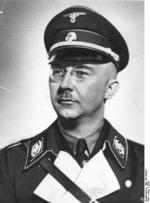 | 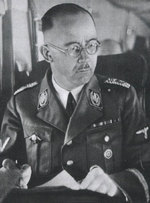 | 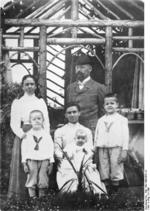 | 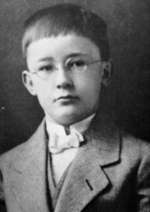 |
Heinrich Himmler Timeline
| 7 Oct 1900 | Heinrich Himmler was born in München, Germany. |
| 5 Aug 1922 | Heinrich Himmler graduated from Universität München (Munich University) with an agriculture degree. |
| 3 Jul 1928 | Heinrich Himmler married Margarete Boden. |
| 6 Jan 1929 | Heinrich Himmler was named the leader of the Schutzstaffel (SS) organization within the Nazi Party. |
| 8 Aug 1929 | Heinrich Himmler's daughter Gudrun was born. |
| 9 Mar 1933 | In Germany, SS leader Heinrich Himmler became the president of the München (Munich) police commission. |
| 3 Nov 1933 | Heinrich Himmler, Karl Maria Wiligut, and other SS figures visited Schloß Wewelsburg in Büren, Germany. |
| 20 Apr 1934 | Hermann Göring transferred control of the Gestapo secret police organization to Heinrich Himmler. |
| 26 Jul 1934 | The SS became an independent organization of the Nazi Party; its chief, Heinrich Himmler, would report directly to Adolf Hitler. |
| 22 Sep 1934 | The first stage of renovations at the SS castle of Schloß Wewelsburg in Büren, Germany was completed, and a ceremony was held to mark the transfer of its possession to Heinrich Himmler. |
| 16 Mar 1935 | Heinrich Himmler established the SS-Verfügungstruppe (Special Task Troops). |
| 12 Dec 1935 | Heinrich Himmler founded the Lebensborn project to promote Nazi eugenics. |
| 16 Jun 1936 | Heinrich Himmler was named the head of the first German national police force. Prior to this, police forces had always been under the jurisdiction of local states and not the national government. |
| 2 Jul 1936 | Heinrich Himmler celebrated the 1,000th anniversary of the passing of King Heinrich I at the Quedlinburg Dom (also known as the Collegiate Church of St. Servatius) at Quedlinburg, Germany. |
| 26 Jan 1938 | Heinrich Himmler gave notice of comprehensive measures against "elements avoiding work"; employment offices were to report those capable of work who had declined job offers twice and those who left employment after a short time. |
| 17 Aug 1938 | Hitler issued a decree confirming Himmler's control over the armed SS in peacetime. |
| 18 May 1939 | A degree from Adolf Hitler permitted Heinrich Himmler to call up older men on the outbreak of war to replace the permanent units of concentration camp guards. This would allow the younger men to be drafted into the 1st, 2nd and 3rd Regiments of a new SS Division, to be called Totenkopf. |
| 7 Oct 1939 | Adolf Hitler appointed Heinrich Himmler as Reich Commissar for the protection of the German Race and issued a decree empowering Himmler to deport all Jews from Greater Germany to the east, where they would be resettled together with almost 2 million Polish Jews now under German rule. |
| 1 Mar 1941 | Heinrich Himmler paid his first visit to Auschwitz Concentration Camp. During the visit, he ordered Commandant Rudolf Höss to expand the current camp to hold a total of 30,000 prisoners, expand the camp to Birkenau with capacity for 100,000 prisoners, supply 10,000 prisoners to work for the nearby I.G. Farben factory, and to expand the camp's agricultural and industrial output. |
| 20 Mar 1941 | Heinrich Himmler, Rudolf Heß, Fritz Todt, Reinhard Heydrich, and other top Nazi German official met in Berlin, Germany to discuss plans for resettling Eastern Europe with Germans. |
| 27 Apr 1941 | Heinrich Himmler visited Mauthausen Concentration Camp in Austria. |
| 26 Jan 1942 | Heinrich Himmler announced his plan to send 100,000 Jewish men and 50,000 Jewish women to concentration camps for use as forced laborers within the following four weeks. |
| 29 Jan 1942 | Heinrich Himmler issued a directive that established the SS Sonderkommando Dirlewanger as a volunteer formation of the SS. This formation, which drew its personnel from concentration camps and hardened criminals, would become notorious for its war crimes against civilians in Poland. |
| 1 Jun 1942 | Heinrich Himmler was placed in charge of Luftschutz, or Air Raid Protection, in Germany. |
| 17 Jul 1942 | Heinrich Himmler visited Auschwitz-Birkenau camp in Poland for two days to inspect the construction of crematoriums, inspect the expansion of prisoner barracks, and observe the extermination of two trainloads of Dutch Jews. |
| 19 Jul 1942 | Heinrich Himmler ordered "Aktion Reinhard", the deportation of Jews in the General Government, was to be completed by 31 Dec 1942. |
| 12 Aug 1942 | The responsibility for maintaining law and order in German-occupied Belgium, Denmark, Holland, and Norway was given to Himmler and the SS organization. |
| 18 Sep 1942 | Orders from Heinrich Himmler: The SS was to have full judicial control over Polish, Russian, Ukrainian, Jewish, and Roma prisoners; all prisoners of the German justice system capable of work were to be transferred to concentration camps for forced labor; food rations for Jews in Germany were to be reduced. |
| 5 Oct 1942 | Heinrich Himmler ordered that all Jews in concentration camps in Germany were to be transferred to Auschwitz or Majdanek concentration camps. |
| 27 Oct 1942 | Himmler ordered the destruction of the last major Ukrainian ghetto in Pinsk. |
| 31 Oct 1942 | The Chilean ambassador to Italy Ramon Briones Luco reported to Chile that Heinrich Himmler had just visited Rome and spoke to Mussolini. According to the ambassador's sources, Himmler requested Mussolini to turn over all Polish, Czech, and Yugoslav Jews in Italy. |
| 9 Jan 1943 | German SS Reichsführer Heinrich Himmler visited Warsaw, Poland, and ordered that 8,000 Jewish inhabitants be deported from the ghetto. |
| 16 Feb 1943 | Heinrich Himmler ordered the Warsaw ghetto in Poland to be liquidated. |
| 23 Mar 1943 | Heinrich Himmler's statistician reported to him that, thus far, 633,300 Russian Jews had been "resettled", with the latter word a likely euphemism for "exterminated". |
| 11 Jun 1943 | The final liquidation of all Jewish ghettos in Poland was ordered by Reichsführer Heinrich Himmler. |
| 21 Jun 1943 | Himmler ordered the liquidation of all Jewish ghettos in all Soviet territories controlled by Germany. On the same day, the Lvov Ghetto in Poland was liquidated; 10,000 to 20,000 Jews were massacred. |
| 27 Jun 1943 | Heinrich Himmler ordered a new procedure for testing the children born of Eastern European forced laborers; those tested racially inferior were to be left in inadequately-supplied centers for foreign children, where many of whom would die from malnutrition and lack of care. |
| 24 Aug 1943 | Heinrich Himmler was appointed as Minister of the Interior of Germany. |
| 4 Oct 1943 | Heinrich Himmler talked openly about the Final Solution at a meeting in Posen, Reichsgau Wartheland, Germany (Poznan, occupied Poland), noting that he cared little about the livelihood of Czechoslovakians, Russians, and other peoples in occupied Eastern Europe since the conquered people were mere slaves to Germany. He warned his lieutenant, however, that this task would not be written in history despite its importance in German history. |
| 4 Jan 1944 | In a conference attended by German leaders Heinrich Himmler, Wilhelm Keitel, Albert Speer, and Fritz Sauckel, it was decided that four million people were to be conscripted from occupied territories as forced laborers for war production. One million were to be drafted from France between 1 Feb and 31 Dec 1944. |
| 14 Feb 1944 | Heinrich Himmler's orders to re-establish the Chelmno Concentration Camp in occupied Poland was received by German officials of Reichsgau Wartheland; the camp resumed extermination in May 1944. |
| 2 Mar 1944 | Heinrich Himmler signed Aktion K into effect, which decreed that captured escapees of prisoners of war camps would be sent to the Mauthausen Concentration Camp in occupied Austria, where they would face execution immediately upon arrival and their remains would be destroyed in the camp crematorium. |
| 7 Mar 1944 | Heinrich Himmler informed officials from the Security Police, the Security Service, and the SS Central Office for Economy and Administration that no prisoners were allowed to be released from the Mauthausen Concentration Camp during the war. |
| 9 Mar 1944 | In a letter to Hermann Göring, Heinrich Himmler noted that by this date, about 36,000 prisoners were employed for various purposes for the Luftwaffe. He informed Göring that plans were being considered to increase the number to 90,000. |
| 10 Mar 1944 | Heinrich Himmler lifted various laws against Jewish and Roma people as their "evacuation and isolation" had already been achieved. |
| 26 Jul 1944 | Reichsführer-SS Heinrich Himmler made a speech to the Luftwaffe pilots of III KG/3 in which he exaggerated the damage done by the V-1 flying bombs that they were launching to London, England, United Kingdom and other targets. He finished his speech by saying that the German High Command had clear evidence of a weaking the power of the belligerent British Nation. |
| 10 Sep 1944 | Heinrich Himmler ordered that all deserters would be shot, along with their families. |
| 16 Oct 1944 | Heinrich Himmler visited Nürnberg, Germany to personally inspect the repairs to the bunker which housed the Imperial Regalia of the Holy Roman Empire. |
| 18 Oct 1944 | Himmler was appointed as Commander of Heeresgruppe Oberrhein. |
| 26 Nov 1944 | Heinrich Himmler ordered the destruction of the crematoria at Auschwitz-Birkenau Concentration Camp in attempt to hide evidence of mass killings. Dismantling work of Crematorium II of Auschwitz Concentration Camp began on the same day. First, the motor that pumped the air out of the gas chamber was removed and sent to Mauthausen Concentration Camp. Then, pipes were removed and sent to Gross-Rosen Concentration camp. Other equipment were removed in order and shipped into various parts of Germany. |
| 1 Dec 1944 | Heinrich Himmler ordered the crematoriums and gas chambers of Auschwitz Concentration Camp dismantled and blown up. |
| 19 Feb 1945 | Heinrich Himmler made his first contact with Swedish Count Folke Bernadotte regarding a separate peace. |
| 12 Mar 1945 | Heinrich Himmler signed orders to surrender concentration camps to the Allies, which contradicted Adolf Hitler's prior order. |
| 13 Mar 1945 | Heinrich Himmler abandoned his command with Army Group Vistula; he would later claim that it was due to sickness. |
| 16 Mar 1945 | Heinrich Himmler, having abandoned his command with Army Group Vistula three days prior, checked himself into a sanatorium at Hohenlychen, Germany so that doctors there could treat his influenza. When Heinz Guderian came to visit him, he would request Guderian to carry his letter of resignation as commanding officer of Army Group Vistula to Adolf Hitler. |
| 12 Apr 1945 | Heinrich Himmler ordered that commanders who failed to hold key positions in the defense of Germany would be executed. |
| 14 Apr 1945 | As Allied troops advanced, Heinrich Himmler ordered all prisoners at Dachau Concentration Camp in southern Germany be exterminated. |
| 23 Apr 1945 | German SS-Reichsführer Heinrich Himmler contacted the Western Allies via Swedish Count Folke Bernadotte to negotiate for a peace agreement. |
| 28 Apr 1945 | Himmler's attempts to negotiate peace with the Western Allies was discovered Hitler, who stripped him of all his titles and ranks and ordered for his arrest. |
| 5 May 1945 | At a meeting attended by SS-Obergruppenführer von Herff and representatives of the Gestapo and SD, Heinrich Himmler outlined his plans to establish an SS government in Schleswig-Holstein which would conduct independent peace negotiations with the western powers. |
| 6 May 1945 | Grand Admiral Dönitz announced that Himmler was to be relieved of all government duties; he also abolished the Schutzstaffel in all its forms, and banned any further resistance by members of the SS. |
| 21 May 1945 | Heinrich Himmler was arrested by British troops near Bremen, Germany as he attempted to disguise himself as refugee "Heinrich Hitzinger" and flee with the masses. |
| 23 May 1945 | Himmler committed suicide at Lüneburg, Germany. |
| 27 May 1945 | US 101st Airborne Division Master Sergeant Charles Dickey discovered Heinrich Himmler's emergency cash in Himmler's family barn in Bayern (Bavaria) in southern Germany. It consisted of currencies of 26 nations worth a total of US$4,000,000. |
Did you enjoy this article or find this article helpful? If so, please consider supporting us on Patreon. Even $1 per month will go a long way! Thank you. Share this article with your friends: Stay updated with WW2DB: |


Visitor Submitted Comments
3 Feb 2009 06:39:23 PM
i also think that himmler was probably one of the most driven men in the 1900s to present day. the sad thing is that he took his ability to do things well and overachieve and he used them for the success of the nazi party. and if you havnt noticed, most of the high ranking nazi people ended up committing suicide
 BILL says:
1 Mar 2009 10:01:41 AM
Did you know: Some unknown clerk who's job was to shorten official titles, looked at GeheimeStaatspolizei, and abbreviated it to G E S T A P O
BILL says:1 Mar 2009 10:19:33 AM
The Waffen-SS was the Military arm of the Nazi Party. The SS design was created in 1931 and became one of the widely used forms of SS insignia. Did you know: Some of the earlist Television Programs, were broadcast from Berlin in 1935. Later the Olympic Games of 1936, Nazi Party rallies and different types of entertainment.
BILL says:19 Mar 2009 02:24:12 PM
Gestapo agents carried identification tags,that had an image of the national eagle that is holding a wreath with a swastika in its talons on one side and on the other side the words Geheime Staatspolize (Secret State Police). Created in 1933 by Hermann Goring, and assimilated into the SS under Heinrich Himmler the Gestapo was responsible for investigating, imprisoning and executing all enemies of the state.
BILL says:11 Apr 2009 02:24:01 PM
Just think if Television really took off in Germany what would one of the programs be. From " Berlin it's the Adolf and Hermann Show! " however, it was never to be, it would have been cancelled due to low ratings and public opinion in 1945. So much for dark humor.
BILL says:13 May 2009 05:55:58 PM
First they came for the Communists, and I didn't speak out because I wasn't a Communists. Then they came for the Socialists, and I didn't speak out because I was not a Socialist. Then they came for the trade unionists, and I didn't speak out because I wasn't a trade unionists. Then they came for the Jews, and I didn't speak out because I wasn't a Jew. Then they came for the Catholics, and I didn't speak out because I wasn't a Catholic. Then they came for me, and by that time no one was left to speak to speak out.
Martin Neimoeller, pastor,German Confessing Church.
BILL says:24 May 2009 07:44:28 PM
Nazi Germany was a Police State, listed below are know Organizations they are:
Abwehr, Gestapo, SA, SS, Waffen-SS, RSHA, ORPO, Schutzpolizei, Spio, Kripo, SD, OKW, OKH, OKM, OKL, NSDAP, Party Leaders, Officials, Minor Party Officials, Military, Civilian and Police Inspectors, Labor Organizations, Propaganda, and Informers.
Youth Organizations Boys: Pimpfen (Little Fellows) from age 6 to age 10., Jungvolk (Young Folk) age 10 to age 14., Hitler-Jugend(Hitler Youth) from age 14 to age 18. they would train for military service.
Youth Organizations Girls: Jungmadel (Young Girls) age 10., Bund Deutscher Madchen or Madel (The Young Girls League) until the age of 18. "Never in their life, would they be free"
BILL says:15 Jun 2009 10:08:24 AM
In 1939 there were 302,535 Germans in protective custody in Germany, for their political views. By the end of the war, over
800,000 Germans had spent time in concentration camps.
21 Sep 2009 12:47:56 AM
During WW2, my father was a spy for the United States. He was right in the heart of Nazi Germany and I was told how Himmler was actually resposible for our modern bio-fuels.
Himmler had also been in jail with Hitler. Hitler gets credit for a book that Himmler was really reposible for. Himmler also wrote two other books that for some reason, were never republished. I had one of his books.
Himmler was the main man for Germany, not Hitler. Hitler was the front man for what he was told to do. Hitler had a great ability at public speaking so, he got the job! From what I was told by my father, Himmler was a quiet individual that liked to study.
Too bad Himmlers Books have never been reproduced because, if they were, there might be a breach of national security here in these great United States of America..
14 Apr 2010 09:04:09 AM
How many assassination attempts were made on Heinrich Himmler?
16 Feb 2011 03:54:32 AM
Ich bin Heinrich Himmler
23.05.1989
14 Mar 2011 05:16:22 PM
Heinrich Himmler was a GREAT MAN , A GREAT LEADER.
12 Jan 2012 06:24:33 PM
I am not sure if Himmler was a genius , or not, if he was a genius, . Germany was in rough shape, I am still trying to figure out what the jews did to Hitler to get him so angry with them. anyone know???
20 Nov 2013 01:41:15 PM
you're a *** dumbass. hitler hated jews because he found them as a problem. he was scapegoating to them.
22 May 2014 12:56:19 PM
The Jews are still a problem in the world. Hitler did not kill enough.
3 Dec 2014 06:20:48 PM
he was soo evil i hate him, but God says to love those you hate, so.....
15 Apr 2018 09:12:38 PM
when was this thing published?
17 Jan 2021 05:04:28 AM
This man was most evil in this century. I just hope there not another like him. poor evil
All visitor submitted comments are opinions of those making the submissions and do not reflect views of WW2DB.
» Hitler's Master of the Dark Arts
- » 1,150 biographies
- » 337 events
- » 44,024 timeline entries
- » 1,242 ships
- » 350 aircraft models
- » 207 vehicle models
- » 375 weapon models
- » 123 historical documents
- » 260 facilities
- » 470 book reviews
- » 28,622 photos
- » 431 maps
Winston Churchill

Please consider supporting us on Patreon. Even $1 a month will go a long way. Thank you!
Or, please support us by purchasing some WW2DB merchandise at TeeSpring, Thank you!
3 Feb 2009 06:35:48 PM
i think that himmler was a strong motive man but he was also a nazi, which makes him one of the most hated people in the world