


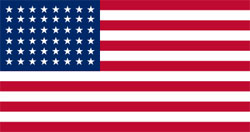
United States
| Full Name | 2 United States of America | |
| Alliance | Allies - Major Member Nation | |
| Entry into WW2 | 7 Dec 1941 | |
| Population in 1939 | 131,028,000 | |
| Military Deaths in WW2 | 407,318 | |
| Civilian Deaths in WW2 | 11,200 |
Contributor: C. Peter Chen
ww2dbaseDuring WW1, the Japanese military seized German colonies in China and in the Pacific, and after the war the western powers allowed Japan to keep the territories, thus recognizing Japan as a regional power. China, which was on the victors' side, protested against this betrayal, but to little effect as Japan would continue to assert effective control over Shandong Province through WW2. During the 1920s and 1930s, military leaders slowly gained political power in Japan. They convinced the country that democracy was divisive, and that Japan, which had been viewed as a second-rate power, deserved to be on-par with western powers such as the France, United Kingdom, and the United States.
ww2dbaseIn 1928, assassins dispatched by the Japanese Army took the life of Chinese warlord Zhang Zuolin in northeastern China. When Zhang's son and successor Zhang Xueliang unexpectedly emerged to be an anti-Japanese and pro-Nationalist figure, Japanese troops marched into northeastern China. Japan appeased the League of Nations with promises of withdraw, but in actuality the plans to establish a puppet state were already in the works. Manchukuo was established on 18 Feb 1932 under the leadership of deposed Chinese Emperor Puyi. To distract the League of Nations from the events in northeastern China, Japan instigated the First Battle of Shanghai in Jan 1932. Angered by continued international condemnation, Japan left the League of Nations in 1933. Between that time and the formal start of the Second Sino-Japanese War on 7 Jul 1937, several small scale engagements took place between Japan and China. In 1937, the already deadly on-going conflict between China and Japan officially escalated into a full scale war, thus making Japan the aggressor that started WW2 in Asia, more than two years prior to the German-Soviet joint invasion of Poland that started the European War. On 27 Sep 1940, Japan, Germany, and Italy signed the Axis Pact. In Jul 1941, after a series of events that worsened relations between the United States and Japan, the US announced the embargo of key raw materials, including oil, against Japan; other western powers followed suit. This was the point of no return for Japan for that it gave fuel to the hawks in Japan's top leadership.
ww2dbaseIn Dec 1941, after China, Europe, and North Africa were already engulfed in war for at least two years, Japan made WW2 a truly global war by starting the Pacific War with a raid on Pearl Harbor in the Hawaiian Islands. In a series of wildly successful attacks, Japan wiped out any force that could pose immediate threat to her in the Pacific in a handful of months. By mid-1942, Japanese military reached as far southwest as Burma and Malaya and as far south as New Guinea, an empire of staggering size.
ww2dbaseJapan's luck began to turn in 1942, however. The war in China seemed to be progressing slowly, but it was becoming evident that China was so large a territory to conquer that it was sucking in more resources than Japan wished to devote to. With a series of strategic losses in the Pacific such as Battle of Coral Sea (failure to secure Port Moresby), Battle of Midway (loss of four fleet carriers, along with irreplaceable aircraft and crew), and the Guadalcanal Campaign (a series of battles that unwisely frittered away Japan's strength), Japan suddenly found herself losing the initiative. Last but not least, Japan became a victim of her own success. With territory so vast, her own shipping capacity was no longer capable to adequately supply all the faraway garrisons and expeditionary forces. Finally, over time, with an inability to replace machines of war and trained men to operate them, the war pushed closer and closer to her. The loss of Saipan was the first devastating piece of news. Then came the loss of Iwo Jima and Okinawa, islands that were considered part of the home islands.
ww2dbaseFrom this point on, it was only the matter of time before Japan acknowledged defeat. While Japanese leaders negotiated for truce unsuccessfully, the incessant bombings turned some Japanese cities into towering infernos. Then, the new atomic weapon the United States unleashed on Hiroshima shocked the world. Japan was now on the verge of admitting surrender unconditionally, but perhaps due to shock, no official reaction was sent to the Allied powers. Finally, on 8 Aug 1945, Russia (whom Japan viewed as relatively friendly) declared war on Japan, invading Manchukuo, and a second atomic bomb destroyed Nagasaki. It was not until then that, Emperor Showa interfered with the government and brought Japan to surrender. On 14 Aug 1945, in a surprising move, Emperor Showa announced the surrender personally over public radio.
ww2dbaseAt the end of the war, Japan was stripped of all of her overseas possessions, and the home islands were occupied by Allied personnel headed by US General Douglas MacArthur. Japan did not regain her sovereignty until Apr 1952.
ww2dbaseSource: Wikipedia.
| Events Taken Place in United States | ||
| Two-Ocean Navy Act | 19 Jul 1940 | |
| ABC-1 Conference | 29 Jan 1941 - 30 Mar 1941 | |
| First Washington Conference | 22 Dec 1941 - 14 Jan 1942 | |
| Internment of Japanese-Americans and Japanese-Canadians | 1 Jan 1942 - 1 Apr 1949 | |
| Second Washington Conference | 20 Jun 1942 - 23 Jun 1942 | |
| Trident Conference | 12 May 1943 - 25 May 1943 | |
| Operation Trinity and Manhattan Project | 16 Jul 1945 | |
| San Francisco Peace Conference | 8 Sep 1951 | |
| Territories, Possessions, and Nations Under the Influence of United States | ||
| Alaska | Panama Canal Zone | US Pacific Islands |
| Guam | Philippines | US Virgin Islands |
| Hawaii | Puerto Rico | |
Weather
WW2-Era Weather Data for United States
Photographs
 |  |  | 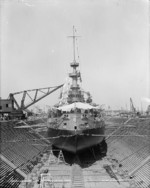 |
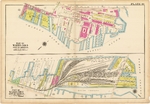 | 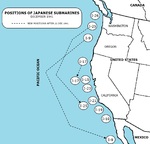 | 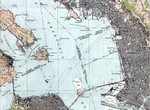 |  |
United States in World War II Interactive Map
Please consider supporting us on Patreon. Even $1 per month will go a long way! Thank you. Please help us spread the word: Stay updated with WW2DB: |


Visitor Submitted Comments
 BILL says:
25 May 2009 02:03:56 PM
"An Army marches on its stomach"
- Napoleon Bonaparte -
C-rations were designed to be eaten cold, but nothing warms them up faster than placing a chunk of C-4 set afire with the end of your cigarette or cigar.
BILL says:25 May 2009 02:13:00 PM
By 1944 90% of U.S. Government spending went to the War cause.
Between 1942 and 1945 very few new automobiles were built. All of the major auto makers built Military vehicles and aircraft.
For example the Kaiser Shipbuilding Co. was able to build the Liberty ship S.S. Robert E. Peary in 4 days, 15 hrs. and 30 minutes. Between 1941 to 1945 18 Shipyards built 2,700 Liberty Ships.
BILL says:26 May 2009 05:36:28 PM
The official Nomenclature for the P-38 can opener is:
Opener Can, Hand, Folding, Type I. One Each
BILL says:12 Jun 2009 03:58:26 PM
World War II Veterans Diminishing:
As of September 30, 2008, the most recent date for which statistics are available from the (VA) Dept. of Veterans Affairs, 2,306,000 WWII vets were living. A total of 16,112,566 Americans served in uniform between 1941 and 1945.
In other words, only 14% of the GI's mobilized by war's end are still alive today.
In 2004 a Gallup Poll found that 90% of Americans viewed WWII as a "just war".
D-Day, a pivotal event of the war, however was largely unknown to many of the young. Of 18-to 29-year olds, only 47% could identify Germany as the enemy nation. Just 40% in that age bracket knew were the invasion of France had taken place. These results are clearly an indictment of the nation's failed teaching of U.S. history, especially our military past.
BILL says:12 Jun 2009 08:14:56 PM
Returning World War II Veterans faced high
unemployment almost triple the rate for civilians. For the disabled veterans, it was
even higher. In January 1946 more than 52,000 disabled veterans applied for jobs, only 6,000 got them.
Many veterans felt, that they were already being forgotten six months after the end of the war. Adding to the many problems were the shortages of housing veterans lived in trailers,converted barracks, barns, even cars
Many moved in with friends and relatives, married veterans lived with parents, friends
or in-laws.
In the fall of 1946 millions of veterans were
without work (48%) of all ex-servicemen in 1947 felt that their wartime service had left them worse off than they had been before.
In one 1947 poll indicated that 1/3 of all
veterans felt estranged from civilian life. With the GI Bill many veterans started to build a new life, a college education was offered to those, who could have never have received one, had it not been for W.W.II.
Many went on to Trade Schools,others started
business settled back into civilian life worked hard, had families and enjoyed the American dream.
During W.W.II 1,300,000 American troops were
hospitalized "neuropsychiatric symptoms".
On Okinawa alone the marines suffered 26,000
psychiatric casualties, some required a short
hospital stay, and returned to duty, others
endured symptoms for years.
Many veterans would live for years with the
experiences of war and its traumas, that could not be left behind.
By war's end the Army had admitted over a 1,000,000 "neuropsychiatric" patients to its
hospitals 40% of discharges had been for NP cases. In 1947 half the beds in VA hospitals
were occupied by men suffering from
neuropsychiatric problems, plus the millions
of men who would live their lives with the
nightmares, and other symptoms lingered for
decades.
Between 1945 and 1947 petitions for divorce flooded the courts, in some cities even
outnumbering marriages. In 1945 over 500,000
marriages ended in divorce.
They fought "the good war" and returned home
happy and well-adjusted, or so the storyline
went. In reality it was more unsettling, those W.W.II veterans struggled to adjust to a life interrupted and forever changed by the
war.
BILL says:15 Jun 2009 09:23:02 AM
The U.S. Army alone suffered 929,307 cases of Battle Fatigue between June and November
1944.
This amounted to 26% of all US Combat casualties, In June 1944 alone there were
10,000 men treated.
BILL says:15 Jun 2009 09:34:13 AM
From 1941 to 1945, 17,955,000 Americans were
medically examined for service. 6,420,000
were rejected (35.8%), 16,112,566 did serve
in the armed forces, a total of (38.6%) were
volunteers.
405,399 Americans gave their lives, in the war that cost the United States a total of 288 Billion Dollars.
BILL says:17 Jun 2009 09:12:06 AM
U.S. Personnel during World War II
Army 8,300,000
Navy 4,204,662
Marines 599,693
Coast Guard 172,952
Died of all causes 405,399
Personnel Captured 130,201
Missing go into the thousands, the exact number,will never really be known.
Soldiers fall in battle, others die through
accidents, disease, wounds and become
disabled and bear the physical and mental
scars for life.
All bear the injuries within, that can not be seen. Many Veterans will spent years in Hospitals convalescing.
Thousands receiving continued medical care for years afterward.
"In War, there are no unwounded soldiers"
15 Oct 2009 10:45:43 AM
i want to the exact number of field marshal in the world thanks
25 Nov 2009 12:32:28 AM
Any information re: my grandfather James H Wilkinson U.S. WWII 1941-1946 dates served as Major? Phone contact 432-275-0552. Thankyou for any info.
Bill says:23 Dec 2009 05:58:55 PM
1940 US Dollars:
Battleship, $77,000,000
Large Aircraft Carrier $45,000,000
Heavy Cruiser $20,000,000
Destroyer $3,000,000
Submarine $2,500,000
Torpedo $12,000
B.A.R. Browing Automatic Rifle $270.00
M-1 Semi-Automatic Rifle $60.00
Anti-Aircraft Gun 3in . $25,000
Large Howitzer 3.9 in . $28,000
Light Tank, $40,000
Medium Tank $45,000
In 1940 soldiers were paid a few dollars a
day, that would add to about $4,000 for a
four-year enlistment.
Today to maintain one soldier it costs
$126,000 dollars.
Show Me The Money:
What was the money worth?
$4.00 US Dollars 1.00 British Pound
$1.00 US Dollar 2.50 German Reichmarks
$1.00 US Dollar 3 to 4 Japanese Yen
$1.00 US Dollar 5 to 28 Russian Rubles
$1.00 US Dollar 37 French Franc
Bill says:2 Oct 2010 02:24:04 PM
World War II brought many changes to American
life, the men went to war, the women went to
work.
This is one area where WWII brought perminent
change in American homes.
After World War II the United States became a Superpower, its Military crushed the Axis
powers, total defeat upon Germany, Japan and
Italy.
Much of Europe and Asia had been divested by the war. Millions had died, and millions were
homeless. It would take decades to rebuild
much of Western Europe, and Asia a new type of struggle would take place, a Cold War
between the two Superpowers the USA and the
USSR, that would last for almost fifty years.
Returning GI's wanted a better life, the WWII
Generation were hardened by poverty and
deprived of the security of home or job, the
creation of the "American Dream" started in
Post-war America.
Jobs were hard and difficult to get millions
of GI's had to live with friends and family
millions were unemployed, it was a difficult time, but slowly the system started to retool
from wartime production to civilian consumer
goods.
Items that were hard to buy during the war,
became avilable again. During the war women
made up 36% of the work force, many returned
home others continued working. Many of those
women married and started families between
1946 to 1964 78.2 million babies were born
GI's bought homes went to collage under the
GI Bill this fueled economic growth never
seen before.
Moving out of the cities to create the new urbanization with the increased demand to buy
cars and other vehicles and home appliances
and other consumer goods. Returning Veterans
built carrers and good paying jobs, and a
standard of living not seen in the rest of
the world.
To be continued..
Bill says:3 Oct 2010 03:36:13 PM
Before we start correction # 13 last paragraph.
(Returing Veterans buit careers and good paying jobs, and a standard of living not seen in the rest of the world.) Sorry, I
misspelled career.
THE HOMEFRONT:
The United States came out of World War II
without damage to its cities and heavy industry. Some people got rich from the war-
time boom, but many simply continued to work
until final victory.
For many who left small towns to work in the
factories, they never returned, same for the GI's that passed through the West and East
Coast many would return after discharge, and build a new life.
BUY NOW PAY LATER:
IN AMERICA EVERYBODY OWES EVERYBODY
The begining of the credit card era started
after WWII, before WWII credit was not easy
to get, and available only to the wealthy and they were issued by banks.
Most Americans had to save and pay for the item in cash. Banks and Department Stores
started to issue credit cards. After WWII, and for the first time many Americans could buy items on the easy payment plan.
As the years passed the credit cards were issued in the millions, and became the new standard of living for many Americans.
When the war ended many industries retooled
from war production to consumer goods when
jobs became available, people had money to
spend wartime shortages were a thing of the
past. Americans went on a spending spree never seen before.
DETROIT GOES TO WAR:
In 1942 a Ford Super DeLuxe Sedan sold for
$825.00 More than 150,000 Plymouths went to
the last buyers in 1942.
Automobile production ended, and all civilian
cars were sold to the Government and used by
the armed forces and officials.
Automakers turned out $29,000,000,000 thats
Billion worth of military equipment.
The end of the war found many Americans able
to buy civilian products from war-time work
and many wanted cars. Did you know...in 1946 the average car was now nine years old.
POWER TO THE PEOPLE:
With the end of the war, the first post-war
cars rolled off the assembly line in July of
1945.
They were a retool of the 1941-1942 models
but they were available the first Ford V-8
Super DeLuxe Sedan's sold for $1,322.00
Sure they were warmed over models, but to
the car-starved Americans they were ready to
snap them up.
More than 28,000,000 vehicles are registared
2,155,924 were built in the 1946 model year.
Some 82,000,000 tires are produced in 1946
alone. In 1947 auto production reached over
3,000,000, in 1949 over 6,000,000 everybody
wanted wheels.
The price went from $1,205.00 for a Chevy to
over $3,000.00 for a 1946 Cadillac, even used
car prices were high, after all it was a
sellers market.
At the start of the war December 7, 1941 the entire US Auto Industry the largest heavy
industrial manufacturing center in the world
went from building cars and trucks, to tanks, trucks, jeeps, engines, airplanes and
all other types of military equipment, this was done, within one year.
By 1943 the United States was out producing Germany, Japan and Italy together! retooling
back to civilian goods took just as fast by
the late 1940's and early 1950's about every
house in America had a telephone,automobile,
electrical appliances,and other labor saving
devices, even early model television sets.
It was a time of one income families many
women left the wartime work force, married
raised the baby boom generation.
WHAT DID YOU DO IN THE WAR DADDY?
For the returning Veteran his wartime
experiences will be with him for the rest of his days, he survived did the best he could
defending the nation and was part of the
"GREATEST GENERATION" with hope for a better
life for his and all men's childern, looking
at his son, and thinking:
If this was the last World War,I mean really the last one, you would really get youself
a break.
"If there be trouble, let it be in my day so
that my child and every man's child may live
in peace"
-Thomas Payne-
"REFLECTIONS OF A BABY BOOMER":
WHY I REMEMBER
The milkman delivering dairy products.
The iceman who still delivered blocks of ice
to people who still had ice boxes!
The policeman who really walked his beat.
The Helms Bakery truck selling all sorts of goodies.
The Goodhumor ice cream truck. Let me tell
you, orange cream ice cream to this day, reminds me of childhood.
The Jewel mobile department store, were you
could order by catalog, just about anything.
The door-to-door salesman.
Corner news stands. And the paper boy.
Going to Sears with my parents, and the
parking lot attendent showing you were to
park.
Going to the gas station, and watching the
servicemen really pump the gas, check air in
Dads tires, check the oil and wash the windows, and Dad knew everbody by name.
My brother and I answered with a Mr. or Mam, with a yes Sir or no Sir and good manners
Respect for God and Country and respect for yourself.
During the summer, the water company would
turn on the fire hydrant.
All your friends knocked at the kitchen
screen door, all the salesmen knocked at the
front door.
Just about everybody knew one another.
Ride on the streetcar to downtown, and going
downtown on Friday nights let me tell you it
was lit up like Christmas time.
Saturday mornings bacon & eggs and orange
juice for breakfast, And all my childhood favorites.
Rin, Tin Tin, Sky King, Howdy Doody, Cartoons
all day. I'm glad I had such a childhood.
When I was in Catholic School we started the
day with the pledge of allegiance and a prayer, and wore uniforms.
For this baby boomer, I've reached a standard
of living higher than my Parents, but they led the way, and over came the obstacles.
Both are now deceased, they were honest and
hard working and that trait has followed with me throughout my life.
"I LOVE YOU MOM & DAD"
Thank you ww2db for allowing me to post my
comments, both Historical and Personel
Best wishes,
Bill
Bill says:10 Oct 2010 02:47:31 PM
SWORDS INTO PLOWSHARES...
Where Did All Those Airplanes, And Other
Military Equipment Go?
After World War II the United States disposed
of millions of dollars worth of Military
Equipment. Aircraft that were brand new, were
flown from factories to storage and salvage
yards.
Many of these aircraft never took any crews into harms way, or fired a shot in anger
those aircraft served the nation, they were
there if needed.
Thousands of aircraft were scrapped,cut up, torn apart,blown up,melted down into aluminum
ingots.
Parts that were salvaged kept other aircraft
serviceable and used, until those aircraft were disposed of, or given to South American
Nations or other friendly Countries.
The bombers and fighters were scrapped first
scrap dealers bought surplus aircraft for
pennies on the dollar, others were sold at
almost give away prices.
B-17 Bombers sold for $13,700, Trainers for
$500, P-38 sold for $1,200 to $2,500 dollars
The scrap metal and other materials were
collected and recycled for civilian use.
The metal went into new cars, trucks and
other machinery. Building material for new
housing, aluminum siding and other fixtures
and those neat 1940s early 1950s metal lawn
furniture, and thousands of other peace
time consumer goods.
The scrapping of wartime equipment looked
like a waste, the men who flew and serviced
them were no longer needed, the war was over!
many started new lives with the hope of a
better future.
There is also waste in war. And freedom isn't
free and if its not worth fighting for, then
nothing else is. Those salvage and scrap
yards, with the thousands of airplanes and
other military equipment, is the result of
the war effort. It is the untold story of the
hundreds of thousands of men and women, who
worked in the factories 24 hours a day,
7 days a week, 365 days a year to see the
final victory.
Free people everywhere must always remember
that "Tyranny Never Sleeps" its good against
evil and good must be very, very careful.
After Japan's surrender thousands of aircraft
were gathered and bulldozed into piles of junk and burned items that could be used were
salvaged, for peacetime use.
The Japanese aircraft industry was forbidden to build any aircraft and other wartime
industries started to rebuild for peacetime
and started to provide the basic necessities
of life.
Many post-war air forces salvaged German and
Japanese aircraft and used them into the
1950s, but like the WWII aircraft, they to
were scrapped when later and better aircraft
became available.
Some aircraft were captured and returned to
the USA for testing and evaluation, many
were later scrapped in the late 1940s and
early 1950s.
A few were placed in storage with the hope of
preserving them, for future generations,some of the aircraft, are the last of their kind.
Luftwaffe aircraft were scrapped and pushed
into piles of junk by bulldozers destroyed
until nothing remains.
Like the Japanese airplanes some Luftwaffe
aircraft escaped destruction advanced jet and
rocket designs,and other wartime aircraft
were shipped back to the USA for testing and
evaluation. Most were later scrapped, but
others were also placed in storage for future
generations, but most were destroyed.
Italian aircraft were scrapped and captured
by the Allies for testing and evaluation.
Many of the same aircraft that fought on the
side of the Axis, fought with the Allies
after Italy's armistice, many continued to be operational into the 1950s
Many can be seen today in museums throughout
the world, others have been found, salvaged
and restored to flying condition, some have
been built as repoductions, others rebuilt
from two or more aircraft to create one flying example.
Did You Know...
After the war, a captured Junkers Ju 290 Transport flew from Paris, France to the United States for tests at Wright field, Ohio.
The aircraft was later scrapped in 1946.
**** **** **** **** **** ****
History is lived forward but it is written in
retospect. We know the end before we consider
the begining.
And we can never wholly recapture what it was
like to know the beginning only.
-CV Wedgewood-
The Thirty Years War
Bill says:16 Oct 2010 08:08:46 PM
Did You Know...
The scrapping of wartime Japanese aircraft
continued well into 1946 and into 1947!
Over 17,000 planes were scheduled to be destroyed, plus hundreds of aircraft left
on Pacific Islands and other support
equipment.
Did You Know...
In 1946 a Nakajima Ki-84 single-seat (Frank) IJAAF fighter plane was restored after WWII
and flown at 427mph and 20,000 ft. However,
most of the captured Japanese aircraft that
were shipped to the USA, were later grounded
due to shortage of spare parts.
As a child growing up in Los Angeles in the
1950s, I remember seeing a Mitsubishi J2M3
(Jack) at that time, it was just a playground
adventure. The single-seat Navy fighter was located at the playground in Griffith Park, California.
It was later given to the Ontario Air Museum
now called the Planes of Fame located in
Chino, Calif. The fighter was restored, but
it dosen't fly.
When I visit the museum, and look at the Jack
it realy reminds me of childhood remembering
how I sat in the cockpit and played airplane.
and other childhood adventures.
Bill says:8 Dec 2011 07:42:30 PM
DESIGN FOR WAR, DESIGN FOR PEACE:
After World War II the United States was the
greatest militay power on earth, it had crushed the armed forces of Nazi Germany,
Imperial Japan and Fascist Italy.
The war was over the GIs were going home to
created a better future, but what happened to
the machines of war.
THE SCRAPMAN COMETH: TODAY HE'S KNOWN AS A
RECYCLING ENGINEER
During WWII the U.S. produced over 294,000
aircraft, 21,583 were lost in the U.S. alone
in training flights, test flights, ferrying
from one base to another.
43,581 were lost en route to overseas operations, never firing a shot in anger at the enemy or dropped a bomb. Between 1945 to
1947 war surplus aircraft were scrapped or sold.
THE PRICE IS RIGHT:
Trainers sold for 1,500 and as low as 450 dollars, P-38s 1,200, P-51s 3,500, B-25s for 8,200, B-17 13,700, B-24 13,000, C-46 and
C-47s sold for 2,000 or as low as 800 dollars
you gotta remember this was in 1940s dollars
when you could still buy something with it.
THE BIG MELTDOWN:
The first 4,871 aircraft declared surplus
for scrap were sold for $1,838,798.19 they
were melted down into aluminum ingots for shipping. By 1947 most of the scrapping was finished, work continued into 1948, and into the early 1950s. The scrapping was done all over the country everyone was getting into the recycling business, and business was good.
So where did all the aluminum go, it went into those pots & pans, tosters, those neat looking 1950s lawn chairs and tables, new stoves and refrigerators and other home appliances, thousands of consumer goods, new automobiles, trucks and other new farm machinery.
7 Apr 2012 02:02:18 PM
i think in the early 1960 the uss sea fox came to vancouver bc and was open for a tour i know that because i took that tour.i often wonder what happened to it after.
10 Feb 2013 12:57:52 PM
wow
Alan Chanter says:11 Dec 2014 07:50:36 AM
When the draft was introduced in the United States the army was faced with an apparently insoluble problem. Its regular officer corps was well trained but small, too small to train an army of millions. The solution was to use the regular officers to prepare detailed training programs which were then distributed to all recruitment camps. There, people who had previously occupied managerial positions in industry were commissioned and given the task, with the aid of these manuals, of training the conscript army. Every officer had his 'Master-Lesson' according to which recruits were to be trained. The short-term disadvantage of this system was that the officers who actually took these fresh forces into combat invariably had had little or no previous contact with their men, which initially led to inferior performance, Nevertheless as lessons were learned the hard way, on the battlefield, this drawback was eventually eliminated.
23 Apr 2018 10:02:58 AM
AMERICA!!!!
All visitor submitted comments are opinions of those making the submissions and do not reflect views of WW2DB.
- » WW2DB's 20th Anniversary (29 Dec 2024)
- » Wreck of USS Edsall Found (14 Nov 2024)
- » Autumn 2024 Fundraiser (7 Nov 2024)
- » Nobel Peace Prize for the Atomic Bomb Survivors Organization (11 Oct 2024)
- » See all news
|
- » 1,150 biographies
- » 337 events
- » 44,186 timeline entries
- » 1,243 ships
- » 350 aircraft models
- » 207 vehicle models
- » 376 weapon models
- » 123 historical documents
- » 260 facilities
- » 470 book reviews
- » 28,658 photos
- » 431 maps
Fleet Admiral Chester W. Nimitz, 16 Mar 1945

Please consider supporting us on Patreon. Even $1 a month will go a long way. Thank you!
Or, please support us by purchasing some WW2DB merchandise at TeeSpring, Thank you!
20 May 2009 01:20:42 PM
The P-38 Folding Can Opener was a unsung hero of World War II. It was developed in 30 days by the Subsistence Research Lab in Chicago,Ill. in the summer of 1942. Since its design, it has never been known to break, rust, need sharpening or polishing. The P-38 is also a tool it can be used as a screwdriver or knife. The P-38 was so named because that is the number of times it took to open a c-ration can. I've carried one since 1967 and since then it has opened many a civilian food can when necessary. The P-38 I still carry, is a symbol along with my dog tag of my wartime service. It still has the US stamped on the side.